Panasonic’s Japanese Microwave: The End of Overcooked Leftovers?
The Evolution of Microwave Technology For over forty years, the microwave oven has remained a static presence in the kitchen, trapped in a…
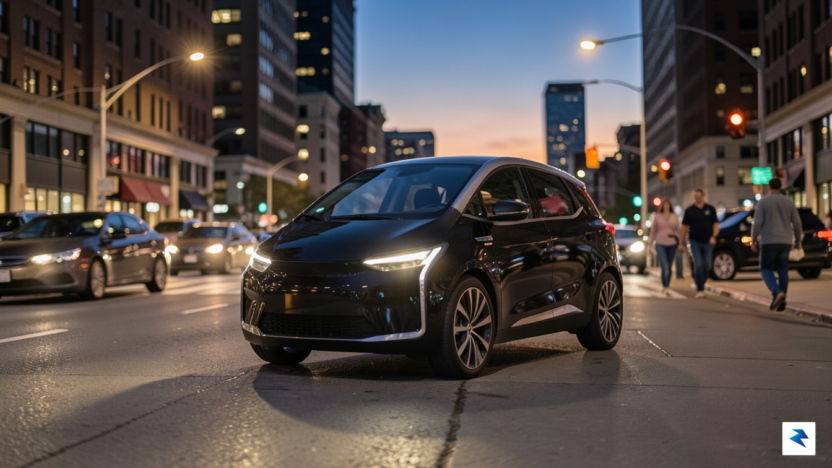
In a significant development for the autonomous vehicle industry, Zoox, a prominent robotaxi developer, recently initiated a voluntary software recall after one of its vehicles encountered an unusual environmental challenge: heavy smoke. This incident, while quickly resolved, serves as a powerful illustration of the complex and iterative nature of bringing self-driving technology safely to public roads. The robotaxi, operating in an urban environment, found itself in a situation where dense smoke significantly obscured its view, leading to a state of confusion within its sophisticated perception system.
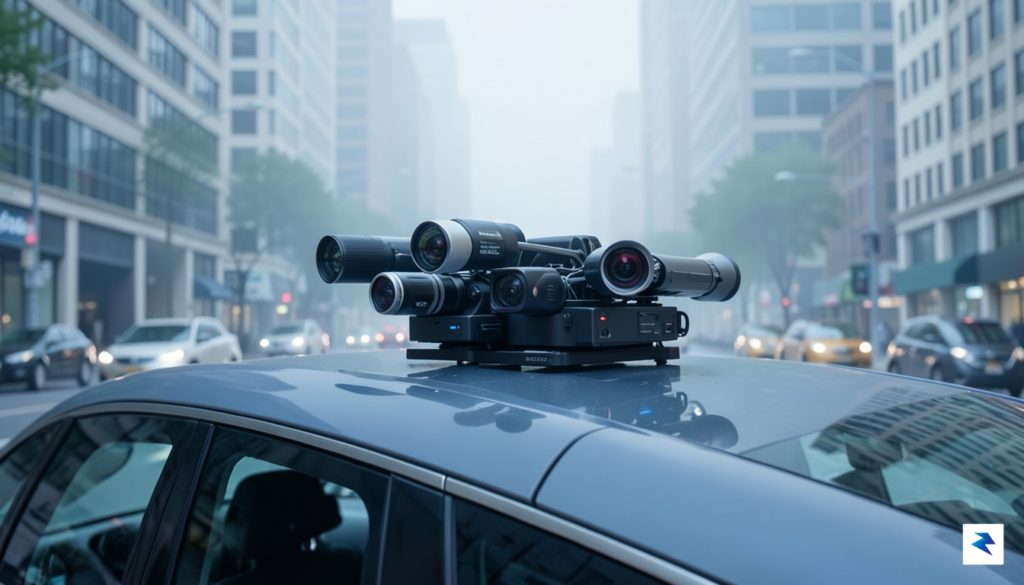
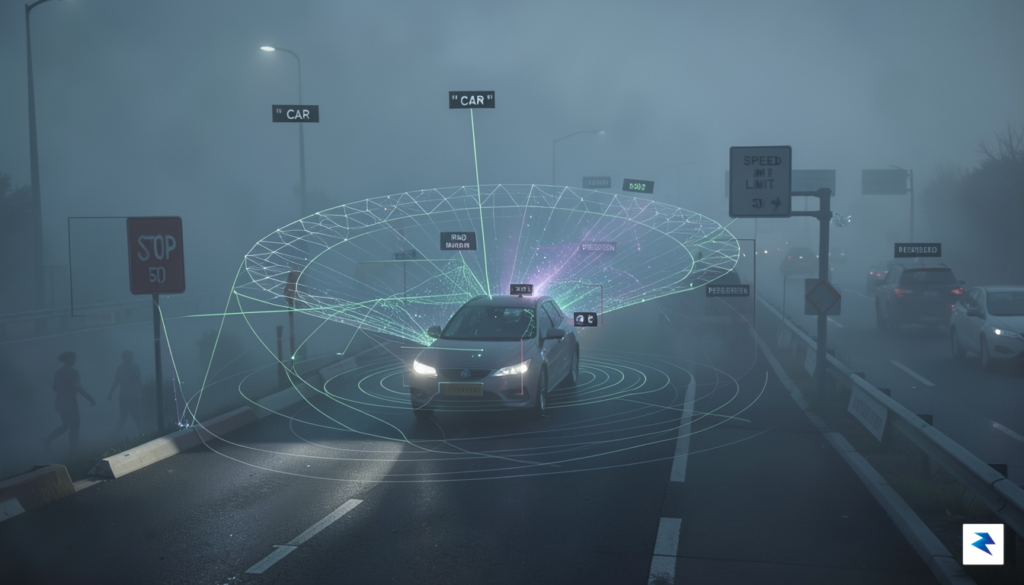
The core of the issue lay in how the heavy smoke interfered with the vehicle’s array of sensors. Autonomous vehicles rely on a diverse suite of technologies, including Lidar, radar, and high-resolution cameras, to build a precise, real-time understanding of their surroundings. Lidar beams bounce off objects to create 3D maps, radar penetrates certain atmospheric conditions, and cameras provide visual context. However, dense smoke, particularly dynamic and swirling plumes, can present a uniquely challenging scenario. It not only reduces visibility for cameras but can also scatter Lidar pulses in unpredictable ways and create false returns for radar, effectively creating a “fog” of data that the vehicle’s algorithms struggled to accurately interpret.
Consequently, the vehicle’s software system, designed to operate with a high degree of certainty about its environment, encountered data it couldn’t confidently classify or integrate into its predictive models. Instead of misinterpreting the obscured scene in a dangerous way, the system defaulted to a safe, albeit confused, state. This response is a critical safety design principle in autonomous systems: when faced with an uncertain or unidentifiable situation, the vehicle is programmed to prioritize safety, often by coming to a controlled stop or requesting human intervention, rather than proceeding with potentially flawed information. This particular incident highlighted a specific edge case where the software’s environmental understanding was compromised by an unforeseen atmospheric condition.
It is crucial to understand that this “recall” is fundamentally different from traditional automotive recalls that often involve physical components or manufacturing defects. In Zoox’s case, the solution is entirely software-based, delivered remotely through an over-the-air (OTA) update. This modern approach allows for rapid deployment of fixes and enhancements directly to the vehicle’s onboard computers, without the need for customers to bring their vehicles into service centers. The update specifically targets the perception and planning algorithms, enhancing their ability to robustly process sensor data in the presence of extreme environmental obscurities like dense smoke, ensuring that the vehicle can either navigate safely through or appropriately react to such conditions in the future.
This type of proactive safety measure is an indispensable part of the maturation process for autonomous driving technology. Every mile driven and every unusual scenario encountered provides invaluable data that helps engineers refine and strengthen the AI behind self-driving cars. Incidents like the smoke confusion, rather than being seen as failures, are critical learning opportunities that push the boundaries of the technology’s capabilities. They demonstrate the industry’s commitment to rigorously testing and improving systems against an infinite number of real-world variables, ultimately building more resilient and safer autonomous vehicles for widespread deployment. The transparency and swift action by Zoox underscore the industry’s dedication to safety as it navigates the complex path to fully autonomous transportation.

Autonomous vehicles rely on a sophisticated “sensor fusion” approach, blending data from cameras, radar, and lidar to construct a cohesive model of the physical world. While this multi-modal redundancy is designed to ensure safety, atmospheric anomalies like thick smoke, dense fog, or torrential rain introduce a form of “noise” that can overwhelm even the most advanced perception stacks. At a fundamental physical level, these environmental stressors act as a barrier to the precision required for high-speed navigation, forcing the vehicle’s onboard computer to distinguish between a genuine obstacle and mere particulate matter suspended in the air.
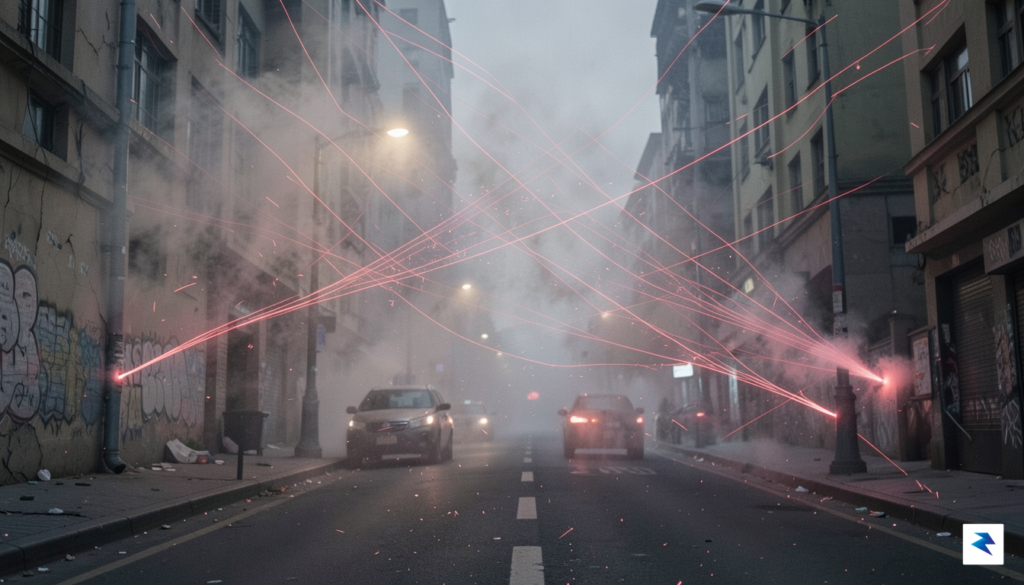
Lidar systems, which function by emitting rapid laser pulses and measuring the time it takes for them to bounce back, are particularly susceptible to this interference. When a laser pulse strikes a smoke particle, it may reflect prematurely, creating a “ghost” object or a cluttered cloud of data points that does not correspond to a solid barrier. Cameras face an entirely different set of challenges, as smoke reduces contrast and obscures the visual cues—such as lane markers or traffic signals—that algorithms depend on for path planning. Unlike a human driver, who can utilize contextual intuition to infer the presence of a road even when visibility is poor, an algorithm must translate these chaotic signals into a binary decision: Is this path safe to travel, or is there an imminent threat?
The core tension in autonomous development lies in the balance between sensitivity and false-positive filtering: if a system is too sensitive, it halts unnecessarily; if it is too filter-heavy, it risks ignoring real-world dangers hidden within the atmospheric clutter.
This struggle highlights the inherent trade-offs in modern robotics. Engineers must calibrate these systems to filter out sensor noise without compromising the vehicle’s ability to detect actual hazards. If a software stack is programmed to be overly cautious, it might interpret a cloud of dense smoke as a solid wall, triggering an emergency brake that could be dangerous to surrounding traffic. Conversely, if the noise-filtering threshold is set too high, the vehicle might fail to recognize a stalled car or a pedestrian obscured by the same haze. Bridging this gap requires not only better hardware but also more robust machine learning models capable of “seeing through” environmental interference, a feat that remains one of the most difficult hurdles in the quest for full Level 5 autonomy.
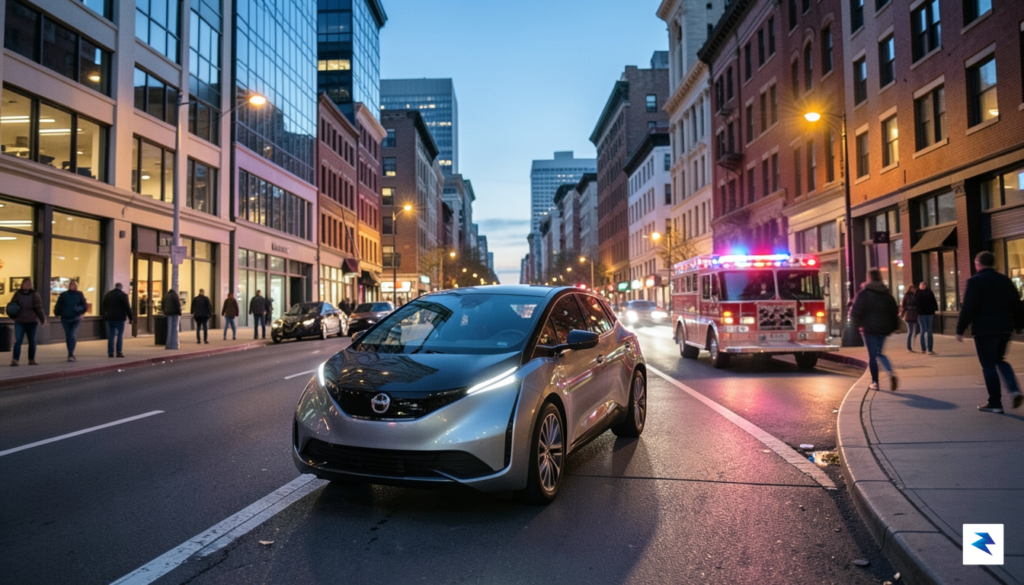
The recent software recall initiated by Zoox underscores a growing, critical tension between the rapid scaling of autonomous vehicle (AV) fleets and the fundamental requirements of public safety. When an autonomous system encounters an environment it cannot categorize—such as heavy smoke or the erratic movement of emergency personnel—it often defaults to an overly cautious state that can inadvertently obstruct those attempting to save lives. This friction has moved from the realm of theoretical edge cases to a pressing regulatory priority, as fire departments and police agencies report an increasing frequency of robotaxis failing to yield, blocking traffic lanes, or entering active emergency zones.
Recent warnings from the National Highway Traffic Safety Administration (NHTSA) have highlighted that these vehicles often struggle to interpret the nuances of human-directed emergency responses. While human drivers are trained to recognize the visual and auditory cues of sirens, flashing lights, and hand signals from officers, artificial intelligence systems often prioritize strict sensor data over contextual awareness. If a sensor suite becomes overwhelmed by environmental noise or visual obfuscation, the vehicle’s decision-making process can falter. This creates a dangerous scenario where a robotaxi might “freeze” in a roadway, effectively becoming an unintentional obstacle that forces first responders to navigate around technology that should, in theory, be programmed to defer to their authority.
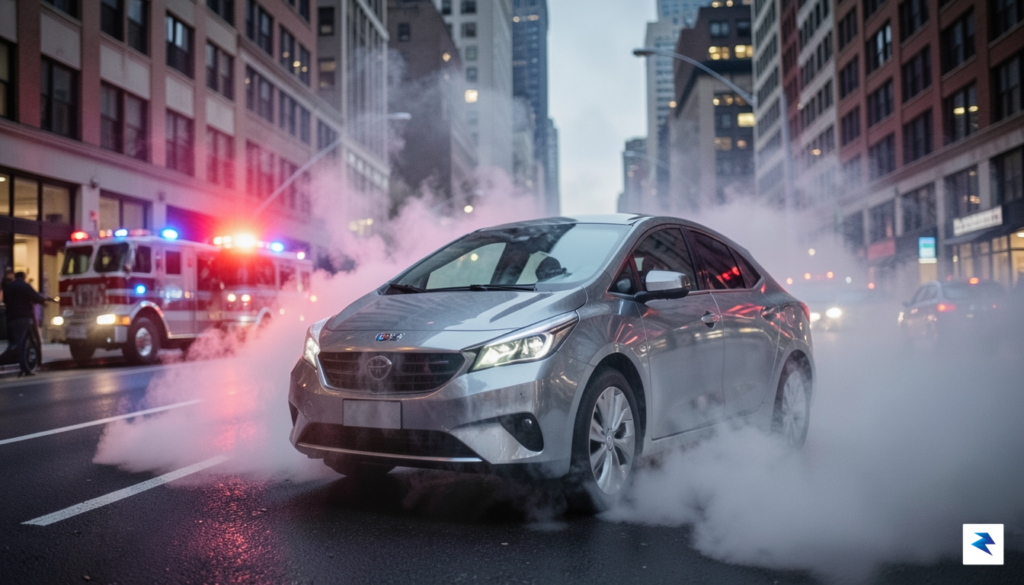
At the core of this challenge is the “OODA loop”—a decision-making framework consisting of Observe, Orient, Decide, and Act—that governs how both humans and machines navigate the world. In a typical driving environment, an AV excels at this loop because the inputs are predictable and the rules of the road are binary. However, during an emergency, the “Orient” phase becomes significantly more complex. When smoke, debris, or the chaotic movement of responders enters the frame, the AI may fail to orient itself correctly to the situation. If the software cannot interpret the “why” behind the scene, it cannot reach a safe “Decision” or “Act” effectively, leading to the erratic behaviors that have prompted safety recalls and increased scrutiny from traffic regulators.
The integration of autonomous systems into urban environments depends entirely on the machine’s ability to defer to human intuition during high-stress, non-routine emergency scenarios.
Ultimately, the industry must transition from training models on perfect, clear-weather driving data to incorporating the “messy” reality of urban emergencies. Until manufacturers can guarantee that their vehicles possess a fail-safe override that recognizes the presence of first responders regardless of visibility conditions, these machines will continue to pose a logistical challenge to public safety. As these fleets expand, the responsibility lies with developers to ensure that the logic governing their vehicles is not just efficient, but subservient to the immediate needs of those protecting the public.
The era of “beta-testing” autonomous vehicles on public roadways is rapidly coming to a close as the National Highway Traffic Safety Administration (NHTSA) shifts its posture from passive observation to active, rigorous oversight. For years, the autonomous vehicle industry operated under a philosophy of rapid iteration, where software patches were deployed with the agility of consumer electronics. However, the federal government has made it clear that a robotaxi is not a smartphone; it is a heavy, high-speed vehicle that requires a formal regulatory framework. By mandating that companies like Zoox issue official recalls for software-based anomalies, the NHTSA is effectively forcing the industry to treat code updates with the same gravity as mechanical repairs, such as fixing faulty brakes or steering columns.
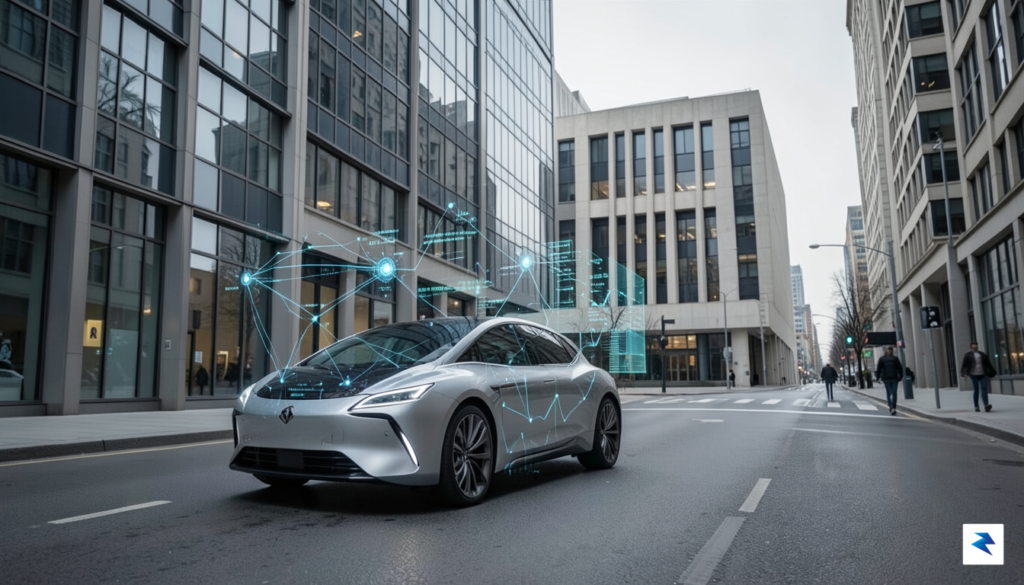
This intensified scrutiny is primarily driven by the agency’s need to track and aggregate data from an increasingly complex ecosystem of AV-related incidents. When a robotaxi becomes “confused” by environmental factors—such as heavy smoke, fog, or unusual road debris—it represents a failure in the perception-action loop that the NHTSA is determined to document. Through the use of Standing General Orders and mandatory reporting requirements, the agency is building a comprehensive database that identifies systemic patterns across different manufacturers. This proactive approach ensures that if a specific sensor suite or decision-making algorithm shows a propensity for failure, the agency can intervene long before those errors lead to widespread public harm.
The transition from experimental deployment to public transportation infrastructure requires a standard of accountability that matches the potential risks of the technology.
Ultimately, the implications of these mandatory reporting requirements extend far beyond mere administrative compliance; they are foundational to building long-term public trust. When manufacturers are legally required to disclose why their software was recalled and how they intend to rectify the underlying glitch, it fosters a culture of corporate accountability that was previously lacking in the “move fast and break things” tech culture. For the general public, knowing that a federal watchdog is monitoring these systems provides a necessary layer of security that encourages the adoption of self-driving technology. By institutionalizing these safety protocols, the NHTSA is not merely reacting to isolated glitches—it is establishing the bedrock rules of the road for the next century of autonomous transportation.
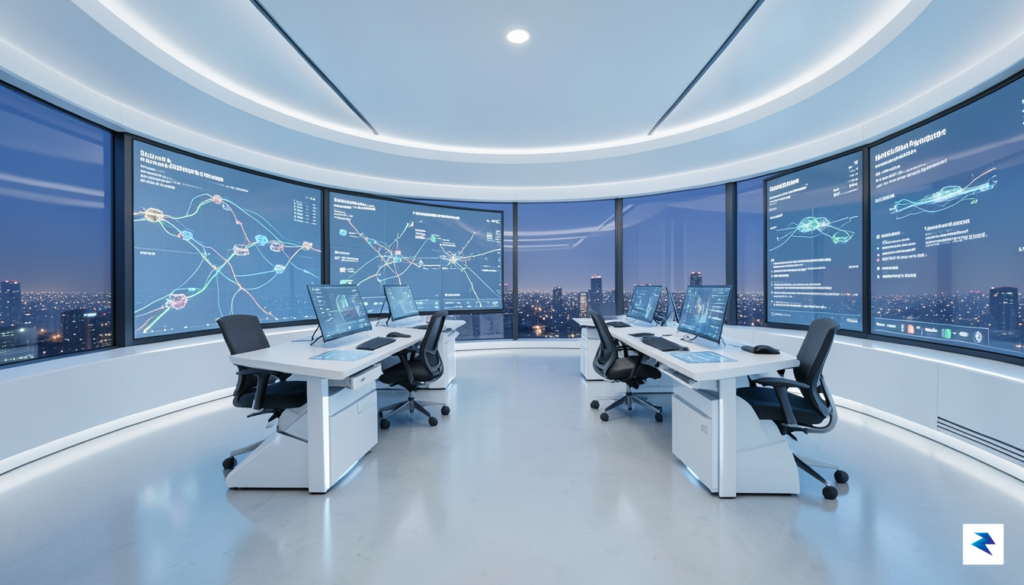
To achieve the level of reliability required for widespread, everyday adoption, autonomous driving systems must move beyond mastering routine navigation and begin tackling the chaotic reality of “edge cases”—those rare, unpredictable scenarios that defy standard driving patterns. The industry is currently undergoing a massive shift toward synthetic data training, where engineers create hyper-realistic virtual environments to subject AI models to millions of miles of extreme conditions. By simulating everything from thick forest fires and dense, obscuring smoke to rare debris patterns and erratic human behavior, companies can train their software to recognize and react to hazards that might only occur once in a decade on public roads. This digital training ground is essential, as it allows developers to refine decision-making logic without ever putting a physical vehicle or human passenger at risk.
Beyond training, the agility of modern fleets depends heavily on the power of over-the-air (OTA) updates to iterate on safety protocols in real time. When an anomaly is detected—such as the confusion caused by smoke in the recent Zoox incident—engineers can rapidly analyze the sensor logs, identify the specific failure point in the perception stack, and push a refined software patch to the entire fleet overnight. This creates a collective intelligence where every vehicle in the network effectively “learns” from the mistakes of one, significantly accelerating the path toward a more resilient autonomous ecosystem. By treating software as a living, breathing entity that evolves through constant refinement, manufacturers are successfully narrowing the gap between human-level intuition and machine-level precision.
The goal is not to eliminate every environmental variable, but to build a system that gracefully defaults to a safe state when the unexpected occurs.
Furthermore, the industry is increasingly prioritizing the standardization of emergency responder protocols to ensure that robotaxis communicate effectively during crises. As autonomous vehicles become more prevalent, it is vital that they are programmed to interpret and respond to the presence of fire trucks, ambulances, and police officers with absolute clarity, regardless of the visibility conditions. This involves not only visual object recognition but also vehicle-to-everything (V2X) communication, allowing the robotaxi to “talk” to emergency infrastructure. By codifying these behaviors across the entire sector, stakeholders are ensuring that autonomous systems don’t just act as independent actors, but as cooperative participants in a broader, safer, and more predictable public transportation network.
You must be logged in to post a comment.