
The Cat-and-Mouse Game: Anthropic vs. The Great Firewall

The accessibility of advanced artificial intelligence has become a defining battleground in the digital age, characterized by an ongoing tension between global tech leaders and restrictive regulatory environments. For companies like Anthropic, the decision to enforce strict geolocation blocks in China is not merely a technical preference; it is a calculated response to complex legal and geopolitical pressures. Navigating the intersection of international data privacy laws and China’s own stringent regulations—which demand that AI models undergo state-approved security assessments—creates a compliance minefield that most Western firms are currently unwilling or unable to traverse. By restricting service to specific regions, Anthropic effectively mitigates the risk of potential legal liability and avoids the complexities inherent in aligning their safety guidelines with local censorship requirements.
However, these administrative barriers have inadvertently sparked a sophisticated “cat-and-mouse” game that pits sophisticated network filtering against the ingenuity of Chinese power users. While Anthropic monitors traffic patterns and blacklists known proxy IP addresses, users have responded by deploying a diverse array of evasion tools, ranging from residential proxy services to custom-built virtual private networks (VPNs) designed to mimic legitimate, non-restricted traffic. This cycle of blocking and bypassing has created a fragile ecosystem where access is never guaranteed, yet the demand for high-performance Large Language Models (LLMs) remains unrelenting. For researchers, developers, and tech enthusiasts in China, the perceived necessity of tools like Claude often outweighs the friction of constantly rotating servers and configuring complex network tunnels.

The persistence of these bypass methods underscores a fundamental shift in the global tech landscape: when a tool offers a significant competitive or intellectual advantage, users will inevitably find a way to circumvent artificial borders, regardless of the difficulty involved.
The sheer technical persistence displayed by the user base highlights a deeper reality: the global pursuit of innovation is inherently borderless. When major AI providers impose geographic limitations, they are attempting to impose a traditional, state-centric model of service delivery onto a decentralized, border-agnostic technology. As the gap between the performance of domestic Chinese AI alternatives and international models like Claude continues to widen, the motivation for users to engage in these complex workarounds only intensifies. Ultimately, this underground movement is a testament to the fact that when high-performance AI is treated as a strategic asset rather than a globally available commodity, the resulting vacuum will almost always be filled by those willing to dismantle the barriers standing in their way.
Technical Workarounds: Beyond Standard VPNs

While basic virtual private networks have long been the first line of defense for users seeking to cross digital borders, they are increasingly ineffective against the sophisticated heuristics employed by modern AI platforms. Standard VPN providers often rely on massive data centers with well-documented IP ranges that are easily flagged and blocked by automated security filters. To circumvent these robust gatekeeping measures, tech-savvy users in China are migrating toward more resilient infrastructure, specifically prioritizing residential IP proxies. Unlike public data center IPs, residential proxies route traffic through genuine home internet connections, making the connection appear indistinguishable from a legitimate user residing in a permitted region, such as the United States or Singapore.
The transition toward decentralized Virtual Private Servers (VPS) represents another significant leap in technical sophistication. Rather than relying on third-party services that may inadvertently expose a user’s true location or identity, many are opting to deploy their own instances on cloud infrastructure providers. By manually configuring these servers with bespoke protocols—such as V2Ray, Shadowsocks, or Trojan—users can obfuscate their traffic to mirror standard HTTPS web browsing patterns. This process makes it incredibly difficult for deep packet inspection tools to distinguish between a casual user navigating a secure website and someone attempting to bypass a geolocation-based firewall. These custom setups allow for a level of granular control that off-the-shelf software simply cannot match.

The Persistence of Bespoke Configurations
Reliability is the primary driver behind this shift, as maintaining a persistent session with an AI model requires a stable and untainted connection. Common public proxies often suffer from high latency and frequent connection drops, which can lead to account flags or session timeouts that disrupt the user experience. By contrast, bespoke configurations offer a dedicated, “clean” IP address that is not shared among thousands of other users. This exclusivity is crucial, as it prevents the “bad neighbor” effect where a single malicious user on a shared server can lead to the entire IP range being blacklisted by the target platform.
True technical resilience in this space is no longer about hiding traffic, but about making it appear as mundane and legitimate as possible to the watchful eyes of AI security gatekeepers.
Ultimately, the arms race between AI developers and bypassers has forced a move toward infrastructure that prioritizes stealth and consistency over mere concealment. These advanced routing techniques, while requiring a higher degree of technical literacy, provide the stability necessary for deep research and creative tasks that Claude facilitates. As gatekeeping mechanisms continue to evolve, the community remains one step ahead by favoring bespoke, self-hosted solutions that effectively mask the digital footprint of the user, ensuring that access remains fluid and uninterrupted despite the tightening of regional restrictions.
The Risks of Sourcing Identities and Accounts
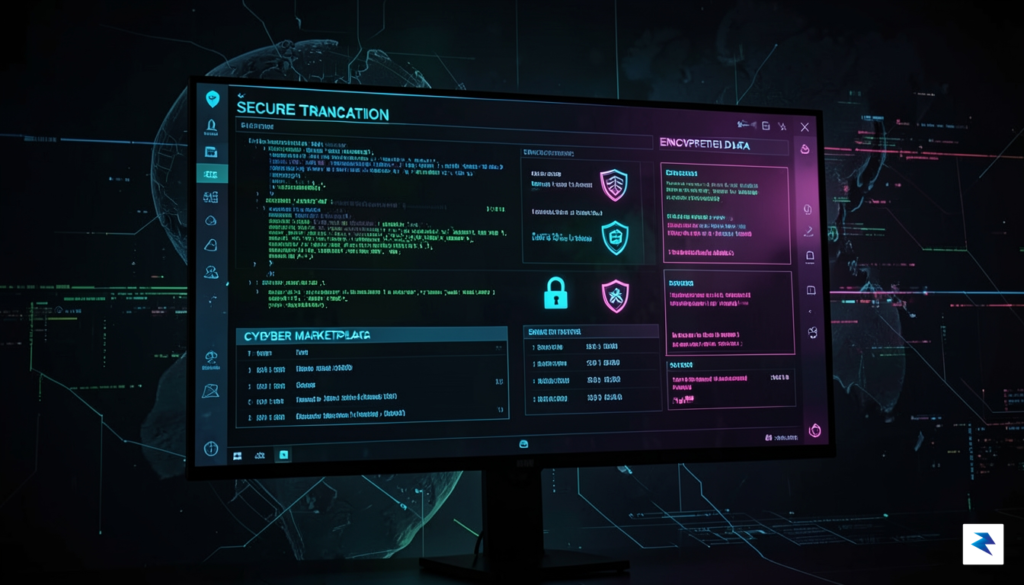
The hunger for Claude’s advanced reasoning capabilities has birthed a sprawling, unregulated marketplace operating primarily through encrypted messaging apps like Telegram. In these digital shadow markets, brokers offer everything from pre-verified accounts to “complete identity kits” that allow users to bypass rigorous know-your-customer (KYC) protocols. While these services provide a convenient shortcut for those frustrated by regional limitations, they introduce severe security vulnerabilities that often go overlooked by the average consumer. By engaging with these unvetted third parties, users are not merely circumventing software restrictions; they are effectively handing over their digital autonomy to anonymous entities whose primary motivation is profit rather than privacy.
At the heart of this risk is the systematic harvesting of Personally Identifiable Information (PII). When a user purchases a “verified” account, they are often required to submit sensitive data—such as passport scans, utility bills, or facial recognition snippets—to a broker who promises to interface with AI verification systems on their behalf. Once this data is transmitted, the user loses all control over how that information is stored, sold, or repurposed. Security researchers have frequently observed that these identity kits are often recycled across multiple platforms, leading to long-term consequences such as identity theft, unauthorized financial activity, or the creation of fraudulent profiles in the user’s name that can persist for years.
The reliance on underground brokers transforms a simple software access issue into a permanent data vulnerability; once your identity is leaked in these circles, it becomes a commodity that can be traded indefinitely by bad actors.
Beyond the immediate threat of identity theft, there is the persistent danger of account hijacking and data exfiltration. Because these accounts are created by third parties, the original broker often retains secondary access or recovery credentials, allowing them to seize control of the account at any moment. This is particularly treacherous for users who rely on Claude for professional workflows or sensitive research, as a hijacked account can result in the loss of months of proprietary data and conversation history. Furthermore, these brokers often embed malicious scripts or tracking pixels within the browser environments they suggest for accessing the AI, potentially turning a productivity tool into a vector for malware infections that compromise the user’s entire local machine.
Finally, the financial landscape of this underground economy is inherently predatory and devoid of consumer protections. Transactions are almost exclusively conducted via anonymous cryptocurrencies, leaving users with zero recourse if an account is banned, fails to function, or is reclaimed by the seller shortly after purchase. This “black market” model relies on a cycle of churn where sellers benefit from the rapid suspension of accounts, forcing users to repeatedly pay for new access. Ultimately, the cost of these workarounds extends far beyond the price of a monthly subscription; it is a calculated gamble with one’s personal security, financial stability, and long-term digital footprint.
The Human Element: Why Chinese Users Prioritize Claude

For many Chinese tech professionals and creative workers, the grueling process of bypassing geolocation restrictions—involving specialized VPNs, virtual private servers, and international phone verification—is not merely a technical hobby; it is a calculated investment in their own productivity. While domestic alternatives like Baidu’s Ernie Bot or Alibaba’s Qwen have made significant strides, users frequently find these models hampered by rigid content guardrails and an over-reliance on standard datasets. Claude, particularly the 3.5 Sonnet iteration, has garnered a reputation for possessing a superior “reasoning edge.” Developers report that Claude handles complex debugging tasks and architectural planning with a level of syntactic nuance that local models often struggle to replicate, making it an indispensable partner for those working in high-stakes software environments.
Beyond pure coding proficiency, the appeal of Claude lies in its sophisticated multilingual capabilities and its unique approach to creative expression. Many Chinese users find that while domestic LLMs are highly efficient at executing rote tasks, they often suffer from a “canned” quality in their writing, reflecting the heavy-handed censorship filters that frequently force models to pivot toward safe, neutral, or state-aligned narratives. Claude, by contrast, offers a more flexible and nuanced conversational partner that can navigate complex, abstract topics without defaulting to generic boilerplate responses. This allows for a deeper level of brainstorming, enabling users to refine their English-language drafts or explore creative writing concepts that are often flagged or restricted on domestic platforms.

The motivation for circumventing these barriers is also deeply rooted in professional development and the desire to stay competitive on a global stage. In an era where AI literacy is becoming a baseline requirement for career advancement, relying solely on local tools can create a “knowledge silo” that limits a user’s ability to interact with the broader international tech ecosystem. By mastering the use of Claude, Chinese professionals ensure that they are operating with the same cognitive leverage as their counterparts in Silicon Valley or London. This is particularly vital for those involved in international research, cross-border digital marketing, or global open-source software development, where the ability to generate culturally fluent, high-context content is a distinct professional advantage.
The frustration with local censorship isn’t just about politics; it’s about utility. When an AI is tuned to be overly cautious, it stops being a creative partner and starts being a bureaucratic filter. Users turn to Claude because it treats them like professional peers, not like children who need to be shielded from complex or challenging topics.
Ultimately, the persistence of these users speaks to a growing demand for uncensored, high-fidelity intelligence. Even with the inherent risks of account bans or connection instability, the trade-off is deemed worth it for the sheer quality of the output. When a user can iterate on a piece of code or a complex logical argument without the constant disruption of “content policy” warnings, the workflow becomes significantly more fluid. For the Chinese user, Claude represents a window into a more open and versatile digital experience, providing the essential tools required to bridge the gap between local constraints and global innovation standards.
The Future of AI Access and Regulatory Friction

The ongoing cat-and-mouse game between AI providers and users in restricted regions is unlikely to remain a permanent state of affairs, as it highlights a fundamental tension between the borderless nature of generative technology and the rigid boundaries of state sovereignty. While current workarounds—such as sophisticated VPN chains, virtual private servers, and SMS verification services—have proven effective, they are inherently fragile and subject to sudden obsolescence. As AI companies like Anthropic continue to harden their security infrastructure, the barrier to entry will inevitably rise, pushing these access efforts into even more obscure corners of the internet. This trajectory suggests that the current era of “clandestine access” is merely a transitional phase, eventually giving way to a more formal, albeit heavily regulated, landscape for AI deployment.

Looking ahead, we are likely to see a shift from localized evasion tactics to a broader geopolitical standoff regarding data sovereignty and information control. Regulators are increasingly viewing the unfiltered deployment of large language models as a challenge to domestic stability, which may lead to more aggressive “digital iron curtains.” Consequently, international AI firms will eventually be forced to choose between total withdrawal from specific markets or the adoption of “sovereign AI” models—versions of their technology that are specifically modified to comply with local censorship laws and reporting requirements. This would effectively end the era of a singular, global AI experience, replacing it with a fragmented ecosystem where the “intelligence” of a model is tethered to the political geography of its user.
The future of global AI will not be defined by who has the most powerful model, but by who has the legal and infrastructure clearance to deploy it within the confines of national policy.
The broader implication of this fragmentation is a fundamental shift in how we perceive the open web. If the digital world continues to splinter along nationalistic lines, the dream of a universal knowledge base powered by AI may dissolve into a series of isolated, siloed networks. For the average user, this means that access to specific tools will depend increasingly on their physical location, turning digital literacy into a matter of navigating complex regulatory hurdles rather than simply mastering the technology itself. Ultimately, the struggle to bypass these restrictions is not just about accessing a specific chatbot; it is a precursor to a much larger debate on whether the future of global technology will be truly open, or if it will be permanently partitioned by the walls of regional policy.