
The Underground Fight to Access Claude: How Chinese Users Bypass AI Restrictions
The Cat-and-Mouse Game: Anthropic vs. The Great Firewall The accessibility of advanced artificial intelligence has become a defining…


The modern aviation industry operates on a razor-thin margin of error, relying on an intricate, globalized network of energy logistics that has long been taken for granted. At the heart of this system lies a profound dependency: major refining hubs across Asia—the primary engine room for global jet fuel production—are tethered to the steady flow of crude oil from the Persian Gulf. When geopolitical instability erupts in the Middle East, this umbilical cord is suddenly constricted, forcing refineries to scramble for alternative feedstocks that are rarely as accessible or cost-effective. The recent escalation of conflict involving Iran has served as a brutal reminder that these supply lines are not permanent fixtures, but rather fragile conduits vulnerable to both physical blockade and the volatile whims of international diplomacy.

Shipping disruptions act as a force multiplier for this instability, turning logistical inconveniences into existential threats for fuel distributors. As tankers are forced to reroute to avoid conflict zones or face surging insurance premiums in contested waters, the “just-in-time” model of jet fuel distribution begins to fracture. This lean inventory strategy, designed to maximize efficiency and minimize storage overhead, leaves virtually no buffer for systemic shocks. When a tanker is delayed by even a few days, the cascading effect hits downstream airports almost immediately, leading to frantic sourcing efforts and, inevitably, the sharp price spikes that currently threaten to erode airline profitability across the globe.
The reliance on a single, pressurized geographic chokepoint for the world’s aviation fuel means that any spark in the Middle East is instantly felt at boarding gates thousands of miles away.
Ultimately, the current crisis highlights the dangerous disconnect between the hyper-efficient demands of global air travel and the unpredictable nature of regional power struggles. Refineries are now finding themselves in a position where they must pivot their procurement strategies in real-time, often bidding against each other for limited barrels from more stable, yet higher-priced, regions. This scramble not only highlights the lack of redundancy in our current fuel infrastructure but also forces a difficult conversation about energy security. For the aviation sector, the era of assuming an uninterrupted, inexpensive supply of jet fuel is effectively over, replaced by a new reality where resilience must be bought at a significant premium.
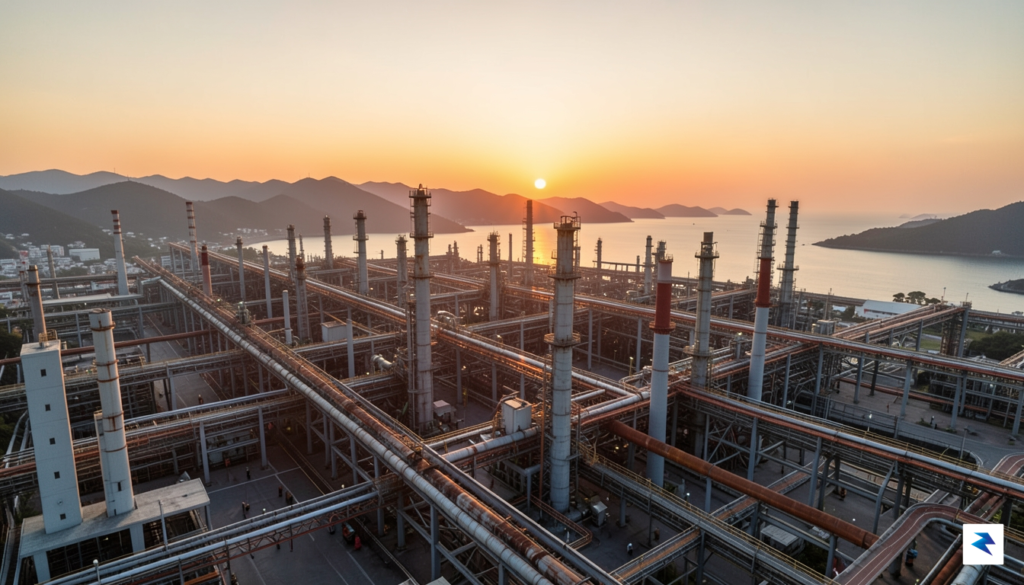
Sprawled across the industrial landscape of South Korea, the Ulsan refinery stands as one of the largest and most sophisticated petrochemical complexes on the planet. This facility is far more than a local manufacturing hub; it functions as a critical global artery, processing massive volumes of crude oil into the high-octane distillates that keep international commerce moving. Its strategic proximity to major maritime trade routes has allowed it to become a primary supplier for energy-hungry markets across the Pacific Ocean, effectively acting as an extension of the domestic fuel infrastructure for nations thousands of miles away.
For the United States, particularly the West Coast, the Ulsan refinery is an indispensable partner in maintaining aviation stability. When regional refineries in California and Washington face maintenance delays or regulatory constraints, they often rely on imports to bridge the gap in jet fuel availability. Ulsan fills this void with remarkable efficiency, shipping refined Jet A-1 fuel across the ocean to feed the heavy traffic at major hubs like Los Angeles, San Francisco, and Seattle. Without this consistent influx of foreign-refined product, the intricate balance of supply and demand required to keep commercial airliners on schedule would quickly collapse, leading to immediate localized shortages.
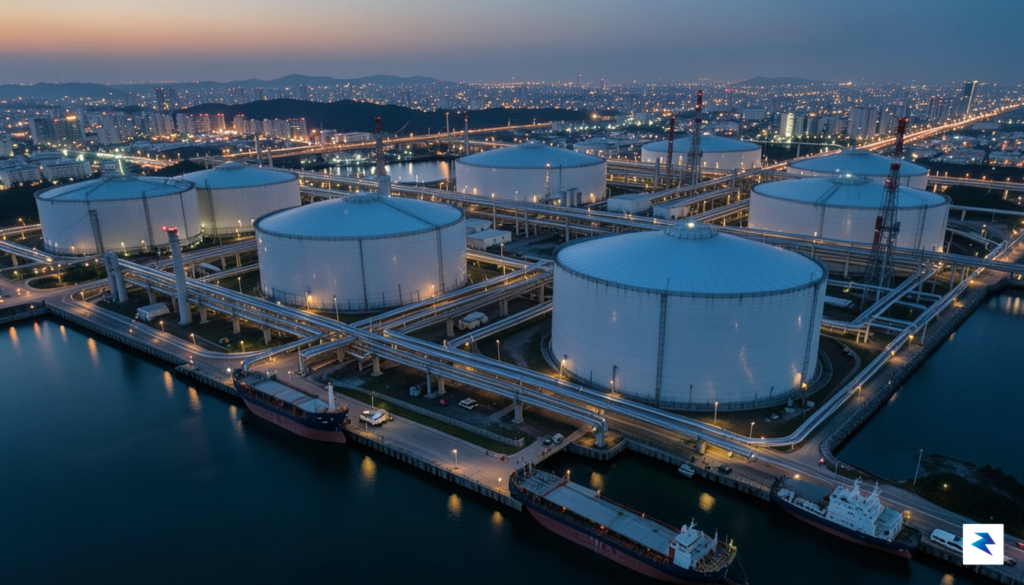
The refinery’s importance is underscored by the specific technical grades of fuel it produces, which are essential for long-haul commercial aviation. Ulsan’s advanced hydrocracking capabilities allow it to churn out high-specification jet fuel that meets the rigorous ASTM International standards required for modern jet engines. These fuels must be exceptionally stable under varying temperature pressures and free from contaminants that could compromise flight safety at high altitudes. Consequently, the facility does not merely export surplus oil; it provides a specialized, engineered commodity that is vital for the operational integrity of the entire trans-Pacific flight network.
The reliance on a single, massive point of production creates a delicate vulnerability in the global supply chain: when the flow of feedstock to Ulsan is disrupted, the downstream consequences are felt in every airport terminal across the American West.
As the current geopolitical tensions in the Middle East ripple through the energy markets, the vulnerability of this supply chain has been thrust into sharp relief. Because the Ulsan refinery operates on razor-thin margins to maintain competitive pricing, any interruption in its crude oil feedstock—often sourced from Middle Eastern fields—forces an immediate recalibration of its export strategy. When Ulsan struggles to source or refine effectively, the resulting scarcity of jet fuel isn’t just a logistical headache for the refinery; it becomes a direct threat to flight capacities, cargo transport schedules, and the overall reliability of the Pacific aviation corridor.

For refineries that have spent decades optimizing their infrastructure for specific grades of Middle Eastern crude, the sudden, violent disruption in global supply chains acts as a brutal stress test. Many facilities are calibrated to process “sour” crude—oil with high sulfur content—which flows abundantly from the Persian Gulf. Transitioning to “sweet” crude from the United States or heavier, complex blends from Latin America is not as simple as swapping one supplier for another. This shift requires a fundamental recalibration of distillation units and hydrotreaters, as different chemical profiles can drastically alter the yield of high-value products like jet fuel and kerosene. When a refinery is forced to change its feedstock mid-stream, it risks operational inefficiencies that can lead to equipment corrosion, suboptimal output, and, in extreme cases, temporary shutdowns for retooling.
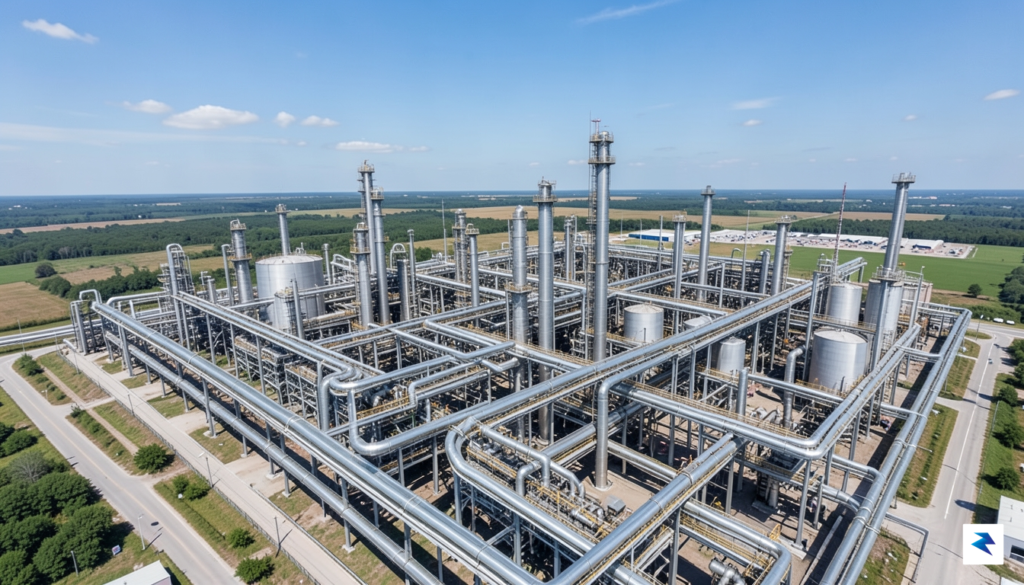
The strategic move toward diversification also forces leadership to weigh the precarious trade-offs between long-term security and immediate fiscal agility. Relying on long-term supply contracts has historically provided a buffer against price volatility, ensuring that refineries receive a steady flow of crude at predictable intervals. However, when geopolitical tensions render these contracts unreliable or geographically restricted, procurement teams must turn to the spot market. While the spot market offers the flexibility to source barrels from West Africa or the North Sea, it exposes the refinery to extreme price swings and logistical bottlenecks. Securing a steady stream of tankers in a panicked market creates a high-stakes environment where every logistics delay ripples directly into the price of jet fuel at the pump.
The structural transition away from traditional crude sources is not merely a financial decision; it is a complex engineering challenge that dictates the long-term viability of national energy security.
For nations like South Korea, which remains heavily dependent on energy imports, this shift carries profound diplomatic weight. Diversifying away from Middle Eastern crude is an economic necessity, yet it requires a delicate balancing act of foreign policy. South Korea must maintain strong energy partnerships with the United States and emerging exporters in Latin America without burning bridges in the Gulf. This transition inevitably pulls the country deeper into global geopolitical arenas, where energy procurement strategies are now inextricably linked to security alliances. As the refinery sector scrambles to adapt, it becomes clear that the future of aviation fuel supply depends as much on diplomatic maneuvering as it does on the technical prowess of the engineers managing the flow of oil through the pipes.

Modern oil refineries are not merely industrial vats; they are hyper-optimized, finely tuned chemical engines designed to process specific “recipes” of crude oil. When geopolitical instability disrupts supply chains, refineries are often forced to switch to alternative grades of crude that their current infrastructure was never calibrated to handle. The primary challenge lies in the variance between “sweet” and “sour” or “light” and “heavy” crudes. Light, sweet crudes—historically preferred for jet fuel production—contain fewer impurities like sulfur and flow more easily through distillation columns. When refineries are forced to pivot to heavier, sourer alternatives, the distillation process becomes significantly more volatile, often leading to lower yields of high-value kerosene-based jet fuel and an excess of unwanted heavy residues.
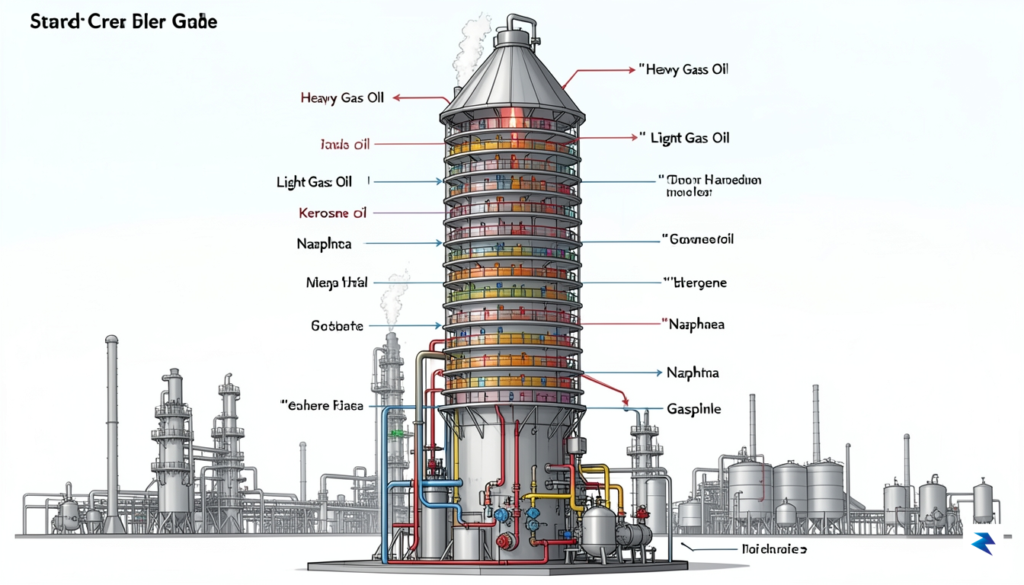
Adapting to these shifts is far from a simple valve adjustment; it requires substantial capital investment and complex engineering retrofits. To process a different grade of crude, engineers must often overhaul the atmospheric distillation units, install new hydrotreaters to strip away higher sulfur concentrations, and recalibrate cooling systems to manage different thermal outputs. These retrofits are incredibly time-consuming, often requiring weeks of scheduled downtime that further restricts the supply of jet fuel during a period of market volatility. Furthermore, there is a tangible risk that even after these modifications, the refinery may fail to achieve the same production volume, leading to a tightening of global fuel supplies that filters down to airport tarmacs worldwide.
The margin for error in refinery chemistry is razor-thin; even a slight miscalculation in feedstock compatibility can lead to equipment fouling or, in worst-case scenarios, catastrophic structural failure within the distillation column.
Beyond the internal engineering of the refinery, the logistical network surrounding these facilities is currently facing immense strain. Tanker scheduling, which usually operates on a “just-in-time” delivery basis, is being severely hampered by erratic arrivals of non-standard crude oil shipments. Port infrastructure, which is built to handle specific vessel sizes and pumping pressures, frequently becomes a bottleneck when refineries are forced to source oil from different global regions. These logistical hurdles create a domino effect: if a tanker is delayed by even a few days due to port congestion or rerouting, a refinery may be forced to slow down or temporarily shutter its processing units to prevent running dry. This combination of chemical incompatibility and logistical gridlock forms a perfect storm that complicates the recovery of jet fuel production in the wake of sudden market shocks.

The recent volatility triggered by geopolitical unrest in the Middle East has served as a harsh wake-up call for the aviation industry, exposing the structural fragility of a supply chain tethered almost exclusively to crude oil. As refineries scramble to stabilize current operations, the conversation has shifted toward a more permanent paradigm: energy independence through diversification. Sustainable Aviation Fuel (SAF) has emerged not merely as an environmental imperative, but as a critical strategic hedge against the unpredictable price swings inherent in fossil fuel markets. By decoupling aviation energy from the volatility of Middle Eastern crude, the industry is increasingly viewing bio-based and synthetic fuels as a way to lock in long-term supply stability, even if the initial cost of transition remains significantly higher than traditional kerosene.

While industry innovation provides the engine for change, government policy acts as the necessary framework for widespread adoption. We are witnessing a global pivot where national governments, wary of the economic damage caused by sudden energy shocks, are mandating higher blending requirements and offering substantial subsidies for renewable fuel infrastructure. These policies are designed to create a “strategic buffer,” ensuring that domestic production capabilities are capable of meeting core aviation needs regardless of whether trade routes in the Strait of Hormuz are compromised. By incentivizing the domestic manufacturing of SAF, nations are effectively turning their energy security into a matter of national defense, shifting the focus from volatile global imports to reliable, localized supply chains.
The transition to a resilient aviation energy sector will inevitably be defined by higher operational costs in the short term, but these expenses are increasingly viewed as an insurance premium against the catastrophic disruption of global flight networks.
Ultimately, the aviation sector is moving toward a multi-polar energy landscape where dependency on a single geographic region is no longer a viable business model. This evolution requires substantial capital expenditure in infrastructure—modernizing refineries to handle feedstocks ranging from agricultural waste to captured carbon—and a rethinking of how fuel is stored and distributed. While the road ahead promises to be more expensive, the industry recognizes that the cost of inaction is far higher. As refiners adapt to this new reality, the focus is shifting from “just-in-time” delivery to “just-in-case” resilience, ensuring that the global skies remain open, even when geopolitical tensions threaten the stability of the traditional oil market.
You must be logged in to post a comment.