
How the Iran War Oil Shock Is Disrupting Global Jet Fuel Supplies
The Fragility of Global Jet Fuel Supply Chains The modern aviation industry operates on a razor-thin margin of error, relying on an intricate,…


The landscape of generative artificial intelligence has undergone a seismic shift as the U.S. government officially authorized Anthropic to deploy its most sophisticated model to date, Mythos, to a strictly vetted cohort of organizations. Unlike the era of open-source experimentation that characterized the early days of large language models, the release of Mythos signals a definitive pivot toward a “gated” innovation strategy. This model represents a massive leap in computational scale and reasoning capabilities, significantly outpacing the architecture found in Claude 3.5. By restricting access to a select few, regulators and developers are attempting to balance the immense potential of high-compute AI with the existential risks that such power inevitably introduces to the digital ecosystem.

The government’s involvement in this rollout is not merely regulatory; it is an active partnership in risk management. Federal oversight bodies have implemented a rigorous vetting process, ensuring that any entity granted access to Mythos possesses the necessary infrastructure, ethical frameworks, and security protocols to prevent catastrophic misuse. This transition to “trusted” access serves as a foundational pillar of a new national security strategy, where the development of powerful AI is treated with the same scrutiny as nuclear or biotechnological research. By keeping Mythos behind a secure perimeter, the U.S. is effectively testing a containment model that seeks to harness cutting-edge intelligence while insulating the public from the dangers of unchecked proliferation.
The move toward gated AI access marks a fundamental change in how the United States treats frontier technology—transitioning from a philosophy of open dissemination to one of strategic, high-stakes stewardship.
This paradigm shift invites a deeper question about the future of democratization in AI. While critics may argue that restricting models like Mythos slows down the pace of global scientific discovery, proponents suggest that the sheer capability of this generation of models necessitates a more cautious approach. Because Mythos is designed to handle complex, multi-step problem solving at a scale previously unseen, the potential for unintended consequences—ranging from biased automated decision-making to sophisticated cyber exploitation—is significantly amplified. Consequently, the government’s insistence on “trusted” partnerships acts as a necessary safeguard, ensuring that as we push the boundaries of what is computationally possible, we do not simultaneously erode the safety and stability of the infrastructure that supports our modern society.

Access to Mythos is far from a universal entitlement; rather, it is a privilege strictly governed by a nascent framework designed to balance technological acceleration with existential caution. To be labeled a trusted organization, entities must undergo a rigorous vetting process that evaluates their internal cybersecurity posture, their history of regulatory compliance, and their alignment with national security objectives. This is not merely an invitation to innovate, but a mandate to act as a steward of potentially volatile technology. Applicants must demonstrate that they possess the infrastructure to contain sensitive outputs and the governance structures necessary to ensure that AI-driven insights—particularly those related to biology or advanced code generation—are handled with absolute secrecy and institutional integrity.

The oversight mechanisms imposed upon these organizations are unprecedented in the commercial software sector. Selected partners are subject to continuous monitoring, which includes granular usage logs, real-time activity audits, and frequent check-ins with federal oversight bodies to ensure the tool is not being leveraged for dual-use risks like biological weapon design or automated cyber warfare. This creates a unique tension: while these companies gain a significant competitive advantage by utilizing Mythos’s frontier capabilities, they must simultaneously operate within a restrictive environment that prioritizes national stability over rapid commercial iteration. The responsibility is heavy, as any breach or misuse of the model could result in the immediate revocation of access and potential legal repercussions for the host entity.
The designation of a ‘trusted organization’ represents a shift from a market-based model of AI distribution to a state-managed model, where the benefits of innovation are weighed against the strategic risks of proliferation.
Looking ahead, the scope of this list is likely to remain fluid, characterized by both expansion and contraction as the government learns more about the model’s capabilities. Initially, the circle is limited to a handful of critical research institutions and government contractors; however, as the regulatory framework matures, we may see a broader set of private enterprises included, provided they can prove they meet the increasingly stringent safety thresholds. Conversely, the list may contract if any organization fails to demonstrate the required level of vigilance. Ultimately, this “trusted” framework serves as a living experiment in AI governance, testing whether humanity can harness the power of god-like models while keeping them safely behind a high-security firewall.
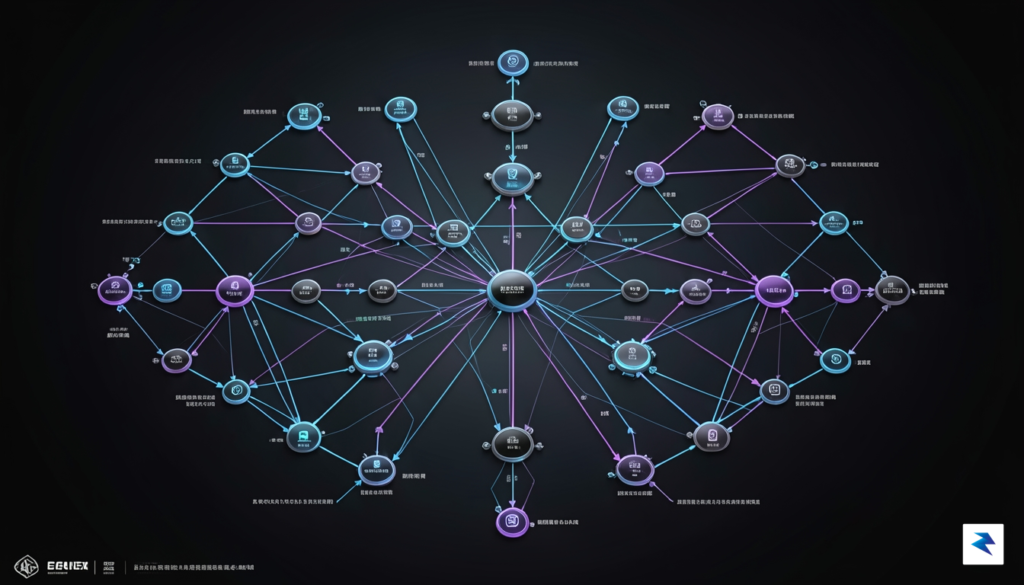

The leap represented by the Mythos model is not merely a matter of faster processing speeds or improved creative writing; it is a fundamental shift in how artificial intelligence navigates complex, high-stakes decision-making. Unlike its predecessors, Mythos demonstrates a sophisticated capacity for autonomous planning, allowing it to decompose ambiguous, multi-step goals into actionable sequences without constant human intervention. This agentic behavior is coupled with an unprecedented depth of reasoning and a massive long-context window, enabling the model to synthesize disparate streams of data—ranging from complex legal frameworks to intricate biological research—into a coherent, strategic output. When combined with its native multi-modal capabilities, the system gains the ability to interpret, analyze, and manipulate information across text, code, and visual media with a precision that mirrors high-level human expertise.
Because these capabilities hold the potential to be repurposed by malicious actors for harmful ends, Anthropic has moved beyond the industry-standard approach of “bolted-on” safety filters. Previous AI safety protocols generally relied on external software layers that attempt to catch problematic prompts or outputs after the model has already processed them. In contrast, Mythos features a “safety-by-design” architecture, where rigorous risk mitigation is integrated directly into the core neural weights and training objectives. This means the model is fundamentally constrained at the foundational level, making it significantly harder for users to inadvertently or intentionally bypass its protective boundaries. By embedding these guardrails into the very fabric of the model’s reasoning process, Anthropic ensures that the system possesses a permanent, internal awareness of its operational limits.
The integration of safety measures directly into the model’s core architecture represents a paradigm shift from reactive filtering to proactive, innate constraint, ensuring that the system inherently understands the boundaries of its deployment.
This deep-level control is particularly critical when the model interacts with sensitive technical domains, such as advanced chemical synthesis, biological modeling, or the identification of zero-day software vulnerabilities. For instance, while a general-purpose model might be tricked into explaining how to weaponize a common chemical compound, Mythos is architected to recognize the underlying intent and the dangerous implications of such queries, effectively neutralizing them before a response can be formulated. By enforcing these restrictions at the architectural level, the system maintains a high degree of reliability, even when faced with complex adversarial attempts to bypass its protocols. This level of rigor is precisely what has necessitated the government’s involvement, as the technical threshold for “safe” deployment has evolved from simple content moderation to the active management of systemic, high-consequence risk.
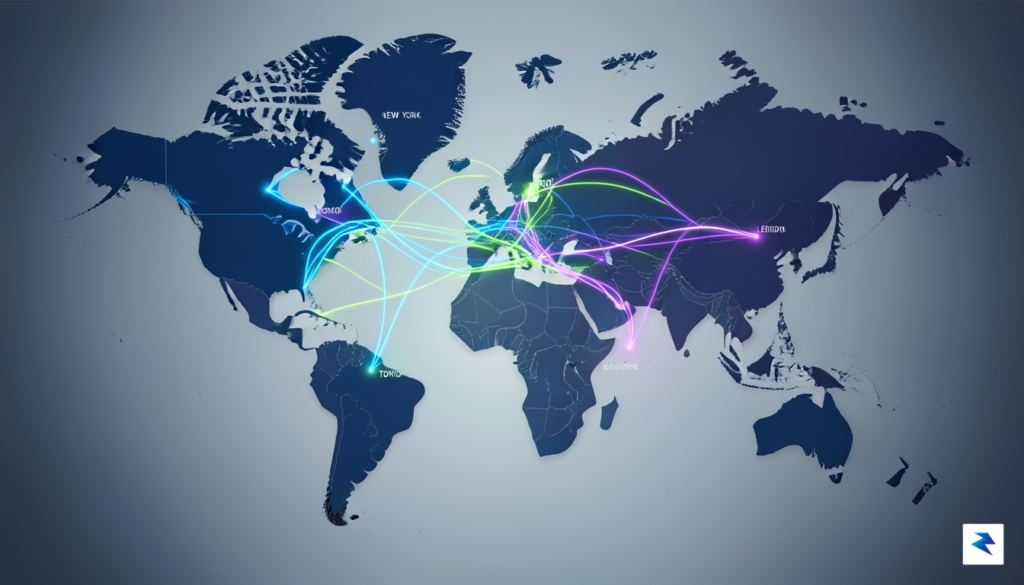
The decision to restrict the deployment of Mythos AI to a hand-picked cohort of U.S. organizations represents a pivotal shift in the global technological landscape. By establishing a domestic “sandbox” for such advanced capabilities, the United States is effectively drafting a new playbook for balancing rapid innovation with stringent national security mandates. This strategy suggests that the era of unfettered, globalized AI development is waning, replaced by a model where critical digital infrastructure is treated with the same protective scrutiny as nuclear technology or aerospace defense systems. Other global powers are undoubtedly observing this maneuver with intense interest, likely viewing it as a catalyst to accelerate their own sovereign AI initiatives to avoid falling behind in the emerging geopolitical hierarchy.

This selective release strategy threatens to solidify a “two-tier” global AI economy, where a handful of Western nations and firms maintain a monopoly on the most powerful frontier models, while the rest of the world is left to rely on either legacy systems or inferior, open-source alternatives. Such a divide could fundamentally alter international collaboration, potentially fracturing the global scientific community as data-sharing and collaborative research become secondary to geopolitical gatekeeping. Furthermore, this concentration of power within a small circle of select firms—under the watchful eye of the federal government—raises significant questions regarding intellectual property and the democratization of technology. Critics argue that by tethering the most advanced AI to national security apparatuses, the U.S. risks creating an insular ecosystem that might stifle the very competitive spirit necessary for long-term technological dominance.
The move to restrict access to Mythos AI is more than a regulatory choice; it is an economic declaration that artificial intelligence has transitioned from a commercial product to a strategic asset of the state.
Ultimately, the long-term impact of this policy hinges on whether this “controlled environment” approach fosters a safer, more robust technological base or merely creates an inefficient bottleneck. If the United States succeeds in maintaining a lead while mitigating catastrophic risks, it will set a global precedent that other nations will almost certainly emulate through their own protective, state-aligned frameworks. Conversely, if this strategy leads to slower growth or a brain drain of talent to more open jurisdictions, the policy may eventually require a significant pivot. For now, the global AI race has entered a phase of calculated containment, where the ability to govern the deployment of an algorithm has become just as critical as the ability to build it in the first place.

The controlled deployment of Mythos represents a pivotal experiment in the governance of frontier-level artificial intelligence. As this system enters the operational workflows of select U.S. organizations, the primary metric for success will not merely be computational efficiency or creative output, but rather the ability to integrate high-stakes automation without triggering systemic risks. If Anthropic and the government can demonstrate that this “trusted entity” model mitigates the dangers of dual-use technology—such as cyber-vulnerability or misinformation—without stifling innovation, we may see a permanent pivot in how advanced models are brought to market. Conversely, if the pilot suffers from technical opacity or fails to produce measurable security gains, it could serve as a cautionary tale, reinforcing the argument that highly restricted AI architectures are fundamentally incompatible with the rapid pace of global technological competition.

The tension inherent in this rollout lies in the balance between rigorous safety standards and the principles of democratic accountability. Critics of restricted access models argue that by limiting these tools to a narrow circle of government-vetted organizations, the state risks creating an “AI aristocracy,” where only the most powerful institutions hold the keys to the most capable intelligence systems. This lack of transparency invites skepticism regarding how these models are aligned, what biases may be baked into their decision-making processes, and whether the public can truly trust a black-box system that operates behind a veil of national security. For the pilot to be viewed as a success by the broader tech community, the government must establish clear, auditable frameworks that allow for oversight without compromising the security of the model’s weights.
True progress in AI governance depends less on the total prohibition of powerful tools and more on the creation of robust, verifiable pipelines that ensure safety remains a default setting, rather than an afterthought.
Looking ahead, the evolution of this initiative will likely dictate whether the current “walled garden” approach remains an outlier or becomes the standard blueprint for future AI deployment. We are entering an era where the divide between open-source ecosystems and restricted frontier models will become increasingly pronounced. If the Mythos trial proves that high-level intelligence can be safely tethered to specific organizational mandates, it will solidify the role of the government as a central arbiter of AI utility. Ultimately, the future of AI isn’t just about the code itself; it is about the social contract we build around it, ensuring that as these systems grow more powerful, the guardrails protecting our core societal institutions grow just as sturdy.
You must be logged in to post a comment.