The Genesis of Matter: A Vision for Unified Connectivity

For many years, the promise of a truly “smart” home remained largely out of reach for the average consumer, often bogged down by a bewildering array of incompatible devices and complex setups. The early landscape was a fragmented battlefield of proprietary ecosystems and competing communication protocols. We saw devices speaking different digital dialects: Zigbee, Z-Wave, and various Wi-Fi-based solutions, each requiring its own hub, app, or specific brand compatibility. This meant that a smart light bulb from one company might not talk to a smart thermostat from another, forcing users into frustrating dilemmas, purchasing multiple hubs, and navigating a labyrinth of brand-specific apps. This inherent lack of interoperability was the single greatest barrier to mainstream adoption, creating a user experience that was anything but smart and often deeply inconvenient.
It was against this backdrop of consumer frustration and stalled market growth that a monumental shift began to take shape. In late 2019, a pivotal announcement made in Amsterdam signaled a new era of collaboration previously thought impossible. Tech titans like Apple, Google, Amazon, and Samsung, alongside major smart home players such as Signify (Philips Hue), recognized that continued fragmentation was detrimental to the entire industry. Instead of fiercely guarding their individual walled gardens, they understood that a unified, open standard would ultimately benefit everyone, expanding the smart home market for all participants. This unprecedented alliance, spearheaded by the Connectivity Standards Alliance (CSA), aimed to move past proprietary silos and collectively build a universal language for smart devices.
This collaborative effort initially known as Project Connected Home over IP, or CHIP, soon evolved into what we now know as Matter. The core philosophy underpinning Matter was simple yet revolutionary: to deliver a standard that made smart home devices reliable, simple to set up, and inherently secure. By leveraging established technologies like IP (Internet Protocol) and building on robust communication methods such as Wi-Fi and Thread, Matter sought to create a foundational layer where devices from any certified manufacturer could discover and communicate with each other seamlessly, right out of the box. Its open-source nature ensured transparency, fostered innovation, and provided a common framework for developers worldwide, moving away from closed systems that limited consumer choice and functionality.
The vision behind Matter was ambitious: to become the common denominator for the smart home, much like Wi-Fi became the standard for wireless internet access or Bluetooth for short-range device pairing. It promised to drastically simplify the user experience, allowing consumers to confidently purchase smart devices knowing they would work together, regardless of brand. This meant less troubleshooting, fewer apps, and a more intuitive, cohesive smart home environment. Ultimately, Matter was conceived as the crucial step needed to transform the smart home from a niche playground for tech enthusiasts into an accessible, reliable, and truly integrated convenience for every household, paving the way for broader adoption and sustained innovation across the industry.
Navigating the Growing Pains of Industry Interoperability

The grand vision of a universally compatible smart home, where every device speaks the same language, is undeniably compelling. However, the journey to realize this dream with Matter has encountered significant turbulence, largely due to the inherent technical and logistical complexities of merging vastly different software ecosystems into a single, unified standard. Imagine trying to get a symphony orchestra, accustomed to playing entirely different genres with unique instruments, to suddenly perform a new piece perfectly in sync – the coordination and re-learning required are immense.
One of the most persistent hurdles lies in what’s often termed the ‘lowest common denominator’ problem. To ensure broad compatibility across an industry populated by giants like Apple, Google, Amazon, and countless smaller device manufacturers, Matter must find common ground. This inevitably means that the initial standard often supports only the most fundamental features and functionalities that all participating systems can realistically implement. Consequently, some advanced or niche features that users might have enjoyed within a proprietary ecosystem might not be immediately available through Matter, potentially leading to a perception that Matter-enabled devices, while interoperable, might sometimes offer a less feature-rich experience compared to native integrations. It’s a delicate balancing act between achieving widespread accessibility and delivering a premium, comprehensive user experience.
Furthermore, the shift from a fragmented landscape of legacy proprietary protocols to a unified, IPv6-based communication standard represents a monumental technical undertaking. For years, smart home devices communicated using a mix of Zigbee, Z-Wave, Bluetooth LE, and Wi-Fi, often requiring separate hubs and bridges. Matter, by building upon Thread and Wi-Fi, aims to standardize communication over Internet Protocol (IP), much like your computer or phone connects to the internet. While this promises greater scalability, reliability, and direct internet access for devices without a central hub, it demands significant re-engineering from manufacturers who have historically relied on different architectures. This transition necessitates substantial firmware overhauls, new hardware designs, and rigorous testing, all of which consume considerable time and resources.
Manufacturers, in particular, face a challenging dilemma: how to maintain backward compatibility with their existing product lines and customer bases while simultaneously investing heavily in the new Matter standard. Developing and supporting two parallel ecosystems is a costly and resource-intensive endeavor, often delaying the rollout of new Matter-certified devices. Moreover, many older devices simply lack the necessary hardware to be upgraded to Matter, forcing consumers into a difficult choice between retaining their existing, albeit fragmented, smart home setup or investing in entirely new Matter-compatible hardware. The industry is currently navigating this awkward transition period, where the benefits of a fully unified ecosystem are still budding, but the costs and complexities of adoption are very real for both producers and consumers.
Finally, the sheer logistical challenge of coordinating hundreds of companies to not only agree on a standard but also implement it consistently across diverse products and platforms cannot be overstated. This involves extensive testing and certification processes to ensure that a Matter light bulb from one vendor works seamlessly with a Matter controller from another. The ongoing need for updates, patches, and feature expansions, coupled with the continuous evolution of technology, means that achieving and maintaining true, seamless interoperability is less of a one-time project and more of a perpetual journey requiring sustained industry-wide commitment and collaboration.
Beyond the Hype: The Reality of Matter Adoption
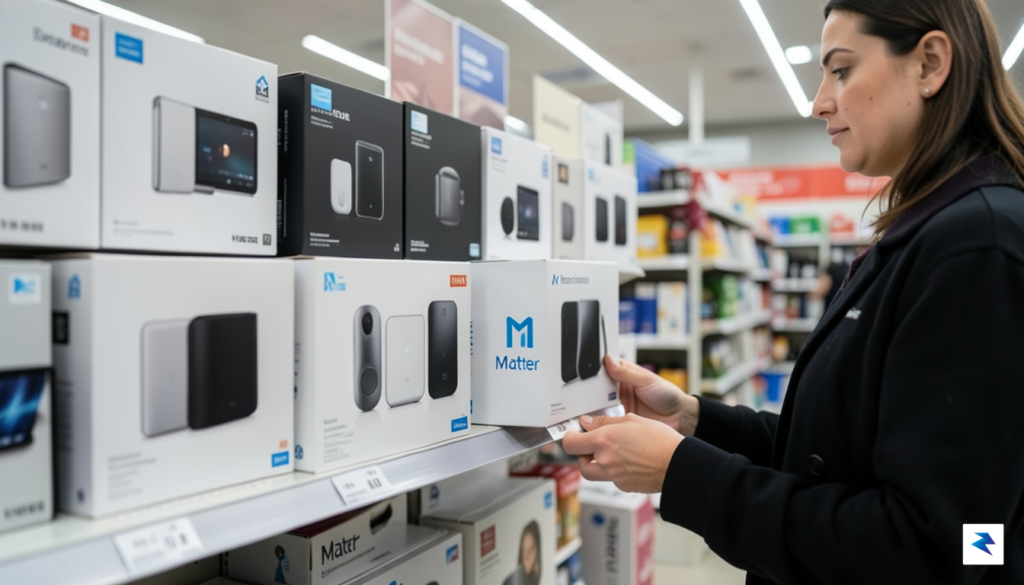
When the smart home industry first unveiled Matter, the narrative was one of immediate, seamless liberation: a world where your preferred voice assistant, mobile platform, and lightbulb manufacturer would finally speak the same language. Today, however, the reality is far more nuanced. While the foundational promise of interoperability is undeniably being built, we are currently in a transitional phase that feels less like a revolution and more like a slow, iterative climb. For the average consumer, the experience remains a patchwork of excitement and friction, as early adopters navigate a landscape where “standardized” does not yet equate to “perfectly plug-and-play.”
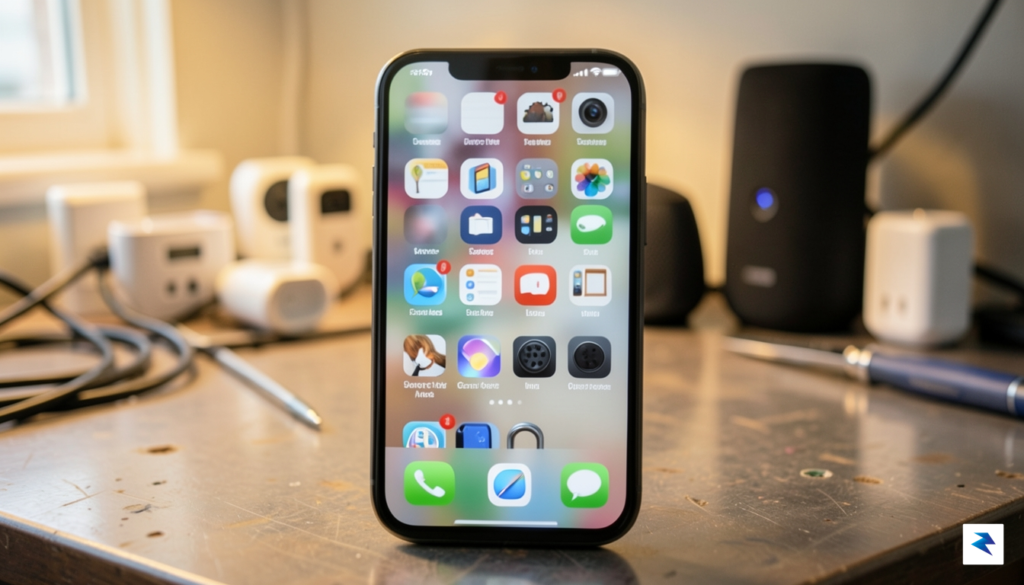
The gap between the theoretical “it just works” promise and the current technical reality is often bridged by firmware updates that can be hit-or-miss. While many major hardware manufacturers have successfully pushed Matter support to their existing product lines, the implementation often reveals the complexity of unifying disparate hardware architectures. Users frequently encounter connectivity bugs, pairing timeouts, or devices that lose their network credentials after a router reboot. These aren’t necessarily fatal flaws for the standard itself, but they serve as a reminder that Matter is a software-defined layer running on top of complex radio protocols like Thread, Wi-Fi, and Bluetooth. As these communication stacks mature, the reliability issues are expected to fade, but for now, they act as a persistent barrier to mainstream adoption.
The true success of Matter will not be measured by the number of certified devices on store shelves, but by the invisibility of the infrastructure behind the scenes.
Furthermore, it is critical to distinguish between basic functional support and the advanced feature sets that power-users demand. While Matter provides a robust baseline—allowing you to toggle a light or adjust a thermostat across different ecosystems—the “secret sauce” of a brand’s proprietary app often remains locked away. Features like complex automation routines, granular energy monitoring, or firmware-specific customizations still frequently require users to bounce back to the original manufacturer’s application. This creates a dual-layered reality: you get the convenience of cross-platform control for daily tasks, but you retain the administrative burden of managing multiple accounts and apps for deeper device management. We are not yet in a world where proprietary apps are obsolete; instead, we are in a world where they have become secondary, optional utilities rather than mandatory gateways.
Ultimately, the industry’s bet on Matter is a long-term play, not a quick fix for years of fragmented development. By establishing a common language, the industry has laid the groundwork for a future where hardware is agnostic, but the evolution of that ecosystem will take years to fully realize. As manufacturers shift their focus from building isolated “walled gardens” to optimizing their products for a shared, standards-based reality, the experience will inevitably improve. For now, the smart home remains a project under construction, rewarding those who are patient enough to endure the growing pains of a digital ecosystem finding its footing.
The Strategic Role of the Connectivity Standards Alliance
At the heart of the Matter ecosystem lies the Connectivity Standards Alliance (CSA), a non-profit organization that serves as the neutral arbiter for a technology that was once fragmented by competing walled gardens. Unlike proprietary smart home platforms that were historically dictated by the whims of a single tech giant, the CSA operates through a collaborative governance model designed to foster industry-wide consensus. By bringing together thousands of member companies—ranging from Silicon Valley behemoths like Apple, Google, and Amazon to boutique hardware manufacturers—the alliance ensures that the roadmap for the smart home is not held hostage by the interests of any one corporation. This structure is essential for maintaining trust, as it democratizes the development process while preventing the monopolistic behaviors that previously stifled innovation in the Internet of Things (IoT) space.
The actual mechanics of this governance are rooted in a rigorous, multi-tiered specification process. When it comes to updates and new features, the CSA utilizes a structured working group system where technical experts debate and refine every iteration of the Matter protocol. This ensures that when a new capability is added—such as improved energy monitoring or advanced security protocols—it is vetted for interoperability before it ever reaches a consumer’s device. Furthermore, the CSA manages a robust certification program that acts as the final gatekeeper; products must undergo strict testing in authorized laboratories to earn the official Matter badge. This certification process is the backbone of the alliance’s power, as it guarantees that a lightbulb from one manufacturer will communicate seamlessly with a hub from another, effectively enforcing the standard through collective discipline.
The true strength of the Connectivity Standards Alliance is its ability to turn fierce competitors into collaborative partners, ensuring that the smart home remains an open ecosystem rather than a collection of isolated, proprietary islands.
Balancing the immense influence of industry titans with the agility required by independent developers is perhaps the most difficult aspect of the CSA’s mission. To address this, the organization employs a committee structure that allows smaller firms to have a meaningful voice, ensuring that the standard remains accessible and not overly burdensome for startups. By fostering an environment of transparency, the CSA prevents the “winner-take-all” mentality that once defined the industry, instead pushing for a future where the consumer’s choice of hardware is decoupled from their software platform. This ongoing negotiation between giants and newcomers is exactly what allows Matter to remain a living, breathing standard that evolves alongside the needs of the global smart home market.
The Future of the Smart Home Ecosystem
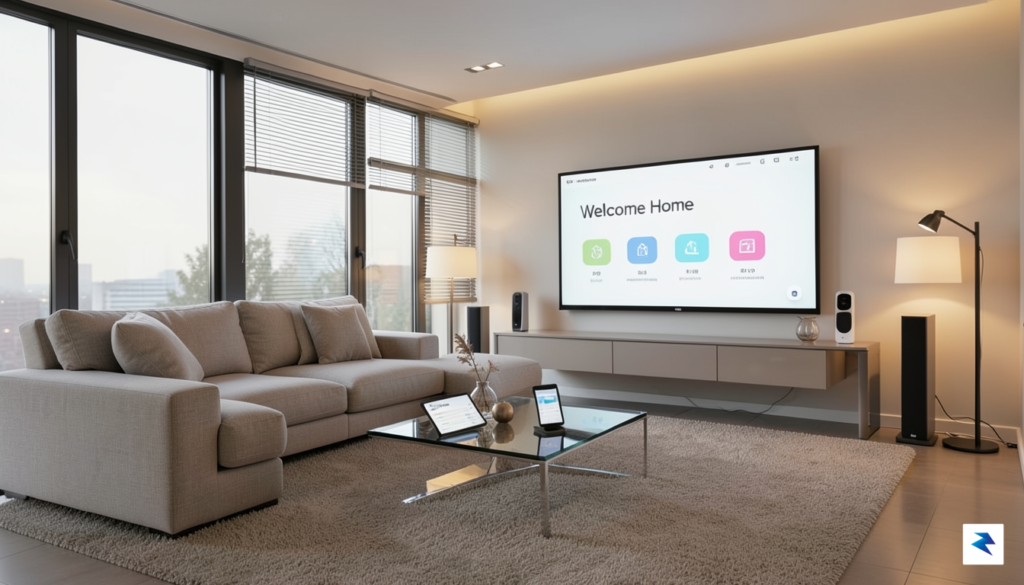
The transition toward a truly interoperable smart home represents more than just a convenience upgrade; it signifies a fundamental shift in how we interact with our living spaces. For the average consumer, the promise of Matter lies in the move toward robust, local control. By prioritizing communication that happens within the four walls of your home rather than relying on constant, latency-prone cloud handshakes, Matter ensures that your smart devices remain functional even when your internet connection falters. This architectural evolution is a victory for privacy, as it keeps sensitive telemetry data inside the home, granting users unprecedented autonomy over their personal digital environment.
Looking ahead to the next five years, we can expect a radical change in how consumers approach hardware purchasing. In the past, buyers were often forced into “walled garden” ecosystems, tethered to a single manufacturer’s hub or platform to ensure compatibility. Matter effectively dismantles these barriers, allowing consumers to choose the best-in-class hardware for their specific needs—whether that is a specific brand of lighting, a preferred sensor, or a specialized thermostat—without fear of integration failure. This shift will likely force manufacturers to compete on build quality, innovative features, and long-term support rather than artificial exclusivity, ultimately driving up the value proposition for the end user.
The true success of the smart home will not be measured by the number of connected devices, but by how seamlessly those devices disappear into the background of daily life, operating reliably without constant maintenance or fear of planned obsolescence.
Furthermore, the industry’s continued commitment to this unified standard acts as a critical safeguard for device longevity. We have all experienced the frustration of “smart” tech becoming “dumb” the moment a company discontinues a server or abandons a mobile app. By decoupling the hardware from a specific cloud infrastructure, Matter provides a framework where devices can remain relevant and functional for years longer than they would under proprietary constraints. This transition protects the consumer’s investment, reduces electronic waste, and fosters a sustainable ecosystem where innovation is built on top of a stable, standardized foundation rather than fractured, competing protocols.

Ultimately, the maturation of this technology will transform the smart home from a fragmented collection of gadgets into a cohesive utility. As the friction of setup and compatibility dissolves, the focus will naturally shift toward advanced automation and true personalization. By betting on Matter, the industry is not just optimizing a technical standard; it is curating a future where technology serves the user, rather than the user serving the platform. This long-term alignment between consumer needs and industrial strategy is precisely what is required to move the smart home from an enthusiast’s hobby into an essential component of modern living.