The Billion-Dollar Horizon: Understanding the Fusion Investment Landscape
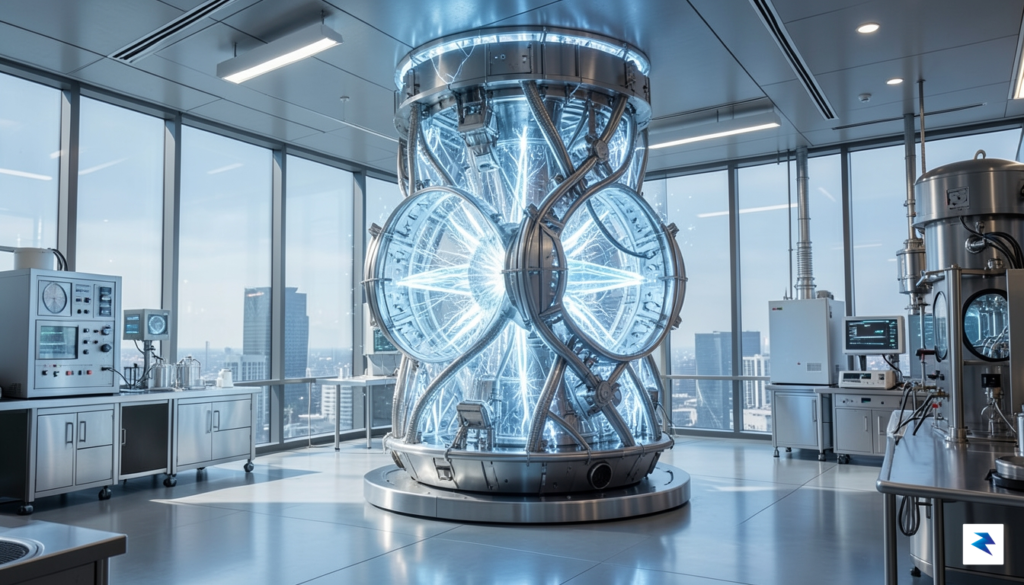
For decades, the promise of nuclear fusion—the same process that powers our sun—has captivated scientists and policymakers alike, offering the tantalizing prospect of limitless, clean energy. This grand ambition, however, largely remained confined to the laboratories of national governments and international collaborations, sustained by public funding and driven by pure scientific inquiry. It was a distant horizon, a moonshot project with timelines measured in generations, not fiscal quarters. Yet, in a dramatic and relatively recent pivot, this landscape has fundamentally transformed, marking a profound shift from a publicly-funded scientific endeavor to a fiercely competitive industrial race.
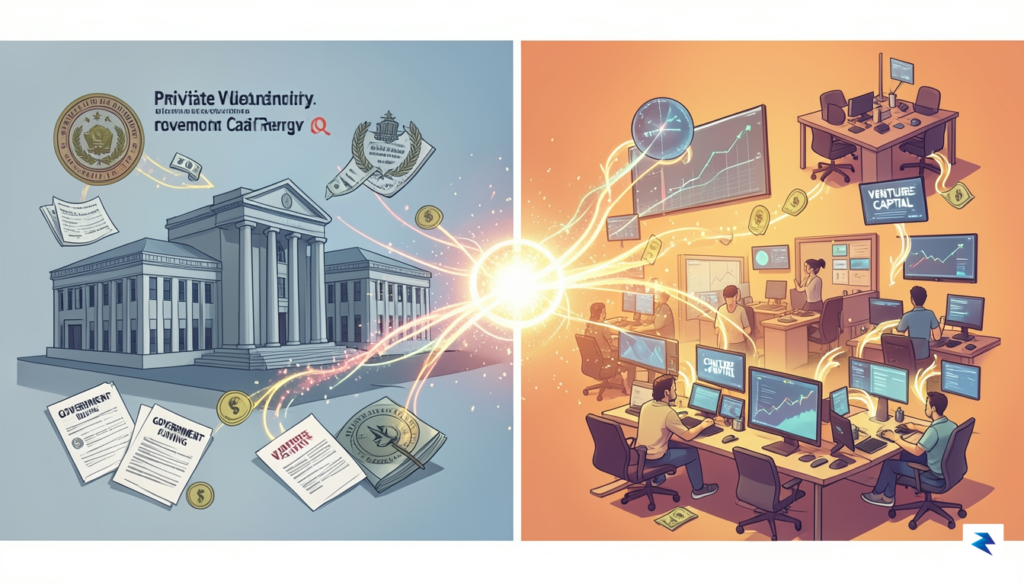
This monumental transition is fueled by an unprecedented influx of private capital, as venture capitalists and institutional investors, historically wary of such long-term, high-risk ventures, now aggressively back fusion startups. Their sudden interest isn’t merely speculative; it’s a strategic response to converging global imperatives. The escalating climate crisis, coupled with the urgent need for secure, decarbonized energy grids, has elevated fusion from a scientific curiosity to a critical component of future energy infrastructure. Furthermore, advancements in materials science, high-field magnets, and artificial intelligence are bringing previously theoretical engineering challenges into the realm of the solvable, making the commercialization of fusion appear increasingly plausible within a more palatable investment timeframe.
Consequently, the once sleepy world of fusion research has become a high-stakes arena, now boasting over $7.1 billion in private investment. This staggering sum represents more than just financial backing; it signifies a collective vote of confidence from sophisticated investors who believe in the tangible, near-term potential of fusion energy. This capital infusion has dramatically accelerated research and development, enabling startups to build larger facilities, hire top talent, and pursue diverse technological pathways simultaneously. It has effectively transformed the pursuit of fusion from a slow-burning academic marathon into an intensely competitive sprint for commercial viability, where innovation is paramount and speed is of the essence.
In this burgeoning ecosystem, the threshold of raising over $100 million in private capital has emerged as a significant indicator of a company’s perceived viability and ambition. This level of funding typically signifies a startup has moved beyond foundational research and proof-of-concept, entering a critical phase of engineering, prototyping, and scaling. These well-capitalized players are not just exploring the science; they are actively designing, building, and testing advanced reactor components and even entire pilot plants, aiming for first-plasma and net-energy gain. For investors, crossing the $100M mark signals a serious contender, capable of attracting the talent and resources necessary to tackle the immense engineering challenges that remain on the path to commercial fusion.
The stakes in this multi-billion-dollar race could not be higher. The company that successfully brings commercial fusion to fruition stands to revolutionize global energy production, offering a solution to humanity’s most pressing energy and environmental challenges. This intense competition is not just about financial returns; it’s about shaping the future of our planet, providing a nearly inexhaustible, carbon-free power source that operates without long-lived radioactive waste. As the fusion industry matures, the ongoing influx of private capital ensures that this transformative dream is closer than ever to becoming a tangible reality, fueling a new era of energy innovation and entrepreneurial drive.
The Titans of Fusion: Analyzing the $100M+ Club

While the dream of clean, limitless fusion energy has sparked the imagination of countless innovators, leading to the formation of dozens of promising startups globally, the financial reality of this ambitious pursuit dictates a much narrower field of true contenders. Not all fusion companies are created equal when it comes to attracting the monumental investment required to turn groundbreaking science into tangible power plants. Indeed, a select, elite group has consolidated the vast majority of investment capital, effectively establishing themselves as the front-runners in the race toward commercial-scale fusion ignition.
This concentration of wealth is starkly evident when examining the fundraising landscape. Companies like Commonwealth Fusion Systems (CFS), Helion Energy, and TAE Technologies stand out, having each raised staggering sums far exceeding the $100 million threshold. CFS, for instance, backed by investors like Bill Gates and Google, has secured well over $2 billion to develop its compact, high-field tokamak, leveraging high-temperature superconducting magnets. Helion Energy, focused on a pulsed non-monotonic FRC (Field-Reversed Configuration) approach, has likewise attracted hundreds of millions, including a significant investment from OpenAI CEO Sam Altman, pushing towards its seventh-generation machine, Polaris. Meanwhile, TAE Technologies, pioneering its beam-driven field-reversed configuration, has accumulated over $1.2 billion in private funding across several decades, demonstrating remarkable investor confidence in its long-term vision.
Beyond these titans, other notable players such as General Fusion, with its magneto-inertial fusion approach, and Tokamak Energy, also pursuing compact spherical tokamaks, have similarly crossed the nine-figure mark. The sheer scale of these investments underscores a critical reality: developing fusion energy is an intensely capital-intensive endeavor. It moves far beyond theoretical modeling and laboratory experiments, demanding the construction of massive, complex physical hardware, often involving cutting-edge materials, intricate engineering, and extensive testing facilities. This isn’t merely about proving a concept; it’s about building the infrastructure for a completely new energy paradigm, which inherently requires vast financial resources.
The strategic importance of this concentrated capital cannot be overstated. For these top-tier companies, such significant funding translates directly into the ability to accelerate research and development, procure specialized components, build larger and more powerful prototypes, and attract the world’s leading scientists and engineers. It allows them to absorb the inevitable setbacks and lengthy development cycles inherent in a challenge of this magnitude, providing a runway that smaller, less-funded ventures simply cannot match. Ultimately, this financial muscle enables these leading firms to not just theorize about fusion, but to physically construct the reactors that will validate their designs, paving the way for the first true commercial fusion power plants and, hopefully, a future powered by clean, abundant energy.
Technological Divergence: Different Approaches to Net Energy Gain
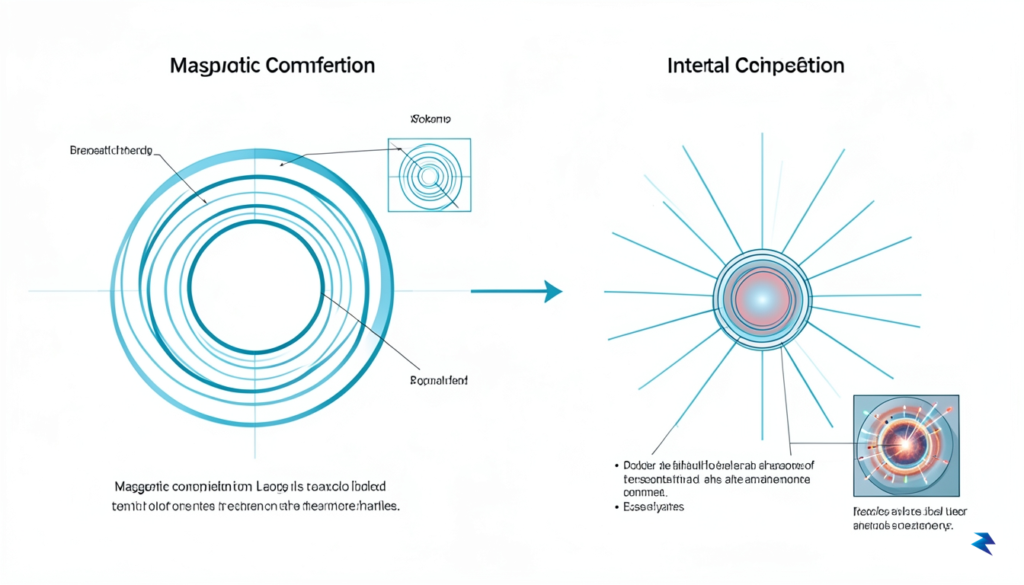
The pursuit of commercial fusion energy is a grand scientific and engineering challenge, yet it’s often mistakenly perceived as a singular endeavor. In reality, the quest for net energy gain—where a fusion reactor produces more energy than it consumes—is being tackled by a fascinating array of fundamentally different technological pathways. The private sector, particularly the startups that have attracted over $100 million in funding, is not putting all its eggs in one basket. Instead, venture capitalists and strategic investors are betting billions across a diverse landscape of physics and engineering architectures, each with its own promise and formidable hurdles. This strategic diversification underscores the inherent complexity and uncertainty in predicting which approach will ultimately unlock the immense power of the stars on Earth.
Perhaps the most widely recognized approach is Magnetic Confinement Fusion (MCF), which seeks to harness superheated plasma by trapping it within powerful magnetic fields. The most famous embodiment of this concept is the tokamak, a donut-shaped vacuum chamber where strong magnetic coils create a “magnetic bottle” to contain plasma heated to hundreds of millions of degrees Celsius. Companies like Commonwealth Fusion Systems (CFS), a spin-off from MIT, are leveraging advancements in high-temperature superconducting magnets to build smaller, more powerful tokamaks, aiming for a commercially viable plant. The primary benefit of MCF is its potential for continuous power generation, but the challenges are immense: maintaining plasma stability for extended periods, achieving sufficient density and temperature, and engineering magnets strong enough to withstand incredible forces while operating reliably.
In stark contrast to the steady-state ambitions of MCF, Inertial Confinement Fusion (ICF) operates on a pulsed basis, akin to miniature, controlled explosions. This method involves rapidly compressing and heating a tiny fuel pellet—typically a mix of deuterium and tritium—to extreme densities and temperatures using powerful lasers or particle beams. The goal is to create conditions where the fuel “implodes,” initiating a brief, intense burst of fusion reactions before the plasma disassembles. While government labs like the National Ignition Facility have demonstrated ignition with ICF, private companies exploring this space face the challenge of repeating these high-energy pulses rapidly and cost-effectively, alongside developing resilient target fabrication and chamber technologies. The promise lies in potentially simpler reactor designs for individual pulses and the absence of complex, persistent magnetic fields, but the energy input per pulse and the repetition rate remain critical engineering hurdles.
Bridging the gap between the continuous confinement of MCF and the pulsed implosions of ICF is Magneto-Inertial Fusion (MIF). This innovative hybrid approach attempts to combine the best attributes of both worlds. MIF systems typically use a magnetic field to confine the plasma, but then rapidly compress that magnetically confined plasma using a strong mechanical force, often from pulsed electrical currents or imploding liners. This rapid compression increases both the density and temperature of the plasma far beyond what pure magnetic confinement alone might achieve, and at lower input energies than pure inertial confinement. Companies like
The Economic Reality: Capital Intensity and Long-Term Viability
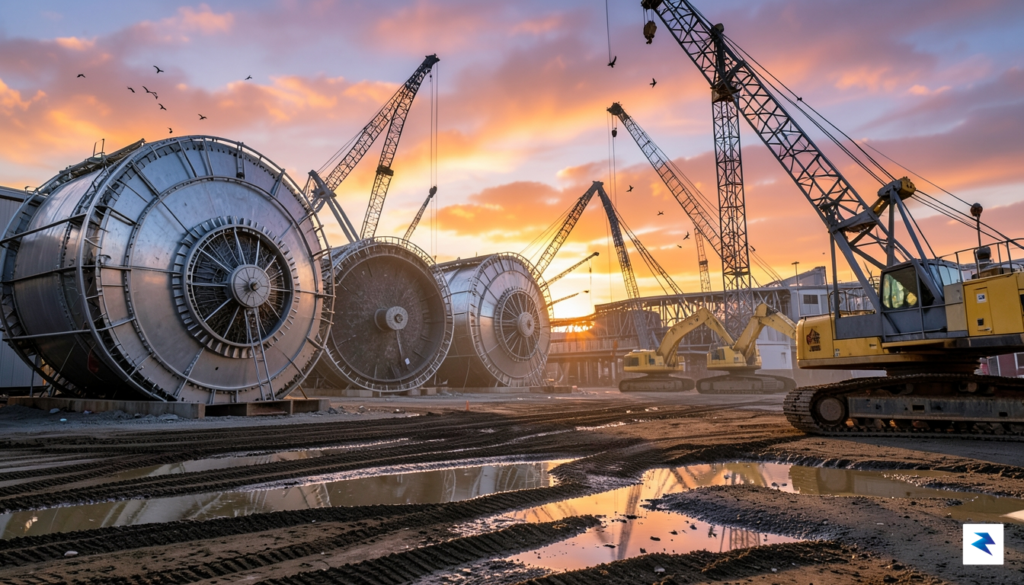
When we talk about the immense sums of money flowing into fusion energy startups—billions of dollars in aggregate, with individual companies raising hundreds of millions each—the immediate question often arises: why so much? The answer lies in the fundamental nature of fusion itself. Unlike a software venture that might scale with lines of code and cloud servers, fusion energy is arguably the most capital-intensive sector within the entire green energy landscape. It demands not just intellectual brilliance but also massive physical infrastructure, access to rare and specialized materials, and a global concentration of highly specialized human talent, creating an exceptionally high barrier to entry that only the most well-capitalized firms can hope to overcome.
The sheer cost of developing a viable fusion reactor stems from several critical areas, starting with the deeply complex research and development (R&D) phase. This isn’t about incremental improvements; it’s about pioneering new physics and engineering solutions at the edge of human knowledge. R&D involves designing and constructing experimental devices that must contain plasma hotter than the sun, requiring custom-built superconducting magnets, powerful laser arrays, or intricate inertial confinement systems. Each iteration of these experimental reactors, from a small proof-of-concept to a full-scale prototype, costs hundreds of millions, if not billions, to design, fabricate, and operate, with every test generating invaluable but expensive data.
Beyond the core R&D, the supply chain and specialized testing facilities add another layer of immense financial burden. Fusion reactors rely on exotic materials capable of withstanding extreme temperatures, radiation, and immense electromagnetic forces. Think of materials like high-temperature superconductors, specialized steels, or neutron-resistant ceramics, many of which must be custom-manufactured in limited quantities. Furthermore, the testing environments themselves are not off-the-shelf; they are bespoke facilities designed to simulate the unique conditions of a fusion reaction, including radiation shielding, tritium handling capabilities, and ultra-high vacuum systems. These facilities are incredibly expensive to build, maintain, and operate, often requiring decades of planning and construction.
This deep technological challenge often leads startups into what’s known as the “Valley of Death”—the perilous gap between demonstrating scientific feasibility and achieving commercial viability. For many deep-tech ventures, this valley proves insurmountable due to a lack of sustained funding. However, the recent influx of over $7.1 billion into the private fusion sector is a game-changer, acting as a vital bridge. This capital infusion is crucial for allowing these companies to move beyond laboratory-scale experiments and invest in the larger, more complex prototypes and pilot plants necessary to demonstrate net energy gain and begin scaling towards grid-ready power generation. Without such substantial backing, the journey from scientific breakthrough to commercial power plant would remain an unfulfilled promise.
“Fusion energy development is not a sprint; it’s an ultra-marathon requiring unprecedented capital commitments. The engineering challenges alone necessitate a scale of investment rarely seen outside of national space programs.”
To put fusion’s capital requirements into perspective, consider other energy sectors. Deploying solar panels or wind turbines, while requiring significant upfront investment, leverages mature, mass-produced technologies with well-established global supply chains. The R&D costs for a new solar panel or wind turbine design are orders of magnitude lower than those for designing and building a first-of-a-kind fusion reactor. Solar and wind projects primarily involve manufacturing, installation, and grid integration, not the fundamental invention of a new energy generation method. Fusion, conversely, is still in its invention and scaling phase, demanding substantial financial outlays for basic and applied research before it can even begin to compete on cost with existing energy sources.
Therefore, the hundreds of millions, and indeed billions, flowing into these fusion startups are not simply discretionary spending; they are an absolute prerequisite for success. This monumental investment underscores the unparalleled ambition and complexity of the fusion challenge. It represents a long-term commitment to fundamentally revolutionize our energy future, acknowledging that only through substantial and sustained capital infusion can humanity hope to harness the power of the stars on Earth, ultimately delivering a clean, virtually limitless energy source.
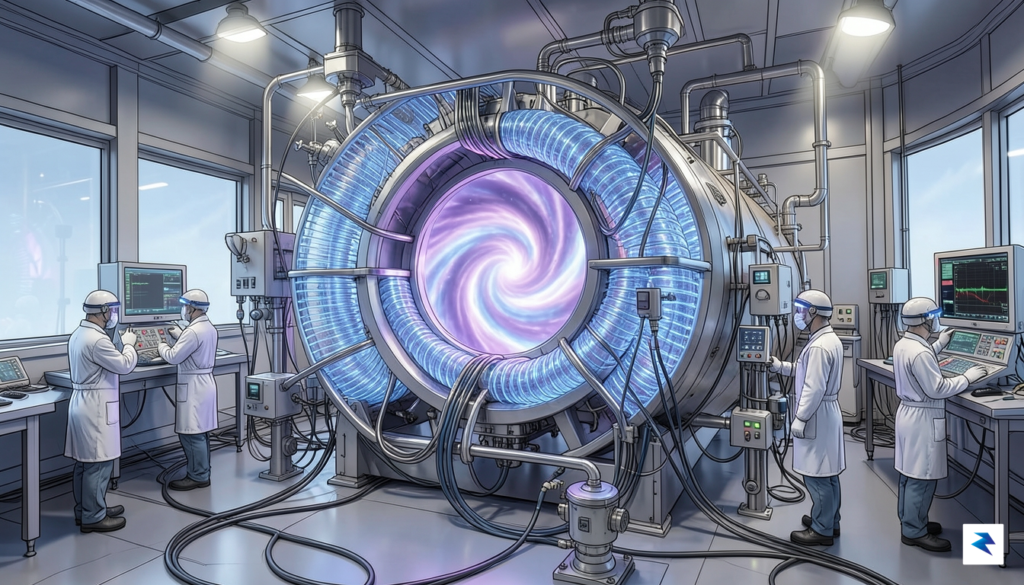
Assessing the Risks: Why Fusion Remains a High-Stakes Bet
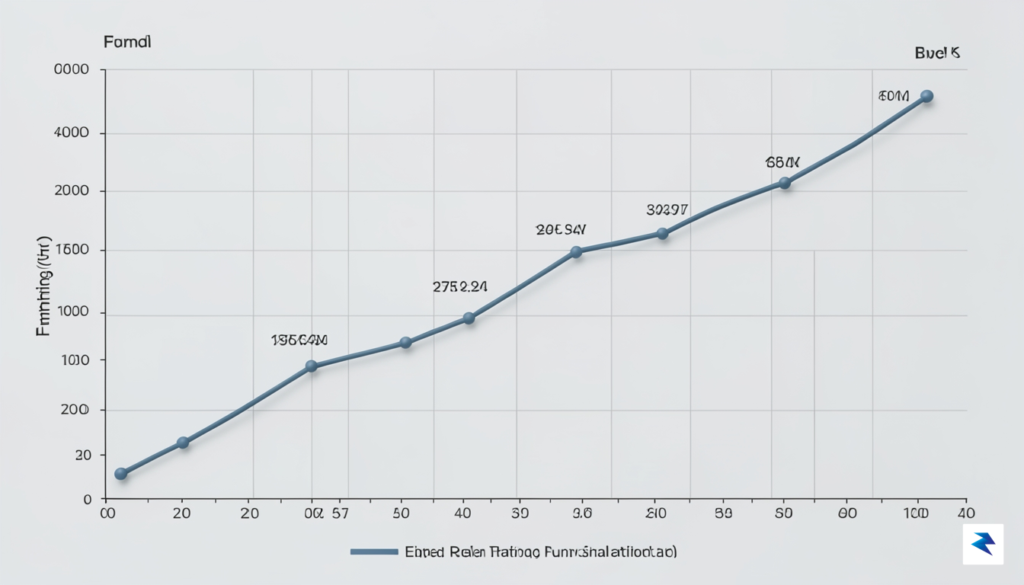
Despite the unprecedented influx of private capital flowing into fusion energy startups, reaching billions of dollars, the underlying scientific and engineering challenges remain profoundly formidable. Investors are not merely backing innovative technological approaches; they are, in essence, placing a high-stakes wager against some of the most stubborn laws of physics and material science. The journey from laboratory proof-of-concept to a commercially viable power plant is fraught with complexities that extend far beyond simply achieving net energy gain in a plasma, requiring breakthroughs across multiple disciplines that have eluded scientists for decades.
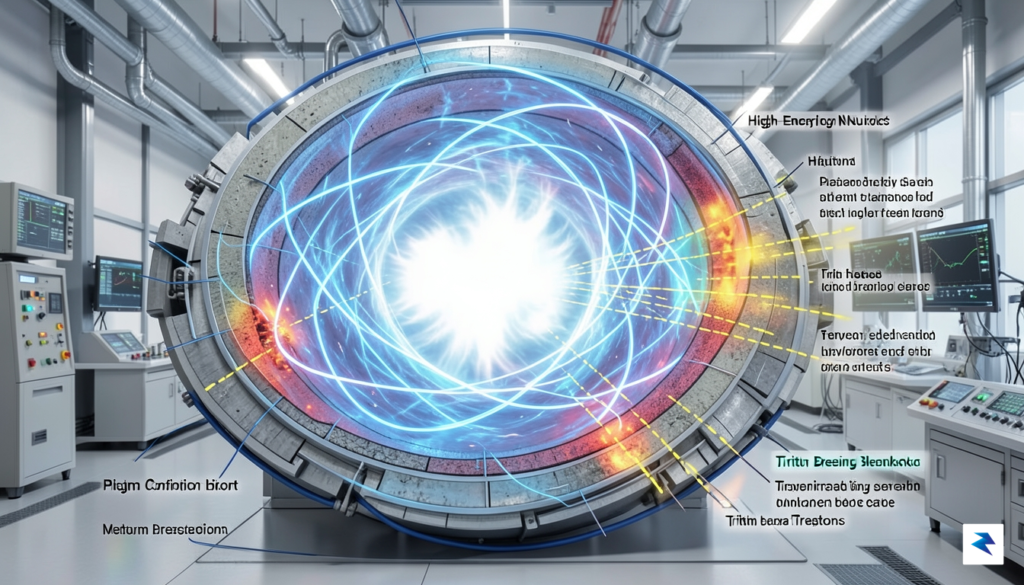
One of the most significant engineering hurdles lies in managing the reactor environment itself, particularly concerning tritium breeding and neutron damage. For a fusion power plant to be self-sustaining, it must produce its own tritium fuel, a radioactive isotope of hydrogen that is scarce on Earth. This requires sophisticated “breeding blankets” to capture high-energy neutrons released from the fusion reaction, converting lithium into tritium. However, these neutrons are incredibly destructive, relentlessly bombarding the reactor’s structural materials, causing them to embrittle, swell, and degrade over time. Developing materials capable of withstanding this intense, long-term neutron flux—a challenge known as a “showstopper” by many—is an unsolved problem, directly impacting the safety, lifespan, and economic viability of any future fusion power plant.
Furthermore, the fundamental act of creating and sustaining a fusion reaction presents its own set of formidable obstacles, primarily revolving around plasma stability and confinement. Achieving fusion requires heating hydrogen isotopes to millions of degrees Celsius, creating a superheated plasma that must be meticulously confined by powerful magnetic fields or inertial forces. The challenge isn’t just reaching these temperatures; it’s about maintaining them stably for extended durations without the plasma becoming turbulent or escaping its confinement. Even minor instabilities can lead to significant energy losses, preventing net energy gain and making the intricate control systems required for a practical reactor staggeringly complex, pushing the boundaries of computational and engineering capabilities.
The enthusiastic timelines often presented by these well-funded startups, while inspiring, frequently clash with the historical realities of fusion research. For decades, fusion has been famously “30 years away,” a testament to the incremental and often painstaking nature of scientific discovery and engineering validation. While new designs and materials promise faster progress, the iterative cycle of building, testing, refining, and understanding complex physical phenomena means that even seemingly small advancements require immense time, resources, and often, unexpected detours. Transitioning from experimental demonstrations to robust, reliable, and continuously operating power-generating systems is a monumental leap that will likely unfold over a longer timescale than many current projections suggest.
Consequently, the risk profile for private investors in these ventures differs markedly from that of traditional government-funded fusion programs. Private capital, while agile and capable of accelerating specific technological pathways, typically seeks a return on investment within a more defined timeframe, often focusing on achieving significant milestones that attract further funding. Government entities, on the other hand, usually operate with a longer-term strategic outlook, funding fundamental research, large-scale international collaborations like ITER, and foundational science without the immediate pressure for commercial returns. This difference means private investors are taking on a higher degree of speculative risk, betting not just on technological success, but on the ability to overcome deeply entrenched scientific challenges within a commercially viable window.
The Future of Energy: Scaling Beyond the Lab

The next five to ten years are poised to be the most decisive in the long history of fusion energy research. With over $7 billion now poured into private fusion ventures, the focus is shifting dramatically from pure scientific inquiry to rigorous engineering execution. Companies are no longer merely demonstrating successful plasma confinement in laboratories; instead, their immediate goal is the construction and operation of pilot plants capable of generating net electricity. This monumental shift involves scaling intricate magnetic fields, perfecting high-temperature superconductors, and developing materials that can withstand extreme conditions, all while proving the economic viability of their chosen approach. The coming decade will thus serve as the ultimate proving ground, determining whether decades of scientific breakthroughs can finally translate into tangible kilowatt-hours for the grid.
However, simply generating electricity is only half the battle; the larger, more complex challenge lies in integrating this novel power source into the global energy architecture. Current grids are designed around dispatchable fossil fuels, large centralized nuclear fission plants, and increasingly, intermittent renewables. Fusion plants, particularly in their initial commercial iterations, will need to demonstrate reliability, flexibility, and a seamless interface with existing transmission infrastructure. Beyond the technical demands, a labyrinth of regulatory hurdles awaits. Nations worldwide lack established licensing frameworks for commercial fusion reactors, necessitating the development of entirely new safety standards, waste management protocols (even for the minimal and short-lived waste fusion produces), and public acceptance campaigns. Navigating these uncharted regulatory waters will require unprecedented collaboration between innovators, policymakers, and communities to ensure a smooth and responsible transition.
Considering the scale of the energy transformation required, the current influx of capital, while substantial, represents only the initial investment in what promises to be an industry on par with global oil and gas or traditional nuclear power. While $7 billion is an impressive sum for early-stage development, achieving full commercialization—building multiple plants, establishing supply chains, and truly scaling production—will undoubtedly require orders of magnitude more capital. The risk remains that without sustained, diverse funding streams and robust public-private partnerships, even the most promising technologies could falter at the commercialization chasm. The success of these ambitious startups in the coming years will not only redefine our energy future but also validate the immense gamble taken by investors, potentially ushering in an era of clean, abundant energy that fundamentally alters geopolitical dynamics, economic landscapes, and humanity’s relationship with the planet. This decade truly holds the key to the ‘Fusion Era’.