
The Dark Reality of Pseudoscientific Cancer ‘Cures’ and Why They Are Dangerous
The Danger of Unregulated Alternative Cancer Therapies When faced with a terminal diagnosis, the human instinct to survive often pushes…

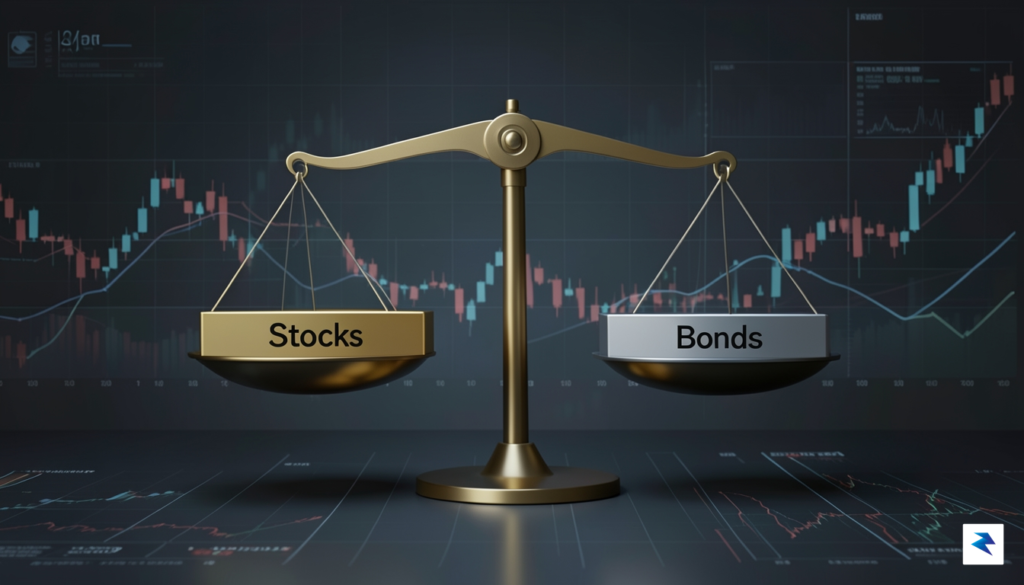
For decades, a fundamental pillar of investment strategy rested on the concept of the Equity Risk Premium (ERP). This premium is, in essence, the extra return investors have historically demanded and received for taking on the additional volatility and uncertainty associated with owning stocks, as opposed to the relative safety and predictable income stream of bonds. It represents the reward for enduring market fluctuations, company-specific risks, and the inherent unpredictability of equity markets, serving as a crucial incentive for capital to flow into riskier, growth-oriented assets.
Historically, this premium has been substantial, often cited as several percentage points annually over long periods. This robust outperformance of stocks over bonds became the bedrock for the popular investment mantra, “stocks for the long run,” guiding countless individuals and institutions in their retirement planning and wealth accumulation strategies. The expectation of this consistent, long-term outperformance meant that investors could confidently allocate a significant portion of their portfolios to equities, knowing that patience would eventually be rewarded with superior returns compared to less volatile fixed-income alternatives.
However, the financial landscape has shifted dramatically, and today, that extra reward for owning stocks has all but evaporated. A confluence of factors has led to this compression, most notably elevated stock market valuations and a significant rise in bond yields. Years of accommodative monetary policy contributed to soaring equity prices, pushing down the expected future returns from stocks. Simultaneously, recent inflationary pressures and subsequent interest rate hikes have made bonds, particularly shorter-term government bonds, considerably more attractive, offering yields that are now competitive with, or even exceeding, the expected returns from many equity portfolios. This unprecedented narrowing of the spread challenges a core tenet of modern portfolio theory.
This new reality poses a profound psychological and practical challenge for long-term investors. For generations, the implicit understanding was that taking on equity risk would inherently lead to greater rewards over time, making it a natural choice for growth-oriented portfolios. Now, with the ERP diminished or even negative in some scenarios, investors are forced to re-evaluate their fundamental assumptions. The dilemma is stark: accept potentially similar or even lower returns for higher risk, or shift capital into bonds that now offer compelling yields without the rollercoaster ride of the stock market. This paradigm shift demands a critical reassessment of asset allocation strategies and a nuanced understanding of risk versus reward in a market environment unlike any seen in recent memory.

For over a decade, a pervasive investment philosophy known as TINA—”There Is No Alternative”—dominated financial markets. This era, characterized by historically low interest rates and negligible bond yields, essentially funneled investors into the stock market in search of any meaningful return, even if it meant accepting higher valuations. With cash and bonds offering little to no real income, equities became the de facto choice for growth and yield, pushing valuations to elevated levels across various sectors.
Today, that paradigm has fundamentally shifted. The once-meager returns from government bonds, particularly the benchmark 10-year U.S. Treasury, have climbed to levels not seen in fifteen years, now consistently offering yields in the 4-5% range. This dramatic rise in the risk-free rate directly impacts how investors perceive the relative attractiveness of stocks. When bond yields offer a reliable and comparatively safe 4-5% return, the “earnings yield” of the stock market – which is simply the inverse of the P/E ratio, representing a company’s earnings per share divided by its share price – comes under intense scrutiny.
In essence, the risk-free rate provided by Treasury bonds acts as a baseline, or a “hurdle rate,” for all other investments. If you can secure a guaranteed 4.5% from a U.S. Treasury, why would you take on the inherent volatility and risk of stocks for a potentially similar or even lower expected return, especially if those stock earnings are not growing robustly? This higher baseline means that for stocks to be considered a superior investment, they must now offer a significantly greater expected return to compensate for the added risk. The availability of compelling returns from safe assets directly raises the bar for what equity performance needs to deliver.
This elevated hurdle rate directly pressures equity valuations, particularly valuation multiples like the price-to-earnings (P/E) ratio. In a low-yield environment, investors were willing to pay a premium for future earnings, leading to higher P/E multiples, because the alternative returns were so paltry and inflation was subdued. Now, with investors able to find attractive 4-5% yields in cash-equivalent assets with minimal risk, the justification for paying 20x or 25x earnings for a stock becomes much harder to make. Companies must demonstrate strong growth prospects and earnings power to warrant such multiples when a viable, low-risk alternative offering significant income is readily available.
The market’s logic has been fundamentally rewired. The availability of substantial, reliable returns from fixed income instruments means that stocks must now deliver a truly compelling “equity risk premium” – that extra return investors demand for taking on stock market risk – to justify their place in a portfolio. This shift forces a reevaluation of what constitutes a fair price for a company’s earnings, ultimately leading to a downward pressure on valuation multiples across the equity market as investors incorporate these higher risk-free rates into their decision-making process.

Despite a growing chorus of caution from institutional investors and financial pundits regarding the shifting dynamics of the equity market, individual investors appear largely undeterred in their pursuit of stock market gains. This intriguing divergence highlights a fascinating aspect of market behavior, where rational economic models often collide with the powerful, sometimes irrational, forces of human psychology. While professional money managers meticulously recalibrate their risk-reward calculations, analyzing every nuance of the current economic landscape, everyday investors continue to pour capital into equities with remarkable resilience, suggesting that factors beyond mere fundamental analysis are at play.
A significant driver behind this persistent retail bullishness is undoubtedly the spectacular performance of certain market segments in recent years. Blockbuster gains, particularly in technology and growth stocks, have created a powerful narrative of seemingly endless upward trajectory. When investors witness significant wealth creation happening around them, often amplified by social media and financial news cycles, it cultivates an environment where the perceived opportunity cost of not investing becomes increasingly painful. This immediate and vivid experience of rapid returns can overshadow long-term historical averages or more sober assessments of current valuations, making the allure of equities almost irresistible.
This phenomenon is closely tied to what behavioral finance experts call “recency bias.” Investors tend to overweight recent events and outcomes, assuming that current trends will persist indefinitely into the future, often overlooking broader historical patterns or structural shifts. If the last few years have shown impressive returns from stock market participation, individuals naturally extrapolate this performance, expecting similar results going forward, even if the underlying market conditions have fundamentally changed. Consequently, the memory of past losses or periods of stagnation fades, replaced by the vivid impression of recent successes, which in turn fuels continued investment into seemingly advantageous positions.
Furthermore, the fear of missing out, or FOMO, serves as an incredibly potent psychological catalyst. In an interconnected world where investment successes are often shared widely and instantaneously, the sight of peers or even strangers accumulating wealth can trigger a strong desire to participate. This isn’t just about greed; it often stems from a deep-seated human aversion to regret – the potential “loss” of opportunity feels just as impactful as a monetary loss. Therefore, rather than exercising caution in the face of compressed premiums, many individual investors feel compelled to jump in, fearing they will be left behind if the market continues its upward march without them.
This contrasts sharply with the more cautious stance observed among many institutional players. While retail trading platforms report robust inflows into equity funds and individual stocks, large pension funds, hedge funds, and asset managers are often re-evaluating their strategic allocations, some even increasing their bond exposure or holding higher cash reserves. Their analytical frameworks, which typically emphasize long-term risk-adjusted returns and diversification, lead them to view the current market environment with greater circumspection. The sustained retail demand, therefore, acts as a significant counterweight, providing liquidity and propping up valuations in ways that sophisticated institutional models might struggle to reconcile with traditional risk assessments.

The financial landscape is undergoing a profound transformation, challenging long-held assumptions about how portfolios should be constructed and managed. For decades, investors could largely rely on the equity risk premium – the historically higher returns stocks offered over bonds – as a foundational principle. This premium justified a significant allocation to equities, with the expectation that over the long run, the reward for taking on more risk would materialize. However, with this historical roadmap now appearing less reliable, simply adhering to past strategies could leave investors unprepared for the future. Adapting to an environment where stocks no longer offer such an obvious, inherent advantage demands a more sophisticated and proactive approach to asset allocation and risk management.
One of the most immediate casualties of a vanishing equity premium is the beloved 60/40 portfolio model. For generations, this simple allocation, balancing growth from stocks with stability and income from bonds, served as a cornerstone of prudent investing. The premise was straightforward: stocks provided upside, while bonds offered diversification and capital preservation, often performing well when stocks faltered. Yet, in an era where bond yields are low and the expected return from equities is diminished relative to their risk, the 60/40 model’s efficacy is being severely tested. Investors must now critically re-evaluate whether this traditional blend still provides the diversification benefits and return potential needed to meet their financial goals, acknowledging that both components may face headwinds simultaneously.
Consequently, the search for truly non-correlated assets becomes paramount. When traditional stocks and bonds offer reduced diversification benefits, investors need to look further afield to assets whose performance isn’t tightly linked to the broader market cycles of equities and fixed income. This could involve exploring alternatives such as private equity, real estate (beyond publicly traded REITs), commodities, or even certain absolute return strategies offered by hedge funds. The goal is not just to chase higher returns, but to introduce genuine diversification that can help smooth portfolio volatility and potentially enhance risk-adjusted returns in a challenging market. Incorporating these less conventional assets, even in smaller allocations, can significantly alter a portfolio’s resilience.
Furthermore, in a low-premium world, the passive strategy of simply investing in broad market indexes, while still valuable, may need to be complemented by a more selective approach. When the tide of overall market growth lifts all boats less reliably, the ability to identify and invest in high-quality companies with strong fundamentals, durable competitive advantages, and robust cash flows becomes increasingly important. This shifts the focus from relying purely on beta (market return) to actively seeking alpha (outperformance due to skill). Investors may need to dedicate more time to fundamental analysis, scrutinizing balance sheets, management teams, and industry trends to unearth those businesses capable of generating superior returns irrespective of the broader market’s tepid performance. It’s about being an owner of exceptional businesses, not just a participant in the market.
Ultimately, these seismic shifts have profound implications for long-term financial planning, particularly retirement. If future returns are expected to be lower across the board, individuals may need to reconsider their savings rates, investment horizons, or even their retirement age. A lower expected return environment means that the magic of compound interest works less powerfully, necessitating higher personal contributions or a more extended accumulation phase to reach desired wealth targets. It also underscores the importance of regularly reviewing and adjusting financial plans, rather than assuming past market performance will dictate future outcomes. Proactive engagement with one’s portfolio and financial advisor will be key to navigating this new era successfully and ensuring long-term financial security.
You must be logged in to post a comment.