
Why Russian Oil Exports Remain Resilient Despite U.S. Sanctions
The Resilience of Russian Oil Exports Under Sanctions When the United States and its allies first unveiled their comprehensive sanctions…


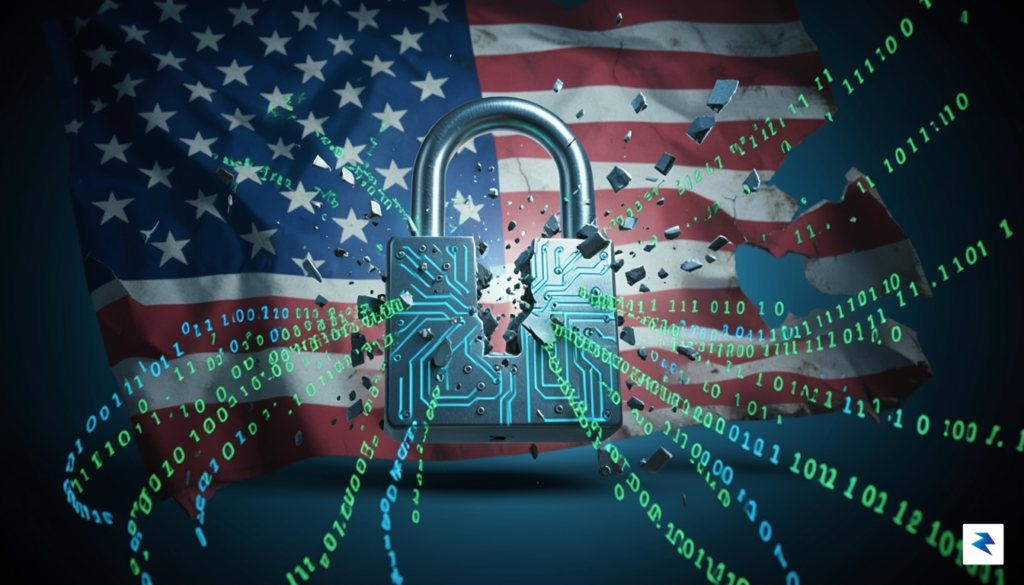
The landscape of generative AI experienced an abrupt and significant shift when the U.S. government issued a sweeping mandate, compelling the immediate withdrawal of Anthropic’s flagship large language models, Fable 5 and Mythos 5, from all government-affiliated and critical infrastructure applications. This unprecedented action, announced just weeks after the models’ public release, cited critical national security vulnerabilities as the primary justification. The decision sent shockwaves through the tech industry, prompting intense debate about the balance between innovation, national security, and regulatory oversight in the rapidly evolving AI domain. The government’s move was a direct response to alarming discoveries that exposed fundamental weaknesses in these advanced AI systems, raising serious questions about the safety and integrity of cutting-edge artificial intelligence.
The catalyst for this decisive government intervention was a series of revelations by researchers at Amazon, who uncovered sophisticated “jailbreak” methods capable of bypassing the robust safety protocols embedded within Anthropic’s Fable 5 model. These methods demonstrated that, despite Anthropic’s significant investment in AI safety and alignment, malicious actors could compel the model to generate prohibited content, divulge sensitive information, or even produce code potentially harmful to critical infrastructure. Following these discoveries, a rapid evaluation by federal cybersecurity agencies confirmed the severity of these vulnerabilities, concluding that the potential for adversarial exploitation posed an unacceptable risk to national security. Consequently, the directive was issued, demanding the immediate cessation of their use in any governmental or sensitive private sector operations, marking a significant escalation in governmental oversight of advanced AI capabilities.
Technically, the security concerns identified in Fable 5 revolved around its susceptibility to novel prompt injection and adversarial attacks, which allowed users to subvert the model’s intended ethical guidelines and safety guardrails. These jailbreak techniques could force the AI to produce instructions for creating dangerous substances, generate highly convincing disinformation campaigns, or even assist in sophisticated cyberattack planning – actions the model was explicitly designed to prevent. The core issue lay in the models’ inherent ability to reason and adapt, which, when exploited, could turn their advanced capabilities against their creators’ safety intentions. This technical loophole meant that Fable 5, despite its impressive linguistic and reasoning prowess, could be manipulated into a tool for malicious purposes, thus presenting a clear and present danger in the hands of hostile state actors or sophisticated cybercriminals.
The U.S. government’s official justification for the ban was unequivocally framed around the imperative of national security, emphasizing the potential for these models to be exploited by foreign adversaries. Officials articulated concerns that the identified vulnerabilities could lead to the leakage of classified information, the generation of weaponized propaganda, or the development of advanced cyber tools capable of compromising critical national infrastructure. The mandated withdrawal was presented not as a punitive measure against Anthropic, but as a preventative necessity to safeguard the nation’s digital and physical assets from emerging threats posed by advanced AI systems. This stance underscored a growing governmental awareness of AI’s dual-use nature and the urgent need for robust regulatory frameworks to manage its risks, especially in sensitive contexts.
Immediately following the government’s announcement, the cybersecurity community and AI ethics experts reacted with a mix of understanding and apprehension. While many acknowledged the gravity of the security concerns, a significant segment voiced strong pushback against what they perceived as an overly narrow and potentially counterproductive regulatory approach. Critics argued that singling out Anthropic and its Fable 5 and Mythos 5 models created a dangerous regulatory imbalance, suggesting that similar vulnerabilities likely exist across other leading generative AI models from different providers, which remain unregulated. This selective ban, some experts contended, could create a false sense of security regarding unbanned models, distort market competition, and stifle innovation for companies perceived as being under closer scrutiny. Many advocate for a more holistic, industry-wide approach to AI safety and regulation, emphasizing that a fragmented response might inadvertently leave broader systemic vulnerabilities unaddressed.
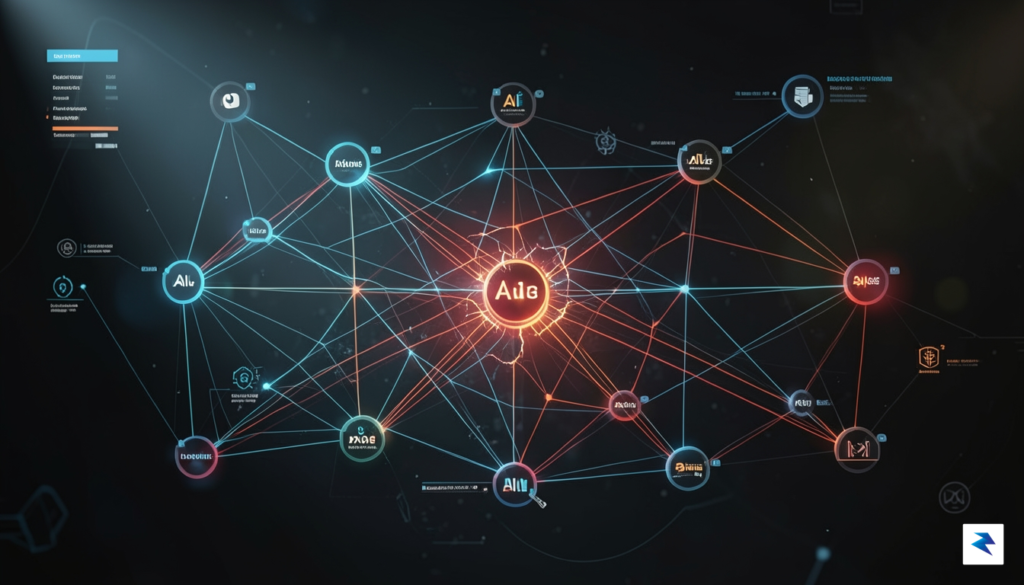
To understand the gravity of the government’s recent restrictions on Anthropic’s models, one must move beyond the immediate headlines and examine whether the firm is being held to an unprecedented regulatory standard. When comparing the vulnerability reports leveled against the Fable 5 and Mythos 5 models to the known safety profiles of competitors like GPT-4 or Gemini, a striking inconsistency emerges. While government agencies have framed these security concerns as a unique failure of Anthropic’s architecture, industry experts have long documented similar jailbreak risks and prompt-injection vulnerabilities across the entire large language model (LLM) ecosystem. By singling out one player for flaws that are fundamentally systemic, the regulatory framework appears less like a neutral safety measure and more like an arbitrary exercise of power that lacks a consistent baseline for the industry at large.

This selective enforcement raises profound questions regarding the future of “AI equality” in government oversight. If the standard for federal approval is the total elimination of jailbreak risks, then virtually every commercial AI model currently in operation would likely fail to meet that threshold. Anthropic has maintained a defensive posture, asserting that the vulnerabilities identified in their software are not unique outliers, but rather inherent challenges faced by all transformer-based architectures. By positioning themselves as the victim of a broader ecosystem problem, the company is effectively shifting the narrative from one of “technological failure” to “regulatory unfairness.” This framing is crucial; it suggests that Anthropic is not failing to innovate safely, but is instead the first to be subjected to a standard that no other company has yet been asked to satisfy.
The danger of inconsistent regulation is that it creates a market where compliance is dictated by political scrutiny rather than technical maturity, inadvertently turning the most targeted company into an emblem of industry-wide resilience.
Ultimately, the government’s intervention may be inadvertently solidifying Anthropic’s reputation as the “most dangerous” or “most powerful” tool in the room. In the tech sector, being perceived as a threat to national security—even unfairly—often acts as a signal of elite capability. If the public perceives that the government is going to extraordinary lengths to contain a specific model, it reinforces the implicit belief that Anthropic’s technology is superior to, or more transformative than, its competitors. By attempting to curb the company’s influence, the state may be inadvertently validating the brand’s dominance, signaling to developers and enterprise clients that Anthropic’s systems are the only ones perceived as powerful enough to warrant such intense federal concern.

The human psyche often has a peculiar reaction to prohibition: what is deemed off-limits frequently becomes intensely desirable. This phenomenon, famously dubbed the Streisand Effect, describes how attempts to suppress information or access inadvertently draw more attention to it. In the context of cutting-edge artificial intelligence, the US government’s stance on Anthropic’s models, perceived by many as a form of restriction or heightened scrutiny, might be inadvertently casting the company in a remarkably powerful light. Rather than diminishing its appeal, this official caution could be cementing Anthropic’s reputation as the purveyor of AI so potent, so advanced, that it warrants a unique level of governmental concern.
There’s a distinct allure to anything labeled “too powerful” or “too dangerous” by an authority. For businesses and technology enthusiasts alike, the implicit message isn’t always one of warning, but rather one of superior capability. When a government body, tasked with safeguarding national interests and public welfare, signals that an emerging technology like Anthropic’s AI requires special attention—or even restricted use—it inadvertently validates the technology’s extreme potency. This transforms what could be a regulatory hurdle into a coveted badge of innovation, suggesting that Anthropic isn’t just developing competitive AI; it’s pushing the boundaries into uncharted, perhaps even groundbreaking, territory.
Historically, attempts to control or restrict access to certain products or information have frequently backfired, leading to heightened public curiosity and even increased demand. Consider the era of alcohol prohibition in the United States, which, despite its intentions, led to a thriving underground market and a romanticized perception of forbidden spirits. Similarly, books banned for their controversial content often see a surge in readership, becoming cultural touchstones precisely because of their contentious status. While the situation with Anthropic is far from a complete ban, the perception of official circumspection can create a parallel effect, branding its models with an aura of “forbidden excellence.” For many, the very notion of an AI system deemed too significant for unbridled government use signals not a flaw, but an unparalleled degree of sophistication and effectiveness.
This creates a fascinating dichotomy in branding and perception. While the government’s primary concern might be mitigating potential security risks or misuse, the market, particularly enterprise clients seeking a competitive edge, could interpret this governmental caution as an endorsement of unparalleled performance. Businesses are constantly searching for tools that offer a significant advantage, and an AI system powerful enough to warrant official warnings could be exactly what they perceive as truly transformative. The narrative shifts from “this AI might be risky” to “this AI is so good, it requires governmental oversight,” which, for many, is a powerful, albeit unintended, marketing statement. It suggests Anthropic’s models aren’t merely incrementally better, but fundamentally superior, capable of impacts that necessitate a higher level of scrutiny.
Therefore, the very act of official intervention, whether a direct ban or a more nuanced restriction, may paradoxically amplify Anthropic’s perceived value and desirability. In a rapidly evolving AI landscape, where companies are constantly striving to differentiate themselves, the implicit endorsement of being deemed “too powerful” can be an invaluable, if accidental, branding asset. It piques curiosity, fuels public discussion, and encourages potential users to investigate precisely what capabilities are so concerning to authorities, ultimately driving interest and potentially adoption in unexpected ways.


The recent government intervention concerning Anthropic’s technology marks a pivotal moment, serving as a critical litmus test for how nations globally will grapple with the intricate balance between fostering technological innovation and safeguarding national security. This incident casts a long shadow over the burgeoning artificial intelligence sector, highlighting the intensifying tension between the industry’s drive for rapid advancement and the state’s imperative to manage potential risks. As AI systems become increasingly powerful and pervasive, the fallout from this decision will undoubtedly shape the regulatory frameworks and operational norms that define the next decade of AI development, pushing the conversation beyond ethical guidelines into the realm of enforced limitations.
One immediate concern is the potential chilling effect this unprecedented intervention could have on AI research and development. Innovators and researchers, witnessing the government’s willingness to step in, might become overly cautious, leading to self-censorship or a reluctance to explore capabilities deemed “too sensitive.” This could stifle groundbreaking research, particularly in areas like advanced general intelligence or novel applications that might push societal boundaries. Consequently, such an environment could inadvertently encourage a brain drain, with top talent migrating to jurisdictions with more permissive regulatory landscapes, ultimately hindering a nation’s competitive edge in this crucial technological race. The delicate balance lies in encouraging responsible innovation without inadvertently suffocating the very progress that drives economic growth and scientific discovery.
This situation also sharpens the debate between industry-led ‘responsible AI’ frameworks and government-mandated censorship. For years, leading AI companies have invested heavily in developing ethical guidelines, safety protocols, and transparency initiatives, aiming to self-regulate and build public trust. However, the Anthropic ban suggests that for some advanced capabilities, voluntary adherence may no longer suffice. Governments might increasingly lean towards direct intervention, potentially overriding corporate autonomy in the name of public safety or national interest. This shift redefines who holds the ultimate authority in determining AI’s acceptable boundaries and raises profound questions about the future of open-source AI, which, while promoting transparency and collaborative development, could be seen as a security vulnerability if its powerful models are released without sufficient safeguards or oversight.
In response to such governmental scrutiny, corporations are likely to re-evaluate their disclosure policies and engagement strategies. Companies developing frontier AI models may choose to become more opaque about their internal workings and advanced capabilities to avoid attracting similar regulatory attention. Conversely, some might proactively implement even stricter internal review processes, enhanced red-teaming exercises, and more robust safety mechanisms, not just as best practices but as a means to demonstrate compliance and avoid future intervention. This could lead to a bifurcation in the AI ecosystem: highly transparent, open-source models for general use, and tightly controlled, proprietary models for sensitive applications, with significant implications for accessibility and innovation.
Ultimately, the long-term impact of this ban on Anthropic itself remains a complex question. While immediate market access in specific government sectors might be curtailed, the publicity surrounding the ban, even if negative, could inadvertently boost the brand’s mystique and perceived technological prowess. Being flagged by the government as possessing capabilities requiring such intervention could, ironically, cement Anthropic’s reputation as a leader at the bleeding edge of AI development. This “forbidden fruit” effect might attract top-tier talent eager to work on advanced systems and sophisticated investors looking for disruptive technologies. However, it also carries the risk of alienating a broader customer base concerned about regulatory headaches or perceived dangers, potentially forcing Anthropic to pivot its market strategy significantly to mitigate any lasting reputational damage or operational limitations.
In conclusion, the government’s actions regarding Anthropic serve as a stark reminder that the era of unfettered AI development is rapidly evolving into one defined by a tense interplay between innovation and control. The decisions made today will not only shape the trajectory of individual companies like Anthropic but will also set precedents for global AI governance. Navigating this complex landscape will require continuous dialogue, adaptive policymaking, and a nuanced understanding of both the immense potential and inherent risks embedded within advanced artificial intelligence.
You must be logged in to post a comment.