
The Vision: Transforming India's Digital Landscape

For over a decade, Reliance Jio has functioned as the bedrock of India’s digital revolution, effectively lowering the barrier to entry for millions by providing affordable data connectivity. However, Mukesh Ambani is now signaling a profound strategic evolution, shifting the company’s identity from a mere telecommunications provider to a comprehensive AI-first ecosystem. This pivot is not just about faster internet speeds; it is about embedding intelligence into the very fabric of daily human interaction. By leveraging a massive subscriber base of over 500 million, Reliance is positioning itself to become the central nervous system of India’s digital economy, where AI is no longer a luxury for the tech-elite but a standard utility available to every citizen.

The core of this vision lies in the democratization of artificial intelligence, ensuring that the benefits of machine learning and large language models reach the average consumer, regardless of their location or socioeconomic status. Ambani’s strategy involves integrating AI capabilities directly into the applications that Indians use every day—from banking and education to healthcare and entertainment. By weaving these intelligent layers into the existing Jio ecosystem, the company aims to reduce the friction of adoption, allowing users to interact with complex technologies through simple voice commands and localized language interfaces. This approach effectively removes the language and literacy barriers that have historically kept significant portions of the population on the fringes of the digital world.
The true measure of technological success is not how sophisticated the code is, but how seamlessly it integrates into the daily lives of the masses, turning complex digital tasks into intuitive human experiences.
Furthermore, this transformation is designed to scale rapidly by utilizing India’s unique demographic profile. As the country continues to undergo rapid digitalization, Reliance is betting that an AI-centric model will create unprecedented efficiency for small businesses and individual creators alike. By providing the tools to automate routine tasks, generate localized content, and optimize personal productivity, the company is effectively building an “AI-for-everyone” infrastructure. This shift is clearly intended to move beyond the traditional “pipe” model of telecom, where the provider simply facilitates the movement of data, toward a value-added model where the provider creates, curates, and optimizes the digital experience for every single user.
Ultimately, this ambitious roadmap represents a fundamental change in how digital services will be consumed in the coming decade. Whether it is through AI-driven search, predictive assistance in everyday apps, or personalized educational platforms, the goal is to make the digital experience feel invisible yet omnipresent. By aligning its massive infrastructure with the cutting edge of global AI development, Reliance Jio is not just participating in the technological gold rush; it is attempting to define the very architecture of how India interacts with the digital future.
Jio’s AI Infrastructure: Building the Backbone

To realize the ambitious vision of embedding artificial intelligence into the daily lives of half a billion people, Reliance Jio is fundamentally re-engineering its network architecture. At the heart of this transformation is the aggressive deployment of 5G Standalone (SA) networks, which serve as the essential high-speed highway for data-intensive AI tasks. Unlike older generations of mobile connectivity, 5G offers the ultra-low latency required for real-time AI processing. By pushing computational power to the “edge”—physically closer to the user—Jio ensures that voice-activated assistants, automated app features, and predictive services react instantaneously, rather than suffering from the sluggish delays typical of centralized cloud processing.

Beyond the connectivity layer, the company is committing massive capital expenditure toward the construction of AI-ready data centers strategically positioned across the subcontinent. These facilities are specifically designed to handle the heavy lifting of Large Language Models (LLMs) and complex machine learning workloads that demand immense graphics processing unit (GPU) capacity. By localizing this compute power, Jio not only circumvents the latency issues associated with routing data to international servers but also addresses critical data sovereignty concerns. This localized infrastructure acts as the digital backbone of the operation, providing the necessary horsepower to run sophisticated AI models that are trained on, and optimized for, the unique linguistic and cultural nuances of the Indian market.
The true power of AI is not found in the cloud alone, but in the seamless, invisible integration of compute power exactly where the user needs it most.
Scaling this vision to 500 million users requires more than just internal hardware; it necessitates a robust ecosystem of strategic global partnerships. Reliance has actively collaborated with world-leading technology giants to source state-of-the-art silicon, high-performance servers, and advanced software frameworks that are capable of powering AI at an unprecedented scale. These alliances allow Jio to bypass the traditional hurdles of infrastructure development, effectively leapfrogging years of iterative testing. By integrating these high-end global tools into a domestic network fabric, the company is creating a cohesive, scalable environment where AI is not an optional add-on, but a foundational feature of every call, app, and smart home interaction.
- Ultra-Low Latency: Utilizing 5G Standalone technology to enable near-instantaneous AI responses.
- Edge Computing: Distributing processing power closer to the user to reduce bandwidth strain and improve performance.
- Localized Compute: Building domestic, GPU-dense data centers to host and train massive AI models locally.
- Strategic Alliances: Leveraging partnerships with global tech leaders to access the latest in high-performance hardware and AI frameworks.
Ultimately, this infrastructure play is about democratizing access to high-end technology. By building a network that treats AI as a utility—much like electricity or mobile data—Reliance is setting the stage for a new digital era. Whether it is a rural farmer accessing real-time crop analysis via a voice-activated app or an urban professional utilizing automated scheduling assistants, the underlying architecture is designed to remain invisible yet omnipresent, ensuring that the promise of artificial intelligence is delivered reliably to every corner of the country.
Integrating AI into Daily Digital Life

The vision for a ubiquitously intelligent network begins with the transformation of the humble phone call. Rather than viewing voice communication as a static utility, the new strategy aims to deploy real-time AI translation engines directly into the calling experience. This means that language barriers could soon dissolve, allowing users speaking entirely different languages to converse fluently as the system processes and translates speech mid-sentence. Beyond translation, automated call assistance will act as a digital concierge, capable of transcribing conversations, summarizing key action items, and even managing scheduling tasks without the user needing to leave the call interface. By embedding these capabilities into the network layer, the infrastructure becomes proactive rather than reactive, turning every conversation into an opportunity for heightened productivity.
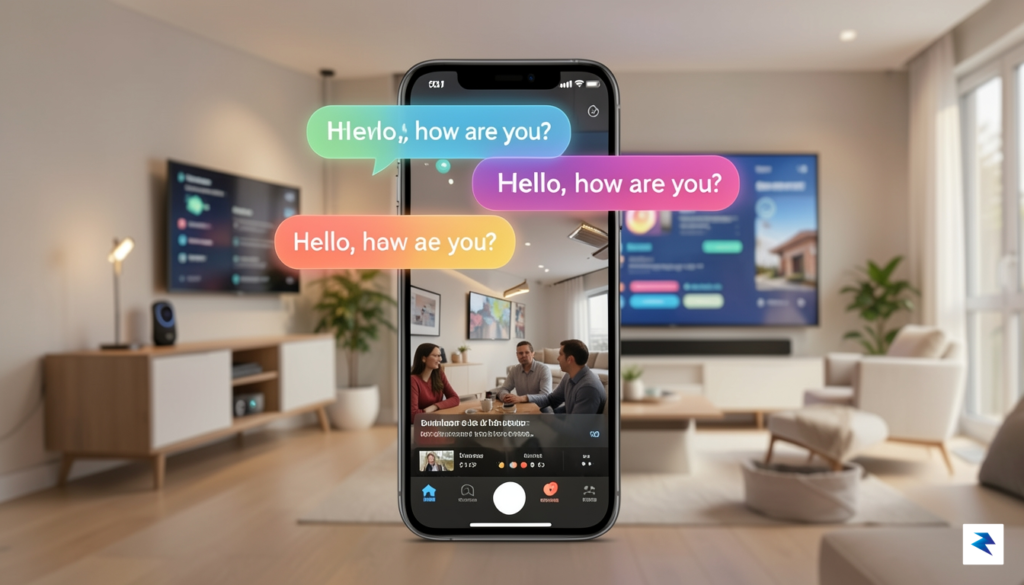
Personalization is the next frontier, as the company looks to move beyond simple recommendation algorithms toward a truly predictive content ecosystem. Within the suite of entertainment and utility apps, AI will act as a hyper-personalized curator that learns individual preferences with surgical precision. Instead of scrolling through static menus, users will find their digital environment shifting to match their mood, historical habits, and real-time needs. Whether it is filtering through endless streaming content to surface exactly what a viewer wants to watch, or suggesting specific productivity tools based on a user’s current project status, the system aims to reduce digital friction significantly. This deep integration ensures that the more a user interacts with the ecosystem, the more intuitive and helpful the interface becomes.
The goal is to transition from an era of manual digital navigation to an age where the technology anticipates the user’s intent before they even tap a button.
Furthermore, the ‘Jio Home’ ecosystem serves as the physical manifestation of this digital intelligence, bridging the gap between mobile software and domestic infrastructure. Through seamless IoT (Internet of Things) integration, the AI is designed to act as the central nervous system for the modern household. From managing energy consumption by adjusting smart thermostats to coordinating security alerts and appliance status updates, the system creates a cohesive environment that is managed through a single, unified interface. By bringing these smart home features under the umbrella of a single network provider, the barrier to entry for advanced home automation is drastically lowered. Consequently, users no longer need to navigate fragmented systems; instead, they gain a holistic, intelligent space that learns how to optimize their living environment for comfort and efficiency, all controlled through the same digital identity used for their mobile and data services.
Economic Impact and Global Implications

The strategic deployment of artificial intelligence across Reliance’s massive ecosystem marks a transformative moment for India’s digital economy, effectively transitioning the nation from a consumer of global technology to an architect of its own AI-driven future. By embedding advanced machine learning models into the daily interactions of over half a billion users, the company is creating a massive, localized data loop that is unparalleled in the developing world. This integration is expected to catalyze a new wave of business models, ranging from hyper-personalized retail experiences to automated agricultural advisory services, which will likely serve as a blueprint for other emerging markets struggling to bridge the digital divide. As these services become deeply ingrained in the fabric of Indian life, they provide the necessary scale for local startups to innovate atop a robust, readily available intelligence layer, rather than building from the ground up.

From a global perspective, this aggressive push positions India as a formidable counterweight to the dominance of Silicon Valley and Chinese tech giants. By leveraging its unique demographic scale, India can now dictate the pace of AI adoption in ways that prioritize regional linguistic diversity and specific socio-economic needs. This shift forces global technology players to rethink their market strategies, as they can no longer rely on standardized, one-size-fits-all solutions to capture the Indian consumer. Instead, the market is moving toward a model of “sovereign AI,” where national infrastructure is prioritized, and local data remains within the jurisdiction, fostering a more self-reliant technological ecosystem that is less susceptible to foreign platform dependencies.
The integration of AI into every facet of the consumer journey is not merely a corporate strategy; it is a national economic engine that turns raw data into tangible, inclusive development.
Furthermore, the ripple effects of this initiative are likely to reverberate through global capital markets and technology supply chains. As Reliance invests heavily in localized compute power and domestic data centers, India is rapidly moving up the value chain, evolving from a back-office support hub into a primary hub for AI research and development. This transition is attracting significant interest from global investors who are eager to participate in the growth of a market that is not just scaling, but fundamentally reshaping how AI interacts with a massive, diverse population. Ultimately, this gambit serves as a litmus test for whether a single, coordinated national effort can successfully leapfrog traditional stages of digital development to achieve global leadership in the age of intelligence.
Navigating Privacy and Ethical Challenges

As Reliance Industries charts a course toward embedding artificial intelligence into every facet of its expansive ecosystem, the promise of hyper-personalization inevitably collides with the growing global demand for robust data privacy. With a user base numbering in the hundreds of millions, the sheer volume of behavioral, financial, and communication data flowing through Jio’s networks presents a monumental task in governance. True digital sovereignty requires that Ambani’s vision does not come at the expense of individual autonomy. For this AI-driven paradigm to gain long-term public trust, the company must move beyond mere regulatory compliance and adopt a “privacy-by-design” framework that prioritizes the user’s right to control their own digital footprint.

The core challenge lies in the tension between training sophisticated large language models and protecting the granular intimacy of the data required to fuel them. When AI operates across calls, retail apps, and smart home devices, it creates a 360-degree profile of the consumer that could be vulnerable if not strictly siloed. Reliance faces the imperative to implement advanced encryption techniques and localized data processing, ensuring that sensitive information remains within national borders and under the user’s explicit jurisdiction. Transparent consent mechanisms will be the cornerstone of this initiative; users must be empowered with clear, accessible dashboards that allow them to opt-in or out of specific AI learning cycles without losing access to essential services.
To achieve widespread adoption, AI integration must be viewed not as a data-harvesting machine, but as a utility that respects the sanctity of personal information through radical transparency and decentralized security protocols.
Furthermore, the ethical deployment of these systems necessitates a proactive approach to mitigating algorithmic bias and security risks. Reliance must invest heavily in rigorous auditing processes to ensure that their AI models do not inadvertently discriminate or perpetuate societal prejudices through their automated decision-making. By establishing an independent ethical review board and fostering open communication about how data is used to improve user experiences, the company can transform potential apprehension into a competitive advantage. Ultimately, the success of this ambitious technological expansion will be measured not just by the intelligence of the software, but by the integrity of the infrastructure protecting the people who rely on it every day.