
Inside China’s Crypto Underground: How Traders Outmaneuver the National Ban
The Persistence of China's Crypto Underground In September 2021, the People’s Bank of China (PBOC) issued its most decisive blow against…


The acquisition of Deductive AI by Elastic represents a pivotal shift in the broader M&A landscape, where industry leaders are pivoting from passive monitoring to autonomous intervention. For years, the observability market focused primarily on the “what” and the “where”—providing dashboards that alerted engineers to system failures or anomalies in real time. However, as distributed systems have grown in complexity, the sheer volume of data has outpaced human capacity to diagnose and patch issues manually. By absorbing Deductive AI, Elastic is effectively signaling that the future of enterprise software is not just about observing state changes, but about proactively engineering self-healing infrastructure that can remediate problems before they impact the end user.
This move is particularly telling given the meteoric rise of Deductive AI. In just three years, the startup transitioned from an early-stage venture to an $85 million acquisition target, underscoring the intense market demand for specialized AI agents that can navigate complex codebases. In an environment where every millisecond of downtime translates to significant revenue loss, enterprises are no longer satisfied with tools that merely identify a bug; they are aggressively seeking platforms that can autonomously navigate the root cause and execute fixes. This transition from “observability” to “remediation” is the new competitive frontier for dev-tool providers, as it directly addresses the critical industry metric known as mean time to resolution (MTTR).
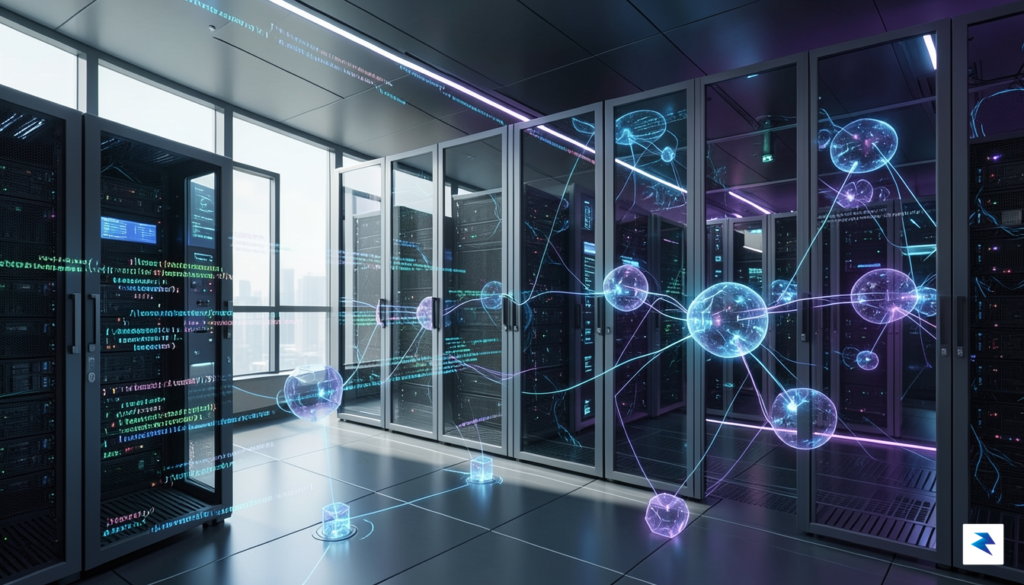
The value proposition for this acquisition is deeply rooted in the economics of large-scale distributed systems. When an enterprise application spans hundreds of microservices, the cognitive load on site reliability engineering (SRE) teams becomes unsustainable. By integrating Deductive AI’s capabilities into the Elastic stack, Elastic is empowering its users to shrink the gap between discovery and resolution. Reducing MTTR is not just a technical optimization; it is a financial imperative that preserves developer velocity and maintains brand trust in high-stakes environments.
The shift toward autonomous debugging marks a fundamental change in software development: moving away from reactive firefighting toward a model of continuous, AI-driven system maintenance.
Ultimately, this acquisition reflects a broader consolidation trend among AI-native developer tools. As the initial excitement surrounding generative AI shifts toward practical, functional utility, companies that can demonstrate tangible impact on system reliability are becoming high-value targets. Elastic’s decision to bring Deductive AI under its umbrella ensures that it remains at the forefront of this evolution, transforming its platform into an ecosystem that understands not only the data produced by software but the logic required to keep it functional at scale.

Modern software development operates on an unprecedented scale, with complex, distributed systems becoming the norm. Applications are often composed of countless microservices, running across various cloud environments, making the task of identifying and resolving issues incredibly challenging. Developers are frequently overwhelmed by a deluge of logs and telemetry data, often struggling to differentiate between trivial anomalies and critical system failures. This reactive approach to debugging, where teams only address problems after they’ve manifested and impacted users, leads to significant downtime, increased operational costs, and considerable developer frustration across the industry.
Deductive AI emerged as a transformative force by fundamentally rethinking this traditional debugging paradigm. Rather than merely aggregating and displaying error logs, their platform employs sophisticated machine learning algorithms to proactively analyze system behavior and predict potential failures. This shift from a reactive, log-centric model to a predictive, intelligence-driven approach allows organizations to move beyond simply knowing “what went wrong” to understanding “why it went wrong” and, crucially, “how to fix it.” By discerning meaningful patterns within vast datasets, Deductive AI effectively filters out the noise, highlighting only the most critical issues that demand immediate attention.
The core of Deductive AI’s innovation lies in its ability to analyze the intricate context surrounding a failure. Instead of just flagging an error message, the platform delves into related system states, code changes, deployment histories, and environmental variables to construct a comprehensive understanding of the problem’s root cause. This deep contextual analysis empowers the system to not only suggest precise remediation steps but, in some cases, even to autonomously execute fixes or rollbacks, significantly reducing the mean time to resolution (MTTR). This proactive capability liberates developers from tedious hours of manual root-cause analysis, allowing them to focus on innovation and feature development rather than endless firefighting.
The significant backing from venture capital firm CRV was a clear testament to the groundbreaking potential of Deductive AI’s vision. CRV recognized that the company wasn’t just offering an incremental improvement to existing monitoring tools; it was pioneering a new category of autonomous debugging that addresses a pervasive and costly industry problem. This investment provided the crucial capital and strategic guidance needed to accelerate their research and development, scale their platform, and bring their transformative technology to a broader market. Such substantial early-stage confidence underscored the market’s hunger for more intelligent, less labor-intensive solutions to software reliability.
Ultimately, the impact of AI-assisted code analysis, as championed by Deductive AI, extends far beyond mere error detection; it represents a profound leap in developer productivity and overall software quality. By automating much of the diagnostic and even remedial work, the development lifecycle is dramatically shortened, enabling faster iteration and quicker deployment of new features. Developers gain an intelligent co-pilot, empowering them to deliver more robust and reliable software with unprecedented efficiency. This strategic move signals a future where autonomous debugging becomes an integral, expected component of every modern software development toolkit, paving the way for even more resilient and self-healing applications across the digital landscape.
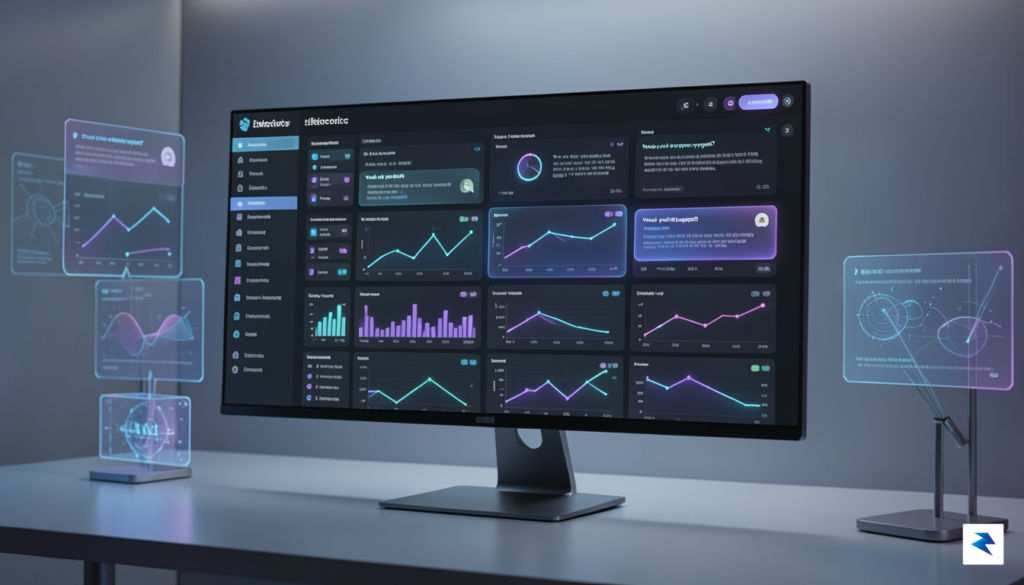
The acquisition of Deductive AI marks a pivotal shift for the Elastic Stack, moving the platform beyond its traditional role as a high-powered search and analytics engine into the realm of active remediation. Historically, Elastic has excelled at providing deep observability—ingesting massive volumes of telemetry data to help engineers identify where a system is failing. By folding Deductive AI’s autonomous debugging capabilities into the existing observability suite, Elastic is effectively closing the loop between insight and action. Instead of merely alerting a DevOps engineer to a spike in latency or a series of 500-series errors, the integrated platform will likely be able to trace those symptoms back to the specific code commits or configuration changes that triggered the anomaly, significantly reducing the “mean time to resolution” (MTTR).

For existing customers, this integration promises to transform the daily experience of incident management. Rather than manually parsing through hundreds of thousands of log lines to pinpoint a root cause, teams can leverage AI agents that autonomously correlate disparate data points—such as performance metrics, trace spans, and application logs—to generate actionable summaries or even suggested code patches. This transition represents a shift from reactive monitoring to proactive self-healing infrastructure. By embedding these agents directly into the Elastic workflow, the platform can act as a force multiplier for lean SRE teams, allowing them to focus their human expertise on high-level architecture rather than the repetitive drudgery of debugging routine production issues.
The true value of this acquisition lies in the transition from passive observability to active remediation, turning Elastic from a tool that observes the fire into a system that helps extinguish it.
Despite the clear benefits, integrating autonomous agents into mature, mission-critical data pipelines presents its own set of technical hurdles. Organizations often operate under strict compliance and security mandates, meaning that any AI-driven intervention must be transparent, verifiable, and bounded by guardrails. Elastic will likely need to implement rigorous “human-in-the-loop” workflows, where the AI provides the diagnostic path but requires an explicit approval from an engineer before executing any changes to the production environment. Furthermore, ensuring that these autonomous agents remain context-aware across hybrid and multi-cloud environments will be essential to maintaining the high performance and reliability that Elastic’s enterprise user base demands.
Looking ahead, this acquisition hints at a broader roadmap expansion toward autonomous infrastructure management. As these AI agents become more sophisticated, we can expect them to evolve beyond simple debugging to encompass proactive capacity planning, automated patch management, and even self-optimizing database configurations. By combining the raw search power of the Elastic Stack with the specialized reasoning capabilities of Deductive AI, Elastic is positioning itself to become the central nervous system of modern software operations. This is not merely an incremental product update; it is a fundamental shift toward an era where the infrastructure itself can identify, explain, and resolve its own operational challenges in real-time.


The acquisition of Deductive AI marks a pivotal shift in how we perceive the lifecycle of cloud-native applications. As software architectures grow exponentially in complexity, the traditional reliance on manual “firefighting” by DevOps teams is becoming unsustainable. We are entering an era where the focus of engineering talent will pivot away from repetitive debugging and toward the strategic orchestration of autonomous systems. By integrating advanced machine learning directly into the observability stack, organizations can move toward a “human-in-the-loop” model, where the AI handles the grueling task of incident triage and root-cause analysis, leaving engineers to focus on architectural innovation and high-level strategy.
This consolidation trend suggests that the developer tools market is maturing rapidly, moving beyond simple automation scripts toward truly intelligent, self-healing infrastructures. For the DevOps job market, this does not spell the end of human involvement; rather, it signifies a professional evolution. Engineers will increasingly function as “system overseers,” setting the parameters and guardrails within which AI agents operate. While the efficiency gains of automated remediation are undeniable, they introduce a critical need for robust governance. As these systems gain the power to alter production environments, the industry must prioritize strict security protocols and data privacy standards to ensure that automated fixes do not inadvertently introduce vulnerabilities or violate compliance mandates.
The true value of autonomous debugging lies not in replacing the engineer, but in elevating them to a role that prioritizes system design and long-term reliability over the chaotic urgency of manual troubleshooting.
Ultimately, the trade-off between speed and oversight remains the central challenge of this new paradigm. Organizations must balance the convenience of “set-it-and-forget-it” remediation with the necessity of maintaining transparency. If we allow black-box AI to manage our infrastructure without sufficient audit trails, we risk losing the deep understanding of system behavior that only manual investigation can provide. Therefore, the successful implementation of tools like those developed by Deductive AI will depend on our ability to build trust through observability—ensuring that for every automated action taken, there is a clear, understandable, and reversible logic behind it. As we embrace these autonomous capabilities, the most successful companies will be those that treat AI as a powerful partner rather than a total replacement for human intuition.
You must be logged in to post a comment.