
India’s Strategic Pivot: The Return of Iranian Oil Explained
The Strategic Resurgence of India-Iran Energy Ties For decades, the energy relationship between New Delhi and Tehran served as a cornerstone…


In September 2021, the People’s Bank of China (PBOC) issued its most decisive blow against the digital asset sector, declaring all cryptocurrency-related transactions illegal and effectively barring foreign exchanges from serving mainland residents. This sweeping mandate was designed to eliminate the speculative volatility that authorities feared could threaten national financial stability and facilitate capital flight. Yet, rather than disappearing entirely, the Chinese crypto market has retreated into a sophisticated digital shadow economy, revealing that government prohibitions are often no match for the deep-seated financial ambitions of a tech-savvy population.
The resilience of this underground market is largely fueled by a persistent psychological drive among retail investors who view digital assets as a necessary hedge against traditional, often stagnant, investment vehicles. For many, real estate—once the bedrock of Chinese household wealth—has become a source of anxiety due to market instability, while equity markets frequently underperform. Consequently, cryptocurrency is perceived not merely as a speculative gamble, but as a critical gateway to global financial participation. Despite the constant threat of legal intervention, the allure of high-yield potential and the desire for financial autonomy continue to outweigh the risks of state censure.
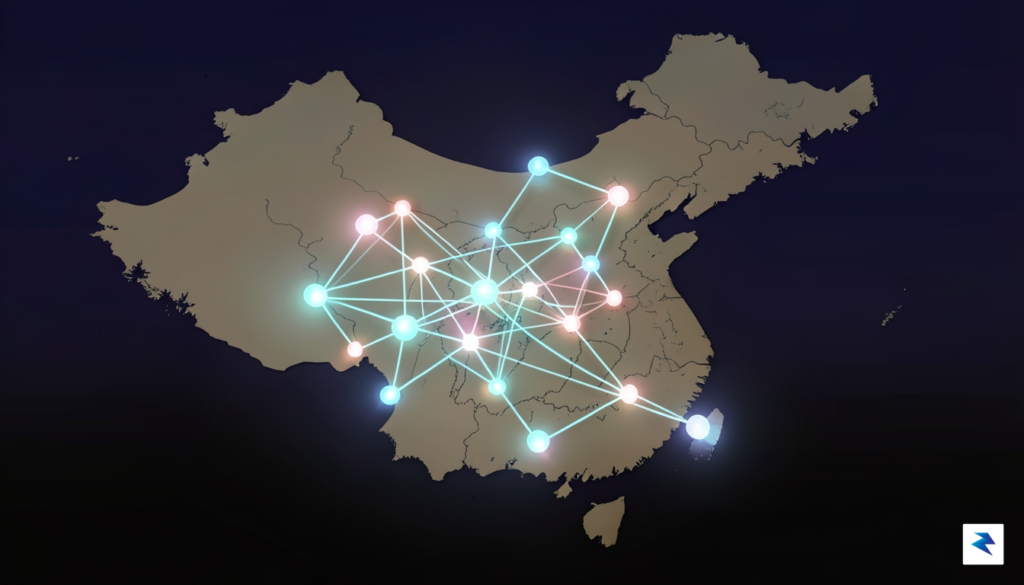
This ongoing struggle has evolved into a high-stakes cat-and-mouse game between state regulators and persistent traders. As authorities implement advanced monitoring systems to flag suspicious banking activities and block VPN services, investors have become increasingly adept at navigating these restrictions. The ecosystem has shifted dramatically away from centralized, domestic exchanges—which were once easily shuttered—toward decentralized peer-to-peer (P2P) networks. By leveraging encrypted messaging platforms and obfuscated payment channels, participants can trade digital assets with relative anonymity, effectively bypassing the reach of traditional banking oversight.
The structural shift toward decentralized peer-to-peer networks has decentralized the risk, making it nearly impossible for regulators to target a single point of failure within the crypto ecosystem.
Ultimately, the persistence of China’s crypto underground highlights a fundamental tension between centralized monetary control and the decentralized nature of blockchain technology. While the 2021 ban successfully pushed the industry to the fringes, it simultaneously fostered a more resilient, decentralized infrastructure that is inherently resistant to top-down suppression. As long as there is a clear demand for alternative wealth management strategies, the crypto market in China will likely continue to adapt, finding new, creative ways to circumvent restrictions and maintain its presence in the digital shadows.

At the heart of China’s persistent crypto ecosystem lies a sophisticated web of over-the-counter (OTC) brokers who function as the essential bridge between the controlled Chinese yuan and the borderless world of digital assets. While the state has systematically dismantled centralized exchanges, it has inadvertently pushed liquidity into the shadows, where these intermediaries operate as human circuit breakers. These brokers act as escrow agents, accepting local bank transfers or digital payments from retail buyers and releasing equivalent values in Tether (USDT) or other stablecoins into the buyer’s private wallet. By meticulously maintaining liquidity pools across various platforms, these facilitators effectively neutralize the government’s efforts to isolate the domestic economy from global crypto volatility.
The operational infrastructure of these middlemen relies heavily on encrypted communication platforms like Telegram and WeChat, where trust is brokered through reputation scores and established social circles. Unlike the open order books of traditional exchanges, these transactions occur in private, one-on-one chats that leave little trace for automated regulatory surveillance. Traders often utilize a rotating set of bank accounts—frequently sourced from third parties—to obfuscate the trail of funds, shifting capital in smaller, less conspicuous tranches to avoid triggering automated anti-money laundering (AML) alerts. This digital “cat-and-mouse” game requires constant vigilance, as brokers must frequently migrate their operations to new accounts or platforms whenever a particular channel becomes compromised by law enforcement.

The resilience of the Chinese crypto underground is not merely a product of technological ingenuity, but a reflection of the enduring demand for capital mobility in an environment defined by strict currency controls.
Operating in this grey zone carries profound legal risks, as the Chinese judicial system increasingly interprets such facilitation as “assisting in illegal financial activities” or even money laundering. Despite the looming threat of asset freezes, long-term imprisonment, and permanent blacklisting from the formal banking sector, many middlemen remain active due to the high profit margins associated with the “risk premium” they charge. Historically, capital flight was managed through traditional underground banks or complex trade-invoicing schemes, but current illicit transfer techniques are vastly more efficient. Today’s middlemen have replaced the physical movement of cash with instantaneous, immutable blockchain transactions, making it far more difficult for authorities to trace the final destination of wealth. By leveraging these modern decentralized tools, they have effectively rendered the national firewall permeable, ensuring that even under a total ban, the flow of capital remains fluid and largely unstoppable.

To navigate the stringent digital borders imposed by the Great Firewall, Chinese crypto traders have developed a sophisticated, multi-layered infrastructure that functions almost entirely in the shadows. At the foundational level, high-end Virtual Private Networks (VPNs) and specialized proxy services are no longer just optional tools; they are the essential gateways that allow users to mask their IP addresses and bypass state-level censorship. By routing traffic through encrypted tunnels, traders gain access to international exchanges and decentralized applications (dApps) that would otherwise be blocked. This creates a persistent digital camouflage, effectively hiding the user’s physical location and activity from domestic internet service providers while maintaining the illusion of standard web traffic.
Once inside this digital perimeter, stablecoins—most notably Tether (USDT)—have become the bedrock of the entire ecosystem, serving as a reliable medium of exchange that avoids the volatility of Bitcoin while circumventing the traditional banking system. Traders utilize these digital assets to settle debts and conduct cross-border transactions without ever touching a regulated financial institution. Because these stablecoins are pegged to the U.S. dollar and operate on permissionless blockchain networks, they allow for rapid, peer-to-peer transfers that leave no clear footprint for state monitoring software to track, effectively bypassing the oversight typically associated with central bank-controlled currencies.

Beyond the blockchain, the most ingenious methods of obfuscation occur in the “off-ramp” and “on-ramp” phases, where digital assets meet local fiat currency. Traders frequently rely on split-payment systems, where a large transaction is broken down into dozens of smaller, seemingly innocuous peer-to-peer transfers across common fintech platforms like Alipay or WeChat Pay. By scattering these payments across a network of personal accounts, traders make it nearly impossible for automated financial compliance algorithms to flag the activity as illicit or suspicious. This “smurfing” technique leverages the sheer volume of daily transactions on these platforms, allowing crypto-related capital flows to blend seamlessly into the background noise of everyday consumer spending.
The strength of the crypto underground lies not in total invisibility, but in the deliberate fragmentation of financial trails that makes centralized detection prohibitively expensive and technically complex for regulators.
Finally, the ecosystem thrives by exploiting inherent loopholes in the domestic fintech landscape. Traders often utilize merchant accounts or dormant corporate profiles to facilitate larger volumes of trade, taking advantage of the fact that these accounts are subjected to different monitoring thresholds than individual consumer wallets. By continuously rotating their payment methods and maintaining a diverse portfolio of digital identities, these participants ensure that if one node in their network is discovered or frozen, the rest of the operation remains intact. This perpetual game of cat-and-mouse forces regulators to constantly update their surveillance heuristics, yet for every new restriction implemented, the shadow infrastructure evolves, proving that technical ingenuity remains the ultimate defense against state-imposed financial limitations.


While the Chinese government has successfully shuttered major centralized exchanges and banned domestic crypto-to-fiat conversion services, the reality on the ground reflects a persistent “whack-a-mole” dynamic. Recent legal precedents, including high-profile cases involving underground money laundering rings, demonstrate that authorities are increasingly adept at utilizing blockchain forensics to trace illicit flows. Law enforcement agencies now routinely employ specialized analytical software to de-anonymize wallet addresses, linking suspicious transactions back to real-world identities through rigorous digital footprint mapping. Despite these technological strides, the decentralized architecture of peer-to-peer (P2P) trading platforms creates a structural blind spot that traditional regulatory frameworks struggle to penetrate effectively.
The primary difficulty lies in the sheer volume and fragmented nature of millions of small-scale, private transactions that occur daily across global messaging apps and decentralized finance (DeFi) protocols. Unlike the structured, monolithic databases of commercial banks, which provide clear audit trails and centralized points of control, blockchain networks operate in a borderless, permissionless environment. When traders move their assets into private, non-custodial wallets, they effectively bypass the gatekeepers that regulators rely upon for reporting and oversight. Consequently, monitoring these micro-transactions requires a level of resource intensity that far exceeds the cost of policing conventional banking systems, placing a significant strain on municipal and national oversight budgets.
“The decentralized nature of modern crypto trading creates a persistent friction point where state authority meets the immutable, borderless code of the blockchain.”
Furthermore, the effectiveness of China’s enforcement efforts is heavily contingent upon the cooperation of international jurisdictions, which often remains elusive. When a transaction crosses digital borders to reach an offshore platform or a jurisdiction with more lenient reporting requirements, Chinese authorities face a wall of legal and technical obstacles. Without a unified global standard for digital asset compliance, traders can easily exploit these regulatory gaps to maintain their positions. As long as these borderless channels remain open, the cat-and-mouse game will likely continue, forcing regulators to choose between increasingly intrusive surveillance of personal communications and accepting the presence of a resilient, albeit shadowed, financial ecosystem.

The central pillar of China’s strategy to neutralize the influence of decentralized finance is the rapid expansion of the e-CNY, or Digital Yuan. By introducing a state-backed Central Bank Digital Currency (CBDC), Beijing aims to provide the efficiency and convenience of digital transactions while maintaining absolute control over the monetary supply. This move is designed to render speculative assets like Bitcoin redundant for the average citizen, as the government offers a “safe” digital alternative that aligns with national security priorities. However, the inherent desire for censorship-resistant assets often persists, suggesting that a state-controlled ledger may not fully satisfy the demand for genuine financial autonomy among tech-savvy demographics.
Excluding China from the global crypto innovation cycle presents a complex economic paradox for the nation’s leadership. While the ban protects the domestic financial system from the volatility of decentralized assets, it simultaneously risks isolating China from the burgeoning Web3 economy, which is increasingly becoming a bedrock of global digital infrastructure. By forcing talent and capital into the shadows, the government may be inadvertently stifling its own long-term competitiveness in the blockchain sector. The economic trade-off, therefore, is a precarious balancing act: maintaining domestic order at the expense of potentially missing out on the next major shift in financial technology.

Looking ahead, there is persistent speculation regarding whether Beijing might eventually pivot toward “regulatory sandboxes”—controlled environments where blockchain technology can be tested under strict government oversight. Such an approach could allow the state to harness the efficiency of distributed ledgers for supply chain management or cross-border settlements without relinquishing control over capital flows or public trading. If such a compromise were reached, it would signify a shift from a total ban to a managed integration model, where the underlying technology is embraced while the speculative, decentralized nature of crypto remains prohibited.
The core tension remains: can a state that prioritizes total transparency and control truly coexist with a financial asset designed to function outside of it?
Ultimately, the appetite for digital assets in China appears to be an inevitable force that even the most stringent policies struggle to fully extinguish. Whether through continued evasion or eventual regulatory evolution, the demand for decentralized finance is deeply rooted in the digital behavior of modern investors. As the global landscape continues to mature, China will likely find that a perpetual cat-and-mouse game is not only resource-intensive but perhaps unsustainable. Whether the path forward involves further crackdowns or a calculated opening, the trajectory of digital finance suggests that the total prohibition of decentralized assets will remain one of the most challenging, and perhaps elusive, policy goals of the decade.
You must be logged in to post a comment.