
Elastic Acquires Deductive AI: A New Era for Autonomous Software Debugging
The Strategic Intersection of AI and Software Reliability The acquisition of Deductive AI by Elastic represents a pivotal shift in the broader…

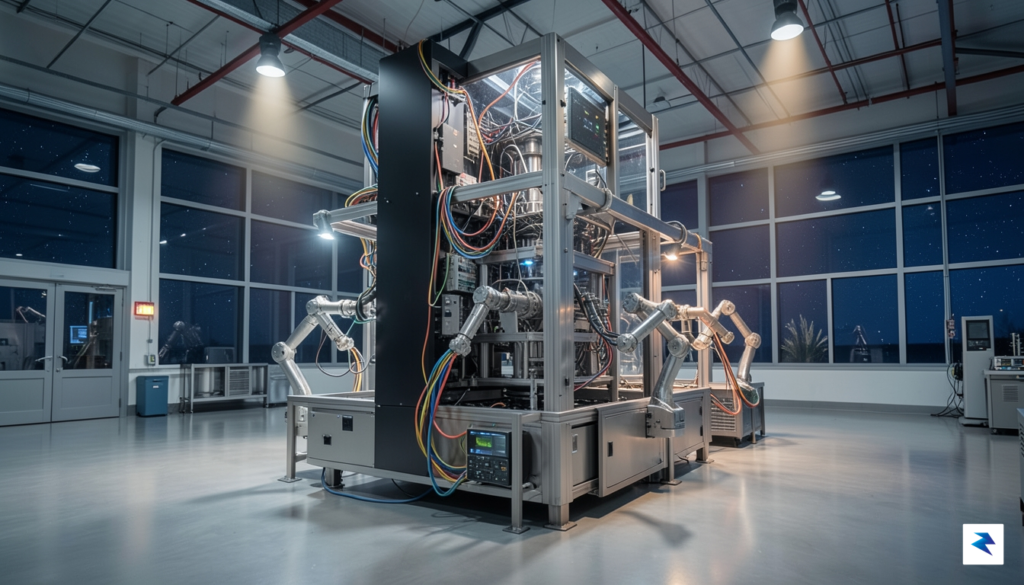
At the center of the current geopolitical storm lies a fundamental discrepancy between Western intelligence assessments and the operational reality maintained by ASML, the Dutch semiconductor giant. Recent whispers and formal inquiries have centered on whether the most sophisticated lithography systems—the backbone of modern chip production—have circumvented stringent export controls to arrive at Chinese manufacturing hubs. The United States government, driven by national security mandates, has expressed growing skepticism regarding the efficacy of current oversight, suggesting that high-end tools might be slipping through the cracks of global supply chain monitoring. This tension has transformed ASML from a behind-the-scenes engineering powerhouse into a focal point of international trade friction, forcing the company to defend the integrity of its logistics and compliance infrastructure against accusations that it is enabling China’s technological ascent.
The technical nuance of these allegations rests on the distinction between Extreme Ultraviolet (EUV) lithography and its predecessor, Deep Ultraviolet (DUV) systems. EUV technology is the industry’s “holy grail,” capable of etching the impossibly small features required for the most advanced artificial intelligence and military-grade processors; its export to China has been banned for years. However, the controversy has shifted toward immersion DUV tools, which are less precise but still highly capable. While these machines are technically permitted for certain legacy chip manufacturing, US officials worry that clever engineering—a process known as “node-stretching”—allows Chinese firms to repurpose this equipment to produce chips that rival those made with prohibited EUV technology. Consequently, the Biden administration has pushed for broader restrictions, effectively attempting to close the gap between what is legally shipped and what is actually achievable on the factory floor.

The friction between industrial compliance and national security reveals a fragile reality: in the world of high-stakes semiconductors, technical precision is just as much a political asset as it is a manufacturing capability.
ASML has consistently maintained that its export protocols are not only compliant with international law but are among the most rigorous in the global manufacturing sector. The company contends that every machine is tracked, monitored, and serviced through a closed-loop system that prevents unauthorized use or modification. Despite these assurances, the Biden administration continues to apply pressure, arguing that the complexity of modern semiconductor supply chains makes it nearly impossible to guarantee that equipment remains in the hands of authorized users once it crosses international borders. This impasse highlights a deeper crisis of trust in global trade; when the lines between “commercial tool” and “strategic weapon” blur, the responsibility placed on a single manufacturer to police the geopolitical ambitions of nations becomes an untenable burden.
Ultimately, the discourse surrounding these allegations serves as a bellwether for the future of the global tech economy. If the US suspicion is proven correct, it suggests that the current regime of export controls is insufficient to halt the technological progress of a determined rival. If ASML’s denials hold true, it underscores the difficulty of managing a globalized supply chain in an era of heightened protectionism. As both sides continue to exchange accusations and policy shifts, the semiconductor industry remains caught in the crossfire, forced to navigate a regulatory landscape that changes with every new intelligence report and strategic breakthrough.

To understand the gravity of these accusations, one must first appreciate the machinery itself. Extreme Ultraviolet (EUV) lithography is not merely another step in chip manufacturing; it is the foundational technology underpinning the world’s most advanced semiconductors, making it the indispensable backbone of modern AI, high-end computing, and smartphone production. Without the intricate capabilities of EUV, the incredibly dense and powerful transistors that drive today’s technological marvels simply cannot be manufactured, effectively halting progress at the cutting edge of microchip design. This makes the ability to produce or acquire these machines a pivotal factor in national security and global economic power.
At its core, EUV lithography is about printing incredibly tiny patterns onto silicon wafers, a process akin to creating microscopic cities on a pinhead. Unlike older lithography techniques that use deep ultraviolet light, EUV employs light with an extremely short wavelength—just 13.5 nanometers. Generating this light is an engineering feat in itself: a droplet of molten tin is zapped by a powerful laser hundreds of thousands of times per second, vaporizing it into a plasma that emits the desired EUV radiation. This light then reflects off a series of perfectly polished mirrors, which are the smoothest objects ever made by humans, to project the circuit pattern onto a silicon wafer. The entire process must occur in a vacuum, as EUV light is absorbed by nearly everything, including air, further complicating an already monumental challenge.
The machines that perform this delicate dance are a marvel of precision engineering, unique in their complexity and virtually impossible to replicate. ASML, a Dutch company, holds a near-monopoly on the production of these systems, a testament to decades of relentless research and development, combined with an ecosystem of highly specialized suppliers. Each EUV machine contains over 100,000 parts, requires multiple cargo planes for transport, and costs well over $200 million. The sheer intellectual property, manufacturing know-how, and supply chain control required to build these tools create an insurmountable barrier to entry for any potential competitor, solidifying ASML’s position as the sole gatekeeper to cutting-edge chip fabrication.
This exclusivity places global technology giants like TSMC, Samsung, and Intel in a position of complete dependency. These industry leaders, responsible for manufacturing the vast majority of the world’s advanced processors, rely entirely on ASML’s EUV systems to produce chips with features smaller than 7 nanometers. Without access to these machines, these companies would be unable to produce the next generation of semiconductors essential for everything from advanced artificial intelligence algorithms and high-performance computing data centers to the latest iPhones and Android flagships. This dependency creates a powerful “choke point” in global tech dominance, where control over this single technology directly translates into significant geopolitical leverage. It means that whoever controls the flow of EUV machines effectively holds a key to the future of technological advancement and, by extension, economic and military power.
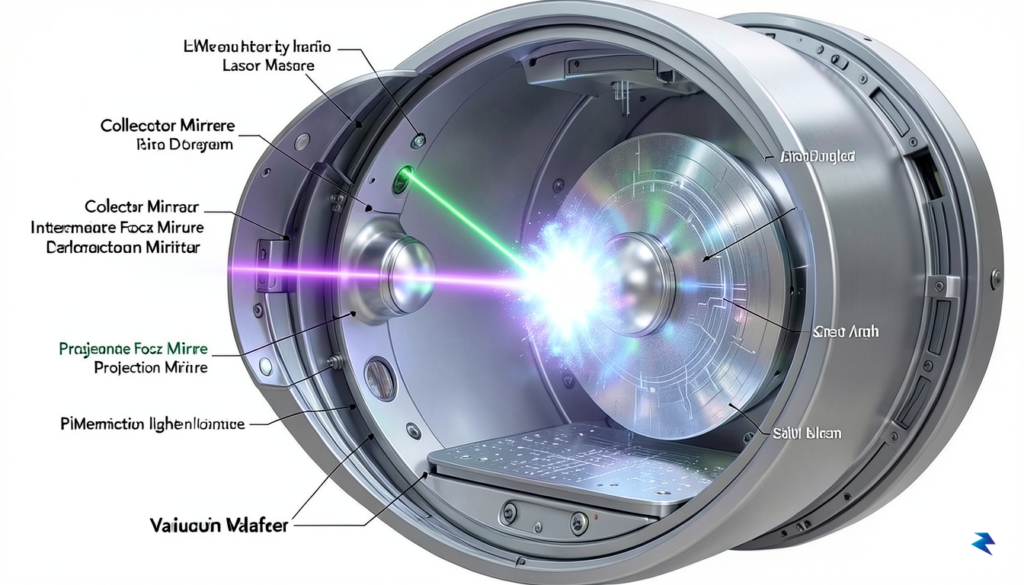

To understand why ASML would maintain strict adherence to export controls, one must first look at the sheer fragility of their business model. ASML operates as the sole provider of extreme ultraviolet (EUV) lithography systems, a position that grants them immense market power but also makes them a singular target for geopolitical scrutiny. Their operations are inextricably linked to a global supply chain that relies on components from the United States, Japan, and Europe. By defying US export regulations, ASML would not merely be risking a fine; they would be courting a total severance from the very technological ecosystem—such as specialized software, high-end sensors, and optical glass—that allows their machines to function in the first place.
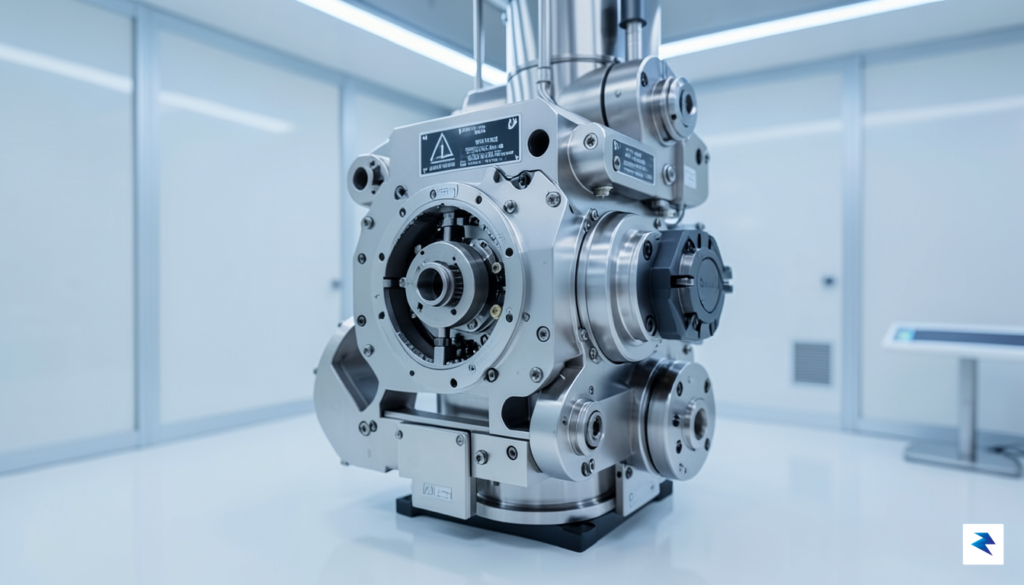
Furthermore, the notion that a multi-ton, state-of-the-art lithography system could be smuggled into a facility as a “ghost machine” is fundamentally detached from the technical reality of how these tools operate. These machines are not plug-and-play devices; they require years of collaborative installation, constant calibration by ASML’s own elite field engineers, and a persistent connection to the company’s proprietary cloud-based monitoring systems for maintenance and optimization. For a tool to remain operational, it requires a steady stream of spare parts and software updates that are tracked with forensic precision by global regulators. Any attempt to operate such a machine without the manufacturer’s blessing would result in a “bricked” system within weeks, rendering it a multi-million-dollar paperweight rather than a strategic asset.
The commercial logic is binary: for ASML, compliance is not just a legal requirement—it is an existential prerequisite for remaining the world’s most sophisticated hardware manufacturer.
The financial incentives for compliance are equally overwhelming when weighed against the devastating costs of potential sanctions. If ASML were to lose its license to do business with Western chipmakers—such as Intel, TSMC, or Samsung—their revenue stream would evaporate almost overnight. These giants represent the vast majority of ASML’s order book and are the primary drivers of the R&D funding that keeps the company ahead of its competitors. Sacrificing these long-term, multi-billion-dollar partnerships for a clandestine deal with a sanctioned entity would be a catastrophic miscalculation. The board of directors and shareholders alike recognize that the company’s valuation is built upon its reputation for reliability, legal compliance, and technological integrity; losing that trust would effectively signal the end of their industry dominance.
Ultimately, the geopolitical pressure exerted by the US government acts as a forced alignment of interests between the company and the state. ASML has far too much to lose by becoming a rogue actor in the global chip war. Whether through the lens of supply chain dependency, the necessity of ongoing technical support, or the existential threat posed by potential exclusion from Western markets, ASML’s strategy remains firmly tethered to the rules established in Washington and Brussels. In the high-stakes world of semiconductor manufacturing, transparency is the only viable path to long-term profitability.

The apprehension surrounding the movement of high-end semiconductor equipment stems from the inherent complexity of a globalized supply chain that was never designed for geopolitical policing. Modern extreme ultraviolet (EUV) and deep ultraviolet (DUV) lithography systems are not simple pieces of factory machinery; they are massive, modular, precision-engineered behemoths composed of thousands of individual sub-assemblies. Because these systems are shipped in segments and require months of on-site calibration by specialized engineers, the “black box” problem emerges. Regulators struggle to maintain a clear line of sight once a machine is dismantled, crated, and moved across international borders, as the modular nature of the hardware allows for components to be diverted or swapped long before they reach their officially declared destination.
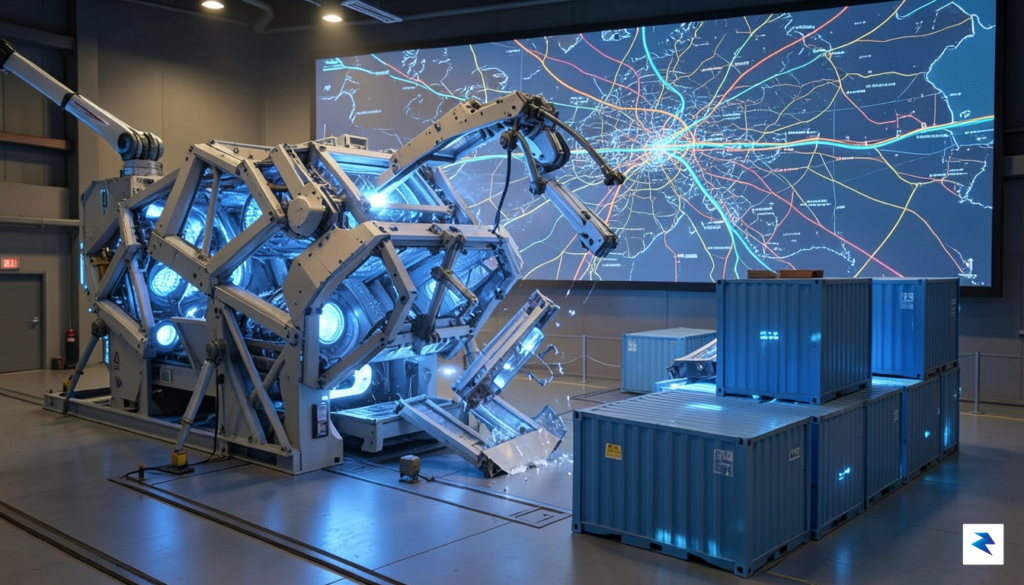
Furthermore, the maintenance and upgrade ecosystem presents a significant blind spot for trade enforcement. ASML’s systems require constant technical support, frequent software patches, and a steady stream of proprietary spare parts to remain operational at the cutting edge. This creates a persistent “gray market” vulnerability where sanctioned entities might acquire older-generation tools and slowly upgrade them using illicitly obtained components. Because these tools are so highly customized, tracing the origin of a single lens or a specialized light source becomes a logistical nightmare. Even with rigorous end-user verification processes—which require buyers to provide documentation proving that the equipment will not be repurposed for military use—the reality of international customs is that illicit actors often exploit shell companies or transshipment hubs to obscure the ultimate beneficiary.
The difficulty of enforcement lies in the fact that once a machine is inside a cleanroom, it effectively disappears from the global regulatory map, leaving inspectors to rely on trust rather than real-time telemetry.
Current monitoring technology is simply insufficient to bridge this gap. While export controls attempt to lock down the sale of complete systems, they often fail to account for the “death by a thousand cuts” scenario, where secondary markets provide the necessary modular upgrades to bypass performance caps. International customs agencies often lack the technical expertise to distinguish between a benign spare part and a performance-enhancing module capable of pushing an older tool into a more advanced category. As long as the semiconductor industry relies on this highly interconnected, service-heavy model, the ability to ensure that high-end lithography tools stay strictly within permitted jurisdictions will remain a significant, perhaps insurmountable, challenge for global regulators.

The recent scrutiny surrounding the potential unauthorized transfer of advanced lithography technology signifies a permanent shift in how the semiconductor industry must operate on the global stage. As geopolitical tensions harden, the days of seamless, borderless collaboration in chip manufacturing are rapidly fading, replaced by a landscape defined by “technological sovereignty.” For companies like ASML, this means that their operational footprint will no longer be dictated solely by market demand or logistical efficiency; instead, it will be tethered to an increasingly complex web of export compliance, rigorous site audits, and near-constant surveillance by government agencies. This transition suggests that the era of open trade in dual-use technologies is effectively over, forcing firms to navigate a future where every piece of hardware shipped is treated as a strategic asset with profound security implications.
In response to these tightening restrictions, China has significantly accelerated its domestic efforts to cultivate a self-reliant semiconductor ecosystem. Rather than viewing export controls as an insurmountable barrier, state-backed initiatives are pouring immense capital into indigenous research and development, aiming to replicate the sophisticated manufacturing processes that were previously accessible through international partners. This drive for “silicon independence” is creating a bifurcated global market, where innovation cycles are increasingly siloed. Consequently, the industry is bracing for a period of fragmentation, where global standards might diverge, and the cost of duplication—as multiple nations build redundant supply chains—threatens to stifle the rapid pace of technological progress that has defined the last few decades.

The long-term impact of these regulatory shifts will likely be a more expensive, less efficient, and highly politicized semiconductor industry, where national security concerns consistently override the traditional economic incentives of globalized trade.
Looking ahead, the tension between the necessity of national security and the ideals of free trade will remain the defining challenge for policymakers and corporate leaders alike. While the desire to protect intellectual property and maintain strategic advantages is understandable, the industry must grapple with the reality that over-regulation can lead to stagnation. If the global chip market continues to drift toward protectionism, the shared progress that once drove down costs and expanded access to computing power may begin to stall. Ultimately, finding a sustainable balance will require a new framework of international cooperation—one that acknowledges the realities of modern state competition while preserving enough commercial fluidity to ensure that the next great leaps in innovation are not lost in the friction of global trade barriers.
You must be logged in to post a comment.