The 2026 iPad Buyer’s Guide: Which Model is Actually Worth Your Money?
Navigating the 2026 iPad Landscape: A Buyer’s Guide The tablet market in 2026 has reached a point of unprecedented complexity, transforming…
OpenAI has officially transitioned from the purely digital realm of large language models into the physical peripheral market with the debut of the Codex Micro. For months, the tech industry has been rife with speculation regarding an ambitious, secretive hardware collaboration involving design legend Jony Ive and Sam Altman, often rumored to be a revolutionary AI-integrated mobile device that would redefine personal computing. However, the Codex Micro represents a far more pragmatic and immediate strategic pivot. Rather than attempting to disrupt the crowded smartphone landscape or compete with consumer electronics giants, OpenAI has chosen to ground its first foray into hardware in the familiar, high-stakes environment of the software developer’s workstation.
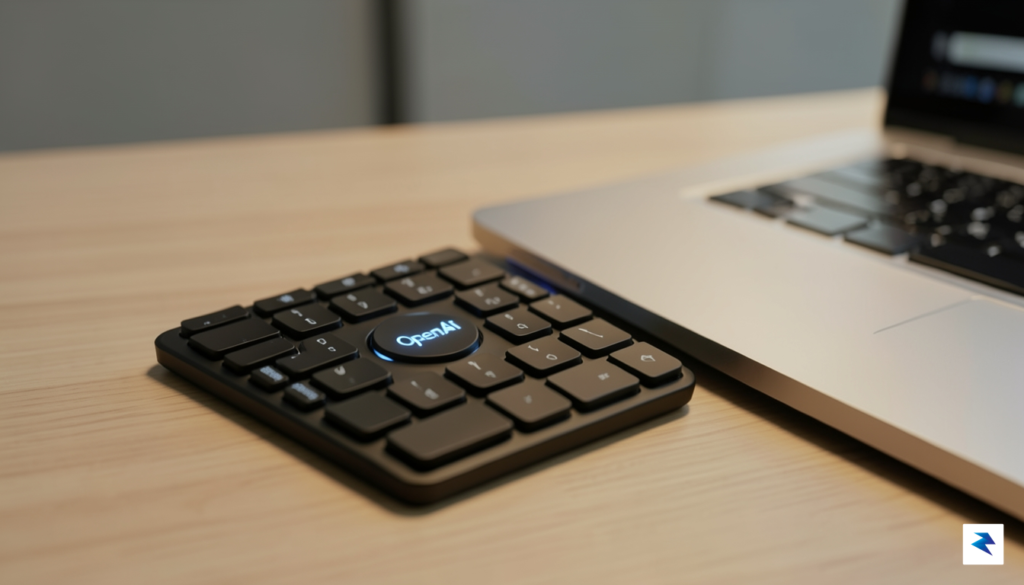
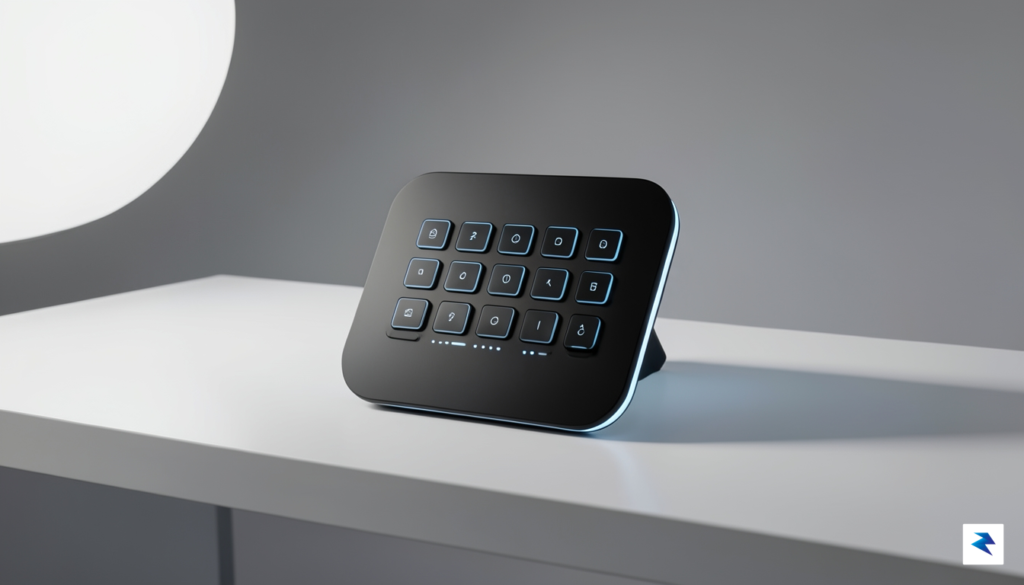
The device itself takes the form of a dedicated macro-pad, specifically engineered to act as a physical bridge between the programmer and the Codex engine. By providing a tactile interface for common coding tasks—such as invoking code generation, accepting suggestions, or toggling between different implementation branches—the Codex Micro aims to reduce the friction inherent in the constant back-and-forth between a developer’s keyboard and the AI’s output. While the rumors of a Jony Ive-designed mobile device remain a tantalizing mystery for the general public, this peripheral is laser-focused on the professional workflow. It is not intended to be a mass-market gadget, but rather a specialized utility designed to lower the cognitive load for those who spend their entire day interfacing with OpenAI’s coding capabilities.
The Codex Micro is not a replacement for the keyboard; it is an ergonomic force multiplier that turns AI-assisted programming into a fluid, tactile experience.
Targeting the developer ecosystem rather than the general consumer market is a calculated move that speaks volumes about OpenAI’s current priorities. By prioritizing deep integration within the IDE (Integrated Development Environment) over broad consumer appeal, the company is doubling down on its most loyal and impactful user base. Developers require precision, speed, and reliability, and the Codex Micro delivers this by offloading repetitive AI interaction commands to physical keys that can be mapped to specific coding patterns. This shift suggests that OpenAI recognizes that the future of AI-driven productivity isn’t just about better models, but about the physical interfaces that allow humans to exert their intent more efficiently. In an era where software is increasingly generated by machines, the Codex Micro stands as a testament to the fact that the human touch—and the physical tools we use—remain essential to the creative process.
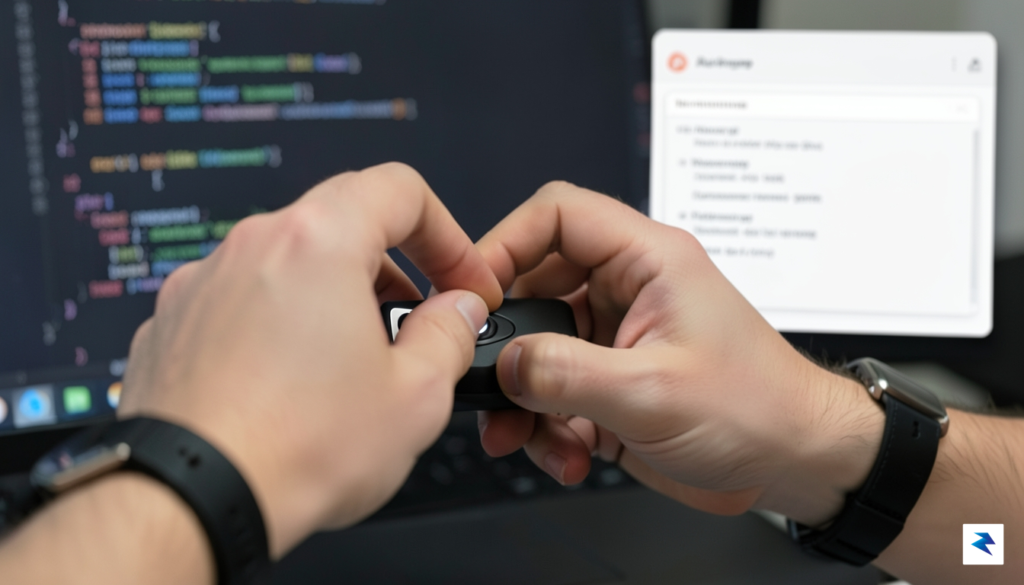
The true ingenuity of the OpenAI Codex Micro doesn’t lie merely in its existence as a piece of hardware, but in its profound ability to bridge the often-clunky chasm between human intent and AI-assisted code generation. For too long, integrating AI into a developer’s workflow has involved a series of disruptive steps: pausing coding, opening a separate chat interface, crafting elaborate prompts, copying and pasting results, and then returning to the editor. This constant context switching shatters the delicate “flow state” crucial for deep work, transforming what should be an enhancement into a frustrating bottleneck. The Codex Micro directly addresses this by transforming complex prompting into a fluid, tactile experience, keeping developers immersed in their coding environment.
At its core, the Codex Micro functions as a highly customizable, programmable input device meticulously designed for AI interaction. Imagine a compact console adorned with an array of physical buttons, each waiting to be imbued with specific AI commands. Its interface is intentionally minimalistic yet powerful, featuring durable, responsive keys that provide immediate haptic feedback. This physical presence is a stark contrast to purely software-based solutions, offering a tangible anchor in the digital workspace. The device is built to be an extension of the developer’s hand, minimizing the cognitive load associated with navigating menus or memorizing obscure keyboard shortcuts for AI functions.
The real power of the Codex Micro unfolds with its extensive custom button mapping capabilities. Developers can effortlessly link virtually any AI command to a physical button press using a user-friendly configuration utility. For instance, a single button could be mapped to “generate docstring for selected function,” another to “refactor selected code for efficiency,” or even “explain this complex regex pattern.” This mapping goes beyond simple text insertion; it leverages the underlying Codex AI to intelligently interpret the context of the code editor, applying the commanded action precisely where it’s needed. This level of integration means that complex, multi-step AI requests can be distilled into a single, intuitive button press, dramatically accelerating common development tasks.
The ergonomic benefits of physical keys over convoluted keyboard shortcuts or mouse-driven interactions cannot be overstated, especially when it comes to preserving a developer’s precious flow state. Instead of breaking concentration to type out a lengthy prompt or hunt for a GUI element, a developer can simply reach out and press a dedicated button. This instantaneous trigger allows the AI to perform its function in the background, or directly within the IDE, without pulling the developer’s focus away from the problem at hand. The tactile nature of the buttons reinforces muscle memory, making AI invocation an almost unconscious action, much like typing itself. This reduction in cognitive friction means less mental overhead and more uninterrupted time spent actually coding and problem-solving.
Consider a scenario: a developer is deep into debugging a tricky algorithm. They encounter a section of code they suspect might be inefficient. Instead of stopping, opening a new tab for an AI chat, copying the code, pasting it, typing “optimize this algorithm for performance,” waiting for a response, then copying the optimized code back, they simply select the code in their IDE and press a pre-configured “Optimize Code” button on the Codex Micro. The AI immediately processes the request and either suggests changes or directly refactors the code within the editor, all while the developer’s primary focus remains on the broader debugging task. This seamless, immediate interaction fundamentally changes how developers integrate AI assistance, turning it from an interruption into an indispensable, always-on co-pilot.

For years, the development of artificial intelligence was confined to the ethereal realm of code editors and browser windows. While the intelligence behind these models grew exponentially, the interface for interacting with them remained stubbornly static: a keyboard and mouse, tools designed for the typewriter era. OpenAI’s foray into tangible hardware marks a fundamental departure from this tradition, signaling a broader industry pivot toward what we might call “AI-native hardware.” By creating physical tools engineered specifically to complement the unique strengths of Large Language Models, companies are acknowledging that software is only as powerful as the friction it encounters at the human-computer interface.
This shift is not entirely unprecedented; history is filled with specialized peripherals designed to maximize professional efficiency. Consider the dedicated color-grading consoles used by professional cinematographers or the complex MIDI controllers favored by music producers. These tools do not replace the underlying software, but they transform the user experience by providing tactile, low-latency access to the most critical functions. In the context of coding, the introduction of a specialized device for Codex suggests that the future of programming may involve a similar physical augmentation. By mapping complex AI prompts, code completions, and debugging sequences to dedicated buttons and dials, developers can maintain a “flow state” that is often broken by the constant context-switching required to navigate menus and AI chat interfaces.
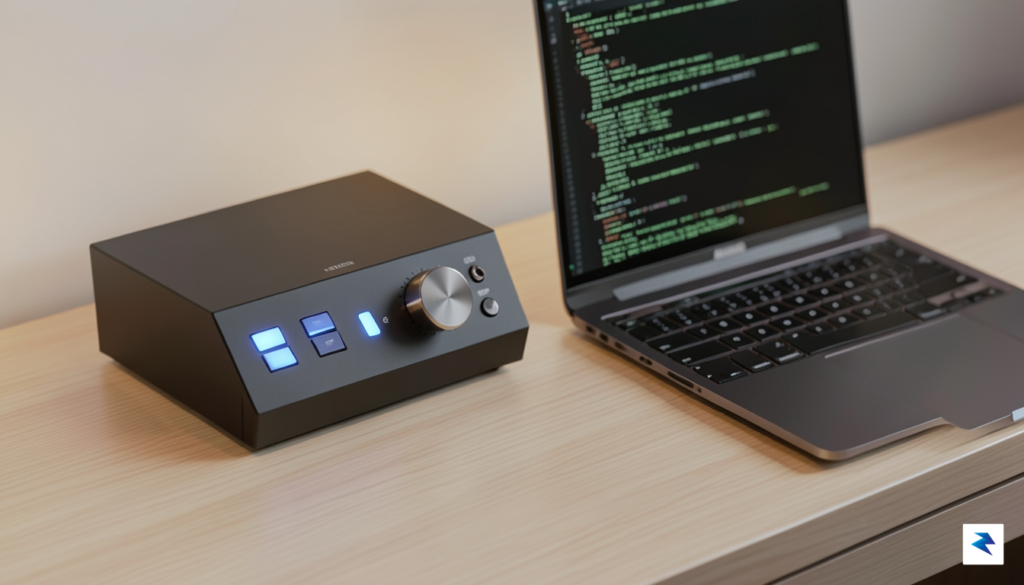
The transition toward hardware-software ecosystems introduces both significant promise and potential pitfalls. On the positive side, dedicated hardware provides a layer of physical intuition that software menus simply cannot replicate. When a developer can physically trigger a code refactor or toggle between different model variants with a single, tactile press, they offload cognitive strain from their brain to their hands. This creates a symbiotic relationship where the hardware acts as an extension of the developer’s intent, turning the abstract power of AI into a predictable, rhythmic workflow.
The most effective human-computer interfaces are those that disappear, allowing the user to focus entirely on the creative outcome rather than the tool itself.
However, the move toward proprietary hardware ecosystems requires a careful balancing act. If the industry leans too heavily into closed systems, we risk creating fragmented environments where developers are locked into specific hardware to unlock the full potential of their software tools. While specialized gear can enhance productivity, it also introduces the risk of “peripheral clutter” and the necessity of learning proprietary hardware layouts. Ultimately, the success of this hardware-assisted development philosophy will depend on whether these physical tools remain open enough to adapt to the rapidly evolving landscape of AI. If done correctly, the result will be a more harmonious union between human creativity and machine intelligence, proving that the most advanced software often requires a physical anchor to truly thrive in the real world.
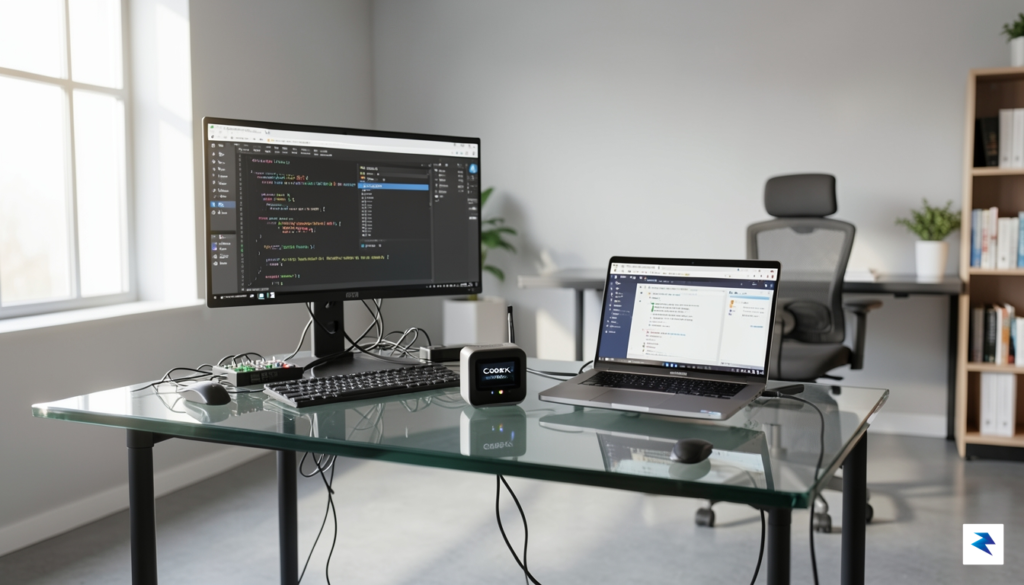
The introduction of the Codex Micro represents a pivotal shift in OpenAI’s corporate trajectory, signaling a transition from an organization defined primarily by its research prowess to one deeply invested in product-led integration. By moving beyond the screen and into the physical realm, OpenAI is signaling that its intelligence models are no longer content to live solely within browser windows or API endpoints. This hardware venture serves as a controlled pilot program, allowing the company to navigate the complexities of supply chains, manufacturing constraints, and physical user experience design without the immediate pressure of launching a flagship consumer device. In many ways, the device acts as a strategic “trojan horse,” embedding OpenAI’s ecosystem directly into the developer’s workspace and creating a tangible touchpoint that reinforces brand loyalty in a way that software updates simply cannot.
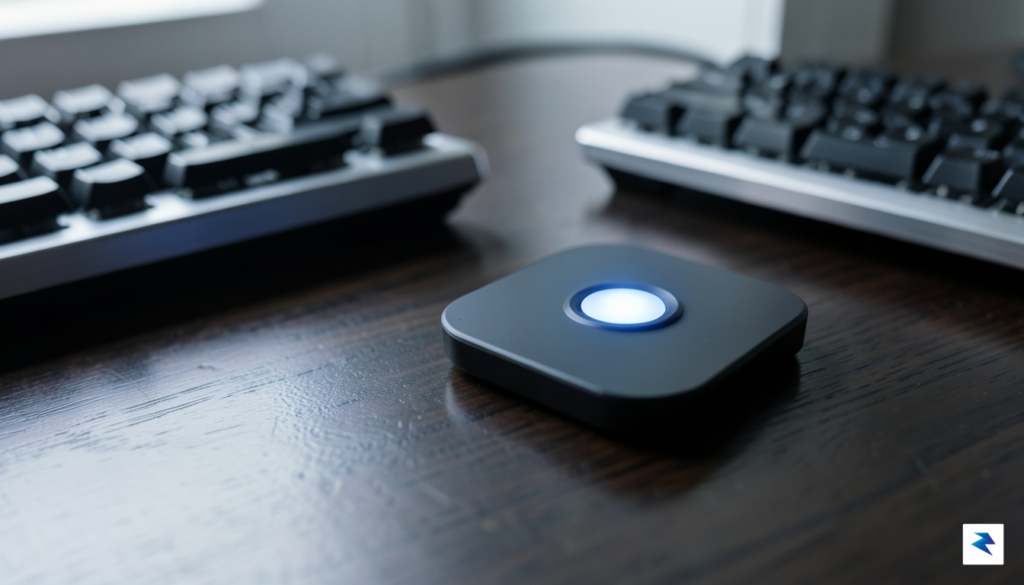
There is a distinct branding strategy at play here: by releasing a specialized, functional peripheral rather than an ambitious, all-encompassing “AI device,” OpenAI is managing expectations while simultaneously gathering high-fidelity data on user interaction patterns. This approach mirrors the iterative nature of software development, where small, functional releases precede major architectural overhauls. By focusing on a niche developer audience, the company can refine its hardware-software synergy in a low-risk environment, effectively stress-testing how users integrate AI-driven hardware into their daily, high-intensity workflows. This indicates that the long-term roadmap likely involves a more expansive hardware ecosystem where AI becomes an ambient, physical utility rather than just a conversational chatbot.
The leap from software to hardware is rarely just about the device itself; it is about establishing a proprietary physical interface for the next generation of human-computer interaction.
Furthermore, the move into the peripheral market places OpenAI in direct competition with established hardware manufacturers, yet it differentiates itself through its deep-rooted software intelligence. While competitors focus on mechanical tactile feel or programmable macro keys, OpenAI is betting that the true value lies in the contextual awareness of the hardware. As AI-driven peripherals become more common, the barrier between the intent of the programmer and the execution of the code continues to thin. This evolution suggests that the future of the developer-AI relationship will be defined by seamless, low-latency integration, where the hardware acts as an extension of the model’s capabilities. Ultimately, the Codex Micro is a blueprint for a future where OpenAI’s influence is physically anchored to the very desks where modern software is built, ensuring that their models remain at the center of the creative process.
You must be logged in to post a comment.