
Strait of Hormuz Blockade: Why Oil Prices Are Skyrocketing
The Geopolitical Flashpoint: Strait of Hormuz Re-Blockaded The Strait of Hormuz is not merely a body of water; it is arguably the most vital…


The modern corporate landscape is currently obsessed with the promise of “seamless” AI integration, framing customer service chatbots as the ultimate solution for 24/7 accessibility. Companies market these digital assistants as high-speed conduits to resolution, designed to shave seconds off wait times and streamline the user experience. However, for anyone who has navigated the labyrinth of an automated support interface, the reality is starkly different. Instead of serving as helpful assistants, these bots function primarily as high-tech gatekeepers, meticulously engineered to deflect queries and keep human support representatives safely hidden behind a wall of pre-programmed scripts.
When an issue is as straightforward as resetting a password, these systems work adequately; however, they collapse completely when faced with the nuance of a complex problem, such as a high-value e-bike delivery that has vanished into the logistics void. AI models excel at pattern recognition, but they lack the critical human capacity for contextual reasoning and moral accountability. When a user is reporting a missing delivery, they are not just looking for a tracking update; they are seeking empathy, investigation, and tangible agency. A chatbot, limited by its decision tree, sees only data points and binary outcomes, entirely missing the frustration of a customer whose significant investment has simply evaporated.
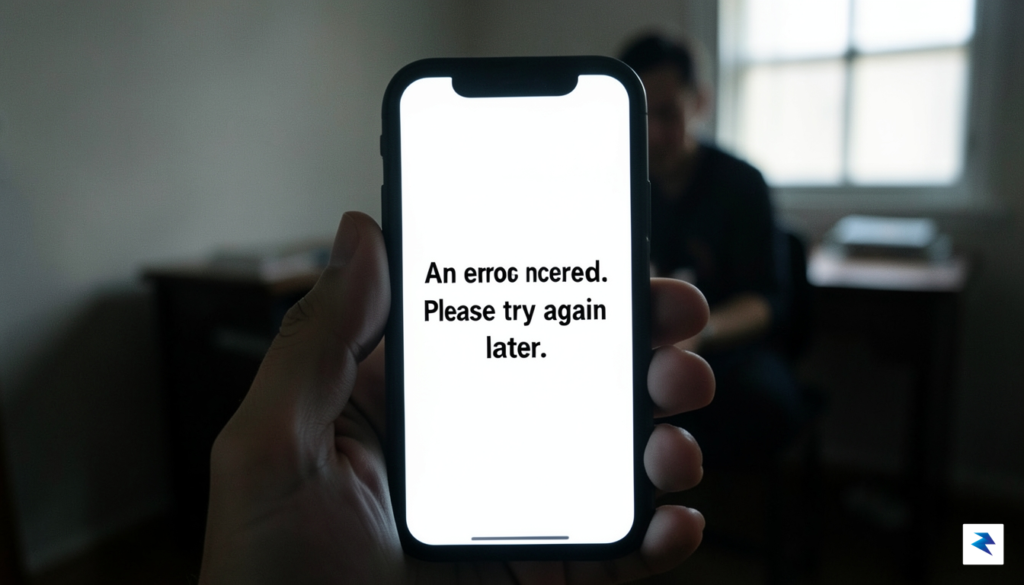
The fundamental disconnect lies in the fact that corporations view AI as a tool for cost-reduction, whereas customers view support as a service for trust-maintenance. When the two goals collide, the customer is almost always the one left behind.
The erosion of trust is perhaps the most damaging byproduct of this automated support culture. Every time a user is forced to repeat their tracking number to a bot that cannot understand the context of a “missing” status, the brand equity of the company diminishes. Corporations may save money by reducing their headcount in call centers, but they are inadvertently trading long-term loyalty for short-term balance sheet optimization. This shift treats the customer not as a human being with a legitimate grievance, but as a “ticket” to be deflected or closed. Ultimately, by prioritizing efficiency over efficacy, these organizations have created a system that feels less like a service and more like an obstacle course, leaving consumers feeling trapped in a cycle of circular logic that leads nowhere.

There is a specific, visceral kind of rage that ignites when you realize you are no longer communicating with a service provider, but rather circling the drain of a pre-programmed logic loop. When my ebike went missing, I wasn’t just looking for a logistical update; I was experiencing a high-stakes moment of financial loss and personal vulnerability. Yet, as I navigated the chatbot interface, the machine responded with the same hollow, cheery platitudes regardless of the urgency in my prompts. This creates a state of induced helplessness, where the user is forced to perform a repetitive dance of keywords in a desperate bid to trigger a human response that may never come. The frustration isn’t merely about the wait time; it is about the profound invalidation of being ignored by an entity that is technically designed to “assist” you.
At the core of this psychological toll is the fundamental absence of empathy. Human support agents, however flawed, possess the capacity to recognize the weight of a situation—they can hear the panic in a customer’s typing or acknowledge the gravity of a significant loss. An algorithm, by contrast, is completely “blind” to the emotional reality of the user. It processes queries as data points to be categorized, effectively stripping the transaction of its human context. When a chatbot repeatedly redirects you to a generic FAQ page while your property remains unaccounted for, it signals that your distress is irrelevant to the system’s architecture. This clinical indifference functions as a form of gaslighting, making the user feel as though their problem is trivial simply because the machine refuses to acknowledge its severity.
The true horror of “chatbot hell” is not the delay of a resolution, but the systematic dehumanization of the customer. When we are trapped in a loop, we are no longer treated as individuals with unique grievances, but as nodes in a data stream that must be efficiently managed—or ignored.
This experience of dehumanization fundamentally alters our relationship with the companies we patronize. By removing the human touchpoint, these corporations essentially shield themselves from the visceral consequences of their own service failures. The interaction becomes a one-way street where the user expends immense emotional labor trying to “hack” the bot to get a straight answer, while the company maintains a wall of automated scripts. This dynamic breeds a deep-seated resentment that lingers far longer than the original problem itself. We end up feeling not just like a customer who has been wronged by a missing product, but like a citizen being actively managed by an uncaring, bureaucratic machine that views our anxiety as nothing more than a glitch in the software.


In the relentless pursuit of operational efficiency, modern e-commerce platforms have increasingly turned to AI-driven customer support as a panacea for rising labor costs. While chatbots and automated ticketing systems offer the allure of 24/7 availability and instant responses, they often create an invisible barrier between the brand and the buyer. By forcing customers into a rigid, algorithmic feedback loop, companies inadvertently signal that operational margins are prioritized far above the individual experience. This shift represents a dangerous trade-off: businesses may save a few dollars on support overhead in the short term, but they frequently do so at the expense of their most valuable asset—long-term customer trust.

The phenomenon of “chatbot hell” acts as a catalyst for immediate customer churn. When a high-stakes issue arises—such as a missing high-value item like an e-bike—the customer is already in a state of heightened anxiety. Being met with a sterile, repetitive script that fails to acknowledge the complexity of the situation is not merely an inconvenience; it is an insult to the customer’s investment. Users who feel trapped in these automated loops are statistically far more likely to abandon the brand entirely, viewing the company as impersonal and indifferent to their financial losses. The frustration of repeating one’s story to an unfeeling machine erodes the emotional connection that brands work so hard to cultivate through marketing and product design.
True brand equity is built in the moments of friction, not the moments of ease. When a company fails to provide human support during a crisis, they are effectively telling their customers that the relationship is purely transactional and easily replaceable.
Beyond the immediate risk of churn, there is a significant, yet often overlooked, decline in long-term brand equity. Loyalty is not earned when everything goes perfectly; it is forged when a company takes responsibility and offers tangible, empathetic solutions to complex problems. By automating away the possibility of human intervention, brands strip themselves of the opportunity to turn a negative experience into a demonstration of reliability. Consequently, what could have been a moment of brand advocacy—a story about how a company went above and beyond to recover a missing package—becomes a cautionary tale shared on social media and review platforms. The long-term cost of this reputational damage far outweighs the nominal savings achieved by removing human agents from the support workflow.
Logistics-heavy industries, in particular, must recognize the inherent limitations of automation. E-commerce involves physical assets, complex shipping chains, and significant financial stakes that rarely fit into the “if/then” logic of a chatbot’s decision tree. High-value issues demand context, nuance, and the ability to exercise judgment—traits that AI simply does not possess. Companies that insist on keeping human support out of reach for these critical issues are building a fragile support infrastructure. To thrive in a competitive market, businesses must view human support not as a cost center to be minimized, but as a strategic investment in customer retention and brand resilience.
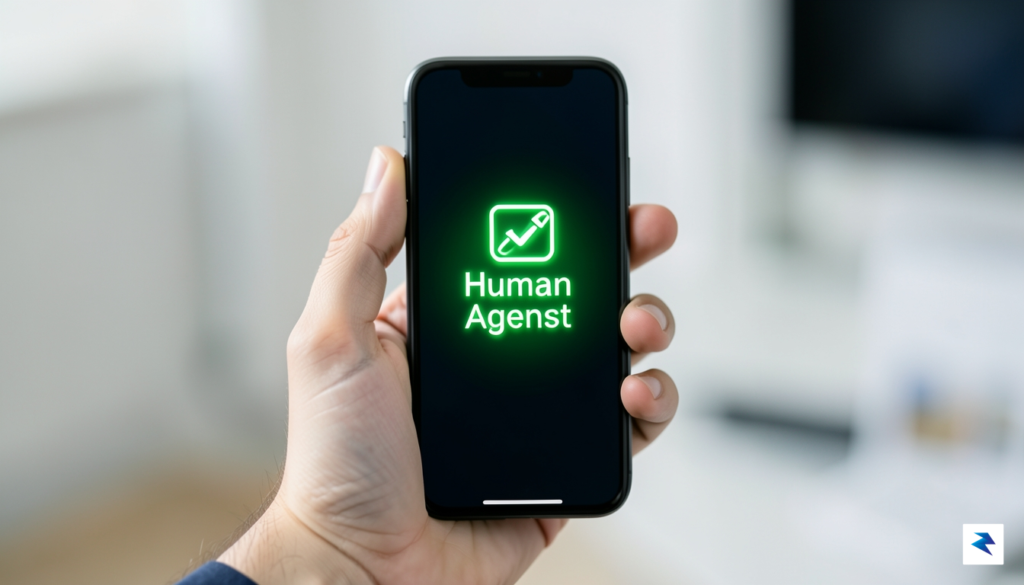
Navigating the labyrinth of modern automated support systems requires more than just patience; it demands a strategic, almost tactical approach to force the system to acknowledge your humanity. When you find yourself caught in an endless loop of pre-programmed responses, the first step is to abandon standard conversational pleasantries. Automated systems are often trained to categorize intent based on specific keywords, so stop asking, “Can you help me?” and instead use aggressive, clear triggers such as “Speak to a representative,” “Escalate to a supervisor,” or simply “Human agent.” If the bot asks for a reason, provide a concise, high-priority status phrase like “Report lost property” or “Unauthorized transaction,” as these prompts are frequently prioritized by support algorithms to avoid legal or financial liability.

If the chat interface refuses to yield, it is time to pivot toward unconventional contact methods. Many companies bury their direct contact information to discourage high-volume support requests, so don’t settle for the first “Help” page you see. Search specifically for “hidden” contact forms, dedicated email addresses for executive relations, or support phone numbers that aren’t listed on the main landing page. Websites like GetHuman or specialized forums often house community-sourced databases of direct support lines that bypass the initial automated triage. By finding these back-door channels, you significantly increase your chances of speaking with someone who has the actual authority to resolve your issue rather than someone reading from a standard-issue script.
Persistence is not merely a virtue in customer service; it is the most effective tool for resolution. When AI fails, the human who finally picks up the phone often responds to the customer who has already done their homework.
When direct communication channels remain blocked, leveraging social media can be a highly effective, albeit public, escalation strategy. Companies are incredibly sensitive to their public reputation, and a well-worded, firm complaint posted on X (formerly Twitter) or Facebook tagging the company’s official support handle often triggers a response from their social media management team. These teams are typically comprised of human representatives with much higher levels of autonomy and a vested interest in resolving public grievances quickly to protect the brand’s image. Be sure to include your ticket number if you have one, and keep your tone professional yet firm; public shaming is a powerful motivator that can force a company to move your case out of the “chatbot queue” and into the hands of someone who can actually track down your missing property.
Finally, never underestimate the power of documentation and follow-up. Every time you interact with an automated system, take screenshots or request a transcript of the chat. When you finally reach a person, having this evidence creates a paper trail that demonstrates the system’s failure to assist you, which can be essential if you need to dispute charges or file a formal complaint later. Persistence pays off because, eventually, the cost of the agent’s time becomes less than the potential fallout of an unresolved, escalating issue. By staying consistent, utilizing social pressure, and refusing to accept the first “no” from a machine, you reclaim control over the resolution process.

The true promise of technology in the service industry should never be the wholesale replacement of human connection, but rather the strategic augmentation of our collective capabilities. When companies rely exclusively on automated systems to navigate crises—like a missing, high-value e-bike—they inadvertently turn frustration into a permanent state of agitation. Moving forward, the industry must redefine what it means to provide “smart” support. A truly intelligent system is one that recognizes the limitations of its own logic, gracefully bowing out the moment a situation requires nuance, emotional intelligence, or complex problem-solving that an algorithm simply cannot possess.
To achieve this, we need a shift toward a hybrid model of customer experience. In this framework, AI serves as an efficient gatekeeper for routine, high-volume tasks like tracking numbers, password resets, or basic policy inquiries. However, the architecture must include a frictionless, immediate “human handoff” trigger. If a customer repeats a query, expresses high levels of distress, or flags a high-stakes issue like a missing delivery, the bot should be programmed to escalate the ticket instantly to a live agent. By removing the barriers that currently force customers to fight against automated loops, companies can prove that they value their users’ time and sanity above operational cost-cutting.

Empathy-first design must become the foundational standard for all future AI development. Developers and stakeholders need to ask themselves not just how a system can be more efficient, but how it can be more accessible and compassionate. This involves implementing rigorous testing that simulates high-stress scenarios to ensure the software doesn’t just provide a correct answer, but an appropriate one. When a customer is in the midst of a stressful ordeal, a cold, repetitive script feels less like assistance and more like an insult to their intelligence.
True innovation in customer service is not found in the sophistication of the algorithm, but in the seamlessness with which technology facilitates human connection when it matters most.
Ultimately, the industry must commit to a set of consumer accessibility standards that prioritize human-centric design. This means transparency regarding how and when AI is used, and ensuring that live human intervention remains a viable, easily accessible choice rather than a hidden, difficult-to-find option. When we stop treating human support as an expensive luxury and start viewing it as a core component of a healthy business relationship, we can finally escape the cycle of chatbot-induced frustration. Only by balancing the speed of automation with the soul of human empathy can companies build trust that lasts beyond the initial transaction.
You must be logged in to post a comment.