
How to Watch the 2026 World Cup Final: Spain vs. Argentina
Introduction: The 2026 World Cup Final Showdown The 2026 FIFA World Cup has been nothing short of a sporting odyssey, defined by tectonic…


For decades, the direct-to-video (DTV) market functioned as a distinct ecosystem within the entertainment industry, acting as a graveyard for projects that failed to secure a theatrical release. During the late 20th century, the barrier to entry for this market was strictly physical; production houses had to manage the logistics of VHS and DVD replication, distribution networks, and shelf space in rental stores or bargain bins. Even the most budget-conscious B-movie required a tangible investment in celluloid, actors, and post-production crews. Because these physical constraints existed, there was a natural ceiling on how much “slop” could be produced; the cost of manufacturing and shipping a physical product ensured that even the most mediocre action flick or low-budget horror sequel required some semblance of human labor and market strategy to be viable.
The digital age has systematically dismantled these logistical hurdles, replacing the physical limitations of the past with the near-infinite capacity of the internet. Today, the distribution bottleneck has been effectively erased by streaming platforms and social media algorithms that prioritize volume over quality. Where the old DTV model required a warehouse full of plastic cases, the modern iteration requires only a server and a prompt. This shift has facilitated the rise of content that is not merely low-budget, but entirely detached from the traditional collaborative process of filmmaking. By leveraging generative AI, creators can now flood digital storefronts with procedurally generated narratives, uncanny character models, and synthetic scripts that mimic the structure of a film without inheriting the soul of the craft.
The transition from physical distribution to digital automation marks the shift from a ‘grindhouse’ economy, where cheap movies were at least made by human hands, to a ‘slop’ economy, where content is generated at the speed of a keystroke.
In this contemporary landscape, AI-driven content is the direct successor to the bargain-bin thriller. However, while the DTV staples of the 1990s were often born from genuine, if misguided, creative ambition, modern automated cinema is designed specifically to exploit algorithmic discovery. These productions are crafted to catch the eye of a scrolling user, satisfy a search query, or populate a “recommended” feed with just enough visual stimulation to generate ad revenue before the viewer realizes the content is hollow. We have moved from an era of “so bad it’s good” movies—which relied on the earnest, albeit flawed, efforts of aspiring actors and directors—to an era of “so synthetic it’s disposable,” where the primary goal is to monetize the sheer volume of digital noise.
At its core, the rise of “AI slop” in modern cinema represents a fundamental shift in how we define the act of creation. It is not merely the integration of new technology into the filmmaking pipeline, but rather the systematic replacement of human intent with algorithmic statistical probability. While groundbreaking directors have long used digital tools to augment their vision—such as complex CGI or sophisticated editing suites—AI slop operates under a different philosophy. In these projects, the machine is not a brush in the hands of an artist; it is the architect, the writer, and the editor all at once, leading to a final product that feels fundamentally hollow because it lacks the spark of lived human experience.
To understand this distinction, we must differentiate between AI-assisted production and purely AI-generated slop. AI-assisted projects utilize machine learning to streamline tedious tasks, like rotoscoping or color grading, leaving the creative decision-making firmly in human hands. Conversely, AI slop is characterized by minimal human oversight, where prompts are fed into a black box and the resulting output is treated as a finished asset. This process prioritizes speed and volume over coherence, effectively churning out content that is designed to satisfy the metrics of an algorithm rather than the emotional needs of an audience.
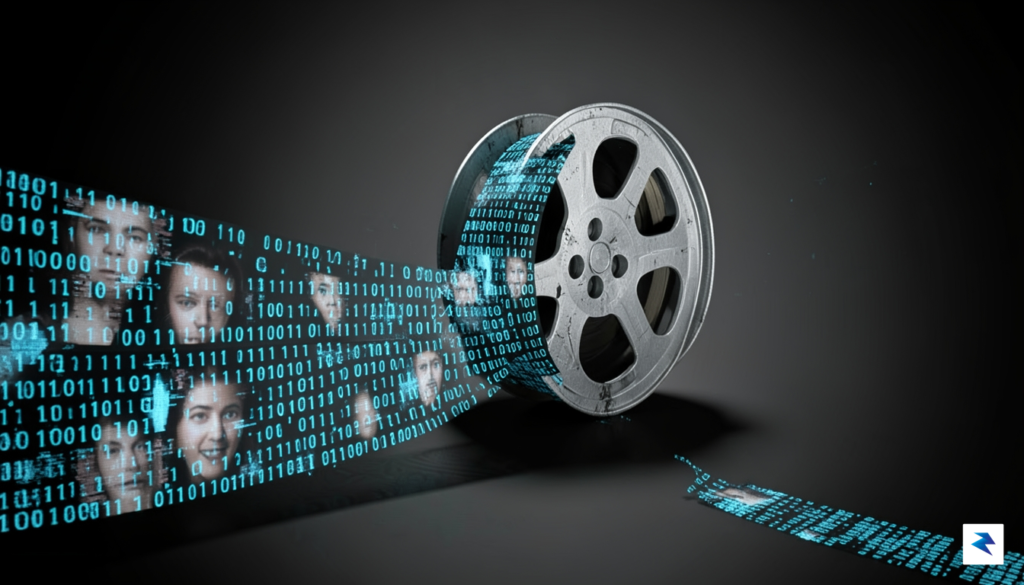
The hallmark traits of these automated cash grabs are as unmistakable as they are unsettling. Viewers often encounter a jarring lack of narrative cohesion, where scenes transition with the logic of a fever dream, failing to maintain consistent character motivations or thematic depth. Visually, these films are frequently plagued by the “uncanny valley” effect—unnatural lighting, flickering textures, and morphing background figures that reveal the machine’s struggle to comprehend the laws of physics and human anatomy. Furthermore, the storytelling relies heavily on derivative tropes, regurgitating the most statistically common narrative beats found in its massive training data. This creates an experience that feels paradoxically familiar yet entirely alien, as if the movie is a faint, distorted echo of every better film that came before it.
The tragedy of AI slop is not that it exists, but that it treats the audience as a data point to be harvested rather than a community to be entertained.
Ultimately, this phenomenon is the modern evolution of the classic “direct-to-video” bargain bin release, updated for the age of instant digital consumption. Where the low-budget movies of the past at least required a cast and crew to physically perform, AI slop eliminates the human element entirely to maximize profit margins. By prioritizing the lowest common denominator of engagement, these projects threaten to saturate the cultural landscape with content that mimics the structure of a film without ever capturing its soul.

The modern streaming landscape is built upon a paradox: platforms are perpetually desperate for new content, yet they are increasingly unwilling to shoulder the immense financial risks associated with traditional prestige filmmaking. This creates a vacuum, one that is rapidly being filled by AI-generated media. By leveraging the “long tail” economic model, streaming giants and predatory production houses have discovered that they no longer need a singular blockbuster to justify a subscription fee. Instead, they require a constant, infinite stream of algorithmically generated titles that can occupy the margins of a library, ensuring that a user’s scroll through the menu never truly reaches an end.
When the cost of production is slashed by artificial intelligence, the traditional calculus of “return on investment” undergoes a radical transformation. In the era of high-budget studio filmmaking, a project needs a massive audience to recoup the millions spent on salaries, sets, and post-production. However, when a film is constructed largely through automated prompts and generative software, the overhead becomes negligible. Even if a title attracts only a minuscule fraction of a platform’s user base, it effectively operates with a profit margin that traditional cinema could never sustain. This shift incentivizes “content farms” to churn out hundreds of low-effort, AI-assisted projects, banking on the statistical likelihood that enough people will press play out of sheer boredom or curiosity to make the venture viable.
Furthermore, these AI-driven productions serve a specific defensive function for streaming services: they act as “churn reduction” tools. By keeping the content library in a state of constant, automated flux, platforms can claim that they are providing “fresh” material every week, even if that material lacks the human soul, narrative coherence, or technical craftsmanship that defines great art. It is a cynical strategy that prioritizes the sheer volume of assets over the engagement or satisfaction of the viewer. In this new ecosystem, quantity is not just a metric of success—it is the primary product.
The goal of the modern content farm is not to create a masterpiece that lingers in the cultural consciousness, but to provide a digital sedative that keeps the subscriber from clicking the cancel button.
Ultimately, this economic pressure creates a feedback loop that devalues the very medium of film. As platforms demand cheaper, faster, and more abundant content, the threshold for what constitutes a “releasable” movie drops to the floor. We are witnessing the birth of a digital landfill, where thousands of AI-slop movies are generated to satisfy the insatiable appetite of an algorithm rather than the aesthetic curiosity of an audience. As long as these low-cost, automated fillers successfully capture a few minutes of our attention, the financial incentive to replace human creators with silicon approximations will only continue to accelerate.
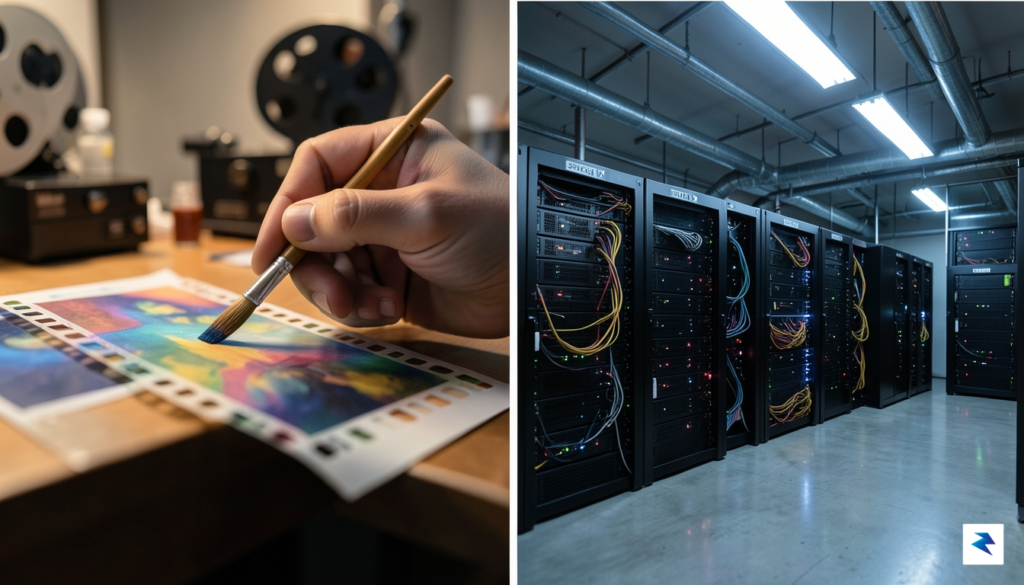
At its core, the tension between traditional filmmaking and the rise of automated production lies in the fundamental distinction between “content” and “art.” While content is a commodity designed to fill a void—occupying a viewer’s time until the next advertisement or subscription renewal—art is an act of communication born from the friction of lived experience. When a director, screenwriter, or cinematographer crafts a film, they are filtering the complexities of human existence through a subjective lens. This “human gaze” is not merely a stylistic choice; it is the essential conduit through which an audience finds resonance. By contrast, AI models function on the cold logic of statistical probability, predicting the next most likely pixel or syllable based on a vast, flattened database of past successes. This process treats storytelling as a puzzle to be solved rather than a vulnerability to be shared.

The danger of replacing human struggle with algorithmic efficiency is that we ultimately strip cinema of its ability to surprise us. Authentic storytelling often relies on the idiosyncratic, the irrational, and the deeply personal—elements that emerge when a creator pushes against their own limitations or challenges the status quo. An AI, however, is inherently conservative; it is trained to emulate what has already worked, effectively insulating the viewer from the raw, unpredictable edges of creative evolution. When a script is generated by an engine that has never felt heartbreak, triumph, or the mundane passage of time, the resulting narrative often feels hollow. It mimics the structural beats of a hero’s journey or a tragic downfall, but it lacks the internal consistency of an actual soul, leaving the audience with an uncanny sense of emptiness that no amount of polished rendering can bridge.
Cinema is the act of one human mind attempting to bridge the gap to another; when we outsource that connection to an algorithm, we aren’t creating movies—we are merely manufacturing mirrors that reflect nothing but our own past data.
Ultimately, the push for automated filmmaking threatens to transform the theater into a factory floor. If we allow the metrics of engagement and “data-optimized” plot points to dictate the creative process, we risk losing the very thing that made cinema a defining medium of the twentieth century: the ability to evoke genuine empathy. When a film is built by a machine to trigger specific emotional responses through Pavlovian repetition, it ceases to be a dialogue and becomes a transaction. The human element is not just an optional layer of polish; it is the heartbeat of the medium. Without the friction of human intent, the screen becomes nothing more than a high-definition void, offering us endless, hollow distractions that satisfy our boredom while starving our need for true, transformative connection.

As the digital landscape becomes increasingly cluttered with algorithmically generated content, the entertainment industry is poised for a significant cultural pivot. Much like the organic food movement that arose in response to hyper-processed industrial agriculture, we are likely to see the emergence of a “Human-Made” premium market. Audiences, exhausted by the uncanny valley aesthetic and the hollow, derivative narratives of AI-generated slop, will inevitably begin to crave the friction, imperfection, and deep emotional resonance that only a human writer or director can provide. This demand will create a clear, value-based divide in the industry: on one side, a deluge of disposable, automated content designed to fill gaps in streaming libraries; on the other, a high-value sector of artisanal, verified human-led cinema that markets its creative origins as a badge of quality.

This shift will likely force studios to re-evaluate their branding strategies, perhaps even adopting “Human-Certified” labels or marketing campaigns that emphasize the grueling, collaborative process of traditional filmmaking. Independent creators, in particular, may find a new competitive advantage by leaning into the raw, unpolished, and deeply personal aspects of their work that AI simply cannot replicate. While large-scale studios may attempt to use automation to cut costs, they risk alienating a growing demographic of viewers who are becoming increasingly sophisticated at spotting the “soulless” hallmarks of machine-generated scripts. Consequently, the ability to prove that a film was born from genuine human experience will transition from a standard expectation to a premium selling point that commands higher ticket prices and stronger brand loyalty.
The true value of cinema does not lie in the efficiency of its production, but in its ability to facilitate a profound, empathetic connection between the storyteller and the observer—a bridge that remains impossible for current AI architectures to cross.
Ultimately, the industry’s trajectory will depend on a balanced integration of these technologies rather than an unchecked surrender to automation. Responsible filmmakers will likely utilize AI as a sophisticated tool for background rendering, logistical planning, or technical assistance, keeping the creative core firmly in human hands. However, the danger remains that unchecked automation will dilute the cultural significance of cinema, turning a medium of profound expression into a background hum of infinite, interchangeable content. By championing transparency and prioritizing human artistry, the industry can protect the medium from becoming a digital landfill, ensuring that the stories we watch remain a reflection of our collective humanity rather than a statistical prediction of our preferences.
You must be logged in to post a comment.