
Apple Maps Ads: Why Home Services Are Getting Locked Out
The Evolution of Apple Maps Advertising For years, Apple maintained a reputation as the "anti-advertising" giant of the technology world,…
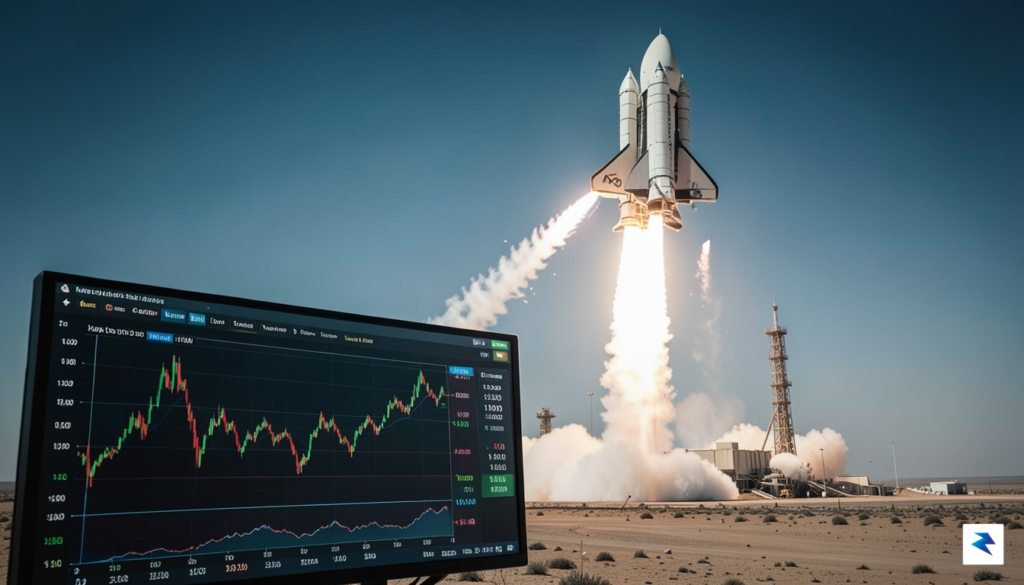
For years, SpaceX has operated as the undisputed titan of the private space sector, consistently commanding an aura of invincibility that few other high-growth firms could replicate. When the company’s valuation hit the public consciousness, investors were swept up in the narrative of a firm that was not merely launching rockets, but fundamentally rewriting the economics of orbital access. The $135 threshold became more than just a numerical value; it served as a psychological anchor for those who bought into the dream of a multi-planetary future. When the share price recently dipped below this storied mark, it signaled a profound shift in market sentiment, moving from unchecked optimism toward a more rigorous, skeptical evaluation of the firm’s capital-intensive operations.

This cooling effect is a well-documented phenomenon in the life cycle of high-growth technology companies that eventually invite broader market participation. Often, the initial excitement surrounding a private-equity-turned-public entity is driven by speculative fervor rather than immediate cash flow, creating a valuation premium that is notoriously difficult to maintain. As the hype cycle matures, investors inevitably begin to pivot their focus from the “visionary” metrics—like successful landing sequences or reusable fairings—to the “sober” metrics of quarterly burn rates and revenue sustainability. The dip below the $135 mark acts as a necessary correction, reflecting the transition from a speculative asset to a core component of institutional portfolios where long-term business fundamentals must supersede the promise of future innovation.
The true test of a market leader is not found in the initial surge of valuation, but in how it navigates the inevitable normalization of investor expectations after the dust of the debut settles.
However, it would be a mistake to interpret this price movement as a failure of the business model itself. SpaceX continues to achieve unprecedented milestones in launch frequency and satellite deployment, maintaining a competitive moat that rivals, such as Blue Origin or legacy aerospace giants, have yet to bridge. The discrepancy between the company’s internal technological progress and its external stock performance highlights a classic market paradox: the financial markets are often preoccupied with the short-term macro environment, while the aerospace industry operates on decade-long time horizons. Consequently, this period of price volatility serves as a stress test for stakeholders, separating those who view the company as a short-term trade from those who understand the immense, albeit slow-burning, value inherent in monopolizing the infrastructure of space exploration.
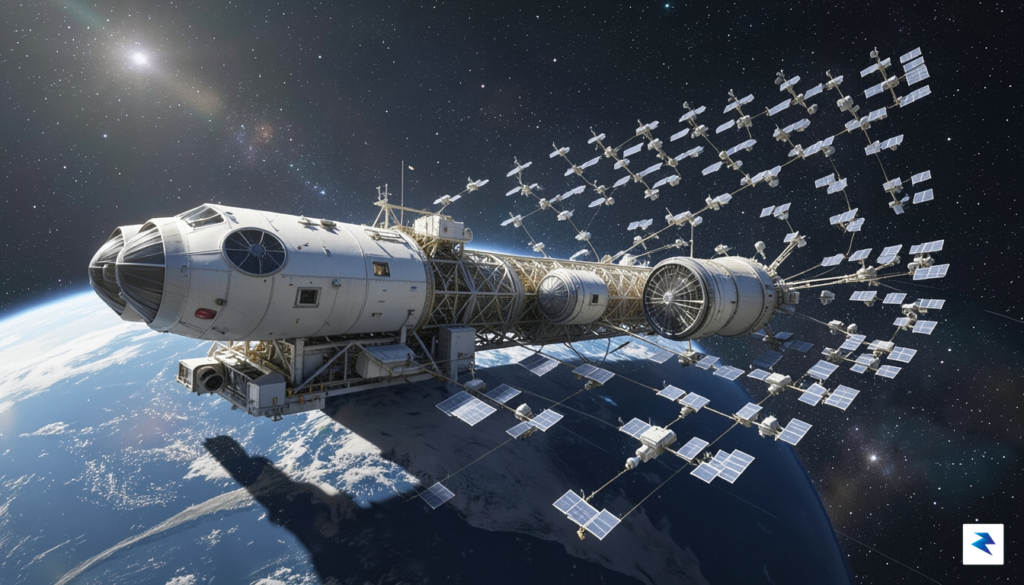
The aerospace sector is defined by a unique economic paradox: the ambition to colonize the stars requires capital investment on a scale that dwarfs traditional infrastructure projects, yet it operates within the unforgiving volatility of global financial markets. SpaceX has long operated on the promise of future dominance, but as the company moves from an experimental phase into a high-cadence operational reality, investors are beginning to pivot their focus from visionary milestones to bottom-line performance. The sheer capital expenditure required to maintain the rapid iteration cycle of the Starship program, combined with the massive, ongoing deployment costs of the Starlink constellation, creates a persistent strain on liquidity that even the most efficient launch provider must carefully manage.
Transitioning from a research-intensive R&D model to a sustainable revenue-generating machine is the ultimate hurdle for any aerospace giant. While SpaceX has successfully disrupted the launch market with its reusable Falcon 9 fleet, the company is now forced to grapple with the reality that space infrastructure requires constant, expensive maintenance. The recurring costs associated with satellite replenishment and the massive ground-based infrastructure needed to support low-latency internet services mean that revenue cycles are far longer than those of typical tech startups. Consequently, the market is scrutinizing whether the current pace of growth can justify the enormous debt and equity dilution required to sustain these long-term bets.
Increased competition from emerging aerospace firms—many of which are benefiting from similar technological leaps in propulsion and material science—is beginning to exert downward pressure on launch margins. As the price per kilogram to orbit continues to plummet, SpaceX can no longer rely on premium pricing strategies to offset the immense development costs of its next-generation hardware. Instead, profitability is becoming increasingly tied to the company’s ability to scale its satellite division, Starlink, into a mass-market utility. This shift creates a high-stakes scenario where any delay in deployment or regulatory hurdle in international markets translates directly into a valuation adjustment, as seen in the recent fluctuations of the company’s share price.
The transition from a pioneer of space exploration to a standardized utility provider requires a shift in investor sentiment from valuing disruptive potential to prioritizing operational efficiency and recurring cash flow.
Furthermore, the risk profile of SpaceX’s contract portfolio is evolving. While government contracts, such as those with NASA and the Department of Defense, provide a bedrock of stability and prestige, they often come with stringent delivery timelines and fixed-price constraints that leave little room for R&D overruns. Balancing these high-reliability government missions with the aggressive, “move fast and break things” approach required for commercial innovation is a delicate, and often expensive, tightrope walk. As the company matures, the market is demanding greater transparency regarding these operational costs, signaling that the era of valuation based on pure hype is being replaced by a more sober, analytical examination of the company’s long-term financial viability.

The trajectory of SpaceX has long been tethered to the persona of Elon Musk, creating a unique dynamic where the company’s valuation is as much a reflection of his personal brand equity as it is of its aerospace engineering achievements. For many investors, Musk serves as the ultimate catalyst, representing a visionary force capable of turning science fiction into industrial reality. However, this deep-seated association acts as a double-edged sword; while his bold rhetoric fuels excitement and attracts massive capital, it also introduces significant volatility into the market. When Musk dominates public discourse or pivots his focus toward other ventures, investors often react with heightened sensitivity, leading to rapid fluctuations in the perception of the company’s underlying stability.
This concentration of risk—where the identity of a single leader becomes inseparable from the entity itself—poses a complex challenge for those holding private shares. If a company’s momentum is perceived to be driven primarily by the sheer will of its founder rather than purely by its logistical and financial milestones, any ambiguity regarding his attention or public standing can lead to a cooling of investor confidence. Historically, SpaceX has benefited from a ‘growth at any cost’ mentality, where the promise of interplanetary travel justified long-term financial uncertainty. Yet, as the aerospace sector matures, the investor base is undergoing a fundamental shift, moving away from speculative enthusiasm toward a more rigorous demand for disciplined value and transparent operational performance.
The shift in investor sentiment signals that the era of valuation based solely on visionary potential is waning, replaced by a mandate for concrete, sustainable financial returns.
As the market recalibrates, the metric of success for SpaceX is no longer just about the next successful landing or orbital deployment, but about how effectively the company can decouple its long-term financial health from the unpredictability of its founder’s public profile. Investors are increasingly looking for evidence of institutional durability—structures and processes that can withstand the whims of the news cycle. This transition from prioritizing high-risk innovation to valuing fiscal discipline is not an indictment of the mission, but rather a sign of a maturing market that requires SpaceX to prove it can generate consistent value regardless of the headlines. Ultimately, the future of the company’s share price will depend on its ability to demonstrate that its engineering brilliance is matched by a robust, independent business model that provides security even when the visionary at the helm faces intense public scrutiny.
Market corrections are an inherent, albeit often uncomfortable, feature of any rapidly evolving industrial frontier. Much like the early days of the internet or the initial surge of the automotive industry, the “New Space” sector is currently grappling with the realities of price discovery. When high-profile private equity valuations fluctuate—specifically as they approach or dip below initial benchmarks—it is tempting to view the movement as a definitive signal of a bursting bubble. However, history suggests that these corrections are frequently the market’s way of separating speculative enthusiasm from the tangible, long-term value generated by infrastructure and innovation. The current volatility should not be interpreted as a failure of the sector’s mission, but rather as the complex process of the market recalibrating to account for the immense capital requirements and extended timelines inherent in aerospace engineering.

To understand this phenomenon, one must look at the shifting composition of the investor base. While retail investors often react to short-term news cycles and price action, institutional participants—such as pension funds, sovereign wealth funds, and specialized venture firms—tend to view space assets through a multi-decade lens. These larger entities are less concerned with the daily fluctuations around a specific share price and more focused on the total addressable market for satellite connectivity, orbital logistics, and deep-space exploration. By maintaining a focus on the fundamental growth trends of the aerospace sector, investors can better distinguish between temporary market noise and the structural maturation of a multi-trillion-dollar industry. Price discovery for space assets is particularly difficult because there are few historical precedents for companies that operate simultaneously as logistics providers, telecommunications giants, and government contractors.
The true value of a pioneering company is found not in its daily ticker price, but in its ability to redefine the boundaries of what is physically and economically possible in orbit.
Ultimately, navigating this volatility requires a shift in perspective from short-term trading to long-term ownership. The aerospace industry is moving from an era of “proof-of-concept” to one of “industrial scale,” where the primary metrics of success are flight cadence, payload reliability, and the cost-per-kilogram to orbit. While the price of shares may fluctuate based on macroeconomic conditions or capital market liquidity, the underlying demand for space-based services continues to accelerate. Investors who remain fixated on a specific price point may miss the broader reality: the infrastructure of the future is currently being built in real-time, and the firms that survive the necessary market corrections are likely to be the ones defining the global economy for decades to come.
The recent dip in share price following the initial public offering is perhaps less a reflection of fundamental weakness and more a testament to the inherent volatility associated with deep-tech, high-capital ventures. Investors looking toward the horizon should recognize that SpaceX’s valuation is inextricably linked to a series of high-stakes, transformative milestones. The primary engine for future growth remains the full operationalization of the Starship launch system, which promises to revolutionize the economics of payload delivery by offering unprecedented mass-to-orbit capabilities. Should upcoming flight tests continue to demonstrate the reliability and reusability of the vehicle, the company will likely solidify its monopolistic hold on the heavy-lift market, turning current skepticism into a catalyst for long-term equity appreciation.
Beyond the hardware itself, the expansion of the Starlink constellation serves as a critical revenue pillar that fundamentally reshapes the global telecommunications landscape. By providing high-speed, low-latency internet to underserved and remote regions, SpaceX is effectively building the infrastructure layer for the digital future. This transformation of space into a functional utility, rather than just a scientific frontier, ensures that the company remains insulated from the speculative cycles that often plague pure-play aerospace firms. As the constellation reaches full deployment, the recurring revenue streams generated will likely provide the financial stability necessary to fund more ambitious interplanetary exploration goals, thereby diversifying the company’s risk profile for long-term shareholders.
For investors in the space sector, the true value of SpaceX lies not in quarterly fluctuations, but in its role as the foundational architect of the modern orbital economy.
Ultimately, SpaceX acts as the definitive bellwether for the entire commercial space industry. Its successes and failures dictate investor sentiment, regulatory focus, and the overall pace of space privatization across the globe. While the market may currently be grappling with the complexities of pricing such a unique, capital-intensive asset, the trajectory remains clear: the commercialization of space is a marathon, not a sprint. Those who maintain patience in the face of initial market corrections are betting on the fundamental belief that we are moving toward a multi-planetary future where SpaceX is not just a participant, but the primary operator of the critical infrastructure that connects our civilization to the stars.
You must be logged in to post a comment.