
SpaceX Stock Slides to $135: The Reality Check Behind the Starship Hype
The SpaceX IPO Reality Check: Market Expectations vs. Operational Reality The meteoric rise of SpaceX’s valuation during its transition from a…
For years, Apple maintained a reputation as the “anti-advertising” giant of the technology world, positioning its hardware and software ecosystem as a sanctuary from the relentless data-tracking and promotional clutter that defines its competitors. However, the company’s recent strategic shift toward integrating advertising within its native applications represents a profound evolution in its long-term business model. By carefully introducing sponsored placements into Apple Maps, the tech titan is signaling a departure from its purely hardware-centric revenue stream, acknowledging that the future of sustained growth lies in leveraging its massive, high-intent user base. This transition is not merely about increasing quarterly earnings; it is a calculated effort to diversify income while maintaining the premium, privacy-focused identity that consumers have come to expect from the brand.
Maintaining the integrity of the user experience remains the central tension in this new advertising strategy. Unlike traditional platforms that prioritize aggressive monetization at the expense of usability, Apple is opting for a curated, highly selective approach to sponsored content. The goal is to ensure that advertising feels like a natural extension of the utility Maps provides, rather than an intrusive interruption to navigation or discovery. By carefully screening which services and businesses can appear as promoted entities, Apple aims to uphold the “high-quality” standard that defines the Maps ecosystem. This selective gatekeeping is why recent developments—such as the exclusion of certain home services—are so significant; they reveal that Apple is willing to sacrifice broad-spectrum ad revenue to protect the perceived quality and trustworthiness of its platform.
The move toward Maps advertising is a delicate balancing act: it requires Apple to prove that it can generate significant revenue without sacrificing the aesthetic and functional purity that keeps users tethered to its ecosystem.
Ultimately, this pivot reflects a broader industry trend where the line between service utility and commercial discovery is becoming increasingly blurred. As users rely more heavily on their mobile devices to bridge the gap between digital intent and physical action, Apple recognizes that its Maps application is a prime piece of real estate for local commerce. By controlling the environment in which these advertisements appear, the company is effectively building a “walled garden” for location-based marketing, where the user experience is prioritized above the sheer volume of ad inventory. This transition marks the beginning of a new chapter for Apple, one where the company seeks to master the art of contextual advertising while staying true to its core mission of putting the user experience above all else.

At the heart of Apple’s expansion into native advertising lies a rigid commitment to user safety and platform integrity. By establishing a strict perimeter around the types of businesses permitted to purchase ad space, Apple is effectively shielding its user base from sectors historically plagued by high consumer friction and predatory practices. Specifically, the company has implemented a blanket ban on a variety of essential home services, including plumbing, electrical work, HVAC repairs, roofing, and locksmith services. These categories, which often require immediate, high-stakes consumer trust, are being kept entirely out of the Maps advertising ecosystem to prevent the promotion of unreliable or potentially fraudulent service providers.
The rationale behind these exclusions is deeply rooted in the inherent challenges of vetting service providers in the “on-demand” home maintenance market. Unlike retail storefronts or restaurants, where quality can be easily gauged through standardized reviews and visual product consistency, home services often involve emergency situations where consumers are at their most vulnerable. Because these services are frequently sought during moments of crisis—such as a burst pipe or a locked door—the risk of price gouging, poor workmanship, or deceptive business practices is disproportionately high. By opting to exclude these categories entirely rather than attempting to build a complex verification system, Apple is prioritizing a “clean” user experience that minimizes the risk of negative interactions.
This curation strategy serves as a strategic safeguard, ensuring that the businesses promoted within Apple Maps maintain a level of quality consistent with the company’s broader brand promise. When a user interacts with an advertisement in a native app, they often subconsciously attribute a level of endorsement to the platform itself. By drawing a clear line in the sand, Apple avoids the reputational liability that comes with facilitating connections between users and unvetted contractors. This approach not only protects consumers from potential exploitation but also preserves the premium, high-trust environment that defines the Apple ecosystem.
The exclusion of high-friction home services represents a defensive posture, prioritizing long-term user trust and platform safety over the immediate revenue potential of a volatile advertising category.
Ultimately, this policy shift suggests that Apple is less interested in capturing the entirety of the local services advertising market and more focused on maintaining a curated, reliable utility for its users. By proactively filtering out industries that are difficult to regulate, Apple is signaling that the sanctity of the Maps experience is non-negotiable. Whether this policy will remain static as the platform grows or evolve into a more nuanced verification system remains to be seen, but for now, homeowners and renters alike can rest assured that their navigation tools will remain free from the common pitfalls of lead-generation advertising.

Apple is charting a fundamentally different course for its advertising endeavors, particularly with its upcoming Maps ad platform, starkly diverging from the data-hungry models that dominate much of the digital advertising landscape. While many platforms thrive on the meticulous collection and analysis of individual user data, creating intricate profiles to deliver hyper-targeted behavioral ads, Apple is deliberately constructing its framework on an unshakeable foundation of privacy-first design. This isn’t merely a marketing slogan; it represents a profound philosophical commitment to user anonymity, influencing every technical decision made about how ads are served and how advertisers interact with the platform.
The company is effectively imposing significant technological constraints upon itself, and by extension, upon advertisers, to safeguard user privacy. Unlike the broader internet advertising market where advertisers often gain access to granular user behavior data – ranging from browsing history and purchase patterns to location movements and demographic inferences – Apple’s Maps ad platform promises no such access. Advertisers will not be able to track individual users across apps or websites, nor will they receive detailed reports on specific user interactions. This self-imposed limitation means foregoing the kind of deep, personal targeting that has become standard, forcing a re-evaluation of what constitutes effective advertising in a privacy-respecting environment.
Despite these stringent privacy safeguards, Apple is positioning its ad platform as a premium alternative, aiming to provide substantial value to local merchants without compromising user trust. The system will leverage on-device intelligence and contextual signals, such as a user’s current location, the time of day, and their explicit search queries within Maps, to serve relevant ads. For instance, if a user searches for “plumber near me,” a local plumbing service that has paid for an ad could appear prominently. The key distinction is that this targeting occurs without the advertiser ever knowing who that specific user is, or what their past behaviors outside of that immediate search might have been. It’s about meeting immediate intent and providing utility, rather than intruding on personal data.
This distinct approach has significant long-term implications for user trust and the future of digital advertising. In an era where consumers are increasingly wary of how their personal data is collected, used, and monetized, Apple’s steadfast commitment to privacy offers a compelling differentiator. By demonstrating that effective advertising can coexist with robust privacy protections, the company reinforces its brand as a champion of user rights. This could foster a more loyal user base, attracting individuals who are deliberately seeking out platforms that prioritize their anonymity. Ultimately, Apple’s strategy suggests a potential shift towards an advertising ecosystem where trust, transparency, and a focus on immediate, contextual relevance could become the new premium, offering a sustainable model for both users and businesses.

For small and medium-sized enterprises (SMEs) in sectors like retail, hospitality, and dining, Apple’s decision to exclude home service providers from its new advertising platform creates a distinct landscape. While plumbers, electricians, and contractors are sidelined, storefront businesses now have an exclusive lane to capture the attention of high-intent users. Because Apple Maps has historically remained an ad-free environment, the introduction of sponsored pins and search results is expected to carry a higher level of consumer trust than the saturated advertising environments found on rival platforms. This shift provides local businesses with a unique opportunity to reach customers exactly when they are physically nearby and actively searching for a place to eat, shop, or visit, effectively turning Maps into a high-conversion destination rather than just a navigation tool.
The potential for premium ad placement to influence local consumer behavior cannot be overstated. By appearing at the top of search results or as a prominent, branded pin, a local restaurant or retail outlet can immediately differentiate itself from competitors that rely solely on organic discovery. This visibility is particularly powerful for businesses that thrive on foot traffic, as it allows them to intercept users who have already signaled a clear intent to engage with a local establishment. As these ads become integrated into the user experience, businesses that capitalize on this prime digital real estate will likely see a significant uptick in foot traffic, provided their digital footprint—such as operating hours, high-quality photos, and accurate location data—remains impeccable.
To succeed in the Apple ecosystem, businesses must prioritize the quality and accuracy of their digital presence, as Apple’s curated approach prioritizes user experience over raw ad volume.
To meet Apple’s rigorous quality-control benchmarks, business owners must treat their Apple Maps listing as a primary storefront. Unlike other platforms that reward high-frequency posting or aggressive bidding, Apple’s model emphasizes relevance and reliability. Business owners should ensure that their business information is verified through Apple Business Connect, consistently updating their hours of operation, menu items, and photos to reflect the reality of the customer experience. By maintaining a clean, professional, and updated profile, businesses signal to Apple’s algorithms that they are reliable partners, thereby increasing the likelihood of their ads being approved and effectively displayed to the target audience.
Ultimately, while the restriction on home services may feel like a missed opportunity for some, it serves as a benefit for the remaining local businesses by preventing platform clutter. By aligning with Apple’s focus on clean, user-centric design, local retailers and service-oriented businesses can build deeper connections with their community. The key to success in this new frontier lies not in outspending competitors, but in providing the most accurate, inviting, and useful information possible to the millions of users relying on Apple Maps to navigate their daily lives.
The divergence between Apple and Google in the digital mapping space has moved from a subtle difference in interface design to a fundamental split in advertising philosophy. For years, Google Maps has operated on a high-frequency, “pay-to-play” model that essentially functions as a massive digital directory for local businesses. By allowing nearly every service provider—from local plumbers and locksmiths to niche home contractors—to bid on search terms, Google has turned its map platform into a hyper-competitive marketplace. This approach prioritizes sheer volume and broad reach, ensuring that a user searching for a service is met with a dense list of options, regardless of brand size or reputation.
In contrast, Apple is positioning its advertising infrastructure as a curated, “walled garden” that prioritizes ecosystem integrity over the raw quantity of participants. By explicitly banning home services from its upcoming advertising slots, Apple is signaling that it views maps as an extension of its premium brand experience rather than a utility for transactional lead generation. While Google’s strategy is designed to capture every possible intent, Apple is building an environment where advertisements feel like elevated recommendations rather than intrusive pop-ups. This deliberate restraint suggests that Apple is willing to sacrifice short-term advertising revenue to maintain a cleaner, more trustworthy interface that avoids the clutter of competing service providers.
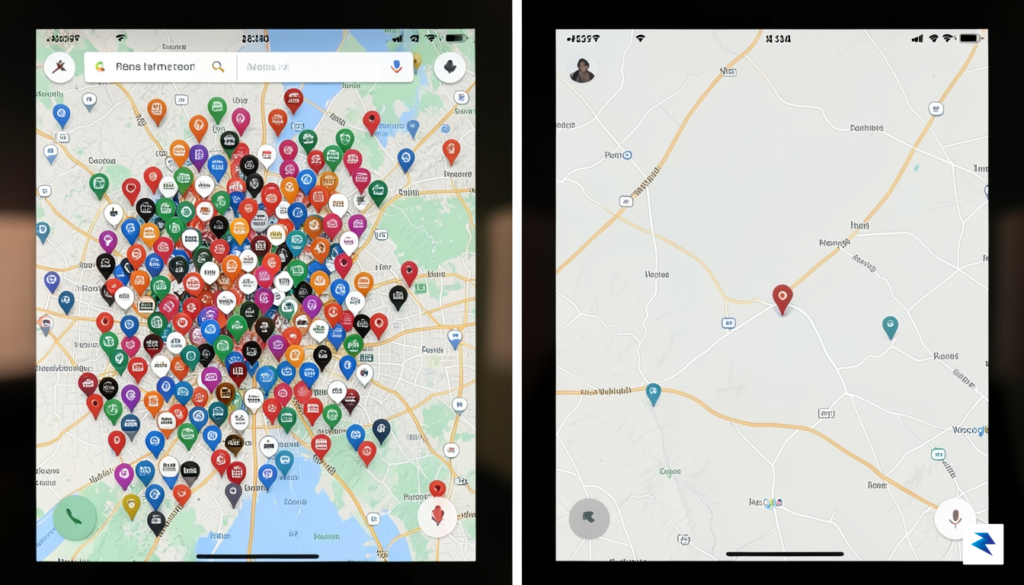
The user experience implications of these two models are profound. Google relies on a data-driven feedback loop where the abundance of choice is framed as a benefit, allowing users to compare ratings and pricing in real-time. This can be highly efficient for a consumer in a rush, but it often leads to a “race to the bottom” where advertisers must spend aggressively just to remain visible in a saturated market. Apple’s approach, meanwhile, leans into the “premium placement” philosophy. By limiting who can participate in their ad ecosystem, Apple is effectively curating the pool of businesses users see, which theoretically increases the perceived quality of the results. This model favors larger brands and national chains that align with Apple’s design aesthetic, creating a more cohesive, if less comprehensive, user journey.
The core trade-off here is between market utility and brand safety. Advertisers who thrive on Google’s platform value the ability to capture immediate, high-intent traffic, whereas those who find themselves locked out of Apple’s map ecosystem are losing a potentially prestigious, albeit restricted, channel for customer acquisition.
Ultimately, businesses must choose which philosophy better serves their growth strategy. If a company relies on high-volume, low-cost lead generation, the Google model remains an essential, albeit expensive, component of their marketing stack. However, for brands that prioritize reputation and a premium customer experience, Apple’s exclusion of home services might actually be a blessing in disguise. By keeping the map clean and free from the aggressive competition typical of home-service bidding wars, Apple is betting that consumers will associate its platform with a higher standard of service, even if that means fewer options are available in the search results.

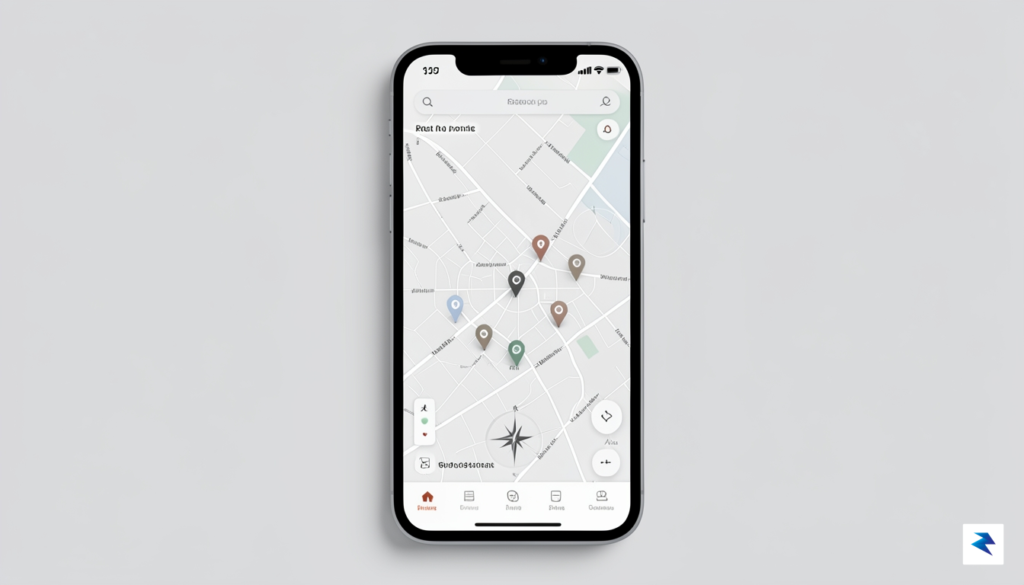
Apple’s calculated decision to restrict home service advertisements within its mapping interface signals a fundamental shift in how tech giants view the relationship between discovery and monetization. For years, local search has been dominated by aggressive, pay-to-play models that prioritize the highest bidder over the most relevant user result. By intentionally limiting which categories can buy visibility, Apple is positioning its navigation ecosystem as a curated utility rather than a cluttered directory. This “quality-over-quantity” approach suggests that the future of local search will likely move away from the “billboard-on-every-corner” style of digital advertising and toward a model that prioritizes user intent and trust.
As consumers become increasingly fatigued by hyper-targeted, intrusive ads, the pressure on competitors like Google and Yelp to refine their own ad experiences will intensify. If Apple successfully maintains a high-utility environment, it creates a powerful competitive moat; users may gravitate toward platforms that respect their digital experience, effectively forcing other providers to reconsider the density and intrusiveness of their own advertising placements. We are likely entering an era where “ad-light” platforms become a premium feature, compelling advertisers to focus on value-driven engagement rather than simply outbidding rivals for top-of-page placement.
The true value of a discovery engine lies not in how many ads it can display, but in how effectively it connects a user to a solution without compromising the integrity of the search.
Ultimately, this pivot indicates that the maturation of location-based services is entering a phase of refinement. While legacy platforms have focused on maximizing short-term revenue through sheer ad volume, Apple is betting on long-term user retention. By acting as a gatekeeper for the types of services that appear in search results, the company is attempting to maintain a “clean” brand image that feels helpful rather than transactional. Whether this strategy will succeed in the fiercely competitive digital advertising market remains to be seen, but it is clear that the industry is at a crossroads. Platforms that fail to strike a balance between monetization and user utility risk losing the very audience that makes their advertising inventory valuable in the first place.
Looking ahead, we can expect to see a divergence in strategies across the tech landscape. Some companies will likely double down on aggressive monetization, banking on the ubiquity of their search tools, while others may follow Apple’s lead, adopting more stringent quality controls to capture a more privacy-conscious, discerning user base. This shift could permanently alter the digital marketing landscape, making discoverability more about earning a place in the user’s journey through high ratings and relevance, rather than simply having the largest marketing budget in the local services sector.
You must be logged in to post a comment.