
The Pixel 11 Camera Bar Mystery: What Is That Glowing Orb?
The Evolution of the Pixel Camera Identity For years, Google has been on a deliberate journey to forge a visual identity that is instantly…


The meteoric rise of SpaceX’s valuation during its transition from a private powerhouse to a public entity was defined by an atmosphere of speculative euphoria, fueled largely by the company’s near-mythical status in the aerospace industry. For months, retail and institutional investors alike poured capital into the stock, driven by the seductive narrative of a company poised to colonize Mars and dominate the global satellite internet market. However, as the initial “honeymoon phase” of the IPO gives way to the rigorous scrutiny of the public markets, the stock has undergone a significant recalibration. Settling toward the $135 mark, the current price action reflects a broader shift in sentiment, moving away from the emotional frenzy of early adoption toward a far more pragmatic and sobering assessment of long-term operational feasibility.
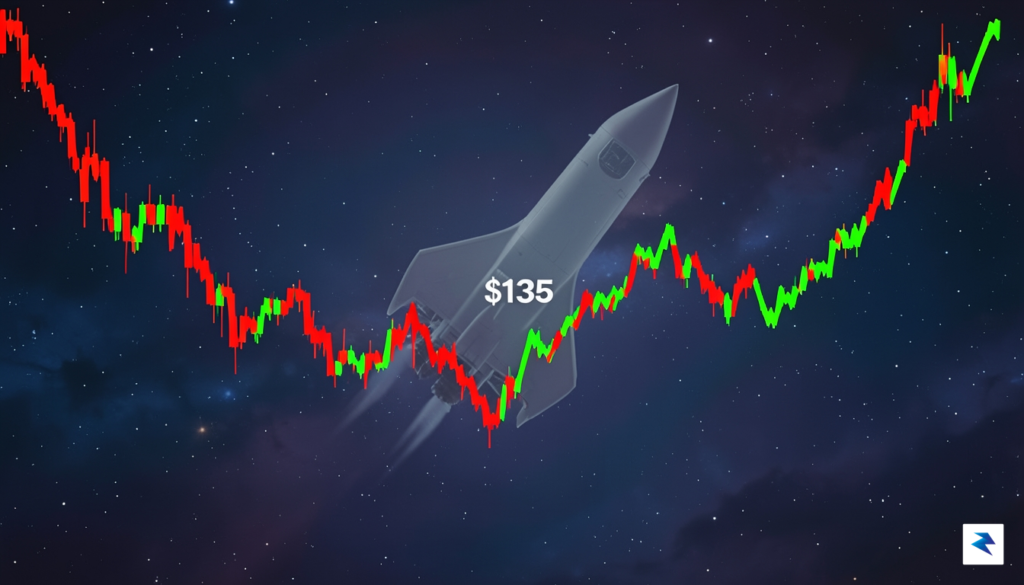
This transition from the private sphere to the public exchange often acts as a harsh reality check for even the most disruptive firms. In private rounds, valuation is frequently tied to future potential, visionary leadership, and the promise of “moonshot” technology that defies current economic models. Once a company enters the public arena, however, the metrics of success shift toward quarterly earnings reports, debt management, and the consistency of cash flow. Investors are no longer merely buying into the dream of interplanetary transit; they are now carefully weighing the capital-intensive nature of Starship development against the company’s ability to generate sustainable, predictable revenue. This friction between the high-flying ambition of Musk’s vision and the rigid demands of Wall Street is exactly why we are witnessing this sharp, necessary correction.
The transition from a visionary private enterprise to a transparent public entity requires a fundamental shift in how the market values potential versus performance. As the hype cycle recedes, the stock price becomes a mirror for operational reliability rather than speculative ambition.
Ultimately, the cooling of investor sentiment should not be viewed as a lack of confidence in the technology itself, but rather as a maturation of the market’s relationship with SpaceX. Early valuation premiums are rarely sustainable when they outpace the actual delivery of hardware milestones and commercial profitability. By forcing the company to prove its business model under the watchful eye of analysts and institutional shareholders, the current market dynamic is ensuring that SpaceX evolves into a more disciplined, fiscally responsible organization. As the company approaches critical Starship launch windows, the market is signaling that it is no longer willing to pay for promises; it is waiting for the concrete, scalable results that justify the premium price tag.
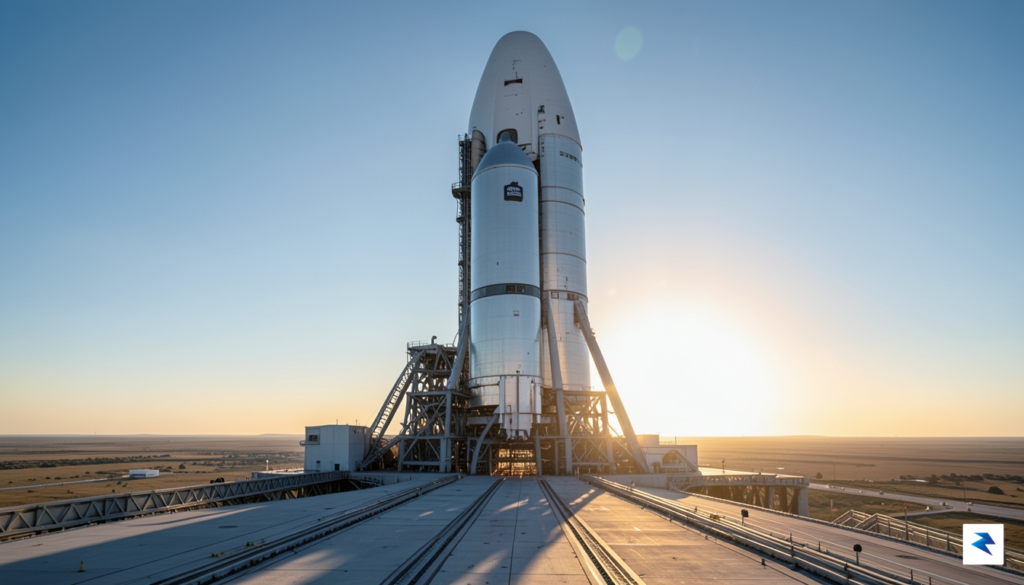
The Starship program represents far more than a mere engineering milestone; it is the fundamental linchpin upon which SpaceX’s entire long-term valuation is constructed. While the company has successfully dominated the commercial satellite launch market with the Falcon 9, the transition to a fully reusable, heavy-lift architecture is what differentiates a successful logistics provider from a multi-planetary infrastructure titan. Consequently, the upcoming launch acts as a definitive crucible for institutional investors, who are currently recalibrating their risk exposure as the stock price drifts toward the $135 threshold. For these stakeholders, the technical hurdles associated with Starship—such as achieving perfect orbital refueling and mastering high-velocity atmospheric reentry—are not just hurdles for engineers, but variables that dictate the company’s ultimate solvency and future growth trajectory.
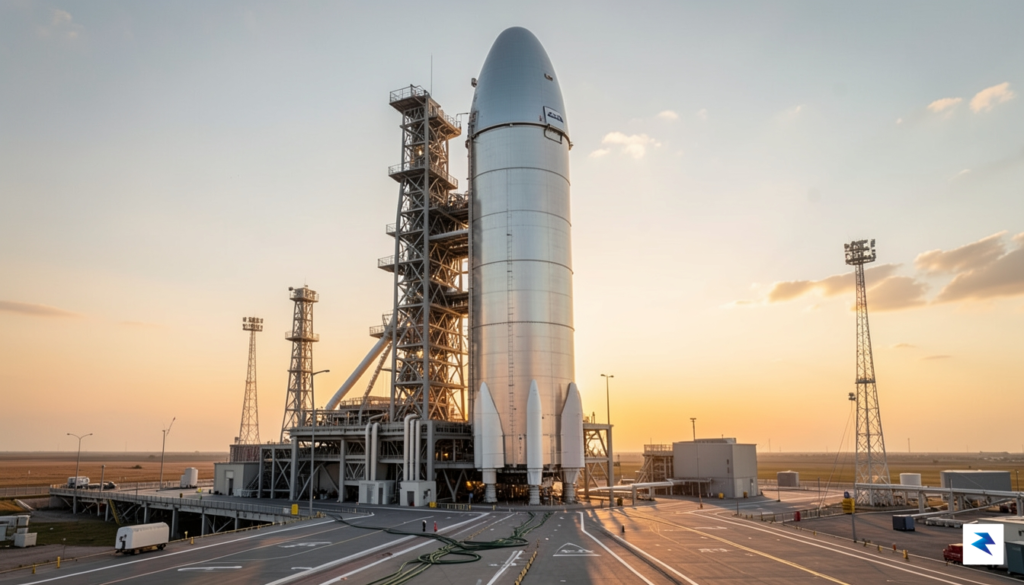
The financial implications of this test flight are profound, as the current valuation models assume a rapid, aggressive cadence of missions that can only be realized if Starship meets its design specifications. A successful flight demonstration would provide the necessary “burden of proof” to validate SpaceX’s shift toward deep-space logistics, potentially unlocking lucrative government contracts and private sector lunar missions that remain speculative today. Conversely, a failure to demonstrate key flight milestones risks signaling to the market that the transition to Starship is further away than anticipated, which would likely force a downward revision of the stock’s growth multiples. Investors are acutely aware that while SpaceX has historically weathered technical setbacks, the current capital-intensive phase requires a clear path to profitability that only a fully operational, high-frequency launch vehicle can provide.
Success in this launch is not just about clearing the pad; it is about proving that the era of sustainable, low-cost heavy lift is finally reachable, thereby justifying the current premium placed on the company’s private shares.
Ultimately, the market is betting on SpaceX’s ability to commoditize deep-space transport in a way that no other entity has ever attempted. By mastering Starship, the firm shifts from being a provider of rocket services to a provider of orbital and interplanetary real estate, significantly expanding its total addressable market. This transition is why the volatility around the $135 price point is so palpable; it reflects a broader nervousness about whether the company’s “technological moonshots” can reliably translate into predictable cash flows. As the launch date approaches, the burden of proof rests entirely on the rocket’s performance, turning every flight test into a binary event that will either solidify SpaceX’s dominance or introduce a period of prolonged skepticism regarding its ambitious operational roadmap.
The recent recalibration of SpaceX’s valuation to the $135 mark acts as a significant pivot point for investors who have long been accustomed to the company’s meteoric rise. Rather than interpreting this slide as a fundamental failure of Elon Musk’s aerospace vision, it is more accurate to view it as a necessary maturation of the stock’s market profile. For years, SpaceX traded on the sheer momentum of its technological milestones and the promise of a multi-planetary future. Now, however, the market is shifting its focus toward the harsh realities of unit economics. Institutional investors, in particular, are moving away from speculative excitement and are instead demanding concrete evidence that SpaceX can translate its dominant launch capabilities into a scalable, self-sustaining revenue stream that extends well beyond its reliable roster of government defense and scientific contracts.
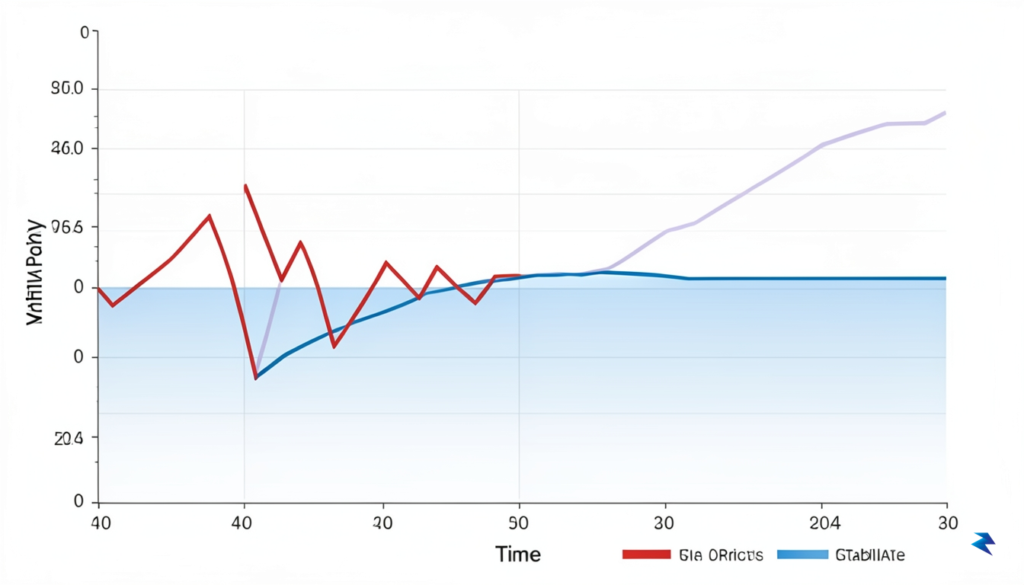
When comparing SpaceX to traditional aerospace benchmarks like Lockheed Martin or Northrop Grumman, the $135 valuation highlights the tension between legacy stability and high-growth potential. Traditional aerospace firms often trade on predictable, multi-decade government procurement cycles, which keeps their valuations relatively tethered to tangible assets and steady dividends. SpaceX, by contrast, operates in a category of its own, blending the capital-intensive nature of heavy manufacturing with the rapid innovation cycles typical of software-heavy tech giants. This valuation correction suggests that the market is beginning to treat SpaceX less like a high-stakes startup and more like an established infrastructure provider, forcing it to justify its price-to-earnings potential against the backdrop of massive capital expenditures required for Starship development.
The transition from a growth-at-any-cost valuation to a disciplined, performance-based price reflects a broader “sobering up” in tech-heavy portfolios, where investors are increasingly prioritizing cash flow visibility over long-term speculative narrative.
Furthermore, the interplay between retail enthusiasm and institutional caution has played a decisive role in this downward trend. Retail investors frequently drive volatility through sentiment-based trading, often reacting sharply to news cycles surrounding Starship flight tests. Conversely, institutional players—who manage the bulk of the liquidity—have started to hedge their positions, seeking more transparency regarding the profitability of the Starlink constellation and the long-term feasibility of orbital refueling. This divergence in trading patterns creates a “reality check” environment. By stabilizing at $135, the market is effectively setting a floor that reflects a more measured assessment of risk, suggesting that while the long-term potential remains intact, the era of unbridled, hype-driven price appreciation has likely reached a temporary impasse in favor of fundamental accountability.
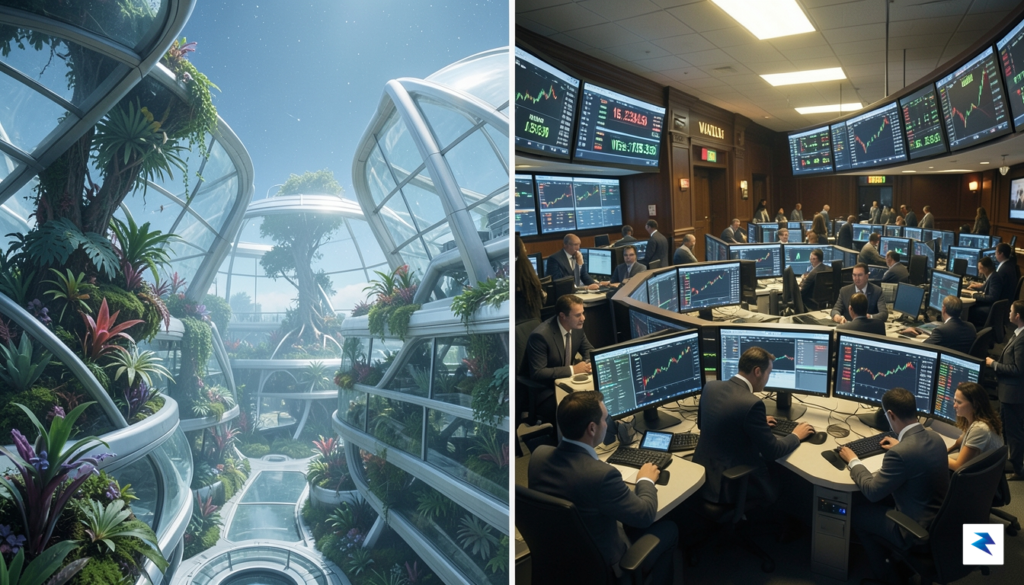
The friction between Elon Musk’s multi-decade roadmap for humanity and the inherent impatience of public market investors has always been a defining feature of his leadership. While SpaceX operates with the ambitious goal of colonizing Mars and making life multi-planetary, Wall Street remains tethered to the traditional cadence of quarterly earnings calls and immediate capital efficiency. This structural mismatch creates a persistent volatility that defines the current $135 share price environment; investors are essentially weighing the potential of a transformative space economy against the immediate, tangible costs of explosive test flights and iterative design cycles. For the average shareholder, this is not merely an investment in aerospace technology, but a bet on a leadership style that explicitly prioritizes long-term outcomes over short-term stability.
Historically, visionary CEOs have often struggled to find harmony with the demands of public equity markets, but Musk’s communication style introduces a unique level of complexity. By using social media to provide raw, unfiltered updates on engineering progress—and setbacks—he bypasses the traditional, sterilized corporate messaging that typically cushions stock price fluctuations. While this transparency is refreshing to supporters, it acts as a double-edged sword for the financial community, which thrives on predictability and structured guidance. When a rocket launch fails or a development timeline slips, the market reacts with immediate, often aggressive, sell-offs, reflecting a lack of patience for the “trial and error” methodology that has become the hallmark of the Starship program.
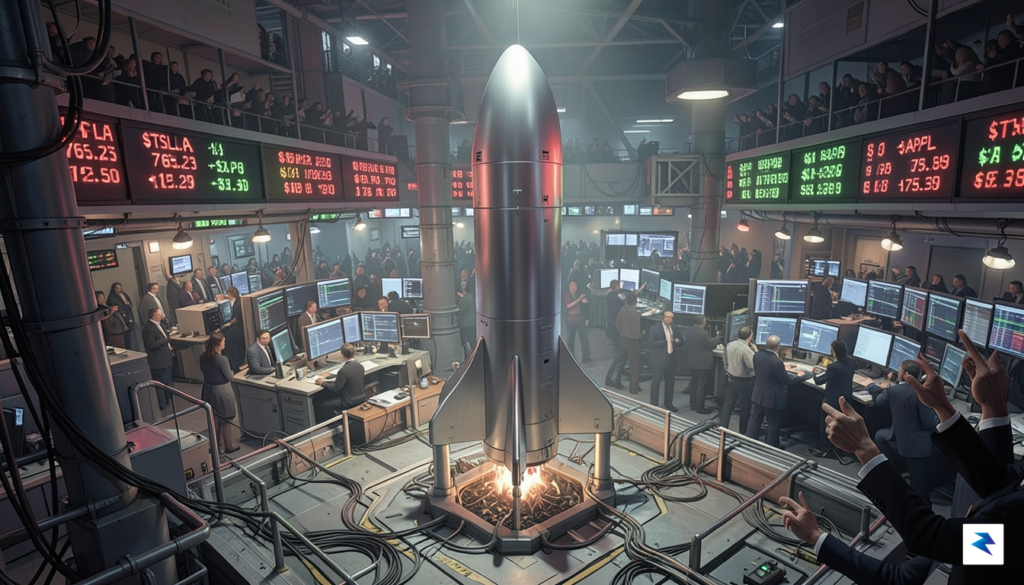
Ultimately, the tension boils down to a clash of philosophies: the public market views a space company as a vehicle for revenue growth, while Musk views it as a utility for human survival.
The resulting volatility is not necessarily a signal of failure, but rather a reflection of the market’s ongoing struggle to price in “Moonshot” risks. Investors are forced to determine if the $135 valuation represents a fair entry point for a company that could eventually dominate the global satellite internet and orbital transport industries, or if it is an overcorrection fueled by fear of the next testing hurdle. As the Starship launch approaches, this tug-of-war will likely intensify. Shareholders must decide whether they are participating in a standard equity play or if they are effectively underwriting the most ambitious engineering experiment in history—a decision that requires a much higher tolerance for uncertainty than the typical public market participant is accustomed to.
Ultimately, the current price slide serves as a reality check for those who equate the excitement of space exploration with guaranteed financial stability. The public market expects a steady trajectory of growth, yet Musk’s SpaceX is built on a foundation of rapid, iterative destruction. For as long as these two worldviews remain in conflict, shareholders can expect continued turbulence, as the company’s valuation remains inextricably linked to the unpredictable nature of its mission success.

For the long-term investor, the recent fluctuation in space sector valuations serves as a stark reminder that aerospace is fundamentally distinct from traditional software-as-a-service or consumer tech investments. Unlike companies that rely on scalable digital infrastructure with low marginal costs, space enterprises are defined by extreme capital intensity and the unforgiving physics of orbital mechanics. When evaluating a company like SpaceX, one must look beyond the quarterly ticker movement and instead analyze the underlying infrastructure—such as the cadence of Starship launches, the build-out of the Starlink constellation, and the shifting economics of payload delivery. The current volatility is not merely a market reaction; it is a reflection of the transition from speculative R&D to the industrialization of low Earth orbit.
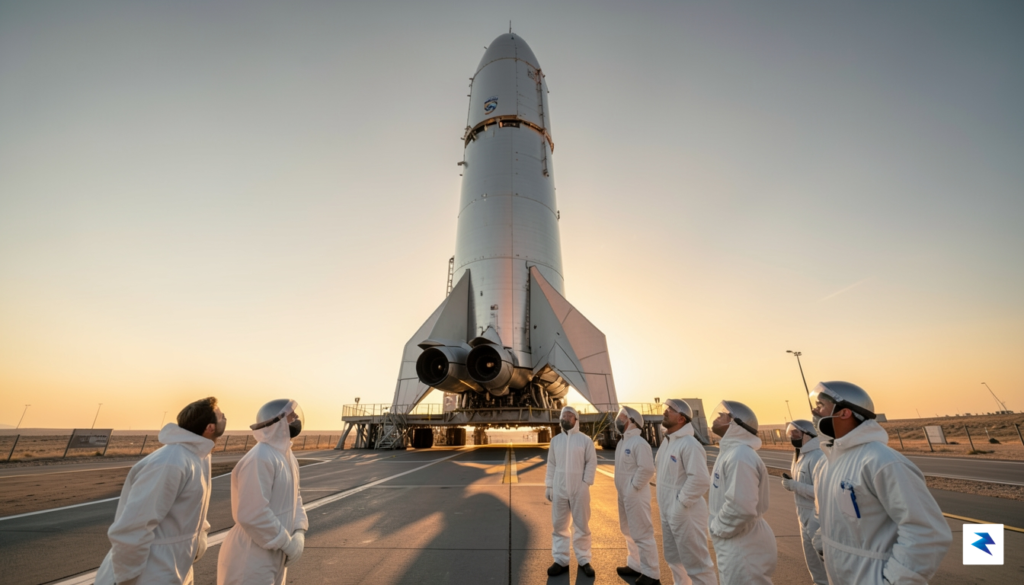
Building a resilient portfolio in this emerging sector requires a paradigm shift in risk assessment. Investors should prioritize companies that demonstrate a clear “moat”—whether through proprietary launch technology, reusable hardware that slashes cost-per-kilogram, or government contracts that provide a bedrock of revenue during experimental phases. It is equally critical to understand that the space economy is currently undergoing a “maturation gap.” In this phase, companies that prioritize incremental, iterative testing over massive, singular bets are often better positioned to survive the long, arduous journey toward profitability. Consequently, a balanced portfolio should perhaps anchor itself in established aerospace players while allocating only a calculated portion of capital to the high-growth, high-volatility firms that are pushing the boundaries of what is possible.
Success in the space economy isn’t determined by the success of a single launch, but by the ability to sustain operations through the inevitable failures that accompany technological breakthroughs.
To navigate this landscape effectively, investors should adopt a multi-decadal horizon rather than a day-trading mindset. The transformation of humanity into a spacefaring civilization is a process measured in decades, not fiscal quarters. Volatility should be viewed as an entry point for those who have performed their due diligence on a firm’s engineering roadmap and cash runway. By focusing on fundamental milestones—such as successful engine firings, regulatory clearances, and customer adoption rates—investors can insulate themselves from the emotional noise that often drives price swings in the aerospace sector. Ultimately, the goal is to align one’s investment strategy with the reality that the space sector is not just another industry, but the foundational architecture for the next century of global economic development.
You must be logged in to post a comment.