
Google Rebrands NotebookLM to Gemini Notebook: What You Need to Know
The Evolution of NotebookLM: From Research Tool to Gemini Integration When Google first introduced NotebookLM, it was positioned as an…
For decades, the journey from travel inspiration to itinerary confirmation was a labor-intensive endeavor. In the pre-digital era, travelers relied heavily on brick-and-mortar agencies to navigate the labyrinth of airline schedules and hotel availability. When the internet democratized travel in the late 1990s and early 2000s, the pendulum swung aggressively toward the DIY model. Suddenly, the power to book flights and manage reservations shifted entirely to the consumer, turning the average traveler into their own amateur travel agent. While this shift provided unprecedented autonomy, it also introduced a new form of digital fatigue characterized by dozens of open browser tabs, conflicting review sites, and the exhausting burden of cross-referencing logistical data.
Today, we are witnessing a significant “second shift” in the travel industry, as consumers find themselves overwhelmed by the sheer volume of information available online. The promise of the DIY era—that more choice equals a better experience—has been replaced by the reality of decision paralysis. This is where artificial intelligence has emerged as a vital catalyst for change, acting as a sophisticated bridge between raw information and meaningful action. By automating the logistical complexities that once required hours of manual research, AI is effectively reclaiming the efficiency of the old-school agency model while simultaneously elevating it with machine learning capabilities that no human could replicate alone.
The modern traveler is no longer looking for a simple booking engine; they are seeking a curated, frictionless ecosystem that understands their unique preferences. As AI algorithms ingest vast amounts of data—from real-time flight disruptions to hyper-local dining trends—they empower travel professionals to provide recommendations that are not just accurate, but deeply personalized. This is not a return to the past, but rather an evolution into a “smart” hybrid model. In this new paradigm, the human expert provides the essential emotional intelligence and nuanced trip design, while the AI handles the heavy lifting of scheduling, pricing optimization, and itinerary management.
The most successful travel platforms in the coming decade will be those that effectively synthesize the warmth of human expertise with the precision of predictive analytics.
Ultimately, the movement back toward professional-led services is driven by a desire for quality over quantity. Modern consumers are increasingly willing to pay for expertise that saves them time and mitigates the stress of travel planning. By leveraging AI to automate the mundane aspects of trip coordination, agencies can once again focus on what they do best: creating transformative experiences. This integration of technology ensures that the professional travel agent remains an indispensable partner in the modern journey, turning the chaotic process of global exploration back into the seamless, enjoyable experience it was always meant to be.

At the core of Fora’s rapid ascent is a fundamental shift in how travel planning is executed. Rather than viewing the traditional travel agency as an obsolete relic, the company has reimagined the profession by fusing the irreplaceable nuance of human expertise with the raw speed and efficiency of proprietary artificial intelligence. By building a dual-pillar strategy that treats human advisors as the primary value proposition while leveraging technology as their ultimate force multiplier, Fora has effectively dismantled the barriers that once kept independent travel planning fragmented and inefficient.
The company’s professional advisor network serves as the heartbeat of the platform, bringing together thousands of curated experts who provide a level of concierge-style service that automated booking sites simply cannot match. However, Fora’s true innovation lies in the backend technology provided to these advisors. This proprietary software suite handles the heavy lifting—automating mundane tasks like data entry, itinerary formatting, and complex supplier logistics—which historically accounted for the majority of an agent’s working hours. By stripping away the administrative friction, Fora enables its advisors to dedicate their time to what truly matters: the art of discovery, deep personalization, and the cultivation of genuine client relationships.

Fora’s model proves that the future of travel isn’t about replacing the human agent; it is about augmenting their capability to provide high-touch service at a scale previously thought impossible.
This streamlined operation allows Fora to maintain a high-tech edge while preserving the deeply personal nature of travel curation. When an advisor crafts an itinerary, they are no longer bogged down by tedious administrative hurdles; instead, they have access to real-time insights, intelligent recommendations, and seamless booking tools that ensure the client experience is flawless from start to finish. Because the platform continuously learns from every interaction, it evolves alongside its network of experts, creating a virtuous cycle where technology becomes more refined as the community grows. By successfully bridging the gap between legacy service models and modern digital infrastructure, Fora has created a hybrid ecosystem that is not only highly scalable but also deeply resilient in an increasingly competitive travel market.

Securing a $60 million Series D round and achieving a coveted $1 billion unicorn valuation is far more than a simple financial win; it is a profound validation of the “human-in-the-loop” business model. By attracting significant backing from industry heavyweights like Forerunner Ventures and Tactile Ventures, Fora has demonstrated that the future of the travel industry does not lie in the total replacement of human experts with cold, unfeeling algorithms. Instead, this capital injection confirms that investors are betting heavily on a hybrid ecosystem where artificial intelligence serves as a force multiplier for human creativity, empathy, and specialized knowledge. This milestone effectively signals to the broader venture capital market that the most lucrative opportunities in travel tech exist at the intersection of sophisticated software and personalized, white-glove service.
With this fresh influx of capital, Fora is positioned to accelerate its aggressive roadmap across three primary pillars: advanced research and development, geographic scaling, and talent acquisition. The R&D investment will likely focus on refining the proprietary AI tools that assist travel advisors in managing complex itineraries, automating administrative grunt work, and surfacing hyper-personalized recommendations that a standard search engine could never offer. Furthermore, as the company expands its footprint into new global markets, this funding provides the necessary cushion to navigate local regulatory landscapes and build out the operational infrastructure required to maintain a seamless experience for a growing network of global advisors.

The success of this funding round proves that high-net-worth travelers and digital-savvy planners alike are rejecting the limitations of DIY booking sites in favor of curated, tech-augmented human expertise.
The market’s appetite for this model is rooted in a fundamental shift in consumer behavior. While pure automation can handle simple flight bookings, it often fails to provide the nuanced guidance required for high-stakes, multi-destination journeys or complex luxury experiences. By empowering advisors with AI that handles the heavy lifting of data synthesis, Fora enables its network to focus on the high-value emotional labor of trip planning. Investors recognize that this strategy creates a durable competitive moat; it is far easier for a competitor to copy an algorithm than it is to replicate a thriving, tech-enabled community of skilled professionals. Consequently, this $60 million round marks a turning point where the travel tech sector finally acknowledges that the most efficient way to scale service-heavy industries is to give the human expert a digital superpower.

The true innovation behind the modern travel agency model isn’t found in the total automation of the booking process, but rather in the deliberate synergy between machine efficiency and human expertise. While algorithms have become incredibly adept at processing massive datasets, they lack the capacity to understand the deeper, often unspoken motivations behind a traveler’s journey. By leveraging AI to handle the heavy lifting of administrative logistics, platforms like Fora empower their advisors to pivot away from repetitive data entry and toward the high-value work of bespoke trip curation. This hybrid approach ensures that the traveler receives the best of both worlds: the lightning-fast precision of modern technology and the nuanced, thoughtful guidance of a seasoned professional.
In practice, AI serves as an indispensable assistant that dramatically expands an advisor’s bandwidth. These systems excel at complex itinerary building, instantaneously cross-referencing global flight availability, hotel inventories, and real-time pricing alerts to ensure the most cost-effective yet luxurious arrangements. Furthermore, AI tools streamline supplier relationship management, allowing agents to track commission structures and booking status updates across hundreds of vendors without the risk of human oversight. By automating these tactical tasks, the technology acts as a force multiplier, allowing an advisor to manage a larger client base while maintaining a high standard of personalized service that would be impossible to scale manually.

However, the value of the human agent remains irreplaceable when it comes to the emotional and unpredictable aspects of travel. While a machine can calculate the shortest route between two cities, it cannot understand the sentiment behind a milestone anniversary trip or the subtle, unspoken needs of a family navigating a complex multi-generational vacation. Humans bring a level of empathy and insider knowledge that purely data-driven models simply cannot replicate. Whether it is navigating a sudden geopolitical crisis, smoothing over a logistical hiccup at a boutique property, or recommending a “hidden gem” restaurant that hasn’t yet made it onto review aggregators, the human touch provides a safety net and a layer of sophistication that builds long-term client trust.
The core of the hybrid model is simple: AI manages the complexity of the logistics, while the human advisor manages the complexity of the human experience.
Ultimately, the future of the industry is not defined by a competition between silicon and intuition, but by their integration. As AI continues to evolve, it will likely provide even more granular insights into traveler preferences, allowing advisors to offer recommendations that feel intuitive and hyper-personalized. By offloading the rigid, rule-based operations to intelligent software, travel professionals are finally free to focus on their true purpose: acting as architects of memory, providing the care, context, and creative problem-solving that transform a standard trip into a truly transformative experience.
The travel industry has long been bifurcated between the massive, algorithm-driven behemoths like Expedia and Booking.com, and the fragmented world of boutique, high-touch travel agencies. While the former dominate the DIY market by leveraging sheer scale and price-comparison functionality, they often fail to capture the nuance required for complex, luxury, or highly personalized itineraries. Fora has effectively identified this white space, positioning itself not as a competitor to the automated booking engine, but as a sophisticated evolution of the traditional travel advisor model. By integrating a proprietary tech stack with a decentralized network of human experts, Fora bridges the gap between digital efficiency and the bespoke service that affluent travelers increasingly demand.
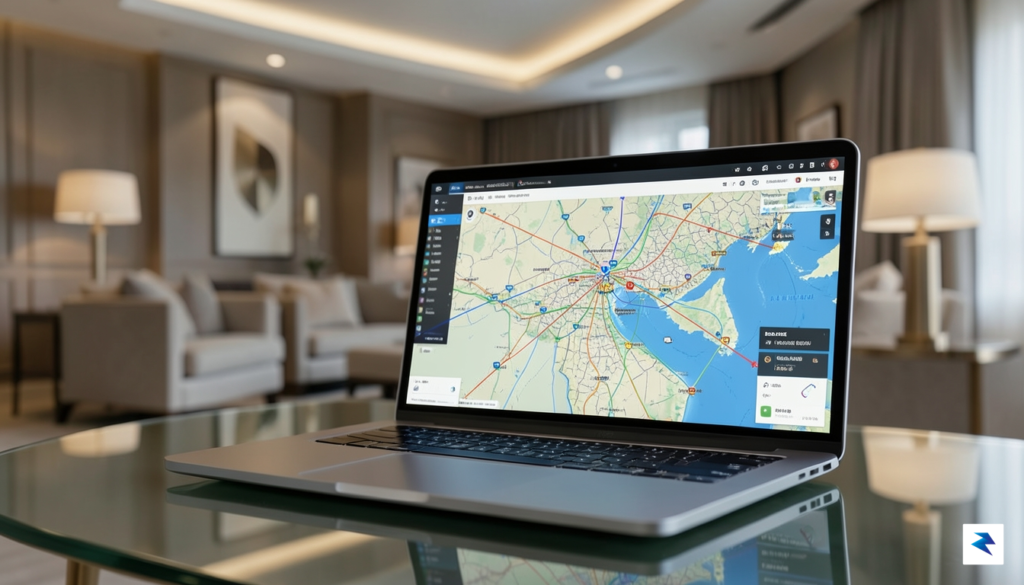
What differentiates Fora from both legacy agencies and pure-play tech startups is its unique “advisor-as-a-service” framework. Traditional agencies often struggle with outdated infrastructure and limited scalability, while tech-only platforms lack the human empathy and insider knowledge necessary to handle high-stakes travel logistics. Fora’s defensive moat lies in its ability to democratize professional travel planning through a centralized platform that handles the administrative friction—such as commission tracking, vendor relationships, and booking workflows—allowing its advisors to focus entirely on the client experience. This hybrid approach creates a formidable barrier to entry; competitors cannot simply replicate a database of hotels, they must cultivate a high-performing community of trained professionals who are empowered by, rather than replaced by, artificial intelligence.
The true competitive advantage in modern travel isn’t just access to inventory; it is the ability to curate that inventory with precision and human intuition at scale.
Furthermore, the shift toward experiential travel has made the reliance on generic booking sites increasingly obsolete for high-net-worth individuals. As travelers seek out hidden gems, private experiences, and seamless connectivity that AI alone cannot guarantee, the value proposition of a human advisor has been reinvigorated. Fora’s platform serves as a force multiplier for these advisors, providing them with sophisticated tools that offer data-driven insights and personalized recommendations. By successfully blending the logistical power of a tech platform with the high-touch expertise of a professional consultant, Fora is not just participating in the travel market—it is redefining the infrastructure of the luxury travel industry for the next generation.
You must be logged in to post a comment.