
Inside TSMC’s $265 Billion Arizona Strategy: Reshaping the Global Chip Market
The Evolution of the Arizona Semiconductor Hub The transformation of Arizona into the bedrock of American semiconductor manufacturing did not…

For many gay men, the digital landscape of the last decade has felt increasingly hollow, defined largely by transactional interactions and the relentless churn of hookup culture. Traditional dating apps, while efficient at facilitating physical encounters, often treat human beings as commodities to be swiped, appraised, and discarded in a matter of seconds. This environment created a profound sense of “app fatigue,” leaving a significant portion of the community feeling isolated despite being hyper-connected to thousands of people within a few miles. It was into this vacuum of intimacy that Goose emerged, positioning itself not merely as another networking tool, but as a deliberate “anti-hookup” sanctuary designed to prioritize soul-deep connection over fleeting physical gratification.
Goose marketed itself as a digital antidote to the superficiality that had long plagued the gay dating app ecosystem. By stripping away the pressure to perform or provide immediate physical validation, the platform offered a space where conversation could breathe and friendships could organically take root. The core value proposition was simple: move the focus from the profile photo to the shared interest, and from the bedroom to the boardroom, the coffee shop, or the hiking trail. For a demographic often forced to navigate spaces centered on hyper-sexuality, this pivot toward platonic community felt like a breath of fresh air, promising a refuge where gay men could finally be seen for their personalities rather than their aesthetics.
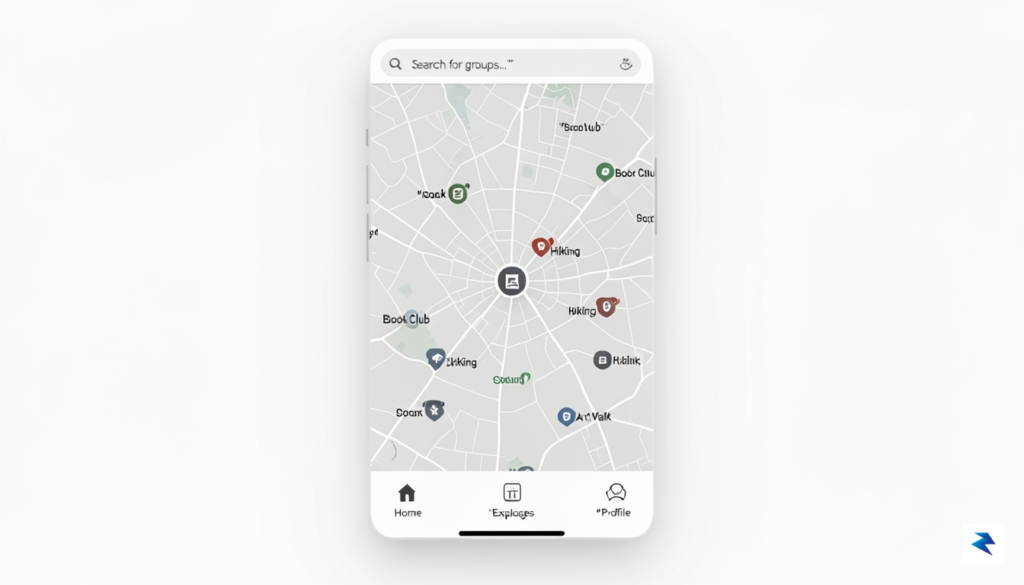
The psychological appetite for this kind of connection is rooted in a fundamental human need for belonging that the existing app market had largely ignored. Many users flocked to Goose because they were actively mourning the loss of “third spaces”—those physical gathering spots where community could form without the transactional nature of the modern digital market. Goose promised to rebuild that sense of belonging by fostering environments where men could find mentors, confidants, and companions who were seeking exactly what they were: a genuine, platonic support system.
The true promise of Goose was the restoration of the “community” back into “community-building,” shifting the goalposts from the ephemeral validation of a match to the lasting stability of a friendship.
Ultimately, the early success of the platform was a testament to how desperately many men were searching for a way to opt out of the constant performance demanded by the status quo. By providing a structure that encouraged low-stakes, interest-driven engagement, Goose tapped into a deep, unmet desire for authentic human interaction. For a brief moment, it felt as though the digital world had finally caught up to the emotional reality of a community that was tired of being defined by its dating habits and ready to reclaim the value of its friendships.

While the initial vision for Goose was to cultivate a sanctuary of genuine connection away from the hyper-sexualized landscape of mainstream dating apps, the user experience has frequently collided with a stark reality. Many prospective members report encountering a digital environment defined by rigid, almost clinical, entry standards that feel more like an interrogation than a community welcome. These barriers, intended to curate a “high-quality” social circle, have inadvertently fostered a culture of elitism. Users who do not fit a specific aesthetic or professional mold often find their applications languishing in pending status or outright rejected, leading to widespread frustration among those seeking the very friendship the app promised to facilitate.
This friction is further exacerbated by the persistent and corrosive issue of digital dishonesty. Despite the rigorous vetting processes designed to ensure authenticity, the platform is not immune to the proliferation of fake profiles and catfishing schemes that plague larger, more established services. When users invest time in a platform sold on the premise of trust and exclusivity, the discovery of bots or deceptive actors feels like a profound betrayal of the app’s mission. This erosion of trust forces genuine users to adopt a defensive posture, ironically mirroring the guarded behavior they hoped to leave behind on traditional hookup-centric platforms.
The paradox of exclusive digital spaces is that in attempting to filter out the “wrong” elements, platforms often end up filtering out the diversity that makes a community vibrant and supportive.
Furthermore, there is a growing concern regarding how the platform’s moderation—whether conducted by algorithms or human gatekeepers—inadvertently replicates the exclusionary societal biases the queer community has fought for decades to overcome. When vetting processes rely on subjective criteria, they often prioritize a narrow definition of “desirability” that alienates those who fall outside of mainstream standards. By prioritizing a homogeneous user base, the platform risks becoming an echo chamber rather than a refuge. The following factors highlight the core of this disconnect:

Ultimately, the promise of Goose remains caught in a tug-of-war between its idealistic aspirations and the messy, complex reality of human interaction. If the platform intends to truly redefine how gay men form platonic connections, it must confront these systemic hurdles head-on. Without a commitment to more inclusive vetting and a more robust strategy for authenticating users, the app risks alienating the very community it aimed to serve, proving that a digital “walled garden” is often just as exclusionary as the world outside its gates.

The desire for a curated social circle is often rooted in a genuine need for safety, especially within marginalized groups who have historically faced rejection. By creating digital spaces that require vetting or invitation, users hope to filter out the noise, harassment, and superficiality that plague mainstream dating and social apps. However, this pursuit of a “curated” experience introduces a fundamental sociological tension: the moment a community defines who belongs, it simultaneously defines who is discarded. While the intention is to build a sanctuary, the practical application often risks sliding into a form of digital gentrification, where the boundaries intended to protect the group inadvertently calcify into elitist barriers.

This paradox of exclusivity creates a dangerous feedback loop. When a space is predicated on a specific “vibe” or a pre-approved identity, it incentivizes members to perform a particular version of themselves to maintain their status. Rather than fostering authentic friendship, this environment can mirror the very cliques and exclusionary hierarchies many gay men have spent their lives trying to escape. When community membership becomes a signifier of social capital, the “gatekeepers” often begin to value conformity over genuine connection. Consequently, the social safety net meant to support the vulnerable becomes a walled garden where outsiders—or those who simply don’t fit the established aesthetic—are treated as intruders, reinforcing the very feelings of isolation the platform promised to solve.
True inclusivity requires the discomfort of openness; the moment a space is optimized for comfort, it risks becoming a stagnant echo chamber of homogeneity.
Furthermore, the digital architecture of these apps often exacerbates the problem by gamifying social access. Algorithms and vetting processes that prioritize “like-mindedness” essentially automate the process of social stratification. While this might result in a smoother user experience in the short term, it stunts the organic growth that comes from navigating diverse perspectives. If a community is designed solely to mirror its members’ existing preferences, it loses the capacity to challenge, support, or expand the horizons of those within it. Ultimately, by attempting to engineer the perfect social circle, these platforms often trade the messy, unpredictable, and transformative power of real-world friendship for a polished, sterile, and fundamentally exclusionary simulation of belonging.

Finding genuine connection in a digital landscape saturated with algorithm-driven platforms requires a paradigm shift in how we approach online interaction. The experience of users on platforms like Goose highlights a fundamental tension: while technology can bridge geographic gaps and introduce us to new social circles, it often fails to foster the depth required for long-term friendship. To move beyond the novelty of a new app, users must adopt a more discerning approach, prioritizing spaces that encourage shared values rather than mere proximity. Vetting a community begins with observing its culture—look for spaces that prioritize active moderation, emphasize inclusive behavior, and discourage the “disposable” social dynamics that plague many modern dating and networking applications.

When evaluating whether a digital space is truly conducive to authentic friendship, ask yourself whether the platform’s incentives align with your goals. If the interface is designed to maximize time spent scrolling or encourage surface-level validation, it is unlikely to cultivate the vulnerability necessary for deep bonding. Instead, seek out smaller, decentralized communities—such as niche interest groups, local volunteer organizations, or hobby-based forums—where the focus remains on the activity or the cause rather than the digital profile. By focusing on shared interests rather than curated personas, you naturally create a stronger foundation for a relationship that can eventually transition from the screen to the real world.
True community is not a product to be consumed; it is a collaborative effort built on the consistency of showing up for one another in both digital and physical spaces.
Ultimately, it is vital to remember that technology is merely a tool, not a substitute for the labor required to build community. While digital platforms can act as a catalyst for meeting new people, the burden of turning a virtual introduction into a lasting friendship lies in the commitment to follow through. This involves moving conversations off the app, initiating low-stakes meetups, and practicing patience as relationships develop naturally over time. Maintaining a healthy level of critical awareness is essential; understand that no app can solve the human need for belonging. By approaching these digital spaces with clear intentions and a healthy dose of realism, you can leverage the convenience of the internet without losing sight of the organic, messy, and deeply rewarding process of building genuine connections in the physical world.
You must be logged in to post a comment.