Hisense XR10 Review: Is This RGB-Powered Projector the Future of Home Cinema?
Introduction: The Evolution of RGB Projection The landscape of home entertainment is undergoing a significant transformation, particularly…
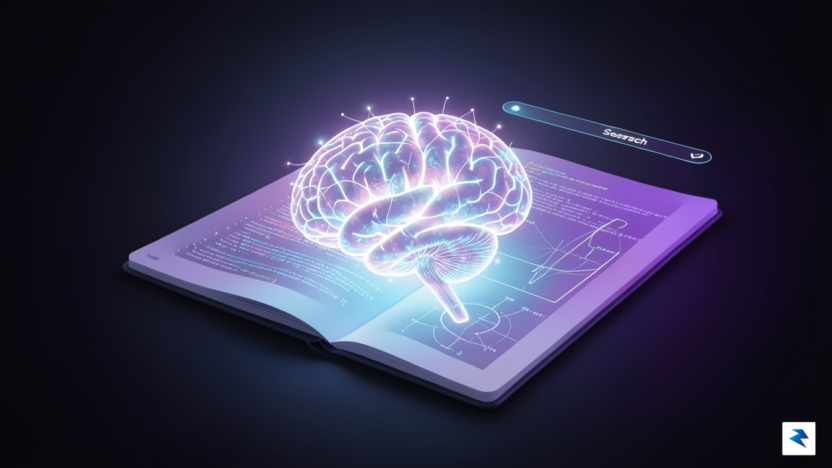

When Google first introduced NotebookLM, it was positioned as an experimental project designed to solve a specific problem in the burgeoning generative AI landscape: the tendency for large language models to hallucinate or drift away from factual reality. By leveraging Retrieval-Augmented Generation (RAG) technology, the tool allowed users to upload their own documents, creating a “source-grounded” environment where the AI was strictly tethered to the provided context. This architecture transformed the AI from a general-purpose chatbot into a specialized research assistant capable of synthesizing complex information, drafting summaries, and answering nuanced questions based exclusively on the user’s private library of files.
The decision to migrate this functionality into the Gemini ecosystem represents a significant strategic pivot for Google. Rather than maintaining NotebookLM as a siloed experiment, the rebranding to Gemini Notebook signals that “grounding”—the process of anchoring AI responses in verified, user-provided data—has moved from a niche research feature to a foundational pillar of Google’s broader product suite. By folding this tool into the Gemini brand, Google is essentially telling users that the capability to interact intelligently with proprietary data is no longer an optional add-on; it is an essential component of the modern AI experience.
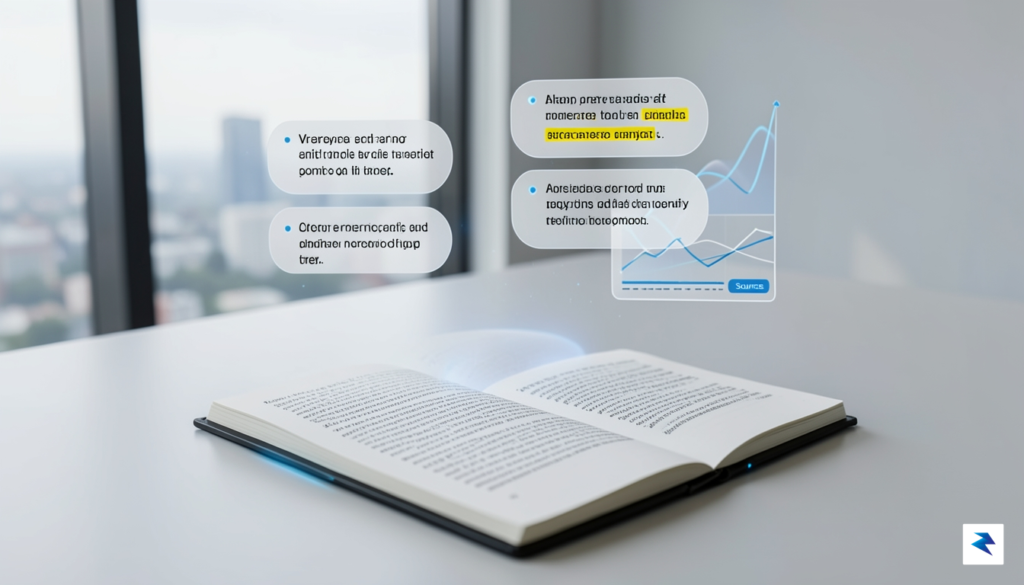
This transition offers a clear value proposition for users who are increasingly wary of the unpredictable nature of standalone LLMs. Because Gemini Notebook forces the AI to cite its sources and restrict its reasoning to the uploaded material, it provides a layer of accountability that is often missing from public-facing models. Users can now expect a more seamless integration with their existing Google workspace, allowing for a fluid workflow where research, synthesis, and writing occur within a unified, reliable infrastructure. This evolution effectively bridges the gap between the chaotic potential of AI and the structured, professional requirements of students, researchers, and knowledge workers.
The shift toward Gemini Notebook highlights a major industry trend: the transition from general, unpredictable AI models to specialized, grounded assistants that prioritize factual accuracy over creative flair.
Ultimately, this rebranding exercise is about more than just a name change; it is about scaling the benefits of grounded AI to a mainstream audience. As Gemini becomes the central nervous system of Google’s AI efforts, the inclusion of source-grounding capabilities ensures that the platform remains a trusted partner for deep work. By moving away from the experimental “NotebookLM” label, Google is signaling that this technology has matured into a reliable, enterprise-ready utility that is ready to handle the rigors of professional research and critical analysis.

The transition from NotebookLM to Gemini Notebook is far more than a simple aesthetic adjustment; it represents a calculated pivot in Google’s long-term artificial intelligence roadmap. For years, Google’s AI ecosystem felt fragmented, with various experimental tools existing in silos that made it difficult for users to understand how these technologies interconnected. By consolidating these services under the Gemini umbrella, Google is signaling a shift toward a singular, cohesive AI strategy designed to compete head-on with OpenAI’s GPT-4 ecosystem. This transition mirrors the company’s previous efforts to streamline its product portfolio, ensuring that every consumer-facing AI feature is immediately recognizable as part of the broader Gemini family.
For Google, the name “Gemini” has evolved from a specific model architecture into a comprehensive brand identity that encapsulates all of its generative AI efforts. This branding consolidation serves as a strategic defensive measure in a crowded market where users are often overwhelmed by a plethora of disjointed tools. By aligning their notebook-based research assistant with the core Gemini name, Google is effectively telling its user base that they are not just using a standalone application, but are instead tapping into the full force of the company’s most sophisticated multimodal AI capabilities. This creates a psychological tether between the tool’s specialized utility and the massive computational power of the underlying Gemini infrastructure.
This shift also plays a critical role in fostering user trust and perceived value. When a tool operates under a distinct, independent name, it can sometimes feel like an experimental “side project” that might be sunsetted without warning. However, by folding the service into the Gemini brand, Google grants it a sense of institutional permanence and legitimacy. Users are more likely to integrate an AI tool into their professional or academic workflows if they perceive it as a core component of a stable, long-term ecosystem rather than an ephemeral experiment. This branding consistency provides a unified experience, allowing users to move fluidly between document analysis, creative generation, and data synthesis without feeling like they are jumping between disparate, disconnected platforms.
The rebranding serves as a bridge, transforming specialized research tools into essential, standardized features of the modern Google experience.
Ultimately, this move reflects the reality of the current AI arms race, where brand recognition is just as vital as performance metrics. By streamlining its identity, Google is lowering the barrier to entry for mainstream users who might otherwise be confused by a fragmented product lineup. This consolidation ensures that as Google continues to iterate on its AI models, every improvement—whether in latency, context window size, or reasoning capabilities—is immediately associated with the Gemini brand. It is a clear declaration that the company is no longer interested in scattering its resources, but is instead laser-focused on building a singular, dominant AI destination for its billions of users worldwide.

The most transformative aspect of Google’s latest update is the seamless integration of your saved research materials directly into the Search experience via the new “AI Mode.” Previously, interacting with your personalized documents—whether they were technical manuals, lecture notes, or sprawling research PDFs—required you to switch contexts, jumping away from your search engine to a dedicated workspace. With the shift to Gemini Notebook, this friction is effectively eliminated. When you activate AI Mode, the search engine no longer just scans the vast, open web for information; it simultaneously queries your own private, curated collection of data, effectively turning your saved documents into dynamic, conversational companions.
This integration fundamentally changes the mechanics of information retrieval by allowing for a dual-layered search process. When a user submits a query, the system synthesizes context from the public web with the specific, proprietary insights buried within their uploaded files. For instance, if a student is researching a complex historical topic, they can ask a question that requires both a general factual check from the internet and a specific interpretation found in their uploaded course textbook. Because the search environment is no longer siloed from the research environment, the AI provides a unified response that cites both web-based knowledge and your personal document library, ensuring a cohesive and highly relevant answer.
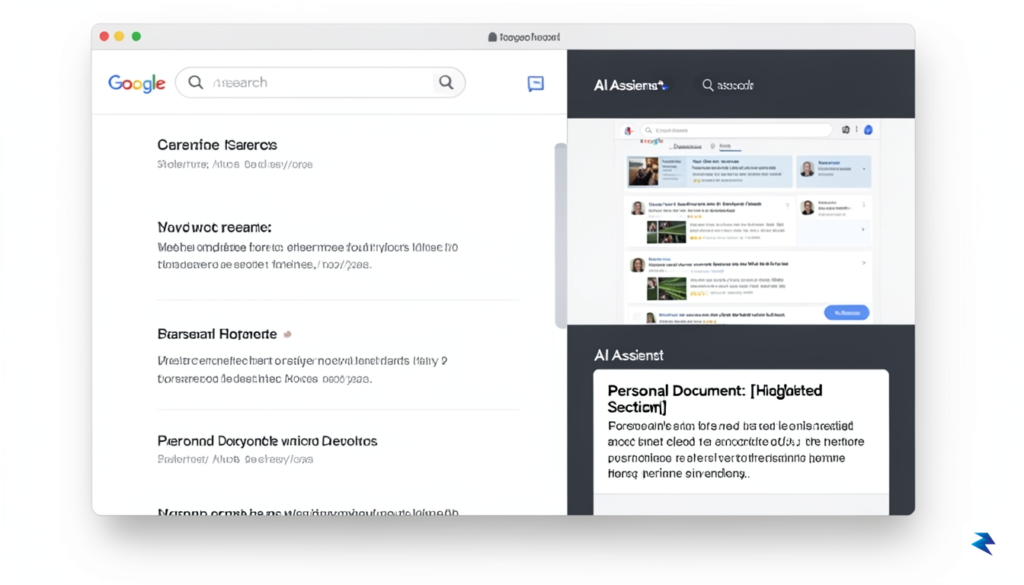
For researchers, students, and knowledge workers, this advancement represents a massive leap in efficiency. By bringing the AI’s analytical capabilities to the point of search, you can essentially ask your documents to explain, summarize, or cross-reference themselves in real-time without ever leaving the browser’s primary interface. This eliminates the tedious process of manual copy-pasting or switching between multiple tabs to compare external findings with internal notes. The result is a fluid, high-velocity workflow that treats your personal knowledge base as a primary source of truth, equal in importance to the billions of pages indexed on the web.
The integration of your private research library into the standard search flow marks a pivot from passive information gathering to active, context-aware intelligence.
Furthermore, this architectural shift ensures that your information remains actionable. Instead of treating your files as static records that sit idle until you manually open them, AI Mode treats them as an extension of the AI’s reasoning engine. As you continue your search, the Gemini model keeps the context of your previous notebook interactions alive, allowing for iterative questioning that evolves alongside your discovery process. This capability ensures that as you dive deeper into a subject, the responses become increasingly refined, tailored not just to general human knowledge, but to the specific nuances and unique details stored within your own workspace.

Transitioning from a passive reading experience to an active analytical workflow is where this platform truly differentiates itself from standard chatbots. For students and researchers, the tool serves as a force multiplier during academic literature reviews. Instead of manually cross-referencing dozens of PDFs, you can upload your entire collection of research papers into a single notebook. By asking the AI to “identify conflicting methodologies across these five studies” or “create a comparative summary of the variables used in these experiments,” you move from hours of tedious skimming to immediate, high-level synthesis. This grounded approach ensures that the output is strictly tethered to your provided documents, virtually eliminating the risk of hallucinations that often plague general-purpose AI models.

In the enterprise sector, the utility shifts toward managing the deluge of long-form documentation that typically slows down project momentum. Professionals can upload complex project charters, technical specifications, and legal agreements to quickly extract actionable data. Whether you need to generate a list of pending action items from a 50-page consultant report or want to clarify obscure compliance requirements in a policy document, the tool acts as a specialized assistant that knows your proprietary data inside and out. To maximize these results, focus on high-precision prompt engineering: instead of broad queries, use specific directives such as “extract all milestones mentioned in the project timeline and organize them into a chronological table” or “identify potential risks mentioned in the financial summary based on the current quarterly budget.”
To achieve the highest quality output, always frame your prompts with clear constraints. Tell the AI exactly how you want the data formatted—whether as a bulleted list, a professional summary, or a Q&A session—to align the responses with your specific project requirements.
For those managing complex team projects, the platform excels at maintaining a “single source of truth” for documentation. By keeping a running notebook updated with meeting transcripts, strategy notes, and evolving project briefs, you can effortlessly query the history of your collaboration. This is particularly useful during onboarding or when a team member needs a quick briefing on the rationale behind a decision made months prior. By grounding your queries in these specific files, you ensure that the AI provides context-aware answers that reflect the actual trajectory of your work, rather than generic advice. Ultimately, the true value lies in treating the notebook as a dynamic archive that grows alongside your professional or academic goals, turning static information into a living, queryable knowledge base.

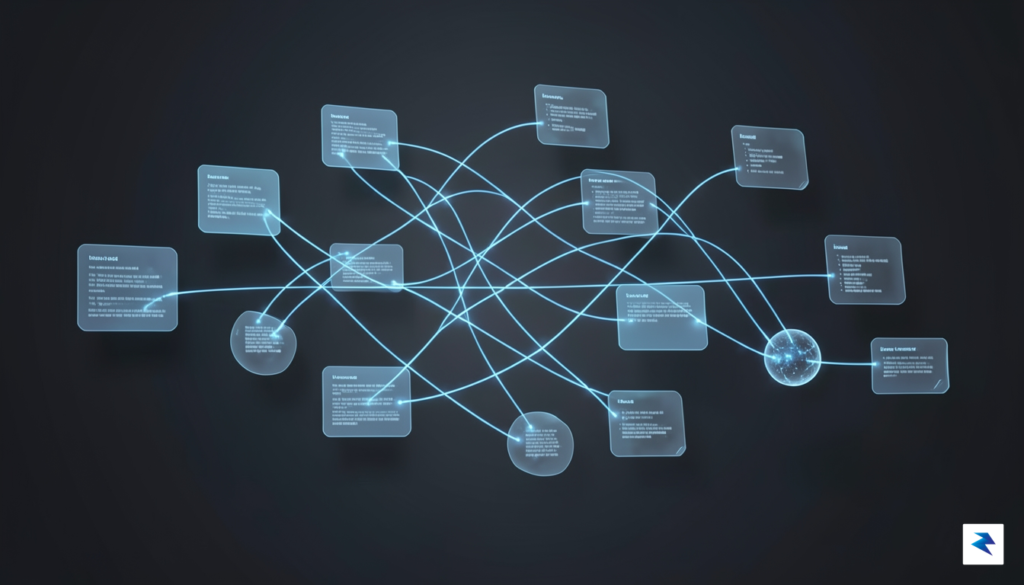
As the transition from NotebookLM to Gemini Notebook signals a deeper integration with Google’s foundational AI models, we are witnessing a fundamental shift in how personal knowledge management (PKM) operates. In the coming years, we can expect these tools to evolve from passive repositories—where we simply store documents—into active, collaborative intelligence partners. Future iterations will likely move beyond simple question-and-answer exchanges to proactive synthesis, where the AI might automatically identify connections between disparate project files, suggest research avenues you hadn’t considered, or draft complex outlines based on evolving data streams. This evolution transforms the user from a mere archivist into an editor of machine-generated insights, fundamentally changing the cognitive load required for deep work.
However, this transition brings the critical issues of privacy and data ownership into sharp focus. When we entrust our most sensitive research, personal notes, and internal work documents to a cloud-based AI, the question of how that information is utilized becomes paramount. While Google continues to emphasize enterprise-grade security protocols, users must remain vigilant regarding how their personal inputs influence broader model training. Moving forward, the most successful knowledge management platforms will be those that provide granular controls, allowing users to silo their private data while still benefiting from the AI’s analytical power. The long-term viability of Gemini Notebook will depend heavily on its ability to prove that it acts as a private vault rather than a data harvesting engine.
True knowledge management in the age of AI isn’t about how much information you collect, but how effectively you can leverage an intelligent system to distill that information into actionable wisdom.
For those considering whether to adopt Gemini Notebook for their long-term digital memory, the verdict depends on your tolerance for platform dependency. If you value seamless integration with the Google ecosystem—where your emails, documents, and research notes coexist in a single, searchable AI-driven interface—then this tool offers an unparalleled advantage. It effectively lowers the barrier to entry for complex information synthesis, allowing even casual users to behave like expert researchers. Nevertheless, before committing your life’s work to any single platform, it is wise to maintain a backup strategy that ensures your data remains portable. By treating Gemini Notebook as an intelligent layer on top of your existing files rather than a walled garden, you can harness the power of generative AI while maintaining the long-term autonomy of your personal knowledge base.
You must be logged in to post a comment.