
Samsung’s Floating Data Centers: A New Solution for New Zealand’s AI Power Crisis
The Growing Friction of AI Infrastructure in New Zealand New Zealand, a nation celebrated globally for its stunning natural landscapes and…


From its very inception, Bitcoin was designed with a finite supply of coins and, crucially, a deliberate limit on the amount of data each block could carry. For well over a decade, this 1-megabyte block size, a technical constraint introduced to mitigate early denial-of-service attacks, largely remained unfulfilled. Transaction fees were often negligible, and the network operated with ample spare capacity, primarily processing simple transfers of value. This stable environment solidified Bitcoin’s reputation as a robust, decentralized store of value, with its primary utility firmly rooted in financial transactions and a global, permissionless payment rail.
However, the underlying immutability and security of the Bitcoin blockchain, inherent to its design, also made it an attractive canvas for other, more creative forms of data inscription. While earlier attempts to embed non-financial data, such as small messages utilizing the OP_RETURN opcode, were relatively sparse and had minimal impact on block space, the landscape shifted dramatically with the advent of Ordinals and Inscriptions in early 2023. These new protocols enabled users to embed arbitrary data—ranging from images and videos to text and even full software programs—directly onto individual satoshis, the smallest units of Bitcoin. This innovation effectively transformed Bitcoin’s block space into a bustling marketplace for digital artifacts, leading to an unprecedented surge in transaction volume and block utilization.
This surge in non-financial data usage has inevitably ignited a fervent debate within the Bitcoin community, intensifying the long-standing discussion about its true purpose. On one side are the maximalists and purists, who staunchly advocate for Bitcoin’s role as a pristine monetary network, a decentralized store of value, and a peer-to-peer electronic cash system exclusively for financial transactions. They view the proliferation of Inscriptions and other non-financial data as “spam” that congests the network, drives up transaction fees, and pushes out legitimate financial transfers. Their core concern is that this data bloat jeopardizes Bitcoin’s core utility, potentially making it too expensive or slow for everyday financial use and increasing the operational costs for running a full node, thereby threatening decentralization.
Conversely, a growing contingent argues for a broader interpretation of Bitcoin’s utility, asserting that its robust security and unparalleled immutability make it an ideal base layer for a diverse array of applications beyond mere financial transfers. Proponents of Inscriptions and similar innovations highlight that if users are willing to pay the market rate in fees for block space, it constitutes a legitimate and economically rational use of the network. They contend that such innovation fosters experimentation, attracts new users, and can even enhance network security by increasing miner revenue, thereby strengthening the incentive structure for securing the blockchain. This clash of philosophies has pushed the network to its limits, forcing a reevaluation of how Bitcoin’s scarce block space should be managed and what truly constitutes its most valuable utility in an evolving digital landscape.

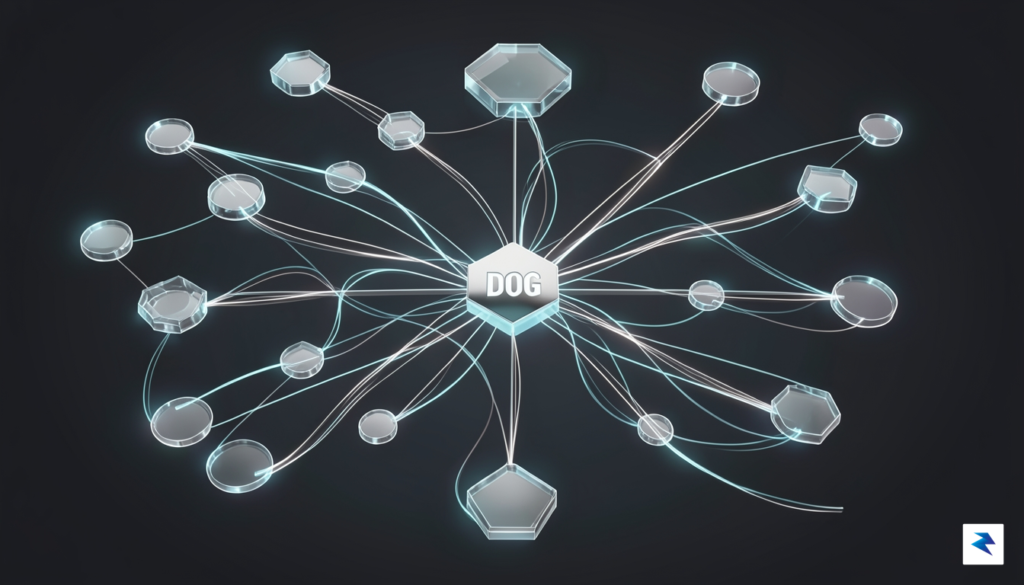
In the ongoing discourse surrounding Bitcoin’s transaction capacity and the perennial challenge of “spam” transactions, DOG Mode emerges as a distinctly different strategy compared to traditional protocol modifications. Rather than seeking a network-wide consensus change, which often involves years of debate and the arduous process of gaining broad miner and node operator support, DOG Mode represents an agile, client-level response. It fundamentally shifts the battleground from the core protocol layer to the individual user’s software, offering a pragmatic solution that sidesteps the gridlock inherent in altering Bitcoin’s foundational rules. This approach empowers individual users and node operators to implement their own filtering policies, providing a swift and localized defense against unwanted transaction types.
Technically, DOG Mode operates as a sophisticated filter integrated directly into a Bitcoin client’s software. When a Bitcoin node running DOG Mode receives new transactions from its peers, these transactions are first subjected to a predefined set of criteria established by the DOG Mode implementation. Instead of immediately validating and relaying every transaction that meets the standard consensus rules, the client inspects these transactions for specific patterns or characteristics that might classify them as “spam” according to its local policy. This pre-processing allows the node to selectively ignore, mark, or de-prioritize certain transactions for relay to other nodes or for inclusion in its own mempool, effectively curating the data it processes and propagates through the network.
Crucially, this client-side filtering mechanism means that DOG Mode does not require a Bitcoin Improvement Proposal (BIP) vote or any form of network-wide consensus. BIPs are essential for changes that alter Bitcoin’s fundamental protocol rules, such as block size limits, new script opcodes, or cryptographic updates, because these changes affect how all participants validate blocks and transactions, thereby requiring universal agreement to maintain chain integrity. DOG Mode, however, makes no such demands on the network. It doesn’t change what constitutes a valid block or transaction according to the global consensus rules; it merely changes an individual node’s policy regarding which valid transactions it chooses to process, store, or relay. This distinction is paramount, as it allows for rapid iteration and deployment without the need for a potentially divisive and time-consuming network upgrade.
By operating as a client-side filter, DOG Mode empowers individual node operators with a significant degree of autonomy. Users can opt-in to this functionality if they perceive a problem with network congestion or “spam,” or they can choose to ignore it entirely. This opt-in nature ensures that those who prefer to process all valid transactions, regardless of their perceived utility, are not forced to adopt a new policy. The impact of DOG Mode is localized to the nodes that choose to run it, affecting their personal experience of the network and their contribution to transaction relay, rather than imposing a new rule set on the entire Bitcoin ecosystem. It is a tool for personal network hygiene, not a protocol-level mandate.
In essence, DOG Mode represents an innovative pivot in the approach to perceived network challenges. Instead of pursuing the often-protracted path of base-layer protocol changes, which demand careful consideration and broad consensus, it offers an agile, user-centric alternative. It leverages the inherent flexibility of client software to allow individual participants to define their own operational parameters regarding transaction processing. This non-consensus approach provides a pragmatic avenue for addressing specific concerns about network efficiency and resource utilization, showcasing a different facet of Bitcoin’s adaptability through client innovation rather than core protocol evolution.

The ongoing debate surrounding Bitcoin’s transaction capacity and data usage has brought two distinct philosophies into sharp relief: one advocating for top-down, consensus-driven protocol changes, and the other championing bottom-up, voluntary client adaptations. This fundamental divergence is vividly illustrated by the contrast between proposals like BIP 110 and the emerging concept of DOG Mode. Understanding these differing approaches is not just an academic exercise; it’s crucial for anyone seeking to comprehend the evolving governance and scaling strategies within the Bitcoin network, revealing the deep ideological fault lines that shape its future.
BIP 110, or Bitcoin Improvement Proposal 110, represented an attempt to address concerns about network spam and inefficient data usage through a formal protocol modification. Proposed as a soft fork, it aimed to impose a strict limit on the size of OP_RETURN outputs, a specific field within Bitcoin transactions often used to embed small amounts of arbitrary data onto the blockchain. The idea was to cap this data at a minimal size, perhaps 80 bytes, thereby preventing large quantities of non-financial information from consuming valuable block space and increasing transaction fees for everyone. This approach required a network-wide consensus change, meaning miners would have to signal their support and activate the new rule, effectively making any transaction exceeding the new OP_RETURN limit invalid for the entire network.
However, BIP 110, like many similar proposals aiming for restrictive consensus changes, ultimately failed to garner significant support from miners and the broader ecosystem. The inherent challenge lies in the decentralized nature of Bitcoin; achieving widespread agreement for modifications that could potentially restrict valid transactions, even if deemed “spammy,” is incredibly difficult. Miners, driven by economic incentives, are generally reluctant to filter transactions that are technically valid under existing rules, especially if those transactions include fees, regardless of their data content. This lack of miner consensus underscored a critical lesson: enforcing top-down regulatory changes on a decentralized network often proves impractical when it impacts the fundamental permissionless nature of transaction inclusion.
In stark contrast to BIP 110’s centralized ambitions, DOG Mode (Decentralized Opt-in Griefing prevention) offers a radically different, bottom-up solution. Instead of attempting to alter the core protocol rules that govern all transactions, DOG Mode operates at the client level, allowing individual Bitcoin node operators to voluntarily implement their own filtering preferences. This means that a node running in DOG Mode can identify transactions that meet certain criteria (e.g., excessively large OP_RETURN data, specific patterns, or very low fees for disproportionate data) and simply choose not to process, relay, or store them. Crucially, these transactions remain perfectly valid under the global Bitcoin consensus rules; the individual node merely exercises its autonomy to ignore them.
The flexibility and autonomy provided by DOG Mode are its defining features. It empowers users to define what constitutes “spam” for their own node, without dictating those terms to the rest of the network. This client-side implementation avoids the arduous process of achieving global consensus for protocol changes, bypassing the very hurdle that stalled BIP 110. Furthermore, it allows for dynamic adaptation; as new forms of data embedding or perceived spam emerge, individual node operators can update their filtering rules without waiting for a slow, network-wide upgrade. This pragmatic approach respects the diverse needs and operational priorities of different network participants, from those running archival nodes to those focused purely on financial transactions.
The divergence between BIP 110 and DOG Mode thus highlights a fundamental philosophical divide within Bitcoin’s scaling and governance discourse. BIP 110 represented an attempt to enforce a singular, network-wide standard through protocol-level consensus, a centralized decision-making process that ultimately proved unwieldy. DOG Mode, conversely, embodies a truly decentralized spirit, offering individual actors the tools to manage their own participation in the network without requiring universal agreement. This shift towards voluntary, client-side adaptations may well represent the future trajectory of Bitcoin’s evolution, favoring user autonomy and flexible solutions over the often-contentious path of hard-fought consensus changes for every perceived network challenge.

Miners are the bedrock of Bitcoin’s security, dedicating vast computational power to validate transactions and secure the blockchain. Their incentive structure, primarily block rewards and transaction fees, is crucial for maintaining the network’s integrity. When discussions arise about filtering certain types of transactions, often labeled as “spam,” it inherently touches upon these vital revenue streams. Any mechanism that influences the volume or type of transactions included in a block directly impacts the economic calculus for miners, potentially altering their behavior and commitment to the network’s security.
Traditional views on transaction filtering often suggest a reduction in potential fee revenue, as miners might exclude transactions that would otherwise pay a fee. However, proposals like DOG Mode offer a more intricate perspective, aiming to categorize certain data as “non-economic” without necessarily forcing miners to ignore the fees these transactions might still generate. Instead of outright censorship, DOG Mode suggests a way for nodes to identify and potentially prune this data after it has been confirmed, allowing miners to continue benefiting from high-fee environments, regardless of the perceived utility of the underlying data. This distinction is vital, as it attempts to separate the consensus-level validation of transactions from the subjective interpretation of their content or purpose.
The notion of transaction filtering, even with good intentions, always carries the inherent risk of centralization and censorship. If miners or full node operators begin to subjectively decide which transactions are “valid” or “useful” beyond the basic protocol rules, it introduces a dangerous precedent that undermines Bitcoin’s core principle of neutrality. A network where a powerful subset of participants can dictate the acceptable content of blocks moves away from permissionless innovation and towards a more controlled, less resilient system. This is why the design of any filtering mechanism must be carefully considered to avoid empowering a centralized authority to dictate economic activity on the chain.
DOG Mode attempts to navigate these treacherous waters by focusing on the data storage aspect rather than outright transaction exclusion. By classifying certain transaction outputs as “dog-like” (data-only-garbage), it proposes a method for nodes to optionally prune this data from their memory post-confirmation, reducing storage burdens without preventing miners from including these transactions in blocks. This approach aims to provide a mechanism for nodes to manage their resource consumption without imposing censorship on miners or users. It posits that miners, driven by profit, will still include any transaction that offers a competitive fee, thereby preserving their incentives and avoiding a direct conflict with their role as neutral block producers.
The long-term implications for network security and decentralization hinge on whether such mechanisms can be implemented without inadvertently creating a two-tiered system of transactions or exerting undue influence over miner behavior. If miners perceive that certain types of transactions are systematically undervalued or targeted by node policies, it could subtly shift their block template construction strategies, potentially leading to less efficient fee markets or even encouraging off-chain agreements. Maintaining a robust security budget, funded by transaction fees, is paramount for Bitcoin’s longevity. Therefore, any policy influencing fee generation must ensure it sustains, rather than undermines, the economic incentive for miners to secure the chain, preserving the decentralized ethos that allows anyone to transact freely and without prejudice.

The emergence of “DOG Mode” within certain Bitcoin client implementations offers a compelling glimpse into the future of network governance and user agency. Far from being a top-down decree, this user-initiated filtering mechanism represents a decentralized response to the evolving data footprint on the blockchain. It underscores the fundamental principle that Bitcoin’s development is not dictated by a central authority, but rather by the collective actions and preferences of its diverse participants. This organic evolution, where new code branches and client modifications arise from community discourse, showcases the network’s inherent adaptability and its resilience against singular points of control. Essentially, DOG Mode acts as a real-world experiment, demonstrating how perceived issues on the network can spur innovation from the ground up, allowing users to take an active role in shaping their blockchain experience.
This incident provides a valuable case study for the long-term outlook of Bitcoin governance, illustrating how rough consensus often materializes through client-level choices rather than formal protocol changes. While core protocol upgrades (BIPs) require broad agreement across developers, miners, and users, alternative client implementations like those incorporating DOG Mode can emerge organically. They serve as a proving ground for new ideas, allowing users to opt-in to different network experiences without forcing changes on everyone else. This decentralized approach fosters an environment where diverse solutions can compete for adoption based on their utility and alignment with user values, ultimately shaping the network’s trajectory through market dynamics rather than central planning. Such a system ensures that the network remains robust and resistant to single points of failure or ideological capture, continuously evolving through iterative, community-driven development.
The implications of DOG Mode extend beyond its immediate functionality, potentially signaling a shift towards client-side filtering becoming a more prevalent industry standard. Rather than relying on network-wide mandates to define what constitutes “spam” or undesirable data, individual users and node operators could increasingly adopt software that allows them to customize their own blockchain experience. This means that while the underlying blockchain continues to record all valid transactions as per the consensus rules, different users might choose to filter, ignore, or even visualize certain transaction types based on their personal preferences or business needs. This paradigm empowers users with greater control over their interaction with the blockchain, moving away from a monolithic view towards
You must be logged in to post a comment.