
The Convergence of Traditional Dividends and Bitcoin

For decades, the standard paradigm of wealth management has remained relatively static: investors purchase equity to receive reliable cash dividends, which are then reinvested into more shares or utilized for liquidity. However, the proposal from Franklin Templeton to introduce ETFs capable of converting these traditional payouts directly into bitcoin signals a profound evolution in how we define portfolio growth. This transition marks the end of an era where digital assets were viewed strictly as speculative, peripheral holdings. Instead, by integrating bitcoin into the mechanical core of dividend distribution, the asset management industry is effectively treating cryptocurrency as a fundamental component of long-term wealth accumulation, placing it on par with traditional equity and income-generating assets.

This shift represents a sophisticated reimagining of the “yield” concept. Historically, dividends have been synonymous with predictable fiat cash flow, serving as the bedrock for conservative investment strategies. By creating a bridge that automatically converts these traditional returns into bitcoin, Franklin Templeton is acknowledging a changing investor appetite that seeks exposure to decentralized digital scarcity without the friction of manual off-exchange transactions. This mechanism essentially allows income-focused investors to build a bitcoin stack using the “excess” cash generated by established, blue-chip companies. It transforms the dividend—once a tool for preservation—into a strategic vehicle for portfolio diversification, effectively hedging against fiat currency debasement while leveraging the potential upside of the digital asset market.
The integration of bitcoin into automated dividend reinvestment plans (DRIPs) serves as a bridge, transforming the static income of the industrial age into the dynamic, growth-oriented assets of the digital economy.
Furthermore, this development highlights a critical maturation in institutional sentiment toward the crypto ecosystem. When a legacy financial giant like Franklin Templeton—a firm with a storied history in mutual funds and traditional asset management—seeks to bake bitcoin exposure directly into the architecture of an ETF, it lends significant legitimacy to the asset class. It suggests that bitcoin has successfully transcended the “digital gold” narrative to become a functional utility within modern portfolio construction. As these products gain regulatory clarity and market traction, the traditional boundaries between fiat-based equity markets and the world of digital assets will continue to dissolve, compelling investors to reconsider the role that automated asset conversion plays in their own long-term financial planning.
Understanding the Mechanics: How Dividends Become Bitcoin
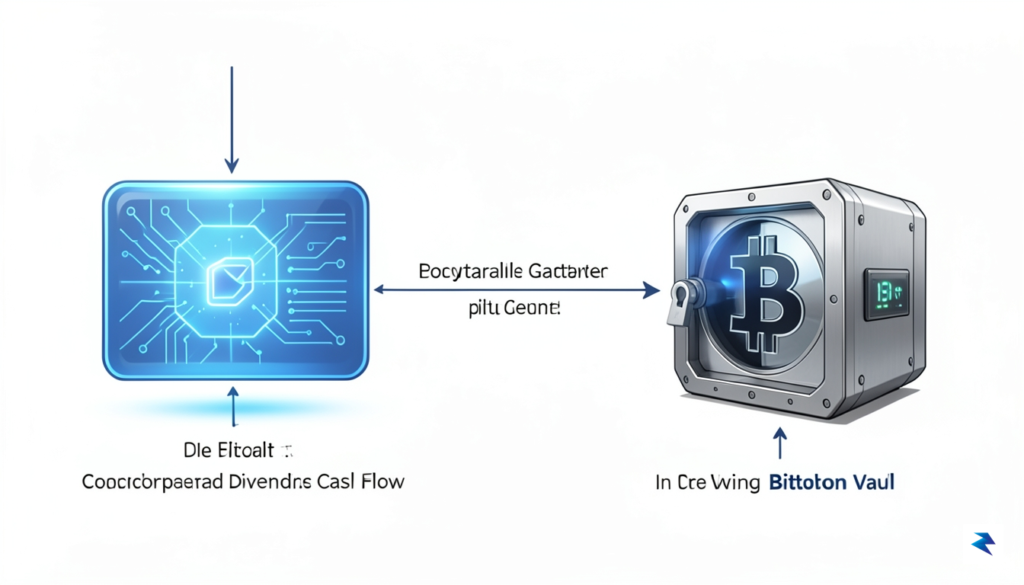
At its core, the proposed fund structure acts as an automated bridge between traditional equity markets and the digital asset ecosystem. Instead of forcing investors to navigate the complexities of cryptocurrency exchanges, wallets, and private keys, the ETF streamlines the process by embedding the conversion logic directly into the fund’s operational mandate. When the underlying corporations in the portfolio distribute dividends, the investment manager does not simply pay these out as cash to shareholders. Instead, the fund’s internal architecture triggers a systematic workflow that treats those dividend payments as capital ready for immediate deployment into the Bitcoin market.

The role of the investment manager is critical in this pipeline, as they must handle the technical execution of these conversions with precision. Upon receiving dividend payments from various holdings, the manager acts as a fiduciary agent, executing trades to purchase Bitcoin at prevailing market rates. This process is designed to minimize the friction typically associated with manual reinvestment, such as transfer delays or high transaction fees. By centralizing these trades, the fund leverages economies of scale, ensuring that the conversion is handled efficiently and that the resulting Bitcoin is securely held within the fund’s custodial framework, thereby providing a layer of institutional-grade protection for the investor’s assets.
The true innovation lies in the transition from manual, discretionary investing to a hands-off, systematic accumulation strategy that bypasses the need for investors to manage crypto-assets directly.
One of the most compelling aspects of this strategy is the inherent application of dollar-cost averaging (DCA). By automatically converting dividends into Bitcoin on a recurring basis, the ETF ensures that investors are consistently entering the market regardless of price volatility. This methodology mitigates the risk of attempting to time the market, as the acquisition of Bitcoin is strictly governed by the dividend schedule of the underlying stocks rather than emotional sentiment. Consequently, investors can systematically grow their exposure to digital assets using “house money”—the yields generated by their existing equity positions—without the need for additional out-of-pocket capital injections.
Furthermore, the timing and execution of these conversions are meticulously planned to align with the fund’s net asset value (NAV) calculation protocols. The investment manager must balance the need for timely accumulation with the reality of transaction costs and market liquidity. By automating these technical hurdles, Franklin Templeton provides a sophisticated, low-maintenance vehicle for market participants who wish to participate in the growth potential of Bitcoin while maintaining a foundational stake in established corporate equities.
Why Institutional Giants are Betting on Bitcoin Yields

Institutional interest in digital assets is rarely the result of speculative impulse; rather, it is a calculated response to a fundamental shift in investor sentiment. Financial giants like Franklin Templeton are acutely aware that modern portfolios are increasingly demanding bridges between legacy equity markets and the burgeoning crypto ecosystem. By proposing vehicles that automatically convert traditional corporate dividends into Bitcoin, these firms are effectively solving a massive friction point: the regulatory and technical complexity of purchasing digital assets directly. Investors now seek the familiar structure of a regulated exchange-traded fund, which offers the security of a major custodian, while simultaneously gaining exposure to the growth potential of an asset class that has historically outperformed traditional benchmarks over long time horizons.
The strategic genius of this model lies in its ability to offer a “low-regret” entry point for conservative investors. Many traditional market participants are hesitant to allocate a portion of their core capital directly into high-volatility cryptocurrency markets due to the perceived risks of self-custody or the instability of offshore exchanges. By utilizing the dividend yield of blue-chip stocks as the fuel for Bitcoin accumulation, Franklin Templeton allows investors to participate in the digital asset space without explicitly selling their positions or dipping into their principal capital. This mechanism turns passive income into a strategic accumulation tool, framing Bitcoin exposure as a secondary benefit of traditional equity ownership rather than a high-stakes gamble.

Furthermore, this shift reflects a broader institutional recognition that Bitcoin is becoming a permanent fixture in the modern retirement and brokerage landscape. As long-term investors weigh the impacts of inflation and currency debasement, they are increasingly viewing digital assets as a non-correlated hedge that belongs in a diversified portfolio. By integrating Bitcoin into the dividend reinvestment process, asset managers are catering to a demographic that values growth, utility, and automated wealth-building. This approach satisfies the need for regulatory oversight, ensuring that even as clients gain exposure to the crypto market, they remain under the protective umbrella of established financial institutions. Ultimately, these proposals represent a maturing market where the wall between traditional finance and decentralized assets is becoming increasingly permeable, allowing for a more seamless and sophisticated investment experience.
The integration of digital assets into traditional dividend reinvestment plans transforms Bitcoin from a speculative “all-or-nothing” trade into a systematic, long-term wealth accumulation strategy that aligns with the risk profiles of institutional-grade investors.
Looking ahead, this trend is likely to accelerate as more firms recognize that the future of wealth management depends on flexibility. Clients are no longer content with stagnant portfolios; they are demanding the ability to participate in the “new economy” while retaining the comforts of the “old economy.” By bridging these two worlds, firms like Franklin Templeton are positioning themselves as the necessary intermediaries for the next generation of financial growth, ensuring that they remain relevant in an era where digital assets are no longer considered fringe, but rather essential components of a robust, forward-thinking investment strategy.
Investment Risks and Regulatory Considerations

While the prospect of automated Bitcoin accumulation through dividend conversion offers a novel way to gain exposure to digital assets, potential investors must navigate a complex landscape of financial and legal uncertainties. The primary hurdle often lies in the tax treatment of such distributions; unlike traditional cash dividends, which are generally taxed at the time of receipt, the conversion of these funds into Bitcoin introduces a layer of complexity regarding cost-basis tracking and capital gains reporting. Investors could find themselves facing a tax liability on the dividend amount itself, while simultaneously dealing with the fluctuating value of the underlying asset, potentially creating a scenario where the tax bill outweighs the liquid value of the holding at the time of filing.

Furthermore, the inherent volatility of Bitcoin introduces a significant risk factor to the total return profile of these proposed funds. Traditional dividend-paying stocks are typically favored by conservative investors seeking stable, recurring income; however, tethering that dividend yield to the notoriously high beta of the cryptocurrency market fundamentally alters the fund’s risk-reward profile. If the fund automatically executes a purchase of Bitcoin during a period of extreme market downturn, the total value of the investor’s dividend yield could be substantially eroded overnight. This disconnect between the steady cash flow of underlying corporate equities and the erratic performance of Bitcoin creates a volatile hybrid asset that may not align with the goals of income-focused portfolios.
The Regulatory Horizon
Beyond market-specific risks, the regulatory environment surrounding crypto-linked financial products remains in a state of flux. The Securities and Exchange Commission (SEC) has historically maintained a cautious, and at times adversarial, stance toward novel crypto-based investment vehicles, citing concerns over investor protection, market manipulation, and the adequacy of custody arrangements. For a fund structure that mandates the automatic conversion of dividends, regulators may require rigorous disclosures regarding how the fund manages the liquidity risk of the Bitcoin market during high-volatility events. Should the SEC determine that such a product introduces undue risk to retail investors, the approval process could be significantly delayed or subjected to stringent limitations that neuter the intended functionality of the ETF.
Investors should approach these hybrid products with the understanding that they are essentially blending the stable, predictable nature of equity markets with the high-risk, high-reward environment of digital currencies, necessitating a deeper level of due diligence than standard index funds.
Ultimately, prospective participants must consider whether the convenience of a “set-it-and-forget-it” crypto accumulation strategy justifies the potential tax complications and the added market exposure. As the SEC continues to develop its framework for digital asset integration into regulated financial products, it is likely that these funds will be under intense scrutiny. Until a clear regulatory precedent is set, investors should be prepared for the possibility of policy shifts that could influence the fund’s operational capacity, or even necessitate changes to its dividend distribution mechanics down the road.
The Future of Hybrid Asset Allocation

The proposal to integrate automated bitcoin acquisition directly into dividend-paying equity funds represents far more than a niche financial experiment; it marks a structural shift toward the next generation of hybrid wealth management. By embedding digital asset exposure into the core mechanics of traditional portfolios, institutions are effectively dismantling the walls that have historically separated legacy markets from the burgeoning digital economy. This evolution suggests that the future of asset allocation will not be defined by a binary choice between “old” and “new” finance, but rather by the sophistication with which these two worlds are woven together into single, seamless investment vehicles.
As major asset managers observe these developments, we should expect a wave of competitive innovation that seeks to cater to a demographic increasingly comfortable with decentralized assets. Institutional competitors are likely to respond by launching their own iterations of yield-to-digital-asset products, potentially expanding the scope to include tokenized real estate, stablecoin-yield accounts, or even programmable smart-contract dividends. This broader trend signals a transition toward an era where “diversification” is no longer just about owning a basket of stocks and bonds, but about capturing value across multiple technological layers of the global financial stack.

The most successful portfolios of the next decade will likely be defined by their ability to seamlessly bridge the stability of traditional dividends with the growth potential of digital scarcity.
For the average investor, this represents a significant maturation of the market, moving us away from the era of high-friction “on-ramps” and complex self-custody requirements. Instead, wealth management is becoming increasingly automated, where the heavy lifting of rebalancing and asset conversion is handled at the fund level. This shift simplifies the investor’s journey, allowing them to gain exposure to volatile digital assets through the familiar, regulated framework of an exchange-traded fund. Ultimately, this integration underscores a fundamental truth about modern finance: diversification in a rapidly changing landscape requires a flexible approach that respects the history of the equity markets while embracing the undeniable innovation of the blockchain era.
Looking ahead, the success of these hybrid products will depend on their ability to offer transparency and efficiency without introducing excessive complexity. If these vehicles prove successful in balancing steady income with the speculative upside of bitcoin, they will likely become the blueprint for future multi-asset strategies. We are witnessing the birth of a new financial architecture, one where the legacy dividend check is no longer just a cash payout, but a dynamic tool for accumulating the assets of the future.