
DOG Mode: Why Bitcoin’s Governance Debate Is Heating Up Again
The Rise of DOG Mode: A Paradigm Shift for Bitcoin For years, the prevailing narrative surrounding Bitcoin has been one of immutable, static…
For decades, the standard blueprint for web development has relied on a rigid bifurcation: a dynamic, interpreted language like JavaScript or TypeScript for the frontend, paired with a specialized backend service often written in a completely different ecosystem. While this fragmented approach served the early web well, the increasing complexity of modern enterprise applications has exposed the cracks in this strategy. Developers have long struggled with the “context switching” tax—the cognitive load required to jump between mental models, build systems, and syntax styles. More critically, the impedance mismatch between these tiers often leads to fragile data serialization, redundant type definitions, and subtle runtime bugs that only surface when the frontend attempts to consume an API contract that has drifted out of sync with the backend.
The industry is now witnessing a deliberate pivot toward architectural unification, with Rust emerging as the primary catalyst for this change. By extending Rust’s rigorous memory safety and uncompromising performance from the server-side directly into the browser via WebAssembly, developers can finally maintain a single, coherent source of truth. This shift is not merely about developer preference; it is a strategic move toward enterprise-grade reliability. When the same language governs both the database interaction logic and the UI component state, the entire stack becomes verifiable by a single compiler, effectively eliminating entire classes of integration errors before a single line of code is executed in production.

By consolidating the stack under one language, teams reduce the overhead of managing disparate toolchains, ultimately accelerating the delivery of high-performance, type-safe web experiences.
Adopting a framework like Topcoat signals an end to the “language-switching” fatigue that has plagued full-stack teams for years. Instead of manually synchronizing JSON schemas or maintaining duplicate type definitions across two distinct repositories, engineers can leverage Rust’s powerful type system to enforce consistency throughout the entire data pipeline. This transition provides a robust foundation for scalability, as the performance characteristics of Rust ensure that even the most resource-intensive client-side tasks run with the speed of native code. As organizations prioritize performance and maintainability, the move toward a unified Rust ecosystem represents a mature evolution in software engineering, turning the chaotic landscape of polyglot web development into a streamlined, predictable, and highly efficient workflow.
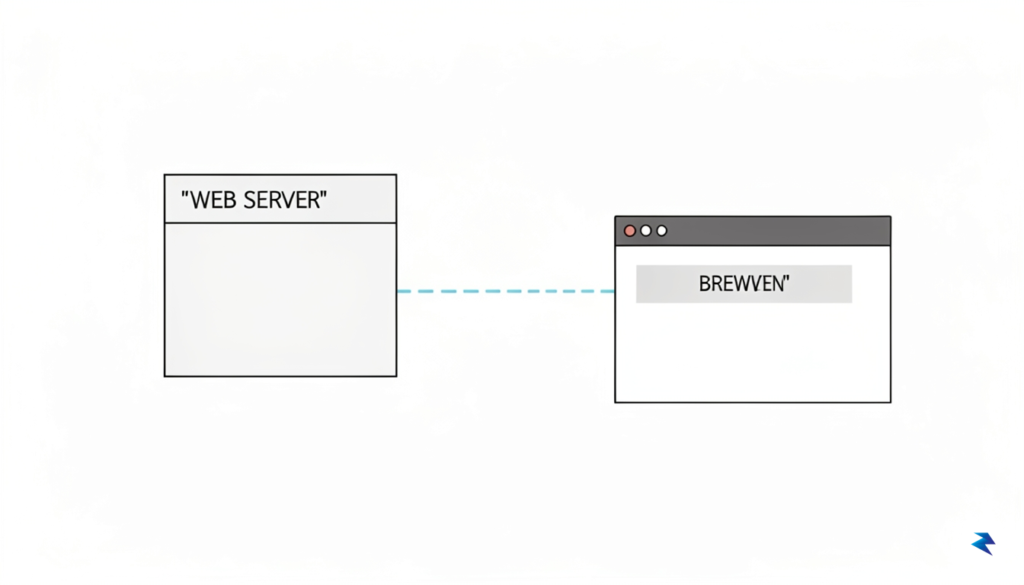
At its architectural foundation, Topcoat functions as an opinionated ecosystem built primarily on the robust Tokio runtime, ensuring that every web request is handled with the asynchronous efficiency and memory safety that Rust is famous for. Unlike modular toolkits that require developers to manually bridge the gap between backend logic and frontend presentation, Topcoat provides a unified pipeline. By leveraging the power of the borrow checker across the entire stack, the framework creates a seamless environment where server-side rendering (SSR) and client-side interactivity are no longer treated as disparate silos. This cohesion ensures that the rigorous type-checking developers rely on for business logic extends all the way to the DOM, effectively eliminating entire classes of runtime errors before the code is even compiled.
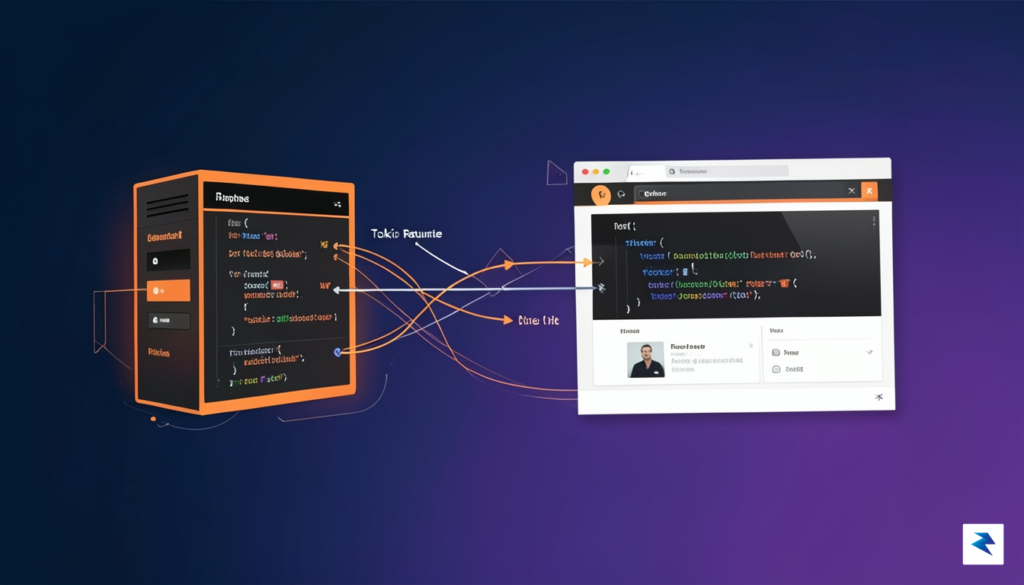
The philosophy of Topcoat centers on the concept of a single-language source of truth. In many modern web workflows, developers are forced to context-switch between disparate syntaxes for routing, state management, and data fetching. Topcoat simplifies this by integrating these concerns into a cohesive framework where shared state is type-safe and automatically synchronized between the server and the client. Whether you are defining routes or managing complex UI state, the framework utilizes procedural macros to abstract away the boilerplate code that usually plagues full-stack projects. This architectural decision allows for hydration—the process of making static server-rendered HTML interactive—to occur with minimal overhead, as the framework already understands the precise data structures sent to the browser.
When comparing Topcoat to established ecosystems like Leptos or Dioxus, the primary differentiator lies in its strict opinionated structure regarding data flow. While other frameworks often offer high degrees of flexibility that can lead to fragmented project structures, Topcoat enforces a standardized pattern for component lifecycle management. This rigid approach is a deliberate trade-off: what you lose in configuration flexibility, you gain in maintainability and architectural predictability. For teams scaling large applications, this means that every developer on the project can immediately interpret the data flow of a new component because the framework dictates a clear, singular path for state updates and prop propagation.
Topcoat prioritizes developer velocity through constraint; by standardizing how Rust components interact with the browser, it removes the cognitive load of architectural decision-making, allowing teams to focus entirely on feature implementation.
Ultimately, the framework functions as an orchestration layer that binds the high-performance capabilities of Rust to the modern requirements of the web. By utilizing a reactive primitive system that ties directly into the Tokio task executor, Topcoat ensures that even under heavy concurrent loads, the responsiveness of the application remains consistent. This deep integration allows the framework to handle complex hydration scenarios without requiring the developer to manually reconcile state, thereby bridging the gap between the server’s memory space and the client’s browser environment with unprecedented efficiency.

At the heart of Topcoat lies a sophisticated engine designed to bridge the traditional gap between the server and the browser. By leveraging Rust’s powerful procedural macros, the framework enables seamless server-side rendering (SSR) that treats the entire application as a unified codebase. Instead of forcing developers to context-switch between disparate languages or build configurations, Topcoat compiles your business logic into a cohesive binary capable of generating static HTML on the server and hydrating interactive components on the client. This approach not only ensures near-instant initial page loads but also maintains strict type safety across the network boundary, catching potential data mismatches at compile time rather than during runtime.
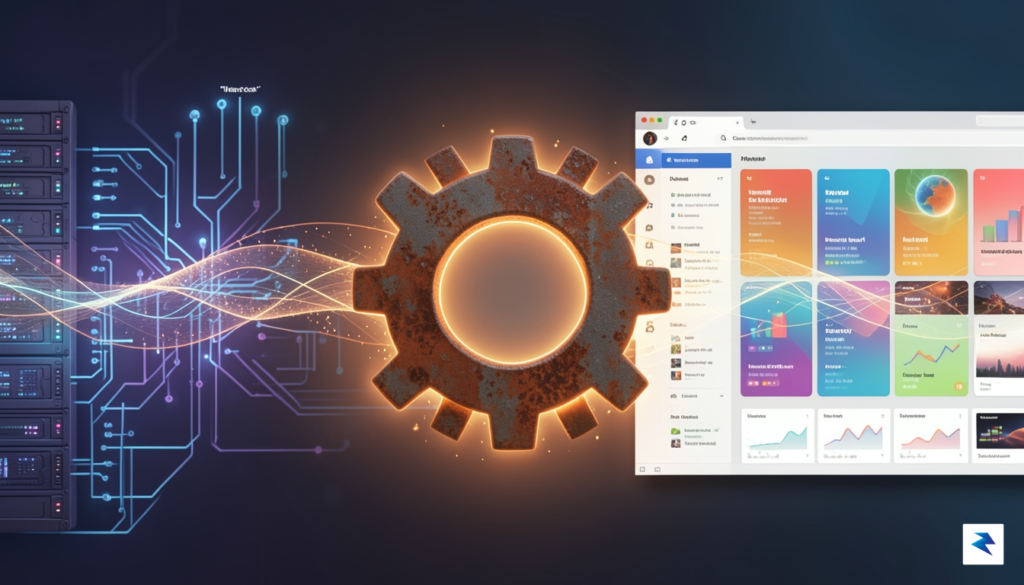
One of the most compelling aspects of this architecture is the reactive state management system. Topcoat utilizes native Rust primitives to track changes across the component tree, ensuring that updates are calculated with surgical precision. By avoiding the overhead of a virtual DOM diffing process found in many JavaScript frameworks, Topcoat updates only the specific segments of the UI that depend on the changed state. This level of granular reactivity is facilitated by a macro-driven syntax that feels natural to experienced Rust developers, allowing them to define reactive signals that automatically propagate changes through the application without needing complex manual wiring or heavy state-management libraries.
Beyond local state, the framework streamlines the often-tedious task of API communication. Topcoat eliminates the need for redundant boilerplate by allowing developers to define API endpoints as simple, strongly-typed functions that can be invoked directly from the frontend. Because the server and client share the same data models, the framework handles the serialization and deserialization processes behind the scenes. This unified approach means that calling a backend function from your frontend code is as straightforward as executing a local method, with all the benefits of Rust’s robust error handling preserved throughout the round-trip.
The true power of Topcoat is found in its “isomorphic-by-default” philosophy, where the boundaries between server and client disappear, allowing for a development experience that is as fluid as it is performant.
Furthermore, code-sharing is elevated to a first-class citizen within the framework. Developers can maintain utility functions, validation logic, and shared domain models in a single location that is accessible to both the server and the client environments. This eliminates the common pain point of maintaining duplicate logic in different languages, which often leads to synchronization errors and maintenance nightmares. Because Topcoat manages the build pipeline automatically, developers are freed from the burden of configuring complex Webpack or Vite setups to bridge the two environments. Instead, they can focus entirely on building features, confident that their shared logic is consistent, performant, and perfectly synced across the entire stack.

The core philosophy behind a unified full-stack architecture is the seamless convergence of server-side logic and client-side interactivity. By leveraging WebAssembly (Wasm), Topcoat allows developers to compile the same Rust codebase that powers the backend directly into the browser. This eliminates the traditional “language tax,” where developers are forced to context-switch between backend languages like Rust or Go and frontend languages like JavaScript or TypeScript. Instead of treating the frontend as an isolated entity that must fetch and parse data from a remote server, the application treats both environments as part of a single, cohesive execution context where business logic remains consistent across the entire stack.
One of the most significant technical burdens in modern web development is the constant need to serialize and deserialize data. In conventional architectures, developers frequently rely on JSON-based REST APIs or GraphQL layers, which require manual schema definitions and often result in runtime errors when the data shape on the wire drifts from the expected structure. Topcoat effectively removes this overhead by allowing developers to define shared structs that exist in both the server binary and the Wasm frontend bundle. Because these structures are native to the Rust compiler, any mismatch in data types is caught during the compilation phase rather than at runtime. This provides a level of type-safety that was previously impossible to achieve without complex code-generation pipelines.
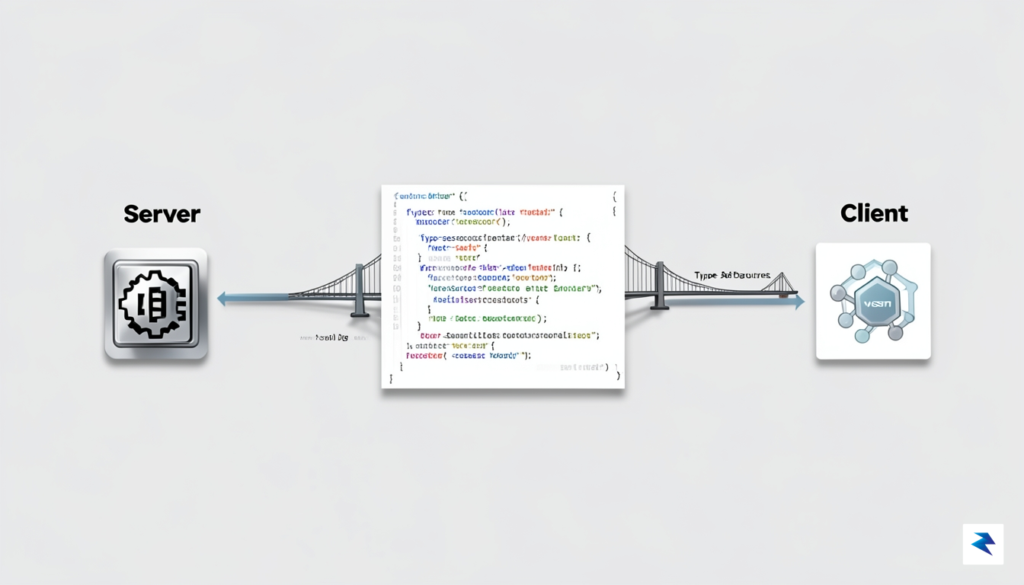
By sharing logic and data structures, Topcoat ensures that the “contract” between the client and server is enforced by the compiler, effectively rendering entire classes of integration bugs obsolete.
Beyond the immediate benefits of type-safety, this architecture drastically reduces the performance penalty associated with frequent network requests. By minimizing the serialization overhead, the system spends less time parsing strings and more time executing high-performance logic. When data is transmitted between the server and the browser, it can be handled with much higher efficiency, as the runtime environment on both sides already understands the memory layout of the shared structures. This architectural synergy allows for sophisticated frontend capabilities—such as complex data processing or real-time validation—that would typically require a heavier server-side footprint to keep the client responsive and synchronized.
Ultimately, the transition toward a full-stack Rust environment represents a shift from “communicating systems” to “distributed components.” When the frontend is no longer a separate application consuming a remote service, but rather a direct extension of the backend’s logic, the development velocity increases substantially. Developers can refactor shared data models with confidence, knowing that the Rust compiler will immediately alert them to any breakage across the entire stack. This unified approach not only simplifies the deployment of web applications but also ensures that the high performance and reliability associated with Rust are maintained from the database layer all the way to the user’s browser.
When developers migrate their full-stack applications to Rust, the promise of performance is often the primary motivator, but Topcoat delivers on this by minimizing the abstraction tax typically associated with web frameworks. Unlike traditional JavaScript-based frameworks that rely heavily on a massive runtime to manage the Virtual DOM and reactive state, Topcoat leverages Rust’s zero-cost abstractions to compile your UI logic directly into highly efficient WebAssembly. This approach drastically reduces the memory footprint of your application, as the browser no longer needs to parse and execute large bundles of interpreted code. By shrinking the binary size and optimizing memory allocation at the language level, Topcoat ensures that your application remains snappy and responsive, even when handling complex, data-intensive interfaces that would otherwise cause “jank” in a typical single-page application.

The true power of this architecture becomes apparent under high-load scenarios where JavaScript’s garbage collector often becomes a bottleneck. Because Rust manages memory through its strict ownership and borrowing model, Topcoat applications do not suffer from the unpredictable pauses or memory leaks that frequently plague large-scale frontend projects. Instead, memory is allocated and deallocated with surgical precision, allowing the application to maintain a stable memory profile regardless of the user’s interaction intensity. Furthermore, the compiled nature of the framework means that your UI components are effectively pre-optimized before they ever reach the user’s browser, providing a significant edge in startup time and overall frame rate consistency compared to interpreted alternatives.
Beyond raw execution speed, Topcoat fundamentally changes how we approach UI reliability by shifting the burden of validation from runtime testing to compile-time verification. In a traditional JavaScript environment, a simple typo or an unexpected null value in a deep data structure often doesn’t surface until the code is running in a production browser, leading to frustrating user-facing errors. With Topcoat, the Rust compiler acts as an unforgiving guardian; if your component expects a specific data shape or state transition, the compiler will refuse to build the application if those requirements aren’t met. This tight integration means that your UI is essentially self-documenting and structurally sound by default.
The integration of Rust’s type system into the frontend lifecycle effectively eliminates entire classes of runtime errors, drastically reducing the need for exhaustive and brittle unit tests focused on data shape validation.
This paradigm shift offers a massive productivity boost, as developers can refactor complex UI components with total confidence. When you change a data structure, you no longer have to cross your fingers and hope your tests catch every affected view; the compiler will explicitly point to every location in your code that needs an update. By codifying business logic and UI requirements into the type system itself, Topcoat allows teams to spend less time writing defensive code to handle “what if” scenarios and more time building features that provide genuine value to their users.

Adopting a new framework is a significant commitment for any development team, but Topcoat has been engineered with a specific philosophy: lowering the barrier to entry for developers already comfortable within the Rust ecosystem. To begin, ensure your local development environment is fully prepared by maintaining an up-to-date Rust toolchain via rustup. Because Topcoat leverages advanced compilation features to unify your frontend and backend logic, you will need to target wasm32-unknown-unknown for your browser-based components alongside your standard native compilation targets. Once your environment is configured, initializing a new project is as straightforward as running the Topcoat CLI, which scaffolds a workspace that separates your shared models, server-side handlers, and client-side reactive components into a cohesive, type-safe architecture.
Creating your first “Hello World” application involves defining a shared state struct that acts as the single source of truth for your data layer. By utilizing Topcoat’s macro-driven API, you can define a reactive component that automatically synchronizes with the server-side state without the need for manual boilerplate or complex fetching logic. This initial prototype serves as a gateway to understanding how the framework abstracts the boundary between the browser and the server. Once the basic structure is running, you will begin to appreciate the power of shared data structures, which eliminate the common pitfalls of serializing and deserializing JSON payloads between disparate stacks.
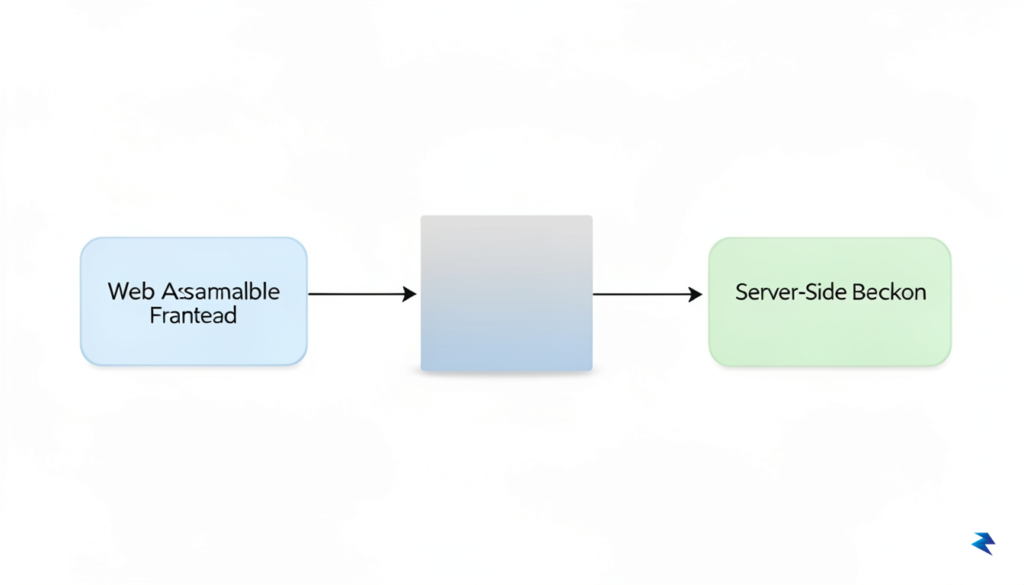
For developers currently maintaining mature applications, a “big bang” migration is rarely the most pragmatic approach. Instead, consider an incremental migration path where you begin by offloading specific, non-critical services to Topcoat. You can start by wrapping existing API endpoints in a Topcoat-compatible service layer, allowing you to gradually introduce reactive frontend components into your current templates. As you gain familiarity with the framework’s reactive primitives, you can slowly migrate deeper into the business logic, replacing fragmented frontend code with Topcoat’s unified, type-safe components. This gradual transition minimizes risk while allowing your team to experience the productivity gains of a unified Rust stack in real-world scenarios.
The most successful migrations prioritize modularity; by treating Topcoat as a specialized engine within your existing infrastructure, you can incrementally prove its value before committing to a full architectural overhaul.
Before diving into a full-scale transition, it is helpful to identify which application types benefit most from the Topcoat ecosystem today. Projects that rely heavily on real-time data synchronization, complex state management, or strict data validation across the entire stack are the ideal candidates for an immediate switch. If your application currently suffers from “type drift”—where frontend and backend models gradually diverge and cause runtime errors—Topcoat will provide an immediate and measurable improvement in developer velocity. By centralizing your domain logic, you ensure that any change to a data model is instantly reflected throughout the entire application, fundamentally changing how you approach maintenance and feature expansion.
You must be logged in to post a comment.