
Critical Zoom Security Flaw: Why You Must Update Your Windows Client Now
Understanding the Critical Zoom Windows Vulnerability The recent disclosure of a critical vulnerability within the Zoom client for Windows has…


For years, the prevailing narrative surrounding Bitcoin has been one of immutable, static architecture. The protocol is frequently characterized as “digital gold,” a finished product whose core rules are set in stone to ensure stability and predictability. However, the introduction of the DOG Mode client by the developer Leonidas marks a profound departure from this conventional wisdom. By challenging the traditional boundaries of how nodes interact with the network, DOG Mode acts as a catalyst for a long-overdue conversation about what it truly means to run a Bitcoin node in the modern era.
At its technical core, DOG Mode functions as a specialized modification to transaction relay policies. Traditionally, nodes adhere to a set of default “soft” rules that dictate which transactions they will accept, validate, and broadcast to their peers. These policies are not part of the hard-coded consensus rules—the rules that define what makes a block valid—but they effectively act as the gatekeepers of the network’s ecosystem. DOG Mode intervenes at this relay layer, providing an alternative framework for node operators to decide which data is worth propagating across the network. This shift is significant because it moves the power of censorship resistance and network prioritization away from centralized development teams and back into the hands of individual participants.

The true power of a decentralized network lies not just in its consensus rules, but in the autonomy of its participants to define the utility of the ledger.
This development is far more than a mere software update or a niche technical experiment; it is a fundamental test of Bitcoin’s governance model. When node operators begin to exercise their agency by customizing their relay policies, the network evolves from a passive participant into an active participant in defining the protocol’s future. This capability forces the broader community to confront the tension between maintaining a unified, singular network standard and embracing the diversity of node-operator preferences. As these relay policies become more visible and debated, the infrastructure of Bitcoin is shifting from a top-down, developer-led paradigm toward a more dynamic, bottom-up negotiation of network values.
By introducing this level of granular control, DOG Mode has successfully set the stage for a contentious, yet necessary, governance debate. It raises critical questions regarding the role of “default” settings and whether the community should tolerate a diversity of node behaviors or strive for absolute uniformity. As we move deeper into this new era, the impact of these relay decisions will likely define the next chapter of Bitcoin’s architectural evolution, proving that the protocol is not just a static relic, but a living, breathing system that is constantly being redefined by the people who power it.
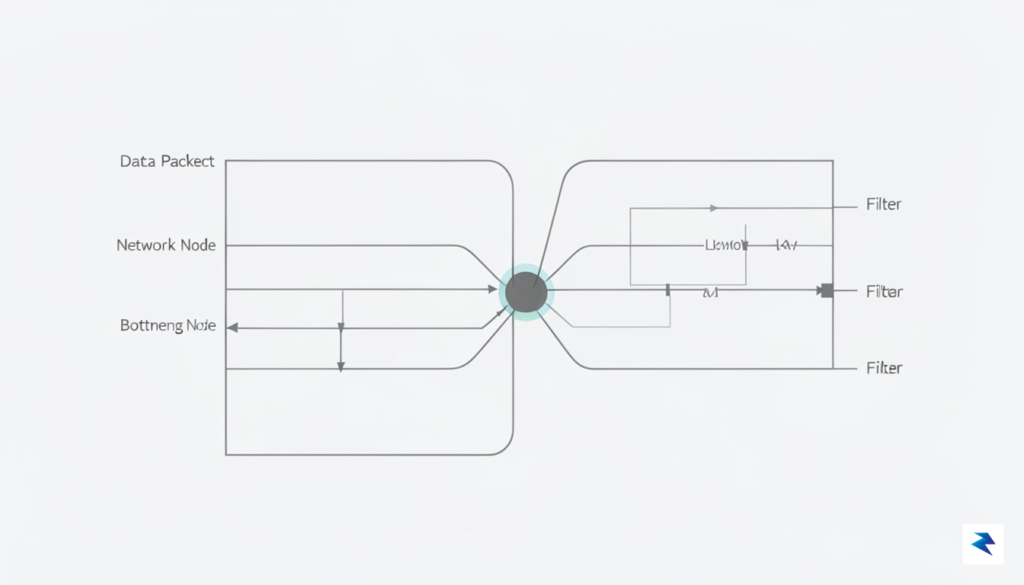
Bitcoin’s robustness and resistance to censorship stem from its distributed nature, a peer-to-peer network where thousands of nodes independently verify and relay information. When a user initiates a transaction – say, sending Bitcoin to a friend – it isn’t directly sent to a central server or a specific miner. Instead, it’s broadcast to the user’s directly connected nodes, which then perform initial validation checks. If the transaction appears legitimate according to a set of pre-defined rules, these nodes, in turn, relay it to *their* connected peers, and the process repeats. This propagation mechanism ensures that a transaction quickly spreads across the entire network, eventually reaching miners who can then include it in a new block, permanently recording it on the blockchain. This decentralized communication is fundamental to how Bitcoin operates without a central authority.
However, it’s crucial to understand that there’s a subtle yet significant distinction between the core protocol consensus rules and a node’s individual relay policies. The *protocol consensus rules* are the fundamental, unyielding laws of Bitcoin that dictate what constitutes a truly valid transaction and block. These are the hard-coded boundaries, such as the maximum block size, the proof-of-work algorithm, or the cryptographic requirements for signatures. If a transaction or block violates any of these rules, it is unequivocally rejected by *every* honest node on the network, making it impossible to be included in the blockchain. In contrast, *node relay policies* are a softer, more flexible layer of rules that individual nodes apply to decide *which valid transactions they will accept and propagate* to their peers. These policies are often implemented as defaults in client software like Bitcoin Core and are designed to manage network resources, prevent spam, and ensure efficiency.
This distinction gives rise to what many refer to as the “gatekeeper problem.” While a transaction might be perfectly *valid* according to Bitcoin’s fundamental consensus rules – meaning it could theoretically be included in a block – it might still

At its core, the DOG Mode movement forces Bitcoin to confront its own foundational identity, reviving a debate that traces back to the network’s earliest cypherpunk roots. For many proponents, Bitcoin was designed as a tool of absolute neutrality; it is meant to function as a permissionless ledger where valid transactions are relayed regardless of their content or the identity of the sender. This school of thought argues that any attempt to curate or filter what enters the mempool is a slippery slope toward systemic censorship. From this perspective, if nodes begin to arbitrarily reject certain transaction types—even those perceived as “spam”—they are effectively acting as gatekeepers, compromising the very anti-fragility that makes Bitcoin a robust global alternative to centralized financial institutions.
Conversely, those who prioritize network integrity argue that this ideological purity ignores the pragmatic reality of maintaining a functional distributed system. If the network is flooded with non-monetary data or low-value spam, it risks bloating the blockchain, increasing the hardware requirements for node operators, and ultimately threatening the decentralization of the network. These proponents of tighter relay policies contend that Bitcoin’s long-term health depends on its utility as a reliable medium of exchange and a secure store of value. They argue that “network health” is not synonymous with censorship; rather, it is a necessary form of digital hygiene required to ensure that the protocol remains accessible to the average person, rather than just well-funded entities capable of running high-bandwidth, high-storage infrastructure.

The tension inherent in DOG Mode is not a failure of the protocol, but a feature of its governance: it forces the community to decide what the network is actually for.
This debate is far from unprecedented, as Bitcoin has navigated similar friction points throughout its history. From the early arguments over block size limits to the ongoing discussions regarding protocol upgrades and mempool filtering, the community has repeatedly grappled with the trade-offs between openness and efficiency. Historically, these disputes have acted as a stress test, forcing developers and users to define the parameters of decentralization. By challenging the status quo, the DOG Mode movement is once again pushing the ecosystem to articulate whether Bitcoin should prioritize being an unyielding, neutral relay for all data, or a hardened, high-efficiency network optimized for financial sovereignty. Ultimately, the resolution of this conflict will likely dictate the next era of Bitcoin’s development, shaping how the network balances the demands of its diverse and often conflicting user base.
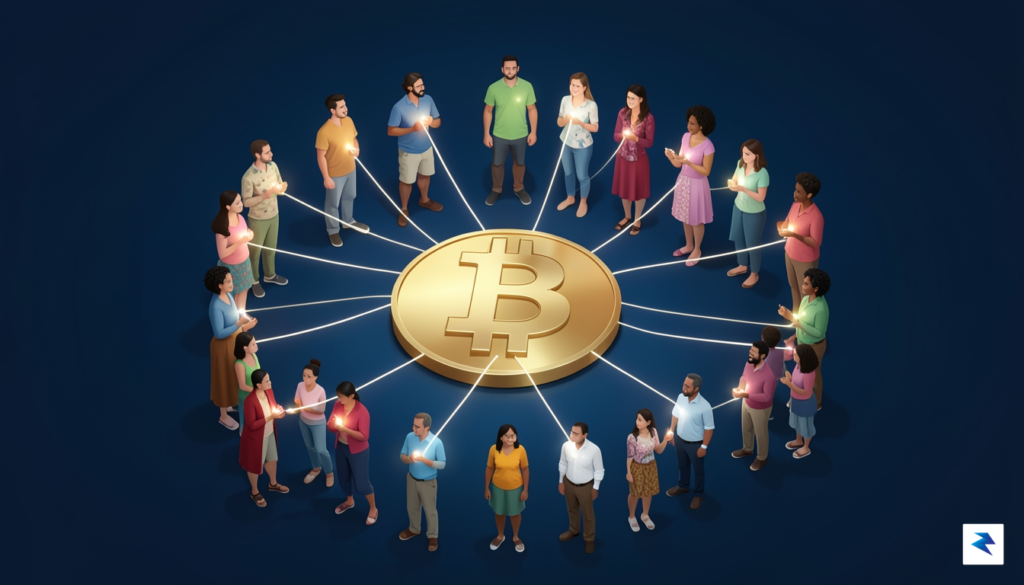
Bitcoin is fundamentally designed as a leaderless system, yet the absence of a central board of directors does not mean that the network exists in a state of perpetual chaos. Instead, governance in Bitcoin is an emergent property—an informal, ongoing process of signaling, social consensus, and technical implementation. Every time a developer proposes a change or a miner signals support for a protocol upgrade, they are participating in a governance mechanism that relies on the voluntary alignment of thousands of independent actors. This decentralized model ensures that no single entity can unilaterally dictate the rules of the network, but it also creates significant friction whenever the community finds itself at a crossroads, such as the current debate surrounding DOG Mode and its implications for relay policies.
The tension between different visions for the network often manifests as a choice between soft forks and hard forks. A soft fork is backward-compatible, meaning that nodes that do not upgrade can still interact with the network, whereas a hard fork requires all participants to adopt the new rules or risk being split onto a different chain. Because Bitcoin’s security is derived from its network effect, the community generally prefers soft forks to avoid fragmentation. However, when a proposal like DOG Mode forces a fundamental disagreement regarding how transactions are relayed or prioritized, the standard path of soft consensus becomes significantly more difficult to navigate. This is where the true, often invisible, power of the node operator comes into play.
The ultimate democratic vote in Bitcoin is not a ballot box or a corporate board meeting, but the individual node operator’s decision to run specific software.
Node operators act as the final arbiters of the protocol’s reality. By choosing which software version to run, every participant effectively signals their acceptance or rejection of proposed changes. If a significant portion of the network refuses to adopt a controversial update, the upgrade simply fails to achieve the consensus required to become the standard. This mechanism provides a robust defense against malicious actors, but it also introduces the risk of chain splits. If the community is fundamentally split on the direction of relay policies—as is the case with the emerging debate over DOG Mode—we face the possibility that different segments of the network will prioritize different sets of rules, potentially fracturing the unified ledger that makes Bitcoin so valuable.

Ultimately, the challenge is to determine how updates should be adopted when there is no formal mechanism to resolve deep-seated ideological differences. When the community cannot agree on the technical evolution of the protocol, the system enters a period of heightened volatility and uncertainty. The current discourse surrounding relay policies is a reminder that Bitcoin’s governance is not merely a technical concern, but a sociopolitical one. As we move forward, the challenge will be to balance the need for innovation with the preservation of the decentralization that gives the network its unique strength, ensuring that no single feature or policy change inadvertently compromises the core integrity of the Bitcoin ecosystem.

At the heart of the debate surrounding DOG Mode lies the fundamental mechanism of how transactions propagate across the Bitcoin network. Currently, relay policies act as the gatekeepers of the mempool, determining which transactions are broadcast and prioritized by nodes. By altering these relay behaviors, DOG Mode introduces a shift in how block space is valued, effectively changing the underlying mechanics of fee estimation. When nodes start prioritizing specific transaction types or metadata structures over others, the traditional “first-come, first-served” model of the mempool begins to fragment, creating a tiered landscape where transaction latency becomes a variable tied to the specific rules a node operator chooses to enforce.
This shift carries significant weight for miner revenue, as miners are the ultimate arbiters of which transactions make it into a block. If DOG Mode gains widespread adoption, miners may face new pressure to align their relay policies with the most profitable transaction subsets to maximize their block rewards. Consequently, the fee market could see increased volatility; if certain transaction types become more “expensive” to relay or process, users might find themselves paying a premium just to ensure their data is seen by the network. This creates a feedback loop where the economic incentive for node operators to adopt alternative relay rules is driven by the desire to capture more fee revenue, potentially turning relay policy into a competitive advantage rather than a neutral network standard.

The economic viability of DOG Mode rests on whether the benefits of specialized relaying—such as improved transaction efficiency or new utility—outweigh the potential fragmentation of the network’s fee market.
Furthermore, the implications for transaction latency cannot be overlooked, as any modification to relay rules inevitably impacts the speed at which a transaction reaches the majority of miners. If a subset of nodes starts “fast-tracking” specific transactions, those transactions may enjoy a significant speed advantage, effectively creating a two-tier mempool where some users experience near-instant confirmation while others face indefinite delays. This structural change forces users to re-evaluate their fee strategies, as the traditional reliance on fee-based prioritization might be eclipsed by relay-based prioritization. As node operators weigh the technical overhead of implementing these new rules against the potential for increased demand for their specific relay services, the governance of Bitcoin’s transaction propagation is poised to become one of the most critical economic battlegrounds in the coming years.

The emergence of experimental governance frameworks like DOG Mode serves as a potent reminder that Bitcoin is not a static monolith, but a living, breathing ecosystem that thrives on healthy friction. As the community moves past the initial shock of these proposals, the focus must shift toward how these mechanisms align with the network’s long-term security and decentralization. The path forward will undoubtedly be marked by intense debate, but this is a feature, not a bug, of a truly permissionless system. By forcing participants to confront how upgrades are signaled and how consensus is reached, the network reinforces its own immune system, proving that its resilience is derived from its capacity to withstand internal scrutiny and evolving technological requirements.
In the coming months, we can expect a flurry of responses as developers, miners, and node operators grapple with the practical implications of on-chain governance experiments. It is highly probable that the community will move toward a more sophisticated understanding of social consensus, distinguishing between technical upgrades that enhance efficiency and those that could potentially alter the network’s fundamental incentive structures. This transition period will likely see an increase in open-source audits and public discourse, ensuring that any proposed modification undergoes the rigorous vetting that Bitcoin has historically demanded. Rather than rushing to implement new layers of governance, the broader ecosystem will likely prioritize transparency, favoring solutions that allow for modularity without compromising the core integrity of the base layer.
The true strength of Bitcoin’s governance lies not in the perfection of its tools, but in the collective vigilance of its participants, who treat every protocol change as a matter of existential importance.
Ultimately, the evolution of Bitcoin requires a delicate balancing act: maintaining the immutable principles that made it a global store of value while simultaneously fostering an environment where innovation can flourish. We must remain wary of any governance model that centralizes influence or creates new avenues for political capture. Instead, the focus should remain on open-source scrutiny, where the strength of an idea is measured by the quality of its code and the consensus it achieves across an adversarial landscape. As we navigate this complex future, the guiding principle must remain clear: the network exists to serve its users through neutrality and censorship resistance, and any governance experiment—no matter how clever—must be subservient to these foundational pillars.

As these experiments continue to play out, the community will likely refine its approach to dissent, moving away from binary conflicts and toward a more nuanced, multi-layered discourse. This evolution is essential, as it prepares the network to scale and adapt to the challenges of the next decade. While the temptation to impose rigid, automated governance structures may grow, the most robust path remains one that respects the human element of Bitcoin—the consensus of people, not just the logic of machines. By embracing this complexity, the community ensures that Bitcoin remains a resilient, decentralized, and sovereign asset for generations to come.
You must be logged in to post a comment.