
Is ChatGPT Silencing the Next Generation of Writers?
The Collision of Literature and Large Language Models When Dave Eggers stepped into the halls of OpenAI in 2023, the atmosphere was thick with…


Founded by computer science prodigy Yang Zhilin, Beijing-based Moonshot AI has rapidly transformed from an ambitious startup into a formidable contender in the global artificial intelligence landscape. The company’s flagship product, Kimi, represents a paradigm shift in how large language models handle massive datasets. Unlike many of its predecessors that struggled with “context window fatigue”—where a model begins to lose track of early information as a conversation grows—Kimi was built from the ground up to prioritize long-context retention. By leveraging a proprietary architecture that optimizes memory management, Moonshot AI has enabled Kimi to process and synthesize up to two million Chinese characters in a single prompt, a technical feat that effectively puts it in a league of its own compared to many standard Western-developed models.

The technical differentiation between Kimi and industry giants like GPT-4 or Claude 3 lies primarily in its specialized attention mechanism and data processing efficiency. While Western models have historically focused on general-purpose reasoning and multimodal versatility, Kimi’s developers concentrated on the specific pain points of enterprise users: the need to digest massive legal contracts, extensive technical manuals, and multi-layered research papers without losing accuracy. This architectural focus allows Kimi to maintain a “needle-in-a-haystack” retrieval precision that is remarkably high, even when navigating hundreds of thousands of words. As a result, Chinese developers and enterprise firms have flocked to the platform, finding that it solves complex document analysis problems that previously required human-in-the-loop intervention or fragmented, multi-step AI workflows.
The rapid ascent of Kimi is not merely a product of clever marketing; it is a direct result of solving the “context bottleneck” that has hindered LLM utility in high-stakes professional environments.
The speed at which Kimi has captured market share in the domestic Chinese market serves as a bellwether for the shifting dynamics of the global AI arms race. Industry experts are closely monitoring Moonshot AI not only for its technical prowess but for its ability to iterate at a velocity that matches or exceeds Silicon Valley incumbents. By providing a stable, high-capacity tool that is specifically fine-tuned for the linguistic nuances of the Chinese language—coupled with its impressive ability to handle complex, long-form logic—Moonshot AI has effectively challenged the narrative that the most advanced AI innovation is restricted to Western borders. Whether this momentum will translate into a broader international threat remains to be seen, but Kimi has undeniably established itself as a benchmark for what is possible in the next generation of deep-context artificial intelligence.

While Moonshot AI’s Kimi has garnered significant attention for its impressive performance benchmarks and extended context window, its emergence on the global stage has simultaneously reignited profound debates concerning data sovereignty, the transparency of model training, and the far-reaching influence of the Chinese regulatory environment on artificial intelligence outputs. This paradox of technological prowess versus geopolitical apprehension forms the core of the skepticism surrounding the model, prompting a closer examination of the inherent technical and political factors at play. Indeed, the very features that make Kimi powerful also contribute to a unique set of international anxieties.
A primary concern revolves around the fundamental principles of data privacy and sovereignty. In an increasingly data-driven world, where AI models are trained on vast oceans of information, the question of where this data originates, how it is stored, and who ultimately has access to it becomes paramount. Under China’s cybersecurity laws, companies operating within its borders are subject to governmental oversight, which can include requests for data access under certain circumstances. This regulatory framework contrasts sharply with the stricter data protection regimes and privacy expectations prevalent in many Western nations, such as the GDPR in Europe. Consequently, the potential for user data processed or even implicitly gathered by Kimi to be accessible to Chinese state entities creates a significant trust deficit, making international adoption a complex proposition for businesses and individuals alike.
Furthermore, the opacity surrounding Kimi’s model training practices is another significant point of contention. The “black box” nature of large language models means that their internal workings are inherently difficult to scrutinize, yet the datasets they are trained on fundamentally shape their worldview, biases, and ethical guardrails. Without transparent disclosures about the composition, sourcing, and filtering of Kimi’s training data, there is a legitimate concern that the model could embed biases aligned with state narratives, censorship protocols, or specific cultural perspectives prevalent within China. Such an outcome could lead to AI outputs that are subtly (or not so subtly) influenced, potentially skewing information, reinforcing propaganda, or limiting freedom of expression, thereby undermining the model’s perceived neutrality and trustworthiness for global users.
From a broader geopolitical standpoint, Western regulators and policymakers view advancements in Chinese AI, including models like Kimi, through a critical national security lens. The ongoing technological rivalry between major global powers means that AI is not just seen as a commercial tool but also as a strategic asset with dual-use potential, capable of impacting everything from surveillance capabilities to military applications and economic espionage. There is a palpable fear that widespread adoption of AI systems developed under the Chinese regulatory umbrella could inadvertently provide vectors for data exfiltration, enable foreign influence operations, or compromise critical infrastructure if integrated into sensitive systems. This perspective elevates concerns beyond mere commercial competition, positioning Kimi and similar models at the heart of an escalating technological arms race where trust and provenance are as crucial as performance.
Ultimately, while Kimi’s technological achievements are undeniable, the complex interplay of data sovereignty challenges, the lack of transparency in its training regimen, and the overarching geopolitical context creates substantial hurdles for its unreserved acceptance outside of China. These aren’t merely abstract theoretical concerns but practical barriers that will dictate Kimi’s ability to truly become a global AI player, underscoring that in the realm of advanced AI, the ‘how’ and ‘where’ of development are often just as critical as the ‘what’ it can do.

The recent emergence of Moonshot AI’s Kimi has sparked a flurry of discourse, with some observers resorting to inflammatory labels like “AI communism” to characterize its distribution and development model. This sensationalist framing suggests that state-backed, centrally directed innovation is a monolithic threat to the market-driven dynamism of Silicon Valley. However, when we strip away the hyperbole, we find that the reality is far more nuanced. Rather than representing a ideological shift in how intelligence is computed, the Chinese model reflects a strategic deployment of national resources designed to accelerate technical parity with Western incumbents. This is not necessarily an abandonment of market principles, but rather a form of state-directed capitalism where the government acts as a primary venture capitalist, subsidizing infrastructure to bypass the slow, iterative phases of private funding.

To understand the competitive landscape, we must distinguish between the “move fast and break things” philosophy of the West and the “national priority” mandate prevalent in China. Silicon Valley firms operate under the constant pressure of quarterly earnings and shareholder expectations, which dictates a model of rapid commercialization and monetization. In contrast, platforms like Kimi benefit from a top-down industrial policy that prioritizes long-term scalability and national technological sovereignty over immediate profitability. This allows these models to undergo massive training cycles without the same immediate fiscal scrutiny, effectively lowering the barrier to entry for widespread adoption. Consequently, the “threat” is not ideological—it is logistical. By pooling data and compute resources at a national scale, these systems can achieve sophisticated linguistic and analytical capabilities that might otherwise take private firms years of competitive bidding to reach.
The core of the competitive tension lies not in the underlying philosophy of the AI, but in the efficiency of resource allocation: state-backed entities prioritize long-term dominance over the short-term revenue cycles that define Western corporate strategy.
Furthermore, the integration of strict content moderation and regulatory alignment is often conflated with a “communist” label, yet this is essentially an exercise in maintaining institutional control within the digital domain. While these constraints certainly limit the creative range of the models compared to their Western counterparts, they also serve to streamline the deployment of AI into specific, state-approved sectors such as finance, manufacturing, and public administration. Instead of viewing this solely as a menace, it is more accurate to view it as a distinct technological trajectory. The legitimate challenge to capitalist-driven innovation is not that these systems are ideologically superior, but that they demonstrate how effectively an autocracy can mobilize human and mechanical capital to achieve technical parity in record time. As the global AI race intensifies, the true test will be whether decentralized, market-driven innovation can continue to outpace the sheer brute-force capacity of state-subsidized development.

The emergence of Moonshot AI’s Kimi serves as a definitive case study in the escalating technological friction between the United States and China. While the public often views generative AI through the lens of productivity gains or creative disruption, Kimi represents something far more strategic: a direct response to the “silicon curtain” imposed by Washington’s stringent export controls. By limiting access to high-end processing hardware, such as NVIDIA’s advanced H100 GPUs, the US has attempted to throttle the pace of Chinese AI development. Yet, Kimi’s ability to process massive context windows—often exceeding two million characters—suggests that Chinese developers are finding ways to circumvent these hardware bottlenecks through architectural ingenuity and highly optimized software frameworks.

This technological agility forces a difficult question regarding the efficacy of current regulatory frameworks. In the West, the regulatory conversation is dominated by safety, alignment, and the mitigation of existential risks, leading to a sprawling, cautious legislative environment. Conversely, China’s approach is characterized by a “top-down” mandate that prioritizes national competitiveness and social stability, requiring AI models to adhere to strict state-defined ideological guidelines. Consequently, we are witnessing the birth of two distinct AI ecosystems. One is driven by open-market experimentation and decentralized innovation, while the other is fueled by state-supported industrial policy and a relentless push to close the compute gap.
The geopolitical stakes are no longer just about who builds the fastest model; they are about who establishes the foundational standards for how AI interacts with human data, global markets, and national security interests.
Looking ahead, the prospect of global AI interoperability appears increasingly dim. As both nations tighten their grip on the underlying infrastructure of artificial intelligence, we are likely moving toward a fractured landscape of incompatible standards. If Chinese models like Kimi continue to thrive despite restricted access to the world’s most powerful chips, it will likely prompt even more aggressive trade policies from the US, potentially further isolating the global digital economy. Ultimately, Kimi is not merely a tool for summarizing documents or writing code; it is a signal that the AI arms race has entered a new phase, where software efficiency is being weaponized as a strategic asset to overcome hard-power economic sanctions.

The rapid ascension of models like Kimi highlights a fundamental tension: the push for technological supremacy often outpaces the development of global regulatory frameworks. As nations race to secure a lead in artificial intelligence, the prospect of a fractured, “Balkanized” digital landscape becomes increasingly plausible. If major powers continue to treat AI development as a zero-sum game, we risk creating isolated ecosystems where models are restricted by geopolitical borders rather than defined by their utility or safety. This fragmentation would not only stifle the cross-border collaboration necessary to solve global challenges like climate change or pandemic preparedness but could also lead to incompatible safety standards, leaving the international community vulnerable to misaligned or unchecked algorithmic risks.
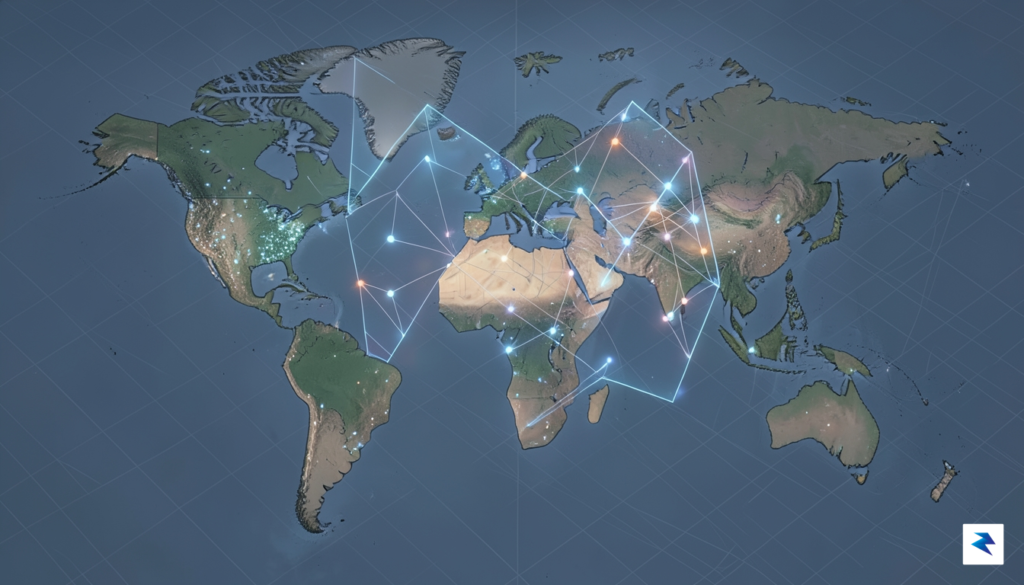
To navigate this, the industry must pivot toward a model of “coopetition,” where deep-seated competitive instincts are tempered by shared safety protocols. Relying solely on national regulations will likely prove insufficient; instead, we need an international consensus—a sort of “nuclear non-proliferation treaty for code”—that establishes baseline safety thresholds for large-scale language models. Without this foundational agreement, the global market may find itself trapped in a race to the bottom, where corners are cut to achieve the next performance milestone. Achieving such cooperation is undeniably difficult, yet it remains the only viable path to ensure that the AI tools of tomorrow are built on a foundation of stability rather than volatility.
Ultimately, the maturation of the AI market will be defined by how these geopolitical currents impact the end-user experience. For the average person, a fragmented AI ecosystem could mean a diminished internet experience, characterized by limited access to information, skewed perspectives depending on one’s region, and a loss of the universal connectivity that once defined the web. Conversely, if the industry successfully moves toward interoperable standards and transparent safety practices, users stand to benefit from a more reliable, personalized, and globally consistent suite of AI assistants. The next phase of the LLM era is not merely about who builds the fastest model, but who can build the most trusted one within a complex, interconnected global order.
The true test of the next AI generation will not be the raw power of its parameters, but its ability to operate safely and effectively across a divided international landscape.
As we look toward the horizon, the maturation of this market suggests a shift from the current “wild west” of rapid releases toward a more measured, infrastructure-heavy phase. Companies that prioritize ethical integration and global compliance, rather than just market dominance, will likely emerge as the long-term leaders. This evolution marks a transition from viewing AI as a volatile curiosity to treating it as a critical piece of global infrastructure, requiring the same level of care, foresight, and collaborative management as our power grids or financial systems.
You must be logged in to post a comment.