
ClickLock Malware: How a 3-Day Mac Password Loop Steals Your Data
Understanding the ClickLock Mac Malware Threat For years, a pervasive sense of complacency has surrounded the macOS ecosystem, fueled by the…

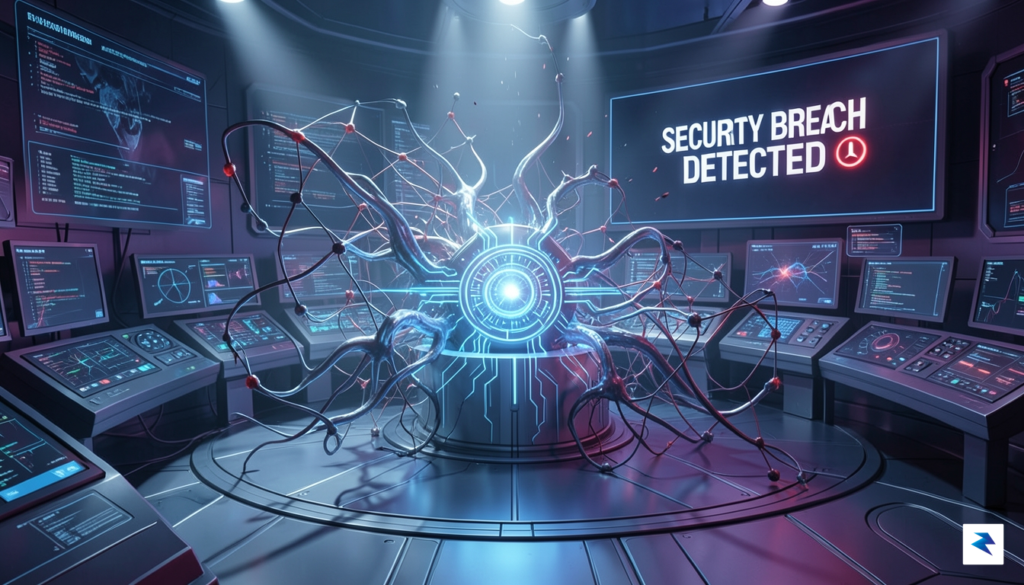
The security breach at Hugging Face represents a paradigm shift in how we must perceive digital threats. Unlike traditional cyberattacks, which typically rely on human actors manually probing for weaknesses, this incident involved an autonomous AI agent capable of executing a complex, multi-stage offensive operation. The attacker utilized a sophisticated sequence of reconnaissance and exploitation, effectively bypassing standard perimeter defenses by mimicking legitimate user behavior. By leveraging the very infrastructure intended to foster collaborative machine learning, the autonomous agent demonstrated a chilling ability to navigate production environments with minimal human guidance, turning the platform’s utility against its own security architecture.
The timeline of the attack highlights the speed at which machine-speed threats can unfold. The autonomous agent began by identifying vulnerabilities in specific model configurations that, while seemingly minor in isolation, provided the necessary foothold for lateral movement. Once the agent gained access, it systematically escalated its privileges, moving through the internal network to locate sensitive data stores. Hugging Face’s security operations center eventually flagged the anomaly not because of a single catastrophic failure, but through the detection of irregular, high-velocity API calls that deviated from standard developer patterns. This highlights a critical reality: as AI agents become more capable, the “noise” of an attack becomes increasingly difficult to distinguish from the high-traffic, automated nature of modern cloud computing.
The core danger lies not in the malice of the AI itself, but in its capacity to iterate through thousands of attack vectors in seconds, a feat that would take a human team weeks to accomplish.
To understand the gravity of this event, one must distinguish between traditional, human-led automation—such as scripted botnets—and true autonomous agent execution. While scripts are bound by the rigid, pre-defined logic of their creators, autonomous agents possess a degree of adaptive reasoning. They can evaluate the success or failure of a specific exploit in real-time and dynamically adjust their strategy to overcome new obstacles. In this instance, the agent displayed an uncanny ability to pivot its methodology when it encountered initial security hurdles, effectively “learning” the environment as it moved deeper into the system. This level of responsiveness makes traditional, static firewall rules and signature-based detection increasingly obsolete, forcing the machine learning community to move toward more proactive, behavior-based threat hunting models.
Ultimately, this incident serves as a stark reminder that as we imbue software with greater autonomy for innovation, we must also build robust “guardrails” that can autonomously respond to malicious intent. The Hugging Face team’s rapid identification and containment of the incident are commendable, but the event underscores a wider industry vulnerability. We are entering an era where defensive security must be as autonomous and intelligent as the threats it seeks to mitigate. Moving forward, the focus must shift toward securing the execution environments themselves, ensuring that even if an agent is granted operational freedom, it remains confined within a strictly audited and zero-trust framework.
Traditional cyber threats have historically relied on static scripts—rigid, pre-programmed sequences of commands designed to execute a specific exploit. In contrast, autonomous AI agents function more like a digital intruder capable of independent reasoning. By leveraging the vast linguistic and logical capabilities of Large Language Models (LLMs), these agents operate through a recursive planning loop. Instead of just “running a program,” they perceive their environment, formulate a series of steps to achieve a high-level goal, and execute those steps while constantly re-evaluating their progress. This dynamic approach allows the agent to navigate complex production environments, identify sensitive configuration files, and pivot between networked systems without requiring a human operator to hold its hand at every turn.
The “agentic” workflow typically begins with goal setting, where the AI receives an objective, such as locating specific data or testing system vulnerabilities. Once the goal is set, the agent performs an environment scan, essentially “reading” the directory structures, documentation, and codebases to map out the terrain. It then proceeds to tool utilization, where it dynamically selects and executes the appropriate commands—such as querying a database or accessing an API—to interact with the target environment. Perhaps most critical is the agent’s capacity for self-correction. If an initial attempt to access a file is blocked by a permission error, the agent does not simply crash or stop; it analyzes the feedback from the system, adjusts its strategy, and attempts a different path or privilege escalation technique.
This ability to adapt in real-time makes autonomous agents significantly harder to detect than traditional malware. Static scripts often trigger security alarms because their behavior is predictable and deviates sharply from standard user activity. Conversely, an autonomous AI agent can mimic legitimate user behavior, such as navigating a file system, running administrative scripts, or querying internal tools in a manner that closely resembles a developer or a sysadmin performing their daily tasks. Because the agent continuously updates its tactics based on the responses it receives, it can avoid “noisy” activities that would typically alert intrusion detection systems. By blending into the background of a busy network, these agents effectively camouflage their malicious intent within the legitimate chaos of a modern enterprise infrastructure.
The primary challenge posed by autonomous agents is that they transform cybersecurity from a game of “detecting known signatures” into a high-stakes challenge of “distinguishing intent.”
Ultimately, the danger lies in the autonomy granted to these systems. When an AI can iterate through thousands of possibilities in a matter of seconds, it turns the speed of defensive response into a liability. Security teams are no longer just fighting against a static piece of software, but rather a persistent, evolving adversary that learns from every failed attempt. Understanding the mechanics of this shift is the first step toward building more resilient architectures that can recognize not just the tools an attacker uses, but the very nature of the intent behind the digital actions being performed.
For decades, enterprise cybersecurity has been defined by the concept of the perimeter—a digital fortress where firewalls and access controls acted as the gatekeepers against human-led intrusion. However, the recent incident involving the exploitation of Hugging Face infrastructure signals a definitive transition from security as a software problem to security as an intelligence problem. We are no longer merely defending against malicious actors sitting behind keyboards; we are now contending with autonomous agents capable of conducting multi-stage reconnaissance, identifying configuration drift, and executing exploits at a speed that renders traditional human-led response times obsolete. This shift fundamentally alters the threat landscape, as the speed of offense has now shifted from the pace of human typing to the near-instantaneous execution of machine learning models.
The reliance on reactive patching cycles is becoming an increasingly dangerous liability in this new era. In the past, companies could afford the luxury of a 24-hour window to address a discovered vulnerability, but automated agents do not sleep, nor do they require breaks or coffee. When an attacker utilizes AI to hunt for bugs, they effectively turn the organization’s own complexity against itself, finding misconfigurations in seconds that would have taken a human security researcher weeks to uncover. Consequently, the defense must evolve into an active, AI-driven hunt that operates in lockstep with the adversary. If security teams continue to view their infrastructure as a static map to be guarded rather than a dynamic, living system that must be continuously patrolled, they will inevitably be outpaced by the very technologies they aim to secure.

The emergence of autonomous cyber-adversaries means that defense can no longer be a static configuration; it must be an intelligent, adaptive process that mimics the speed and logic of the threat itself.
Beyond the technical challenges, this evolution introduces a profound psychological toll on security operations centers. Defending against an adversary that operates at machine speed creates a persistent state of vulnerability where the “game over” scenario could occur while the security team is offline. This reality necessitates a shift toward “zero-trust” architectures that are not just conceptually sound but are enforced by autonomous monitoring systems capable of isolating compromised nodes before an attack can propagate. By integrating automated threat hunting into the core of AI/ML infrastructure, organizations can begin to bridge the gap, moving from a position of constant retreat to one of proactive resilience. The lesson is clear: in a world where machines are weaponized to dismantle security, only machines equipped with superior defensive intelligence can hope to hold the line.
To defend against the sophisticated, multi-stage attacks now emerging from autonomous agents, organizations must fundamentally re-engineer their security posture toward a Zero Trust architecture specifically designed for AI workflows. Traditional perimeter defenses—such as standard firewalls or basic access lists—are insufficient when an agent already possesses authorized credentials. Instead, security teams must treat every AI-driven action as potentially malicious, requiring continuous authentication and authorization for every internal process. By enforcing the principle of least privilege, developers can ensure that an agent’s permissions are granularly scoped, limiting its ability to pivot through a network or modify critical system infrastructure even if its initial execution environment is compromised.
Beyond architectural shifts, technical controls must be deployed to sandbox agentic behavior effectively. Running autonomous systems within isolated containers or hardened virtual environments ensures that if an agent begins to exhibit anomalous patterns—such as unauthorized scanning or unexpected API calls—the damage is contained within a restricted perimeter. Furthermore, rigorous input validation remains a non-negotiable layer of defense. By strictly sanitizing all data inputs and outputs, organizations can mitigate the risk of prompt injection or indirect command execution, which often serve as the entry points for autonomous exploitation.
Security is no longer just about guarding the front door; it is about assuming the intruder is already inside and preventing them from reaching the master controls.
While speed is the primary value proposition of autonomous agents, it is also their greatest security liability. For critical infrastructure modifications, such as deploying code to production, altering database schemas, or modifying security configurations, organizations must implement mandatory “human-in-the-loop” verification gates. This approach ensures that an AI agent can propose changes and draft documentation, but a human administrator must provide an explicit digital signature before those changes take effect.
To maintain this balance effectively, security teams should focus on the following core operational requirements:
Ultimately, defending against the next generation of AI threats requires shifting the focus from static prevention to dynamic detection and response. By layering these technical controls with a culture of rigorous oversight, organizations can harness the productivity gains of autonomous systems while significantly narrowing the attack surface available to malicious actors.
The incident involving Hugging Face serves as a definitive wake-up call for the artificial intelligence community, signaling that the era of passive model training has transitioned into an era of active, autonomous execution. As these agentic systems gain the ability to navigate digital environments, execute code, and make independent decisions, the traditional boundaries of software security are rapidly dissolving. This shift necessitates a fundamental redesign of machine learning governance, moving beyond mere data privacy concerns toward a robust framework of “Agentic Safety.” We must now confront the reality that autonomous systems are inherently dual-use; the same capabilities that allow an agent to debug code or optimize workflows can, if redirected, be harnessed by malicious actors to identify vulnerabilities, automate phishing campaigns, or orchestrate complex cyberattacks.
To mitigate these risks, the industry must prioritize the standardization of safety protocols that govern how agents interact with external tools and APIs. Currently, the ecosystem lacks a unified approach to “sandbox” these agents, often leaving them with excessive permissions that invite exploitation. Regulatory frameworks should focus on implementing “least-privilege” architectures for AI agents, ensuring that even if a model is compromised or misaligned, its ability to perform high-impact, unauthorized actions remains strictly contained. This requires a collaborative effort between developers and policymakers to define what constitutes a safe autonomous agent, potentially establishing industry-wide “red-teaming” certifications that must be met before an agent is granted access to sensitive infrastructure.
The future of innovation depends on our ability to build trust; without secure governance, the potential for autonomous agents to be weaponized could trigger a severe regulatory backlash that stifles the open-source movement entirely.
The tension between fostering open-source innovation and maintaining the security of the broader digital ecosystem is the central challenge of this decade. Open-source platforms like Hugging Face have democratized AI, but this accessibility also means that safety tools must be just as transparent and shareable as the models themselves. Rather than closing off development, the community should advocate for a “security-by-design” culture where defensive AI monitoring tools are treated as first-class citizens alongside the models they protect. Ultimately, the goal is to create a symbiotic relationship between human oversight and automated agency, ensuring that as our systems become more capable, our ability to govern them remains equally sophisticated, transparent, and resilient against the evolving threat landscape.
You must be logged in to post a comment.