
The Robotaxi Regulatory War: Balancing Tech Growth and Public Safety
The Regulatory Tug-of-War: Defining the Robotaxi Era The autonomous vehicle industry has officially moved past the era of controlled, niche…

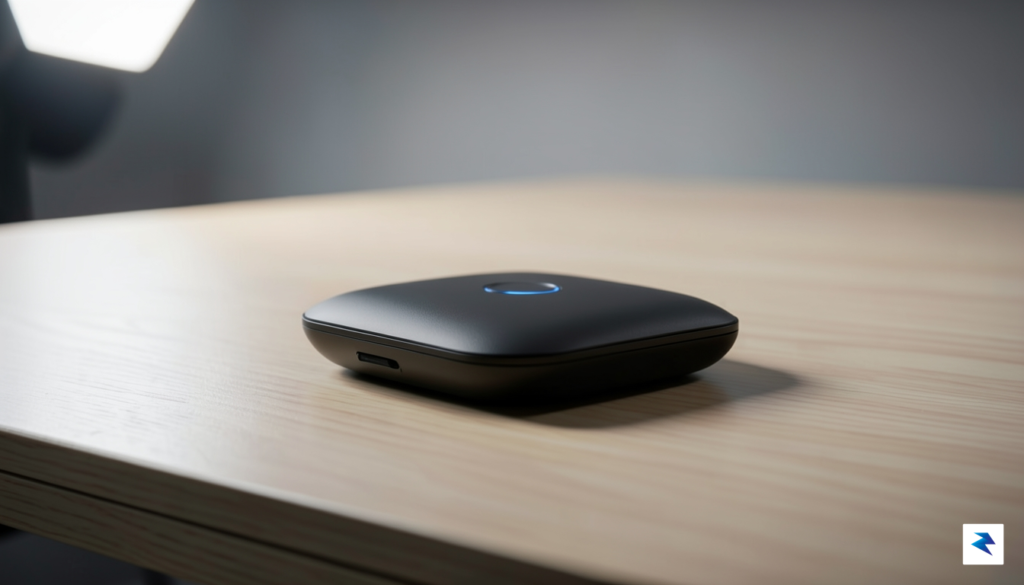
For the better part of a decade, OpenAI functioned primarily as a high-level research laboratory obsessed with the frontiers of large language models and the abstract potential of artificial general intelligence. However, the meteoric rise of ChatGPT signaled a transition from academic curiosity to a consumer-facing juggernaut, and the company’s roadmap has since expanded beyond the confines of a browser window. OpenAI is now actively pivoting toward physical hardware, aiming to transition from a software-first entity to a vertically integrated tech giant. This shift is predicated on the belief that true intelligence should not be relegated to a chat interface, but rather woven into the fabric of daily life through dedicated, purpose-built devices.
The core philosophy driving this hardware evolution is the concept of “ambient AI”—the idea that computing should be invisible, responsive, and always present without requiring the user to stare at a screen. By controlling the hardware layer, OpenAI seeks to bypass the limitations of current mobile operating systems, which often silo AI capabilities behind app-based menus and restrictive permissions. Owning the device allows for a more cohesive integration of sensory inputs, such as real-time audio and visual processing, which are essential for creating a truly fluid, human-like assistant. In this strategic vision, the hardware becomes the primary touchpoint for the user’s digital life, effectively shifting the locus of control from the OS vendor to the intelligence provider.

However, this transition into physical manufacturing presents a steep, complex learning curve for a firm historically steeped in neural networks and backend infrastructure. Transitioning to hardware requires expertise in supply chain management, industrial design, thermals, and global logistics—domains where industry incumbents like Apple have spent decades perfecting their craft. Vertical integration, while offering the allure of ecosystem dominance and optimized performance, is fraught with high-stakes risks. The capital intensity of hardware development, coupled with the potential for unforeseen manufacturing bottlenecks, could divert critical resources away from OpenAI’s core research mission.
Integrating intelligence directly into hardware is not merely a technical challenge; it is a fundamental shift in how OpenAI defines its relationship with the end user, moving from a service provider to a platform architect.
This aggressive push into hardware also positions OpenAI in direct competition with the very gatekeepers that currently host its software. As the company moves to create physical products that compete for the user’s attention and data, it inevitably invites scrutiny from those who own the underlying platforms. Should OpenAI’s hardware aspirations begin to erode the market share of established giants, the company will likely face not only legal hurdles but also significant resistance in the form of ecosystem lockdowns and intellectual property challenges. The success of this pivot will depend on whether OpenAI can innovate fast enough to justify the friction of adopting new hardware in an already saturated market.

As OpenAI pivots from a purely software-centric entity toward the tangible realm of consumer electronics, it inevitably enters the crosshairs of the tech industry’s most litigious giant: Apple. The core of this potential conflict lies in the fundamental divergence between OpenAI’s ethos of rapid, iterative AI deployment and Apple’s fortress-like approach to proprietary hardware-software integration. Apple has spent decades patenting not just individual components, but the very “user experience” flows that make their devices intuitive. If OpenAI attempts to launch a standalone hardware product, Apple could weaponize its massive portfolio of utility and design patents to claim that the startup is infringing upon patented interaction methods, interface gestures, or even integrated neural processing architectures that Apple considers its own intellectual property.
Furthermore, the friction extends beyond mere technical patents into the complex arena of anti-competitive practices. Apple’s ecosystem is built upon the tight coupling of services and hardware, a synergy they defend with aggressive scrutiny. If OpenAI seeks to establish manufacturing partnerships, Apple could theoretically leverage its influence over the supply chain or petition regulatory bodies to investigate potential anti-competitive behavior. By framing OpenAI’s entry as an effort to bypass privacy or security standards that Apple mandates for its own ecosystem, the Cupertino-based company could create enough legal and procedural friction to stall OpenAI’s manufacturing momentum for years. An injunction, even a temporary one, could be devastating for a company attempting to capture a nascent market share against established hardware juggernauts.

Beyond patents and supply chain politics, there is the critical issue of consumer privacy standards. Apple has successfully marketed “Privacy by Design” as a core product feature, effectively using it as a barrier to entry for competitors who rely on massive data aggregation. Should OpenAI’s hardware be perceived as a threat to these established standards, Apple could trigger a wave of regulatory complaints, arguing that OpenAI’s data-hungry AI models are fundamentally incompatible with the consumer protections that Apple claims to uphold. This strategic deployment of privacy as a legal weapon would force OpenAI to prove its compliance in court, turning a hardware launch into a lengthy, costly battle of legal maneuvering rather than a sprint to the consumer marketplace.
The true risk to OpenAI isn’t just a single lawsuit, but a multi-front legal strategy that uses intellectual property, regulatory compliance, and supply chain pressure to suffocate the project before it reaches the retail shelf.
Ultimately, the threat of litigation acts as a powerful deterrent. Even if OpenAI believes their technology is entirely original, the mere threat of a protracted legal war with a company of Apple’s resources is enough to make investors nervous and partners hesitant. By asserting its dominance through the legal system, Apple can force OpenAI into a position of defensive caution, slowing their pace of innovation to match the glacial speed of judicial proceedings. For OpenAI, navigating this landscape will require more than just technical brilliance; it will require a legal strategy as sophisticated and robust as the artificial intelligence models they aim to put in the hands of the public.

In the high-stakes arena of Silicon Valley, a legal challenge from a titan like Apple functions less like a brick wall and more like a significant “litigation tax” on innovation. While it is rare for a lawsuit to completely extinguish the hardware ambitions of a well-capitalized entity like OpenAI, the cumulative effect of prolonged legal warfare often forces a company to pivot or decelerate. This tax is not merely financial; it manifests as a drain on executive focus, diverting leadership away from product design and engineering toward deposition rooms and settlement negotiations. When resources are diverted to defend intellectual property or fight antitrust claims, the velocity of research and development naturally suffers, effectively lengthening the time-to-market for groundbreaking consumer devices.
History provides a compelling blueprint for how these battles play out. Consider the prolonged antitrust litigation faced by Microsoft in the late 1990s or the extensive “smartphone patent wars” that dominated the landscape a decade ago. In those instances, the innovation did not stop, but the companies involved were forced to reorient their strategic roadmaps to accommodate court-mandated restrictions and compliance requirements. For OpenAI, the risk is not that they will be forced to shutter their hardware division entirely, but rather that the cost of entry will skyrocket. If a lawsuit forces them to redesign proprietary architecture or renegotiate supply chain contracts under duress, the capital allocation required to sustain their AI hardware ambitions could become unsustainable, potentially forcing them to scale back their initial projections.

A critical variable in this equation is OpenAI’s choice of manufacturing partners. By potentially aligning with established industry giants like Samsung or specialized semiconductor foundries, OpenAI hopes to leverage existing infrastructure to bypass the grueling learning curve of hardware production. However, this partnership model acts as a double-edged sword. While it provides immediate access to manufacturing prowess, it also exposes these partners to the crossfire of any potential litigation. If an Apple lawsuit targets specific hardware patents or architectural designs utilized by OpenAI’s partners, the entire supply chain could be jeopardized. Large-scale manufacturers are historically risk-averse; should they perceive that their collaboration with OpenAI invites undue legal scrutiny, they may be quick to distance themselves, leaving OpenAI to navigate the hardware landscape in isolation.
The true impact of a legal battle in tech is rarely the ruling itself, but the ‘opportunity cost’ incurred during the years spent in litigation, where talent departs for more stable projects and market windows close.
Ultimately, the threat to OpenAI’s hardware dreams is one of attrition. If they can successfully navigate the legal discovery process and maintain their strategic partnerships, they may emerge with a more robust, battle-tested product. However, if the lawsuit succeeds in creating enough uncertainty, they risk losing the very talent and momentum required to disrupt a market as mature and protected as the consumer electronics space. Innovation in this sector is as much about timing as it is about technology, and legal hurdles are the most effective tool for an incumbent to disrupt a challenger’s clock.

The hardware landscape is notoriously unforgiving, a graveyard of ambitious startups that underestimated the immense capital and logistical complexity required to scale physical products. For OpenAI, the challenge is twofold: they must not only engineer a device that effectively bridges the gap between generative AI and daily utility but also wrestle for market share against titans like Apple, Google, and Samsung, who have spent decades perfecting their supply chains and user ecosystems. While newer entrants like Humane and Rabbit have attempted to disrupt this space with specialized AI-centric hardware, they have largely struggled to find a sustainable foothold, highlighting the difficulty of convincing consumers to carry yet another device in an already crowded pocket.

There is a classic tension in the tech industry between the first-mover advantage and the fast-follower strategy. OpenAI, by pushing into hardware, is attempting to define an entirely new product category, hoping to capture early adopters who crave a more seamless, conversational interface with AI. However, history shows that tech giants often prefer to let startups do the heavy lifting of user education and market validation before swooping in with refined, integrated versions of that same technology. Apple, in particular, excels at this; they rarely aim to be the absolute first to market with a new gadget, but they are almost always the ones to make it a household necessity through superior polish and ecosystem lock-in.
Success in the hardware sector is rarely about the novelty of the invention; it is about the reliability of the experience and the trust built into the brand over many years.
A high-profile legal dispute introduces a layer of friction that can be fatal for a company attempting to establish itself as a reliable hardware provider. Consumer trust is the bedrock of hardware adoption, and public perception is often influenced as much by a company’s corporate image as it is by the device’s feature set. If OpenAI becomes mired in litigation—especially against a household name like Apple—potential customers may view their hardware as legally risky or technologically fragile. Such a conflict creates a “wait-and-see” atmosphere, which plays directly into the hands of established incumbents. While a legal battle might not technically stop the manufacturing process, it can certainly chill the market, cooling consumer enthusiasm and giving competitors the time they need to neutralize OpenAI’s unique value proposition before the product even reaches the shelves.

Regardless of whether legal challenges stall OpenAI’s specific hardware roadmap, the fundamental trajectory of personal computing has shifted irreversibly toward AI-native integration. Over the next five years, we are poised to transition from devices that act as passive conduits for applications to systems that function as proactive, autonomous agents. For the average user, this means that technology will no longer wait for manual inputs or complex navigation through menus; instead, hardware will be designed to anticipate needs, manage workflows, and synthesize information in real-time. This shift represents a move toward “invisible computing,” where the complexity of software is abstracted away by a layer of sophisticated, context-aware intelligence that lives directly on the device.
The outcome of potential litigation between industry giants will play a decisive role in determining the openness of these future ecosystems. If legal pressures force companies to retreat into hyper-protected, closed-loop “walled gardens,” users may find themselves locked into highly polished but restrictive experiences where AI capabilities are limited to the proprietary apps of a single manufacturer. Conversely, a landscape shaped by interoperability would allow personal AI agents to flow across different hardware platforms, giving users the freedom to integrate OpenAI’s advanced reasoning models with the seamless hardware reliability of an Apple ecosystem. The legal battleground is essentially a fight over whether the “brain” of the future will be a universal utility or a gated luxury feature.

The ultimate victory for the consumer is not necessarily the success of one company over another, but the creation of an ecosystem where AI intelligence is portable, privacy-centric, and hardware-agnostic.
As we look toward the horizon of 2030, the most meaningful developments will likely emerge from how hardware manufacturers balance raw processing power with local privacy. Consumers are increasingly wary of having their most sensitive data processed in distant clouds, pushing manufacturers to prioritize on-device AI—a move that favors companies with deep hardware-software vertical integration. While OpenAI’s hardware ambitions represent a bold attempt to bypass traditional gatekeepers, they also force existing tech titans to accelerate their own innovation cycles. Ultimately, whether through intense competition or unexpected strategic partnerships, the user stands to benefit from a new generation of hardware that treats personalization not as an extra feature, but as the foundational operating principle of the machine itself.
You must be logged in to post a comment.