When AI Music Actually Works: Rethinking the Suno Controversy
The Generative AI Music Dilemma For years, the discourse surrounding generative AI in music has been defined by a deep-seated, often reflexive…
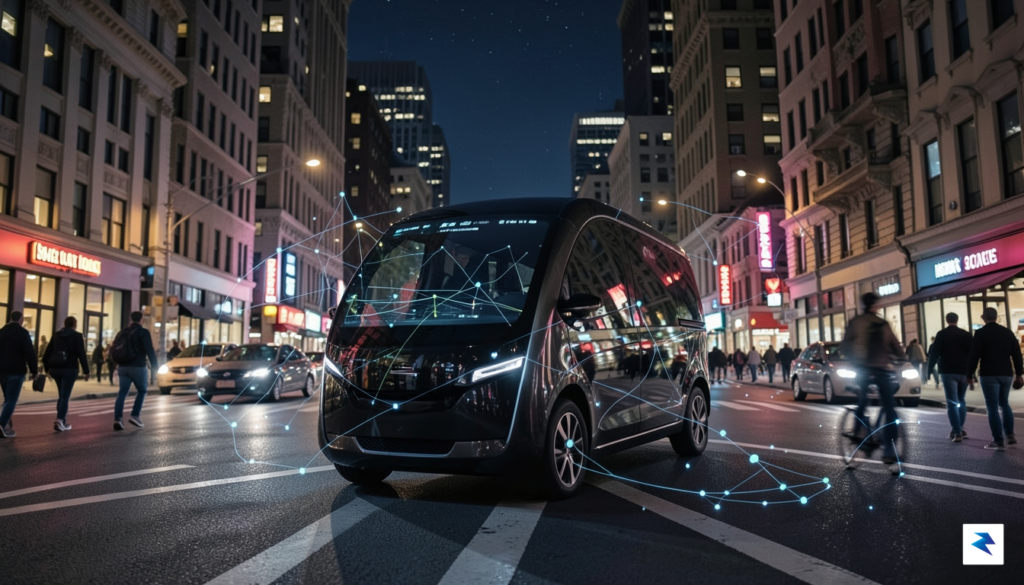
The autonomous vehicle industry has officially moved past the era of controlled, niche pilot programs, shifting gears toward the complex reality of commercial scaling. For years, the promise of robotaxis was relegated to geofenced neighborhoods and limited daytime operations, where the presence of safety drivers served as a comforting buffer for both regulators and the public. Today, that buffer is evaporating as major players expand their fleets to operate around the clock in dense urban environments. This transition marks a structural shift in how we perceive transportation, transforming the autonomous car from a futuristic experiment into a tangible, everyday service. However, this progress has inadvertently triggered a high-stakes standoff between the tech companies pushing for rapid deployment and the regulatory bodies tasked with maintaining public safety.
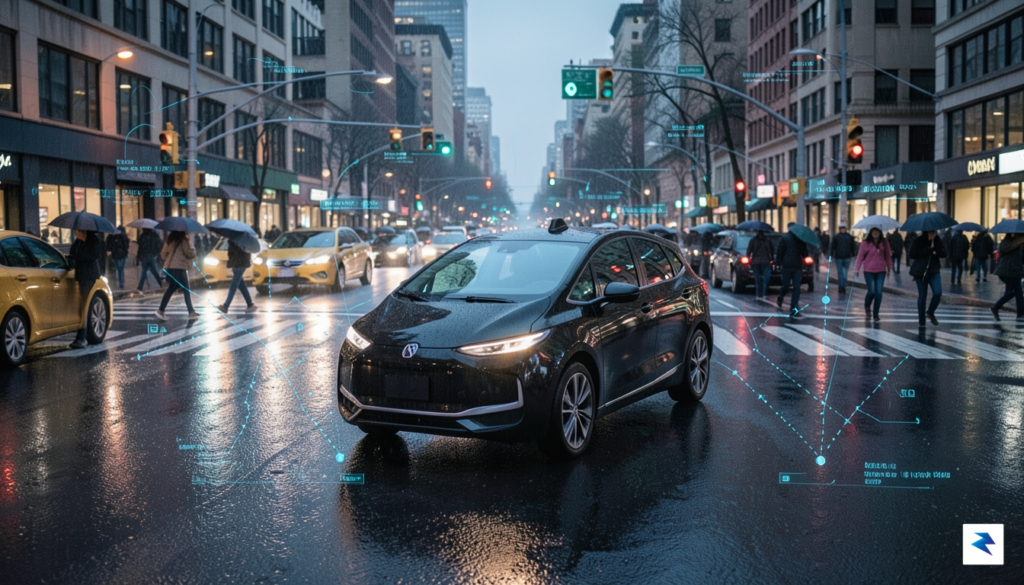
The central tension in this evolution lies in the fundamental disagreement over the pace of innovation versus the necessity of bureaucratic oversight. Tech firms argue that every mile driven by an autonomous system is a step toward safer roads, citing data that suggests machines are less prone to the human errors of distraction and fatigue. Conversely, state and federal agencies are grappling with the reality that there is no uniform playbook for managing the risks of a fleet that lacks a human operator. Consequently, the bottleneck for nationwide adoption is no longer the underlying artificial intelligence or sensor technology; instead, it is the fractured legal landscape that currently dictates where and how these vehicles can operate.
The struggle is no longer just about perfecting the code; it is about establishing a social contract between autonomous developers and the municipalities they intend to serve.
This conflict is further complicated by the jurisdictional tug-of-war between federal mandates and state-level control. At the federal level, agencies like the National Highway Traffic Safety Administration (NHTSA) strive to create a cohesive national standard that would allow for seamless interstate deployment. Meanwhile, individual states—and even specific cities—are scrambling to impose their own restrictive ordinances, citing concerns over everything from emergency vehicle access to the potential for massive traffic congestion. Because “who writes the rules” dictates the speed of market entry, companies are finding themselves forced to navigate a dizzying patchwork of regulations. Ultimately, the battle over robotaxi governance is the defining hurdle of the decade, as it will determine whether autonomous transportation becomes a ubiquitous public utility or remains a fragmented, stalled innovation trapped in a web of conflicting local laws.

At the heart of the current regulatory gridlock lies the elusive concept of “safety equivalence.” Autonomous vehicle developers frequently argue that their systems are already safer than the average human driver, citing millions of miles of testing data that show fewer instances of distracted or impaired driving. However, regulators remain skeptical of these comparative metrics, noting that the “human baseline” is a deeply flawed standard. While a human might make a catastrophic error due to fatigue or poor judgment, they also possess an intuitive ability to navigate complex, non-verbal social cues on the road—a nuance that current artificial intelligence still struggles to replicate with total consistency.
The friction intensifies when addressing the notorious challenge of “corner cases.” These are the rare, unpredictable scenarios—such as a child chasing a ball into the street during a localized weather event or a chaotic construction zone—that do not appear frequently in training datasets. Tech companies often push for rapid deployment, arguing that the only way to expose systems to these edge cases is to put them on public roads, thereby accelerating the learning curve through real-world experience. Conversely, safety advocates and municipal regulators argue that “learning on the job” is an unethical gamble when public lives are at stake. They demand ironclad, simulation-heavy proof protocols that ensure a vehicle can handle the extreme fringes of reality before it is ever granted a license to operate in a dense urban environment.

The fundamental tension is not just technical; it is philosophical. We are attempting to quantify the value of human life against the potential for a transformative, statistically safer future.
Furthermore, the debate inevitably shifts toward the murky waters of liability. When an autonomous system inevitably faces a situation where a collision is unavoidable, the question of who bears the moral and legal responsibility remains largely unsettled. In an environment dominated by unpredictable human drivers, robotaxis must act with a level of caution that can sometimes be perceived by others as erratic, leading to secondary accidents. Establishing clear liability frameworks is essential for public trust, yet regulators are hesitant to grant broad operational permits until manufacturers can prove that their systems are not only safer in ideal conditions but also resilient enough to navigate the systemic failures of our existing, human-centric transportation infrastructure.
Ultimately, the path forward requires a shift from purely reactive safety testing to a more collaborative, transparent data-sharing model. If the industry expects the public to embrace the shift toward autonomy, it must move beyond proprietary “black box” algorithms and participate in standardized, third-party safety audits. Bridging the gap between the rapid pace of software innovation and the deliberate, risk-averse nature of public policy will require more than just better sensors; it will require a shared definition of what it truly means to be “safe enough” in an automated world.

At the heart of the current legislative friction lies the persistent challenge of the “black box” nature of deep learning. As autonomous vehicles increasingly rely on neural networks to perceive their surroundings and navigate complex urban environments, the logic behind their split-second safety decisions often becomes opaque even to the engineers who built them. Regulators are rightfully wary of allowing machines to make life-or-death choices without a clear, auditable trail of reasoning. Because traditional software development follows predictable, rule-based logic—where a specific input always results in a specific, programmed output—the adaptive, probabilistic nature of modern AI poses an unprecedented regulatory dilemma that existing transportation frameworks are ill-equipped to manage.
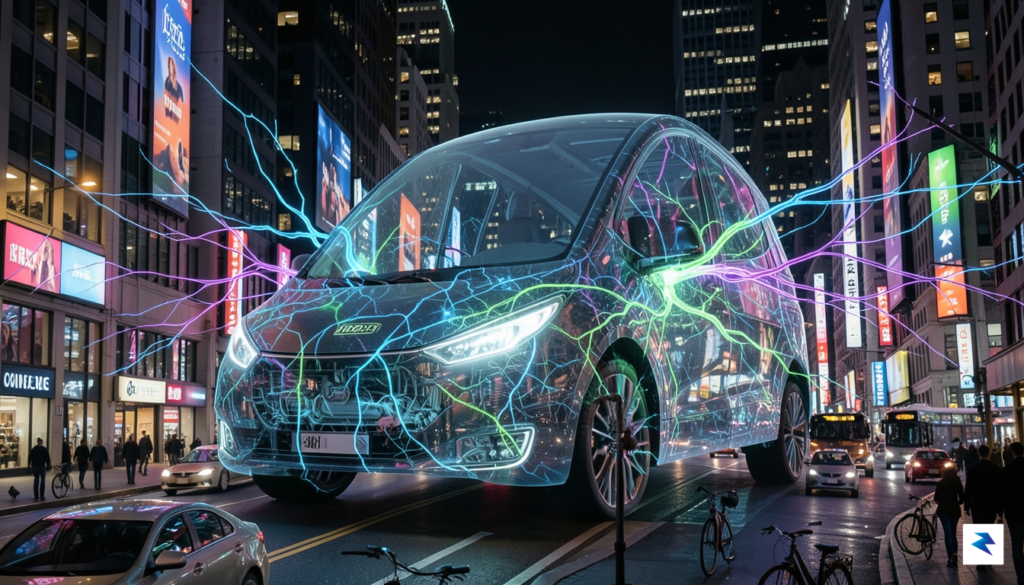
To bridge this gap, policymakers are increasingly turning toward the concept of “regulatory sandboxes.” These controlled environments allow companies to test their autonomous agents in real-world scenarios while granting oversight bodies unprecedented access to the underlying model architecture. By mandating that these systems be “explainable”—meaning developers must provide evidence-based justifications for how an AI arrived at a specific maneuver—governments are shifting the burden of proof onto the tech providers. This transition from passive oversight to active, real-time auditing represents a fundamental change in how we govern mission-critical transportation systems, ensuring that safety is not just a performance metric, but a transparent, verifiable feature of the vehicle’s operating stack.
The core of the issue is not just whether a robotaxi is safe, but whether we can prove *why* it is safe across millions of edge cases that human developers may have never anticipated.
Furthermore, standard software regulation is rapidly proving insufficient for the generative and adaptive models currently powering the next generation of autonomous driving. Unlike fixed applications, these agents learn and evolve, meaning that a vehicle’s behavior today might differ from its behavior a month from now, even if the underlying code remains largely consistent. Consequently, regulators are pushing for a model of “continuous certification,” where AI models are subject to ongoing re-evaluation throughout their lifecycle rather than receiving a one-time safety stamp. This evolution in governance acknowledges that in the realm of high-stakes autonomous mobility, static rules are a relic of the past; in their place, we are seeing the rise of dynamic, algorithmic-aware policy frameworks designed to keep pace with the frantic speed of machine learning innovation.
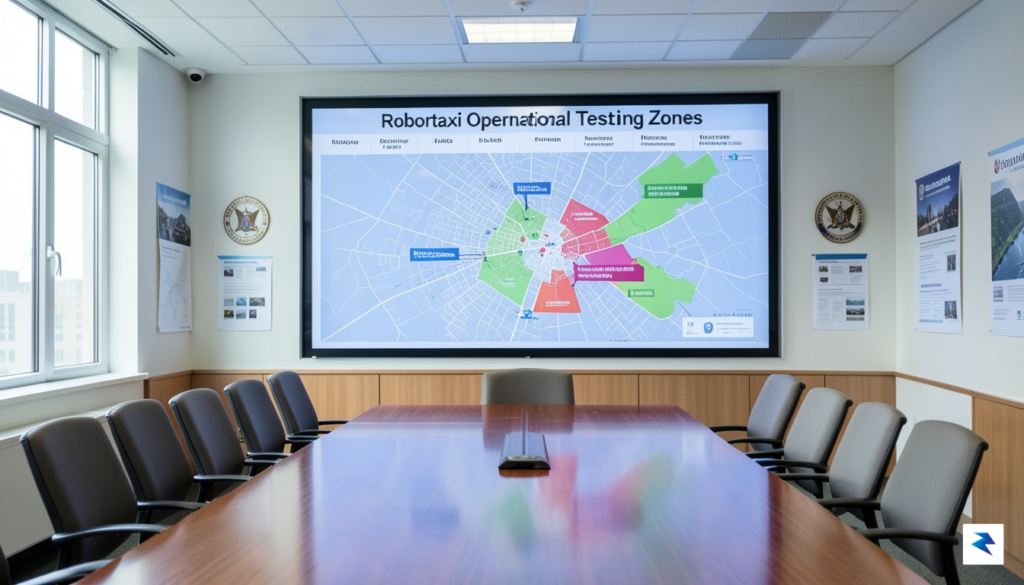
The rollout of autonomous vehicle fleets has transitioned from a Silicon Valley experiment to a gritty, street-level reality, sparking an intense tug-of-war between centralized tech giants and local municipal governments. Unlike software updates that operate in the digital ether, robotaxis occupy physical space, maneuvering through intersections, claiming curbside pick-up zones, and interacting with the complex, unpredictable flow of urban transit. While state-level regulators often see the potential for innovation and economic development, city officials are tasked with the immediate mandate of public safety and traffic management. This friction has birthed a heated “preemption” debate: whether state governments possess the authority to unilaterally override local transit policies, effectively stripping cities of their power to govern their own thoroughfares.
At the heart of this conflict is the fear that robotaxi fleets could cannibalize existing public transit systems rather than supplement them. Urban planners worry that as these vehicles become more accessible, they will increase overall congestion by drawing passengers away from buses and trains—systems that are designed to move masses efficiently—and instead clutter the streets with individual vehicles. If cities lose their ability to mandate service zones or operational hours, they may find themselves unable to ensure that these new technologies serve underserved neighborhoods. Instead, they risk creating a two-tiered mobility system where lucrative downtown corridors receive full coverage, while the broader public transit infrastructure is left to wither from declining ridership and dwindling tax revenue.

Several case studies illustrate the growing success of municipalities in asserting their influence over these tech companies. In cities like San Francisco and Phoenix, local governments have increasingly demanded data transparency and operational concessions, forcing companies to limit fleet sizes during peak hours or restrict access to high-traffic school zones during drop-off times. These mandates serve as a vital check on the “move fast and break things” ethos that often drives the tech industry, forcing developers to prioritize community integration over aggressive expansion. When tech companies face unified municipal pushback, they are often compelled to move from a posture of disruption to one of collaboration, negotiating service level agreements that respect the unique requirements of the local urban fabric.
The core of the regulatory struggle is not about whether robotaxis will exist, but who gets to dictate the terms of their arrival: those who build the code, or those who live on the streets where that code comes to life.
Ultimately, the battle for local control is a fight for the future of the modern city. If centralized tech entities are allowed to operate without the oversight of local authorities, the unique characteristics of our urban environments—the specific needs of pedestrians, the flow of commerce, and the requirement for equitable transit—could be sacrificed for efficiency metrics designed in a boardroom. Successful integration requires a regulatory framework that bridges the gap between state-level ambition and local accountability, ensuring that the next generation of transport enhances the public good rather than simply commodifying the public square.

To break the current regulatory gridlock, the autonomous vehicle industry must transition away from a patchwork of localized mandates toward a tiered, nationalized framework. By implementing a standardized certification process, regulators can ensure that robotaxi fleets meet uniform safety benchmarks before being granted operational permits in new markets. This approach would replace the current environment of uncertainty—where companies must navigate a labyrinth of city-by-city ordinances—with a predictable roadmap for scaling operations. A tiered system would allow for “sandbox” testing phases that gradually expand to full commercial deployment, ensuring that public safety is prioritized through iterative validation rather than abrupt, high-stakes policy changes.
Beyond standardized licensing, the path to maturity requires a radical commitment to cross-industry data sharing. Currently, autonomous software stacks operate in silos, meaning that a “near-miss” incident experienced by one fleet operator provides zero learning benefit to a competitor. Establishing a non-proprietary repository for anonymized safety data would allow the entire ecosystem to learn from collective failures, significantly accelerating the path toward achieving a safety record that far exceeds human drivers. This collaborative approach would not only mitigate public anxiety regarding edge-case incidents but also build the vital institutional trust necessary for municipalities to embrace autonomous infrastructure as a public good.
Success in the next generation of urban mobility will not be defined by raw computing power alone, but by the ability to harmonize complex software systems with the social contract of public safety.
The next five years will function as a definitive “filter” period for the robotaxi race, separating companies with sustainable, safety-first architectures from those relying on rapid, unchecked expansion. Winners will be characterized by their transparency with regulators and their ability to integrate seamlessly into existing transit networks rather than attempting to displace them entirely. Those who view regulation as an obstacle to be bypassed will likely face increasingly hostile legal environments, while firms that treat safety compliance as a core product feature will find themselves with a competitive advantage. Ultimately, the industry must pivot from a “move fast and break things” mentality to a “move safely and prove value” philosophy to secure long-term viability in the eyes of both the public and policymakers.
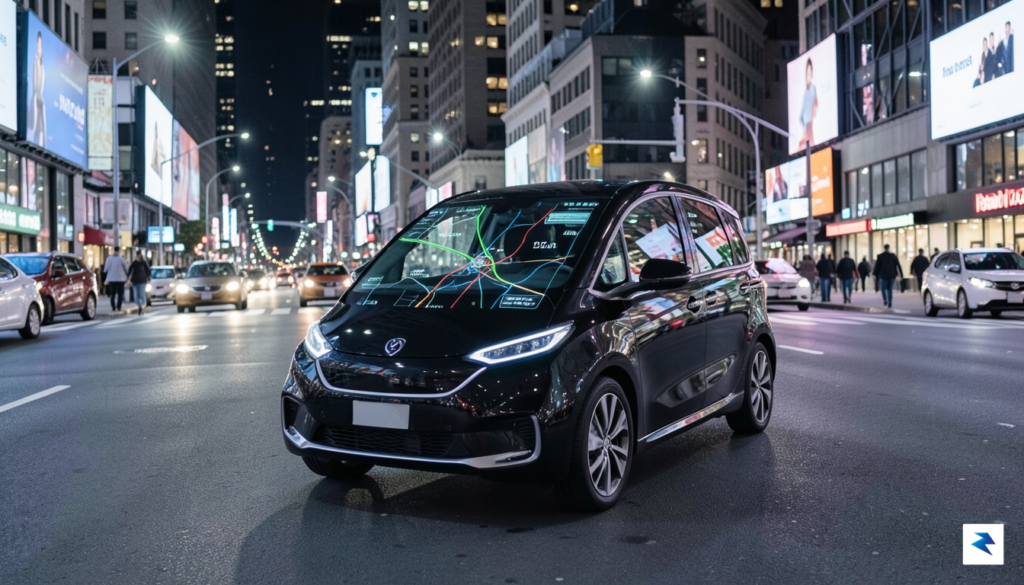
As we look toward the latter half of this decade, the convergence of AI reliability and policy maturity will dictate which firms reach mass-market adoption. By standardizing safety protocols and fostering data-driven transparency, the industry can finally move past the era of regulatory friction. The winners of this race will be the entities that demonstrate that they are not just technological innovators, but reliable partners in the evolution of our city streets.
You must be logged in to post a comment.