
San Francisco Demands Apple and Google Remove 13 Dangerous AI Nudify Apps
The Rise of AI-Generated Non-Consensual Imagery The rapid evolution of generative artificial intelligence has moved far beyond the realm of…


For over a decade, the global artificial intelligence landscape has been synonymous with the sprawling campuses of Silicon Valley. Names like OpenAI, Google, and Anthropic have functioned as the undisputed architects of the digital age, setting the pace for breakthroughs in large language models and generative systems. This concentration of power effectively turned the development of machine intelligence into a western-centric endeavor, where American technical infrastructure and capital investment defined the boundaries of what was considered possible. For a long time, the prevailing narrative suggested that while international competitors might replicate these advancements eventually, they would remain perpetually several steps behind the industry leaders in California.
However, that narrative of unassailable dominance is now fracturing under the weight of rapid, high-stakes innovation emanating from Beijing. The assumption that Chinese firms were merely playing a game of catch-up is being dismantled by a new generation of sophisticated, highly capable models that rival the best the West has to offer. Organizations such as Moonshot AI and Alibaba have recently unveiled proprietary architectures that demonstrate remarkable reasoning, linguistic fluidity, and multimodal integration. These announcements are not mere incremental improvements; they represent a fundamental pivot in the global hierarchy, signaling that the era of American AI hegemony is facing its most significant and credible challenge to date.

The shift is evident in both raw performance metrics and the speed of deployment. Where Chinese researchers were once focused on adapting open-source frameworks, companies like Alibaba—through their Qwen series—and Moonshot AI—with their Kimi platform—are now pushing the frontiers of long-context processing and specialized efficiency. This transition from imitation to genuine competition has forced analysts to rethink the geography of technological power. By prioritizing localized data ecosystems and massive state-supported compute clusters, these firms are successfully narrowing the gap in ways that were deemed impossible just eighteen months ago.
The emergence of high-performance models from China suggests that the competitive landscape is no longer about who gets to the finish line first, but about who can sustain a diverse, resilient, and distinct ecosystem of intelligence.
Ultimately, this evolution is transforming AI from a singular technological monopoly into a complex, multi-polar field of play. As these Chinese platforms continue to mature, they are providing a compelling alternative to the Western status quo, offering capabilities that are specifically tailored to the nuances of the Asian market while maintaining global technical standards. Silicon Valley is no longer the sole arbiter of AI progress, and the implications of this diversification will resonate across global markets, security protocols, and the future of human-computer interaction for years to come.

For years, the narrative surrounding artificial intelligence has been defined by the pursuit of “frontier” models—massive, power-hungry architectures that prioritize raw cognitive capabilities above all else. However, the emergence of Chinese heavyweights like Moonshot AI’s Kimi K3 and Alibaba’s Qwen series has fundamentally shifted the goalposts. These models have introduced an aggressive price-to-performance ratio that challenges the long-standing assumption that more compute equals better utility. By drastically lowering the cost of inference, these developers are not just competing on intelligence; they are competing on the fundamental economics of software deployment.
The real-world impact of this efficiency revolution is most visible in enterprise settings, where cost-prohibitive APIs have historically served as a significant barrier to widespread adoption. When the expense of running a complex query drops by an order of magnitude, AI ceases to be a specialized tool for experimental prototypes and suddenly becomes a viable candidate for the backbone of daily business operations. Companies that previously hesitated to integrate large language models into customer support, logistics, or high-volume data processing can now do so without devastating their operational margins. This shift effectively democratizes access to state-of-the-art technology, allowing developers to build features that were once considered fiscally irresponsible.

The true measure of an AI’s maturity is no longer found in a benchmark score, but in the number of real-world problems it can solve affordably at scale.
This rapid commoditization of performance is forcing Silicon Valley incumbents to engage in an uncomfortable strategic rethink. For a long time, leading US firms relied on the “moat” of superior model performance, justifying premium pricing structures as the cost of doing business with the best. Now, as high-performance alternatives from China arrive with significantly lower overhead, the value proposition of these expensive proprietary models is under fire. US companies are now being pressured to pivot from a focus on pure technological supremacy toward aggressive pricing strategies and tiered subscription models that prioritize economic viability for their enterprise clients.
Ultimately, this competition is a net positive for the broader AI ecosystem. By forcing a market-wide pivot toward efficiency, Chinese developers are accelerating the timeline for AI to become a standard utility rather than a luxury resource. As the focus shifts from building the “smartest” model to building the most sustainable one, we are likely to see a wave of innovation that prioritizes deployment speed, energy efficiency, and scalability. The race is no longer just about who can build the tallest skyscraper of intelligence, but about who can build the most robust infrastructure to support the next generation of global applications.

The landscape of artificial intelligence is no longer a Western monopoly, as evidenced by the sophisticated engineering coming out of Beijing. Moonshot AI has emerged as a particularly formidable player with its Kimi K3 architecture, which moves beyond simple parameter scaling to focus on a modular, highly efficient framework. By optimizing the underlying transformer blocks, Kimi K3 achieves a level of computational fluidity that allows it to maintain coherence across massive datasets. This architecture is purpose-built to handle long-context windows—often exceeding several million tokens—with a latency that rivals or occasionally surpasses the throughput of top-tier models like OpenAI’s GPT-4o. Rather than merely mimicking the structural design of American counterparts, Moonshot has pioneered new techniques in memory management that allow the model to retrieve specific information from vast, dense documents without succumbing to the “lost in the middle” phenomenon that frequently plagues even the most advanced Western LLMs.

Parallel to these advancements, Alibaba’s Qwen ecosystem has become the gold standard for open-weight accessibility and versatile performance. The Qwen-2.5 series, in particular, has demonstrated that it is not merely a follower but a benchmark-setter in the global arena. In recent standardized evaluations, Qwen-2.5 consistently goes toe-to-toe with Claude 3.5 Sonnet, demonstrating superior capabilities in complex coding tasks, multilingual translation, and nuanced logical reasoning. Alibaba’s strategy relies heavily on a highly diverse pre-training corpus that emphasizes both technical depth and cultural breadth, allowing the model to bridge the gap between abstract mathematical problem-solving and idiomatic human communication.
The true breakthrough for Chinese AI developers lies in their ability to master “contextual endurance”—the capacity for a model to hold and synthesize an entire library of information within a single interaction window.
This shift toward longer context windows is perhaps the most significant differentiator in the current technological arms race. While Silicon Valley models often struggle with significant performance degradation as input length increases, the latest iterations from both Moonshot and Alibaba utilize novel attention mechanisms that prioritize information density. By effectively compressing the “hidden state” of a conversation, these models can digest entire legal contracts, full-length books, or massive codebases in one go, providing answers that are not just summaries, but deep syntheses of the provided data. As these Chinese heavyweights continue to iterate, they are proving that efficiency—measured by how much intelligence can be extracted from each unit of compute—is the new battleground for AI supremacy, and they are currently leading the charge.

The landscape of artificial intelligence is currently defined by a sharp divide in philosophical strategy, pitting the “walled garden” approach of Silicon Valley against the increasingly aggressive, open-weights strategy favored by Chinese technology giants. For years, leading Western organizations like OpenAI have maintained a proprietary stance, treating their most advanced models as closely guarded intellectual property accessible only through restrictive APIs. This model prioritizes safety, monetization, and brand control, but it also creates a significant barrier for researchers and developers who require deep, granular access to the underlying logic of a model to innovate effectively.

In stark contrast, Chinese tech leaders—such as Alibaba with its Qwen series and various emerging research labs—are aggressively pivoting toward open-weights releases. By offering powerful models that developers can download, fine-tune, and deploy on their own infrastructure, these firms are effectively bypassing the gatekeepers of the West. This approach is not merely an act of benevolence; it is a calculated strategic maneuver to capture global developer mindshare. When a developer can integrate a high-performance model into their own ecosystem without being tethered to a third-party subscription service or a restrictive usage policy, they are far more likely to build that model into the foundation of their future products.
The true battle for AI supremacy is no longer just about who has the most raw compute, but about whose platform becomes the default operating system for the next generation of global innovation.
This shift has profound implications for the standardization of AI development. As Western firms continue to withhold the blueprints of their most sophisticated models, the open-weights ecosystem is rapidly becoming the training ground for the next wave of global engineers. By lowering the barrier to entry, Chinese firms are encouraging a decentralized development environment where performance benchmarks are constantly being pushed by community-led refinements rather than top-down updates. As a result, we are witnessing a transition where the “open” label is becoming a competitive weapon, forcing Silicon Valley to grapple with a world where their proprietary advantages are being systematically eroded by the sheer speed and accessibility of the alternative. If the current trajectory holds, the future of AI infrastructure may be defined not by the companies that control the most closed data, but by those that provide the most adaptable tools for the developer community at large.
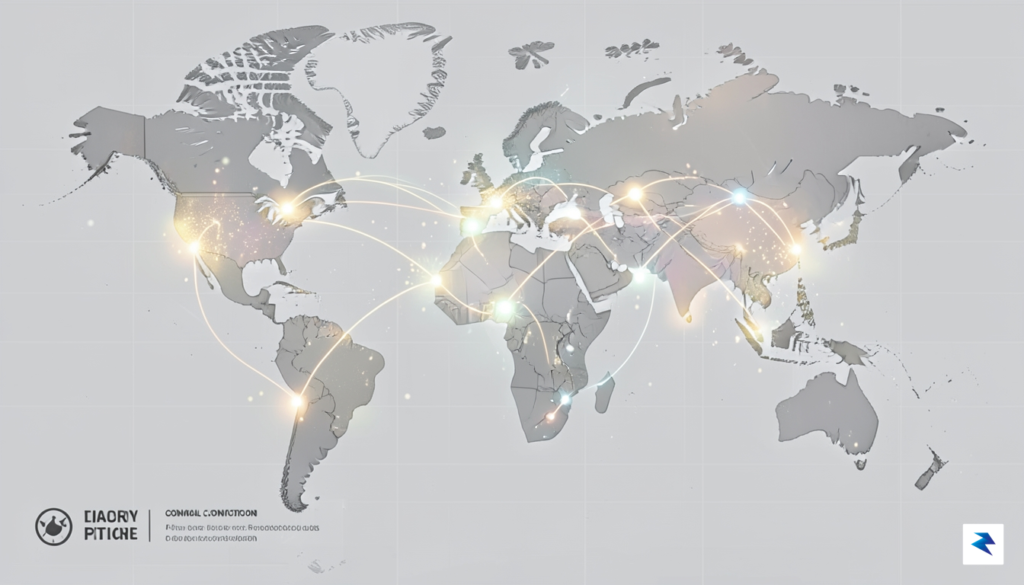
The transformation of artificial intelligence from a commercial luxury into a cornerstone of national infrastructure has irrevocably altered the global political landscape. For years, the prevailing assumption was that Silicon Valley’s hegemony would remain unchallenged, sustained by an insurmountable lead in compute power and talent. However, the rise of sophisticated, home-grown Chinese AI models demonstrates that software innovation can often outpace hardware limitations. As these tools proliferate, the so-called “digital iron curtain” intended to isolate strategic technologies is proving to be remarkably porous. Nations across the Global South, previously forced to choose between competing technological ecosystems, are now finding that the barrier to entry for advanced AI is collapsing, allowing diverse geopolitical players to tap into powerful models regardless of the ongoing friction between Washington and Beijing.
This shift is largely a response to the aggressive export controls imposed by the United States, which have sought to starve Chinese firms of the high-end GPUs necessary for training massive neural networks. Rather than stalling, the industry has pivoted toward a new paradigm of algorithmic efficiency. By focusing on optimizing architectures to achieve more with less, Chinese developers have effectively circumvented the constraints of limited hardware availability. This forced ingenuity has created a blueprint for other nations that lack access to cutting-edge chips, effectively democratizing the ability to build, deploy, and maintain sovereign AI systems. Consequently, the strategy of “choke-point” diplomacy is losing its efficacy, as the global intelligence community realizes that compute power is not the only path to AI supremacy.

“AI sovereignty is no longer a luxury for the few; it has become a fundamental requirement for any nation aiming to maintain domestic stability and economic independence in the twenty-first century.”
The strategic imperative of AI sovereignty has thus become the primary driver of current international policy. Governments are increasingly wary of relying on foreign platforms that may be subject to extraterritorial influence or sudden data cutoffs. This anxiety is accelerating a trend toward fragmented AI silos, where countries prioritize building “national clouds” and localized large language models that reflect their own cultural, legal, and political values. As these alternative AI infrastructures take root, the global arms race is shifting away from simple model performance and toward the creation of self-sustaining ecosystems. This creates a more complex, multipolar environment where technological influence is measured not just by the capability of a single model, but by the resilience and adaptability of the entire digital infrastructure supporting it.
Ultimately, the democratization of these tools means that the traditional levers of soft power are being recalibrated. When nations can deploy high-quality AI solutions developed outside the American orbit, the capacity for Western policy to shape global digital standards is significantly diminished. We are entering an era of competitive coexistence, where the flow of code and algorithms transcends traditional borders, challenging established powers to find new ways to lead in a world where technological dominance can no longer be taken for granted.

The recent strategic advancements by Chinese AI research institutions and tech conglomerates represent a significant shift in the global technology landscape, effectively ending the era of singular American dominance. By delivering a series of rapid, high-performance model releases that rival top-tier Western benchmarks, these developers have successfully closed the performance gap that once seemed insurmountable. This trajectory suggests that we are entering a phase of permanent parity, where innovation is no longer tethered to a single geographic hub. As these models become more accessible and compute-efficient, the focus of the industry will inevitably move away from simple capability milestones and toward practical, large-scale deployment across diverse international markets.

Looking toward the future, the industry should expect a relentless cycle of model releases characterized by both speed and specialized utility. Rather than a winner-take-all scenario, the global AI ecosystem is evolving into a pluralistic environment where cross-pollination of ideas and methodologies becomes the norm. As Chinese firms push the boundaries of model architecture and training efficiency, American developers are forced to refine their own processes, leading to a virtuous cycle of optimization. This competitive friction is not a threat to progress; rather, it is the primary engine of it. We are already witnessing a rapid acceleration in the commoditization of intelligence, which lowers the barrier to entry for startups and enterprises globally, effectively democratizing access to state-of-the-art tools.
Ultimately, the true beneficiaries of this geopolitical tech race are the businesses and end-users who will soon have access to faster, cheaper, and vastly more capable AI tools than ever before.
Healthy competition is the fundamental catalyst for long-term safety and utility. When developers are incentivized to outperform their peers, they naturally prioritize robustness and reliability to earn user trust. This pressure ensures that AI development does not stagnate in silos but instead remains focused on real-world problem-solving, from medical diagnostics to optimized logistics. Furthermore, a competitive global landscape encourages a more diverse range of cultural and linguistic data sets, which will result in AI systems that are more nuanced and globally applicable. By fostering an environment where multiple centers of excellence thrive, the international community ensures that AI remains an open, evolving field that prioritizes constant improvement over complacency.
You must be logged in to post a comment.