
Amazon Japan Supplier AZ-Com Maruwa Adopts JPYC Stablecoin for Payments
The Shift Toward Digital Settlements in Logistics The traditional logistics sector in Japan has long been anchored by rigid, paper-heavy, and…


For the past year, the Model Context Protocol (MCP) has functioned as the invisible scaffolding supporting the next generation of intelligent agents. While most users perceive AI as a static chatbot capable of answering questions, the reality of modern development is centered on agents that can actively perform tasks, query internal databases, and interact with proprietary software. MCP serves as the universal language for these interactions, providing a standardized way for AI models to securely hook into external data sources. By creating a common interface between an AI’s reasoning engine and a company’s fragmented data stack, MCP transforms an isolated model into a functional workplace assistant that understands the specific context of a user’s digital environment.
Historically, connecting AI to real-world data has been a grueling, bespoke process. Developers previously had to build custom integrations for every single software tool, a practice that led to “integration debt” and brittle, stateful connections that frequently broke whenever an API changed. Managing these persistent, authenticated connections required massive overhead, often forcing engineers to choose between building robust internal tools and iterating on the AI logic itself. This complexity became the single greatest bottleneck to AI adoption, effectively gatekeeping the most powerful capabilities behind a wall of specialized infrastructure requirements that most organizations simply could not afford to maintain.

The true measure of an AI’s utility is not found in its parameters, but in its proximity to the data that actually matters to the user.
The recent evolution of the protocol marks a pivotal turning point for the broader AI ecosystem by drastically reducing this technical friction. By simplifying the way these connections are established and managed, the updated protocol allows developers to plug in new data sources in a fraction of the time it once took. This shift is not merely about incremental performance gains; it is about democratizing the ability to build context-aware systems. As the barrier to entry lowers, we are moving toward a future where AI agents can seamlessly traverse across different enterprise applications, pulling in relevant information without requiring the user to manually copy-paste data between isolated silos. Ultimately, this makes the promise of a truly autonomous, data-driven AI assistant feel less like a futuristic ambition and more like a standard feature of the modern digital toolkit.

At the heart of the recent improvements lies a fundamental shift in how connections are managed between users and servers. In traditional “stateful” architectures, the server was burdened with the responsibility of remembering every specific detail about an ongoing interaction. Think of this like a busy waiter who must memorize every customer’s entire order history and personal preferences without writing anything down; if that waiter takes a break or moves to another table, the context is lost, and the service grinds to a halt. In digital terms, this meant that the server had to hold onto unique session IDs, creating a rigid, high-maintenance dependency where the user was effectively “tethered” to a specific machine to keep their session alive.
This previous approach created significant bottlenecks, particularly as traffic scaled. Because the server had to track these active sessions in its own memory, it became increasingly difficult to balance workloads across multiple servers. If a server crashed or needed to be taken offline for maintenance, all the session data stored within it vanished, forcing users to log in again or lose their progress entirely. This design was inherently brittle, making it a headache for developers who wanted to build flexible, high-availability systems that could seamlessly distribute tasks across a global network of hardware.

By moving to a “stateless” model, the protocol now mirrors the way standard web traffic functions, which is far more efficient and robust. In this new paradigm, the server no longer acts as a long-term memory bank for individual sessions. Instead, all the necessary information is passed along with each request, much like a traveler carrying their own passport and documents rather than expecting a hotel to keep their entire life history on file. Because the server doesn’t need to look up a local database to verify who you are or what you were doing, it can handle requests from anywhere, at any time, with absolute independence.
The beauty of the stateless approach lies in its simplicity: by removing the server’s need to “remember” the state of a session, we effectively turn every request into a self-contained, autonomous unit of work.
For developers, this “loose” approach is a game changer that significantly lowers the barrier to entry. It eliminates the complex synchronization logic that previously haunted anyone trying to deploy services across diverse or cloud-based server environments. Developers can now scale their applications horizontally—simply adding more servers to the pool—without worrying about whether those servers share a common memory space. This transition doesn’t just make the underlying protocol faster; it makes it vastly more reliable, allowing for a much smoother user experience that remains consistent even as the infrastructure behind the scenes grows more complex.

For years, the primary bottleneck in deploying artificial intelligence at scale has been the “memory burden” imposed by stateful architectures. In a traditional stateful system, each server must maintain a persistent, active connection with the user, tracking every nuance of the conversation or task flow in real-time. This creates a fragile dependency where the server must essentially “remember” the entire history of a session to function correctly. If a server becomes overloaded or experiences a hiccup, the entire session often breaks, leading to frustrated users and failed deployments. This constant need for synchronization between servers—where each node must know exactly what its peers are doing to maintain session integrity—creates significant overhead that stifles the ability to handle spikes in traffic.
Transitioning to a stateless model fundamentally changes this dynamic by decoupling the intelligence from the session history. Instead of locking a specific user into a specific server, a stateless protocol allows each request to be treated as an independent event, carrying all the necessary context within the request itself. This shift is a game-changer for horizontal scaling; as demand increases, enterprises can simply spin up more server nodes to handle the incoming traffic without worrying about complex handshakes or session synchronization. Because no server is tethered to a specific user state, the system can load-balance requests dynamically, shifting the workload across the entire infrastructure with fluid efficiency.
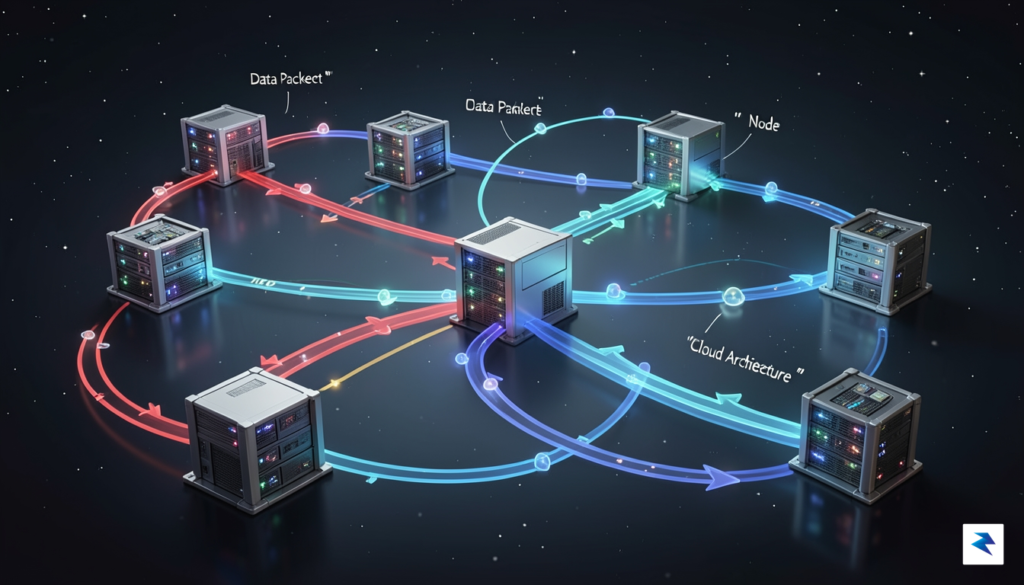
By removing the tether of session persistence, developers can treat AI agents as modular units that scale linearly with demand, rather than monolithic structures that grow increasingly brittle as they expand.
This architectural evolution is critical for enterprise reliability, where high-traffic environments are the norm rather than the exception. When AI tools are stateless, they become far more resilient to the inevitable fluctuations of a production environment. If one node fails, the next request is simply routed to another available server, which immediately possesses the information needed to pick up exactly where the last one left off. This modularity not only prevents the cascading failures common in stateful legacy systems but also allows engineering teams to perform updates, patches, and maintenance without forcing downtime on users. By simplifying how information is passed through the network, we are moving toward a future where AI is no longer a heavy, localized burden, but a lightweight utility that can be accessed reliably by thousands of concurrent users across the globe.

For developers, the lifecycle of building AI-integrated applications has long been plagued by the fragility of underlying communication protocols. Previously, managing these connections required writing extensive boilerplate code to handle intermittent session drops, complex state synchronization, and the inevitable “spaghetti code” that emerges when trying to patch over connection timeouts. Every additional layer of custom error handling increased the maintenance burden, forcing engineers to spend more time debugging the “plumbing” of the connection rather than refining the actual intelligence of their models. With this latest update to the protocol, much of that manual scaffolding is now handled natively, allowing developers to strip away layers of redundant code and focus on building high-performance features that are far less susceptible to edge-case failures.
The downstream effect for end users is a noticeable shift toward near-instant, highly stable interactions. Because the protocol now manages session persistence more gracefully, the frustrating “spinning wheel” or abrupt disconnects that often occur during long-running reasoning tasks are significantly reduced. When the connection between a user interface and a complex AI agent is solidified, latency drops, and the reliability of multi-step autonomous workflows improves dramatically. Users can now engage with AI agents that perform long-form research, data analysis, or creative drafting without the anxiety that a minor network jitter will terminate their entire session and force a tedious restart.
Reliability is no longer just a technical metric; it is the fundamental foundation of user trust in artificial intelligence.
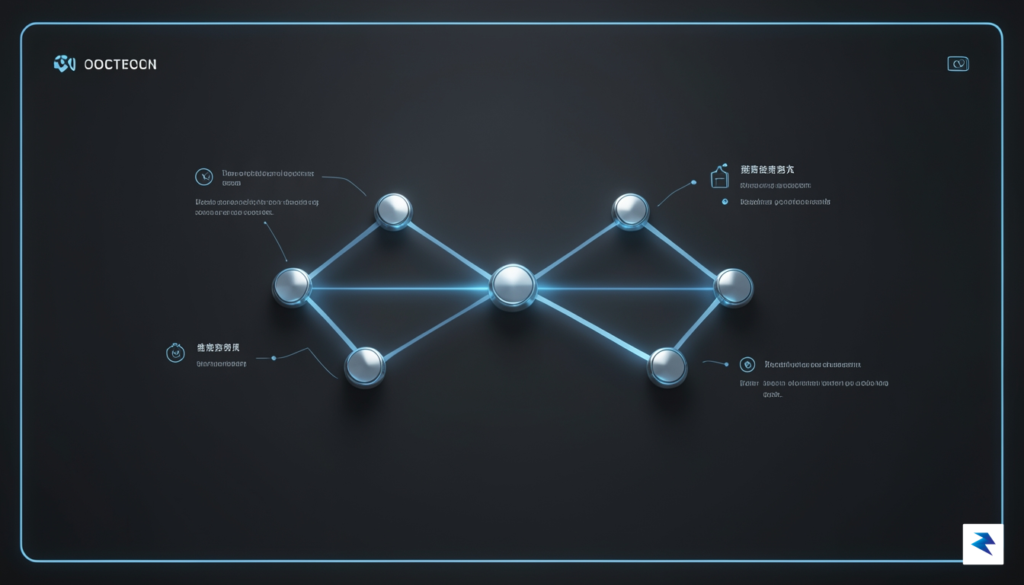
Beyond simple stability, this simplification opens the door for a new generation of sophisticated AI applications that were previously too risky to deploy. Applications requiring real-time, bidirectional communication—such as live collaborative coding assistants, immersive AI-driven gaming environments, and high-frequency financial analysis tools—depend heavily on the robustness of these underlying protocols. By lowering the barrier to entry, developers can now experiment with more complex agentic architectures that require multiple, simultaneous data streams without worrying that the system will buckle under the weight of its own connectivity requirements. Ultimately, this evolution marks a transition from the “prototyping era” of AI connectivity toward a robust, production-ready infrastructure that makes seamless human-AI collaboration the standard rather than the exception.

The quest to establish a universal language for artificial intelligence is no longer a theoretical exercise; it has become the fundamental prerequisite for the next stage of digital innovation. By simplifying the technical barriers to entry, the industry is effectively moving toward a standardized framework where disparate AI systems can finally communicate with one another without the need for bespoke, brittle integrations. This shift toward a common protocol is akin to the early days of the internet, where the adoption of HTTP and HTML transformed a collection of isolated networks into a cohesive, global web. When developers can rely on a consistent set of rules to exchange information and context, the entire ecosystem gains a level of modularity that was previously impossible to achieve at scale.
Aligning these new updates with modern web standards is arguably the most strategic decision in the protocol’s evolution. By leveraging the same principles that govern how websites share data and interact with browsers, the developers behind this initiative are ensuring that AI integration feels familiar, intuitive, and highly scalable. This approach minimizes the learning curve for engineers who are already well-versed in web development, allowing them to build robust AI agents that can traverse existing digital infrastructures with ease. Furthermore, these standards promote interoperability, ensuring that as new models and tools emerge, they do not exist in a silo but can instead plug directly into an existing, collaborative framework.
The true measure of a successful technology standard is not how complex its capabilities are, but how easily it disappears into the background, powering seamless interactions that users no longer have to think about.
Looking ahead, the long-term goal is to transition AI from a tool that we consciously invoke into an invisible, ubiquitous layer of our digital environment. As these protocols become more accessible, we are witnessing the birth of true AI agency, where autonomous systems can securely access the right data at the right time to complete complex workflows on behalf of users. When the underlying plumbing of AI is standardized and simplified, developers can shift their focus away from the “how” of connectivity and toward the “what” of value creation. This evolution marks a critical turning point: we are moving away from an era of fragmented, proprietary AI tools and toward a future where intelligence is a fluid, interconnected utility that powers our work, our creativity, and our everyday digital lives.

You must be logged in to post a comment.