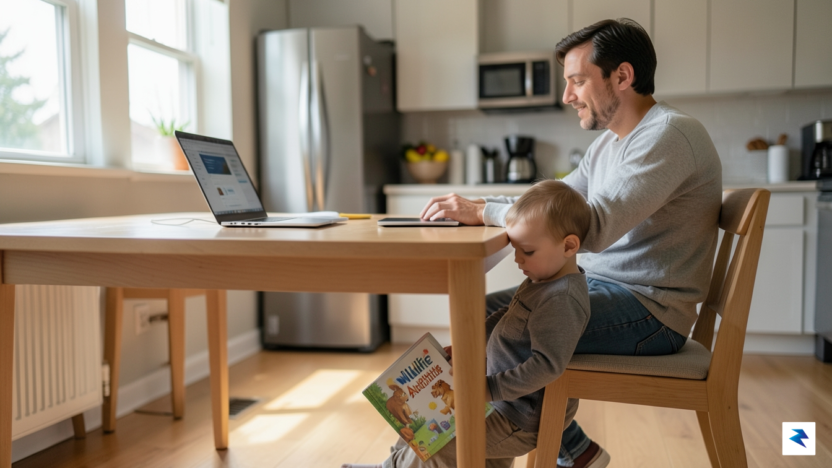
The Paradigm Shift: How Remote Work Redefined Parenthood
For decades, the standard professional model was built upon a rigid, office-centric foundation that viewed family responsibilities as an external burden to be managed in the margins of the workday. Parents were long accustomed to the daily friction of “compartmentalization”—the exhausting mental gymnastics required to separate the professional persona from the domestic one. The traditional nine-to-five structure demanded a physical presence that often prioritized seat time over actual output, forcing parents into a zero-sum game where career progression frequently came at the expense of presence at home. This era was defined by the frantic morning commute, the guilt-ridden late afternoon departure for daycare pickups, and the invisible labor that parents performed in the quiet hours after their children had finally gone to sleep.
The pandemic-driven migration to remote work was initially interpreted as a fleeting emergency measure, a temporary bandage applied to a global crisis. However, as the months stretched into years, this shift revealed itself to be the most significant structural evolution in labor market dynamics since the industrial revolution. It proved that professional excellence is not tethered to a specific desk or a corporate headquarters, but rather to the quality of one’s contribution. For working parents, this realization was liberating; it effectively dismantled the “presence-equals-productivity” myth that had stifled their professional growth for generations. By removing the physical barrier of the office, companies inadvertently handed parents back their most precious commodity: time.
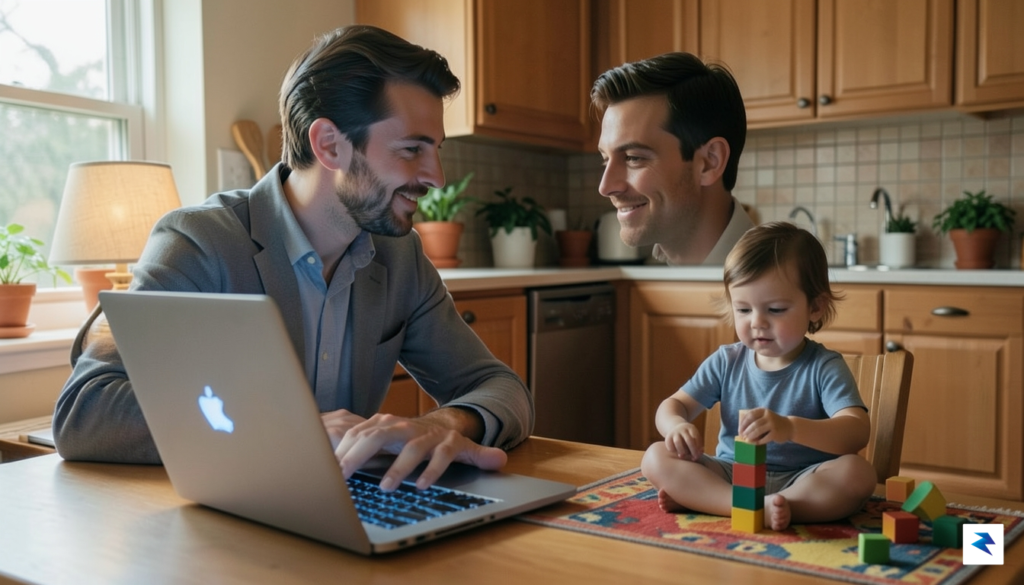
Today, this transition is firmly entrenched as a permanent fixture of our professional landscape, fundamentally altering how mothers and fathers negotiate their dual roles as career-focused professionals and primary caregivers. Remote work now serves as a critical safety net, providing the flexibility required to handle the unpredictable nature of raising young children—from sudden school closures to the inevitable sick days that once caused immense professional anxiety. This is no longer merely about the convenience of avoiding a commute; it is about the integration of life and labor. When parents are afforded the autonomy to manage their own environments, they are better equipped to sustain long-term career trajectories without sacrificing the foundational quality of their family life.
The true value of remote work for parents lies not in the luxury of working from home, but in the restoration of agency over their own time and the removal of the artificial boundaries that previously forced them to choose between their ambitions and their children.
Ultimately, this paradigm shift represents a maturation of the modern workplace. Employers who recognize that flexibility is a strategic advantage—rather than a concession—are seeing higher levels of employee retention, engagement, and overall satisfaction. As we look toward the future, the expectation for remote and hybrid options will continue to grow, not as a trend, but as a necessary standard. We are moving toward an era where the professional success of a parent is no longer measured by their physical absence from the home, but by their ability to thrive in a world that finally respects the complexity of the modern working family.
Economic Empowerment and the Dual-Income Advantage
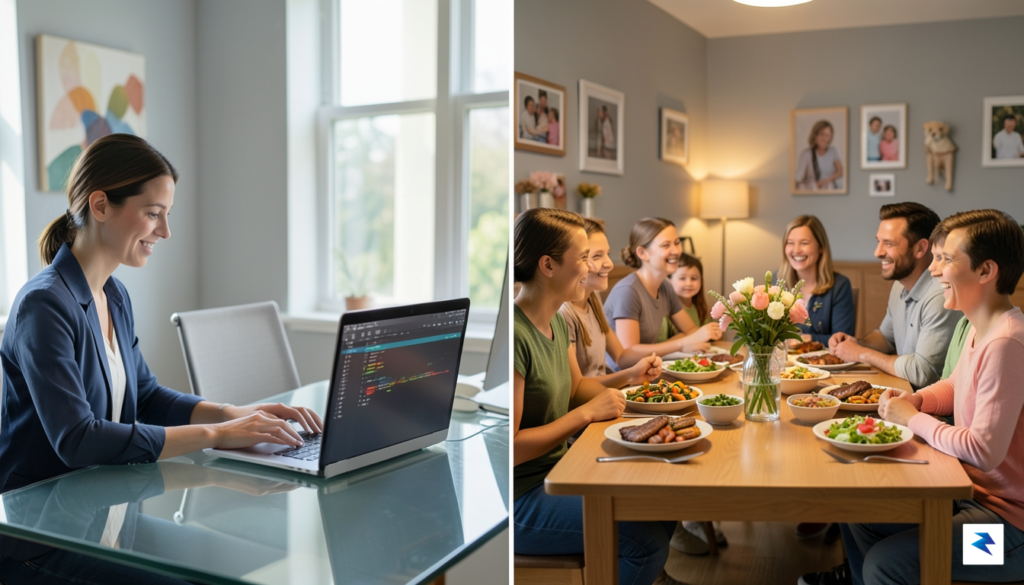
For decades, the traditional office environment acted as an invisible yet formidable barrier to career advancement, forcing parents into a rigid, binary choice between professional progression and household stability. The “motherhood penalty”—a well-documented phenomenon where women face lower earnings and diminished career prospects after having children—was often exacerbated by the inflexible demands of physical workspaces. Remote work has effectively dismantled this barrier, allowing families to optimize their economic output without the impossible trade-off of sacrificing their presence at home. By eliminating the geographic and temporal constraints of the nine-to-five office grind, parents are finally able to integrate the responsibilities of caregiving with the pursuit of meaningful professional growth.
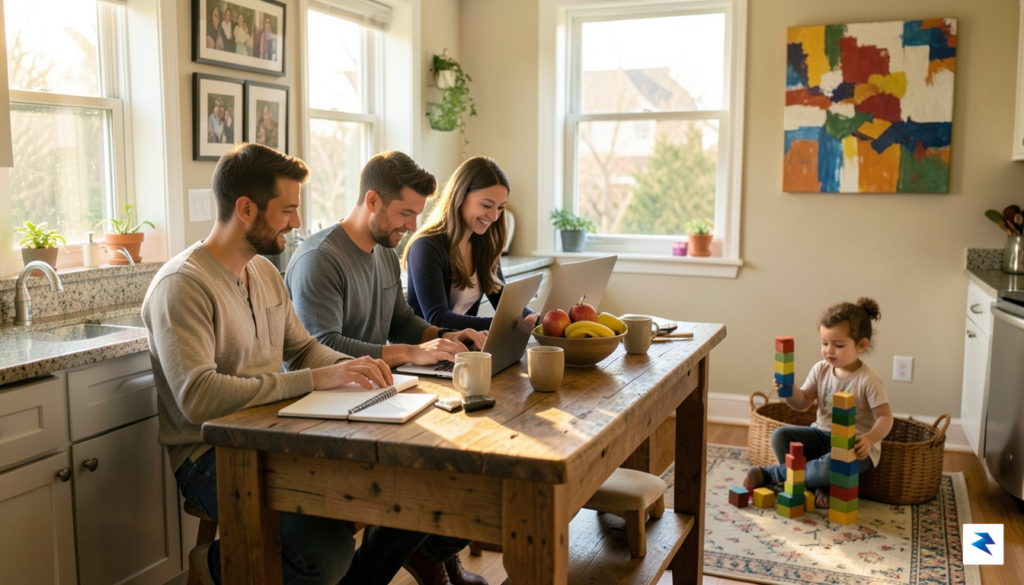
The economic benefits of this shift are profound, particularly when considering the reduction of “hidden” costs that previously drained family resources. The traditional commute was not merely a drain on time and fuel; it represented a massive tax on a parent’s mental energy and a significant overhead cost that often made dual-income arrangements feel precarious. When the commute is removed, that reclaimed time becomes an asset, allowing for a more equitable distribution of household labor. This newfound efficiency enables both partners to remain fully engaged in the workforce, thereby increasing the total earning potential of the household while simultaneously reducing the frantic, high-stress cycle of managing childcare logistics during rush hour.
The integration of remote flexibility does more than just save time; it fundamentally changes the career trajectory of working parents by allowing them to remain on steady, upward paths during the most demanding years of child-rearing.
Furthermore, this shift has a cascading positive impact on long-term financial security for dual-income households. By mitigating the “time-poverty” that historically led many mothers to opt for part-time or lower-paying roles just to accommodate school schedules, remote work enables parents to maintain full-time career status. This continuity is essential for salary growth, retirement savings, and the accumulation of professional experience that defines long-term economic independence. As remote work continues to normalize, we are seeing a structural change in how families approach their finances: they are no longer forced to choose between a second income and the functional stability of their home, but can instead leverage both to build a more resilient and prosperous future.
Navigating the Stigma: Redefining Professionalism
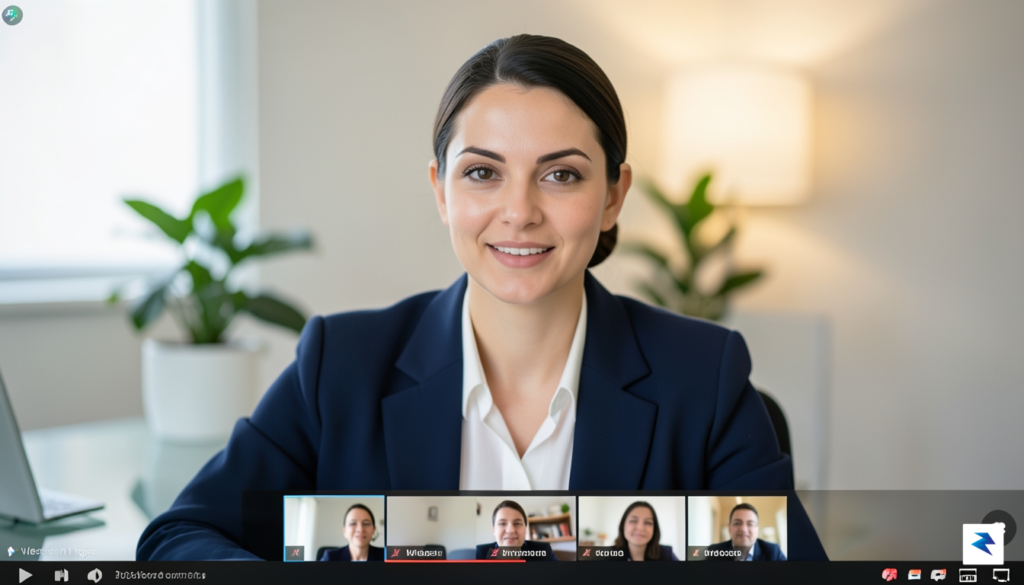
For decades, the standard of professionalism was inextricably linked to physical presence—the unspoken rule that being visible at a desk from nine to five was the primary indicator of dedication. However, the mass shift to remote work has begun to dismantle this outdated metric, revealing that true commitment is measured by impact rather than proximity. Despite this, a lingering stigma persists, particularly for working parents who are occasionally seen navigating the chaotic intersection of professional duties and caregiving. This “visibility tax” often leads to the unfair assumption that a parent attending to a child during work hours is less serious about their career, ignoring the reality that these individuals are often managing their time with greater precision and efficiency than their office-bound counterparts.
To move past this, we must fundamentally redefine professionalism as a results-oriented endeavor rather than a performance of constant availability. The “always-on” culture, which pressures employees to respond to every ping within seconds, is often a mask for insecurity or a lack of clear goal-setting. By prioritizing asynchronous work—where communication is intentional and projects are evaluated based on milestones—companies can create an environment where autonomy is rewarded. When managers focus on the quality and timeliness of deliverables instead of tracking mouse movements or green status lights, the stigma surrounding parenting responsibilities begins to dissolve, replaced by a mutual trust that honors both human needs and corporate objectives.

For parents navigating this transition, managing optics with supervisors is less about hiding one’s reality and more about proactive transparency. Instead of apologizing for the domestic background noise during a call, professionals can lean into a culture of radical honesty by setting clear boundaries and communicating expectations upfront. For example, explicitly blocking out time for school pick-ups or caregiver duties in a shared calendar normalizes the reality of modern life and demonstrates that one is in control of their schedule. By framing these blocks not as “time off,” but as part of an integrated, high-performance workflow, parents can demonstrate that they are capable of delivering excellence while maintaining a healthy personal life.
True professionalism is not defined by the absence of family, but by the presence of accountability. When we judge colleagues on the value they add rather than the environment they inhabit, we unlock a more sustainable and equitable future for the entire workforce.
Ultimately, the burden of change does not rest solely on the shoulders of parents; it requires a top-down shift in organizational culture. Companies that thrive in the remote era are those that foster a culture of autonomy over surveillance. This means moving away from the anxiety of “always-on” availability and toward a model that values deep, focused work. When leadership acknowledges that a parent may be working non-traditional hours to accommodate family life—and yet still producing top-tier results—it sends a powerful message that the organization values the individual’s contribution over a performative display of desk time. This shift is not just a favor to parents; it is a strategic advantage that allows businesses to retain top talent who are empowered to bring their whole selves to work.
Sustainable Integration: Beyond Just 'Working from Home'

Achieving a sustainable rhythm in a remote environment requires shifting the focus from mere time management to intentional boundary-setting. For working parents, the primary risk of the remote model is the “double shift,” a phenomenon where domestic responsibilities and professional deadlines bleed into one another until the boundaries of the day dissolve entirely. To avoid the resulting burnout, it is essential to replace the chaotic “always-on” mentality with a structured, asynchronous workflow. By prioritizing output over hours spent at a desk, parents can reclaim agency over their time, allowing them to complete deep, cognitively demanding tasks when focus is highest, rather than trying to sustain peak performance while simultaneously managing household crises.
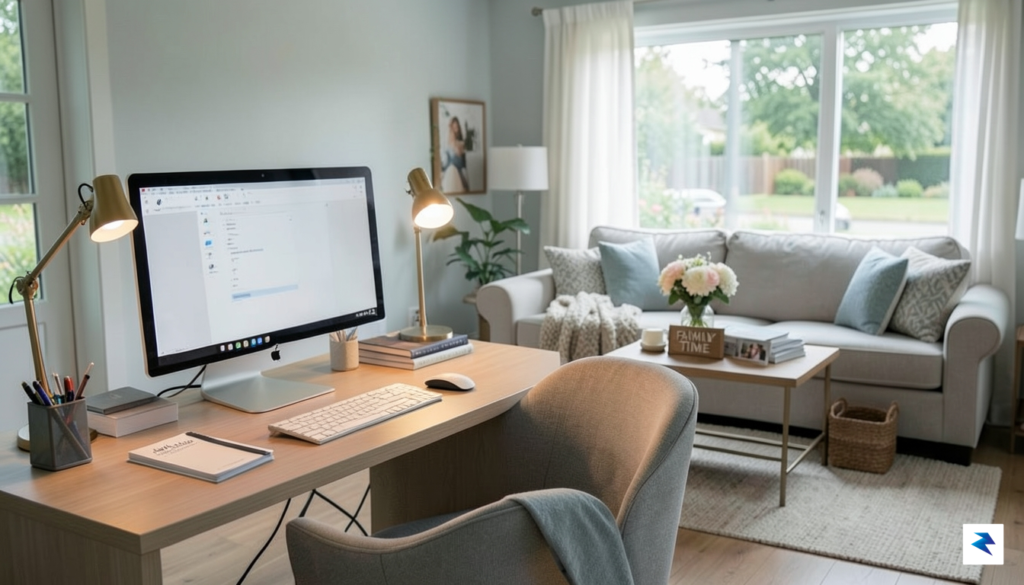
Implementing a framework of asynchronous work is the first step toward long-term professional health. This means communicating expectations clearly with colleagues, focusing on documentation and project management tools rather than constant instant messaging. When you shift your mindset to value the completion of objectives over immediate responsiveness, you create the psychological safety needed to step away for school drop-offs or family meals without the guilt of being “offline.” This autonomy is a critical component of mental well-being, as it allows parents to be present in their parenting roles without the constant anxiety of a looming, unread notification.
Building a Sustainable Daily Rhythm
To successfully integrate these two worlds, consider these actionable strategies for maintaining your mental and professional health:
- Implement Time-Blocking: Segment your calendar into distinct zones. Reserve specific windows for “deep work”—tasks requiring intense concentration—and separate blocks for “administrative maintenance” or “family availability.” Treat these blocks with the same respect you would a high-stakes meeting.
- Create Physical Cues: Even if you lack a dedicated home office, utilize symbolic boundaries. Putting on specific “work shoes” or using a dedicated headset can act as a mental trigger that signifies you are in professional mode, while removing them signals that the professional persona has been put away for the evening.
- Define “Hard Stops”: Establish a non-negotiable time when the laptop closes. The danger of remote work is the assumption that because you are home, you are accessible until bedtime. By clearly communicating your daily sign-off time to your team and your family, you foster a culture of respect for the time you need to recharge.
True work-life integration is not about squeezing every ounce of productivity out of every minute of the day; it is about creating a predictable cadence that protects your energy for both your career and your children.
Ultimately, the goal is to move beyond the survival mode that often characterizes the early transition to remote work. By treating your energy as a finite resource and employing these structural boundaries, you transform your home from a source of friction into a supportive ecosystem. This intentionality ensures that when you are working, you are fully engaged, and when you are parenting, you are entirely present, effectively mitigating the blurred lines that lead to the exhaustion so many families face today.
The Future of Corporate Policy and Family-Centric Design
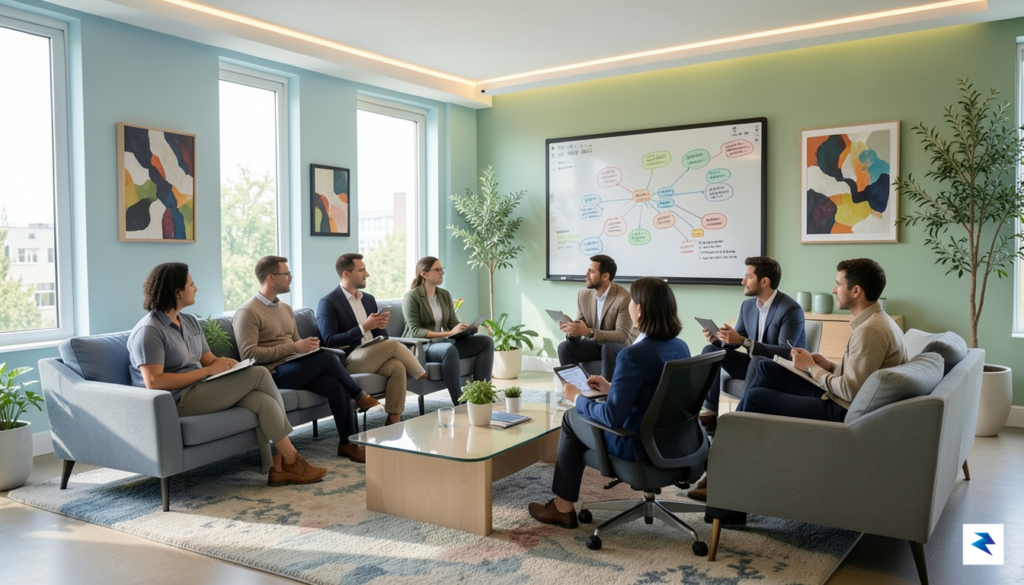
The organizations poised to dominate the next decade are those that have fundamentally shifted their perspective, viewing robust family support not as a peripheral perk or an optional benefit, but as a non-negotiable pillar of their core business strategy. As the workforce increasingly demands a departure from rigid, antiquated structures, HR departments are tasked with the critical responsibility of drafting policies that mirror the messy, beautiful reality of modern hybrid family life. This evolution requires moving beyond static “work-from-home” agreements toward comprehensive frameworks that prioritize asynchronous communication, predictable scheduling, and a genuine respect for boundaries that protect a caregiver’s time. When companies weave these considerations into the fabric of their corporate culture, they do more than just improve employee satisfaction; they cultivate a resilient, high-performing workforce that feels seen and supported in their entirety.

Central to this transition is the adoption of output-based evaluation models, which represent a significant departure from the traditional “hours-in-seat” mentality. By shifting the focus from performative attendance to objective, measurable results, managers can empower working parents to manage their professional responsibilities around the natural rhythms of their domestic lives. This model inherently fosters trust and accountability, as success is defined by the quality and impact of one’s contributions rather than the specific time of day those contributions were generated. When employees are evaluated on their output, the stress of constant digital surveillance evaporates, allowing parents to be fully present for both their professional deadlines and their family commitments without the nagging anxiety of appearing “away” on a messaging platform.
The future of talent retention lies in the transition from monitoring activity to empowering agency. Organizations that trust their employees to manage their own time will consistently outperform those that cling to legacy systems of observation.
Ultimately, the current generation of working parents is acting as a catalyst for a permanent transformation in how we define a professional career. By advocating for flexibility and refusing to accept the binary choice between career advancement and active caregiving, these employees are setting a new, higher standard for the future of work. Companies that refuse to adapt to these shifting expectations will inevitably see their top talent drift toward competitors who prioritize human-centric design. In this new era, the most successful firms will be recognized not just for their bottom-line results, but for their ability to provide an environment where ambitious professionals can thrive as both dedicated experts and nurturing caregivers.