
Alibaba Cloud’s French Expansion: Balancing Global Scale and Data Sovereignty
The Shift Toward Digital Sovereignty in Europe For decades, the European digital landscape was largely defined by a reliance on hyperscale…


For months, the Ethereum landscape has been haunted by the relentless presence of “Jaredfromsubway.eth,” a dominant Maximal Extractable Value (MEV) bot that has become a household name among retail traders. By utilizing sophisticated sandwich attack strategies—a process where the bot identifies pending transactions and places its own trades immediately before and after the victim’s order to manipulate price slippage—Jared consistently siphoned millions of dollars from unsuspecting users. This automated predator operated with surgical precision, effectively acting as an invisible tax on the decentralized finance ecosystem. Its sheer efficiency turned the bot into a notorious figure, feared by liquidity providers and celebrated by those who view the cutthroat nature of on-chain arbitrage as the ultimate test of blockchain survival.

However, the tide turned in a spectacular fashion that has left the crypto community reeling. In a stunning reversal of roles, the hunter suddenly became the prey when it was drained of approximately $7.5 million in a single, complex exploit. By manipulating the very mechanisms the bot used to profit, an unknown actor managed to bypass the bot’s defenses, turning its own sandwiching logic against it. This incident serves as a stark reminder that in the permissionless and ruthless world of decentralized finance, even the most formidable automated entities are not invincible. The bot, which had spent countless hours extracting value from others, found itself on the receiving end of the same predatory tactics it had mastered.
“The irony is palpable,” noted one industry observer, “as the architect of countless financial headaches for retail investors has finally tasted the bitterness of its own medicine.”
Within various crypto forums and social media channels, the prevailing sentiment is one of poetic justice. While losing $7.5 million is a catastrophic event by any financial metric, many Ethereum users have expressed a sense of grim satisfaction regarding the exploit. For those who have seen their own trades degraded by Jared’s aggressive front-running, seeing the bot fall victim to a similar strategy highlights the inherent volatility and “live by the sword, die by the sword” nature of MEV. This event does more than just shift millions in value; it underscores the reality that on the blockchain, security and dominance are never guaranteed, and even the most efficient predators can eventually be outmaneuvered by a more clever adversary.
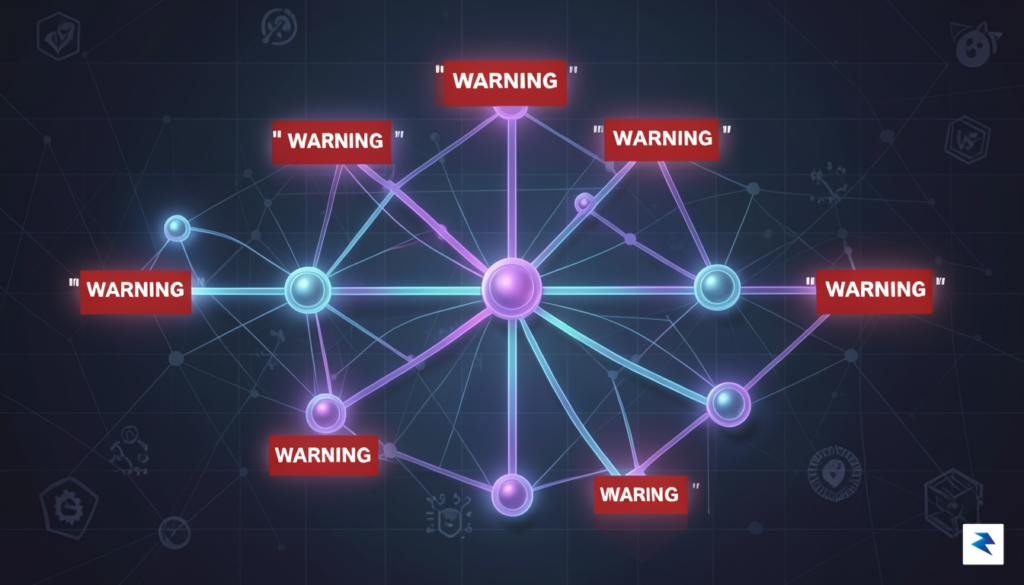
The collapse of one of Ethereum’s most notorious sandwich bots was not the result of a crude brute-force attack, but rather a masterclass in psychological manipulation and technical trickery. According to an in-depth forensic analysis conducted by the security firm Blockaid, the entire heist was orchestrated by exploiting the very automation that defines high-frequency trading bots. Instead of targeting a vulnerability in the blockchain protocol itself, the attacker leveraged a sophisticated social engineering scheme designed to deceive the bot’s human operators and its programmed logic simultaneously. By carefully crafting a scenario that mimicked legitimate market opportunities, the adversary successfully bypassed the bot’s defensive barriers, turning its own efficiency against itself.
At the heart of the exploit was the clever deployment of what security experts describe as “fake trading routes.” In the world of Maximal Extractable Value (MEV), bots are constantly scanning the mempool for pending transactions to front-run or “sandwich” for profit. The attacker created a deceptive environment that made a malicious smart contract appear to be a highly profitable, low-risk trading path. By presenting these fraudulent routes as legitimate arbitrage opportunities, the attacker tricked the bot’s automated systems into prioritizing and executing transactions that granted the assailant unauthorized control over the bot’s liquidity pools. The bot, programmed to act with lightning speed, failed to identify the trap because the malicious contract was engineered to mimic the signature and behavior of trusted decentralized exchange protocols.

The exploit highlights a critical paradox in the DeFi ecosystem: the very speed and automation required to remain competitive in MEV trading also serve as the primary attack surface for sophisticated bad actors.
The fallout from this incident was both swift and severe, resulting in the loss of substantial amounts of high-liquidity assets, including WETH, USDC, and USDT. Because the bot was designed to hold significant capital to ensure it could win competitive bidding wars for transaction placement, the attacker was able to drain these reserves in a single, surgical strike. Blockaid’s investigation revealed that the bot’s internal safeguards—which usually prevent unauthorized withdrawals—were effectively neutralized because the bot was tricked into “approving” the movement of funds to the attacker’s address as if it were a standard, authorized trading operation. This sophisticated manipulation of the bot’s smart contract permissions meant that, to the network, the theft looked remarkably like a series of routine, albeit large, trades.
This event serves as a stark reminder that even the most advanced automated systems are susceptible to human-centric vulnerabilities. By bypassing the technical defenses through the clever use of fake trading routes, the attacker demonstrated that when it comes to securing decentralized finance, technical safeguards are only as strong as the assumptions they are built upon. As the industry moves forward, this incident will likely force developers to reconsider how they balance the need for autonomous speed with the necessity of rigorous, multi-layered verification processes for every automated interaction.

At the heart of the friction surrounding automated trading on Ethereum lies the concept of Maximal Extractable Value, or MEV. In the simplest terms, MEV represents the profit that validators and specialized bots can capture by reordering, including, or excluding transactions within a blockchain block. While some forms of MEV are considered neutral—such as arbitrage, which helps keep token prices consistent across different decentralized exchanges—sandwiching is a far more aggressive and contentious practice. It functions by identifying a pending transaction in the public mempool and strategically placing two trades around it: one to buy the asset just before the victim, driving the price up, and another to sell immediately after, capturing the profit from the victim’s own inflated purchase price.
This predatory cycle creates a negative user experience by artificially increasing slippage, effectively acting as an invisible tax on everyday DeFi participants. When a retail trader attempts to execute a swap, they are often unaware that a bot has detected their intent and manipulated the market state to extract value from their order. This turns the permissionless and decentralized promise of blockchain technology into a lopsided arena where the most sophisticated automated strategies consistently outperform those of regular users. Consequently, many in the community view sandwich bots not as legitimate market participants, but as parasitic entities that degrade the efficiency and fairness of decentralized finance protocols.

The ethical divide within the industry often centers on the tension between market efficiency and outright exploitation. Proponents of these bots argue that they provide “liquidity” and ensure that price discovery happens as quickly as possible, regardless of the individual cost to the trader. Conversely, critics argue that such strategies undermine the core ethos of DeFi, which was designed to democratize finance rather than recreate the exploitative high-frequency trading environments seen in traditional stock markets. This incident, in which one of the most prolific sandwichers was hoist with its own petard, underscores the community’s deep-seated resentment toward these practices.
The irony of a system designed to extract value from others suddenly becoming the victim of a similar exploit highlights the volatile, “code-is-law” reality of the Ethereum landscape.
Ultimately, the massive financial loss suffered by this bot serves as a catalyst for a broader discussion on the sustainability of current MEV models. If the ecosystem continues to prioritize the ability of automated bots to front-run retail activity, it risks alienating the very users it intends to onboard. As decentralized applications evolve, developers are increasingly looking toward solutions like private transaction relays and order-matching protocols that shield users from the prying eyes of the mempool. The community’s reaction—a mixture of schadenfreude and relief—suggests that while the technology behind these bots is technically impressive, the practice itself remains fundamentally at odds with the values of a fair, open, and equitable financial future.

The downfall of one of Ethereum’s most prolific sandwich bots serves as a sobering reminder that in the high-stakes world of decentralized finance, even the most formidable technical advantages are no match for fundamental security oversights. This incident highlights the inherent vulnerability of “token approvals,” a standard mechanism in DeFi that allows smart contracts to spend an user’s assets. When a bot operator—or any user—grants unlimited allowance to a malicious or unverified contract, they effectively sign a blank check for their own wallet. The irony here is palpable: a sophisticated piece of software designed to exploit inefficiencies in the market was itself rendered powerless by the exact same primitive, approval-based vulnerability that plagues retail users every day.

For bot operators, this event must trigger a shift in priorities from purely optimizing for latency and profit-sharing to reinforcing the security architecture governing their execution environments. The reliance on centralized private keys or overly permissive smart contracts represents a massive single point of failure that can be exploited by adversarial actors using “honeypot” strategies. Best practices must evolve to include strict multi-signature requirements for fund management, the implementation of isolated execution environments, and rigorous audits of every external contract the bot interacts with. Furthermore, bot developers should prioritize the principle of least privilege, ensuring that individual modules within their infrastructure possess only the minimum necessary approvals to execute trades, thereby containing potential breaches if one component is compromised.
Security in DeFi is not a static feature but an ongoing process of risk mitigation; if your code interacts with the blockchain, it is only as strong as the weakest approval you have granted.
Looking forward, the ecosystem is beginning to see a transition toward more transparent and equitable ways of handling Maximum Extractable Value (MEV). Innovations like MEV-Share and other privacy-preserving transaction protocols are designed to redistribute the value currently captured by sandwich bots back to the users who initiate the trades. By moving away from a “wild west” environment of predatory bots competing in the public mempool, these protocol-level interventions aim to democratize access to block space and mitigate the risks associated with front-running. Ultimately, the future of automated trading on Ethereum will likely favor those who prioritize long-term sustainability and systemic cooperation over the aggressive, high-risk tactics that defined the earlier, more volatile eras of decentralized finance. As the infrastructure matures, the goal must be to build a financial landscape where technical sophistication is matched by robust, verifiable, and secure operating standards.
You must be logged in to post a comment.