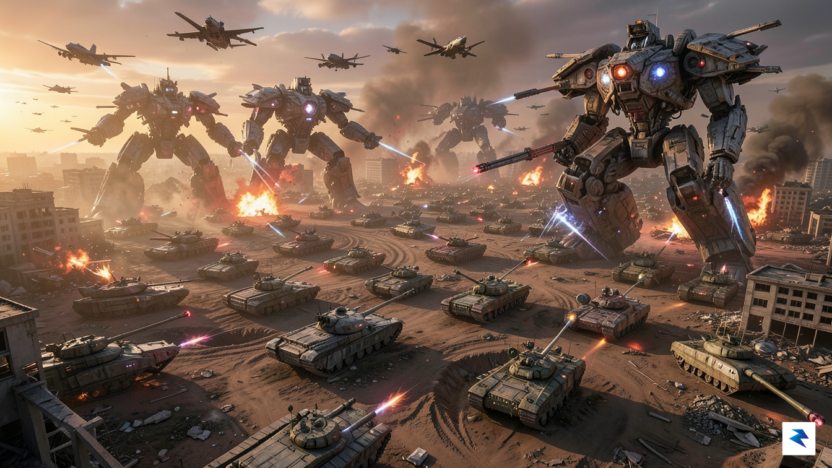
What is Beyond All Reason?
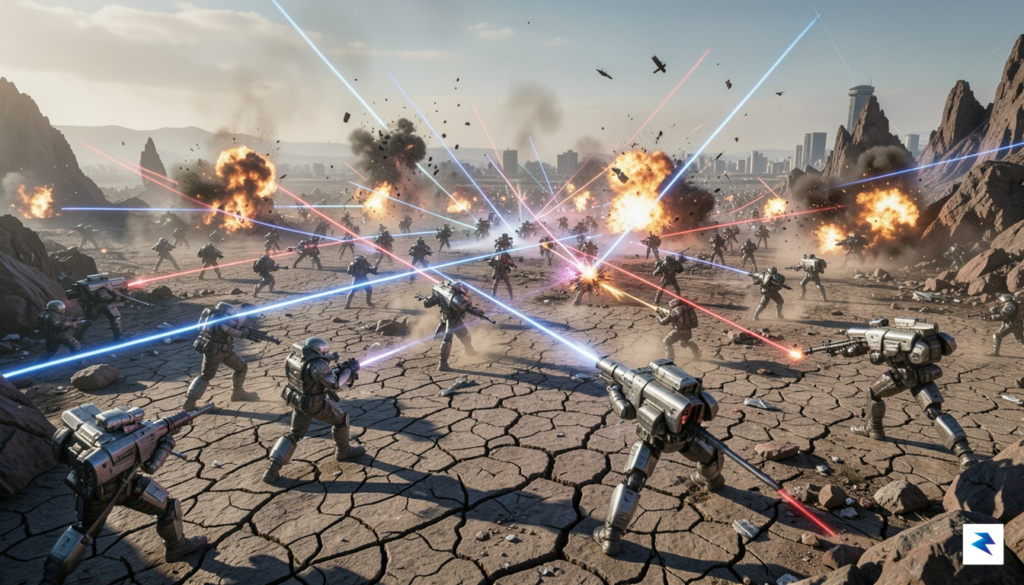
Beyond All Reason (BAR) has rapidly ascended to become one of the most compelling real-time strategy games of the modern era, captivating players with its blend of classic macro-management and innovative quality-of-life improvements. This isn’t just another RTS; it’s a meticulously crafted spiritual successor to the legendary Total Annihilation, a game that redefined the genre decades ago with its groundbreaking scale and strategic depth. In an age where many AAA titles have moved away from intense, scale-focused RTS experiences, BAR proudly fills that void, offering a refreshing return to the grandeur of massive armies, intricate economies, and truly epic conflicts.
At its core, BAR’s very existence is a testament to the enduring passion of the Total Annihilation community, as it is built upon the venerable Spring Engine. This open-source platform was born from the desire of dedicated fans to modernize and expand upon the grandeur of TA, creating a flexible foundation that allowed for massive battles, intricate unit interactions, and community-driven content. For years, the Spring Engine hosted numerous projects and modifications, each striving to capture the essence of TA while pushing boundaries. Beyond All Reason represents the culmination of these efforts, distilling decades of community experience and innovation into a polished, accessible, and incredibly deep strategic package.
What truly sets BAR apart and cements its status as the standard-bearer for ‘Total Annihilation-like’ gameplay is its unwavering commitment to continuous resource generation, large-scale conflicts, and an economy driven by reclaimable wreckage and constant expansion. Unlike many contemporary RTS titles that have streamlined or simplified these elements, BAR embraces the chaos and strategic depth of managing hundreds of units, building complex production chains, and orchestrating truly epic battles across sprawling maps. The game constantly demands your attention, forcing players to balance offensive pushes with defensive fortifications and economic expansion, brilliantly filling a significant void for those yearning for that intense, scale-focused RTS experience that has largely disappeared from the mainstream.
Despite its profound strategic layers and the potential for overwhelming scale, the developers behind Beyond All Reason have made remarkable strides in balancing accessibility with an incredibly high skill ceiling. Modern quality-of-life improvements, such as intuitive unit grouping, smart build queues, and a robust tutorial system, ensure that new players can grasp the fundamentals without feeling immediately swamped by the sheer scope. Yet, mastering BAR involves intricate build orders, precise unit micro, advanced map control, and economic optimization, offering virtually limitless depth for competitive play. This thoughtful design philosophy ensures that while anyone can jump in and enjoy the spectacle of war on an unprecedented scale, true mastery is a rewarding, ongoing journey, solidifying BAR’s place as a modern RTS powerhouse.
The Evolution of the RTS Genre
For a time, it seemed the golden age of Real-Time Strategy games had drawn to a close, leaving many enthusiasts to lament the genre’s perceived decline throughout the 2010s. While once a powerhouse of innovation and strategic depth, the landscape became increasingly dominated by aging franchises or titles that opted for simplification over the complex, sprawling battles that defined its peak. This period saw a shift away from the grand scale and intricate economic models that captivated players in the late 90s and early 2000s, leading to a sense of stagnation where new ideas were scarce, and established formulas were rarely challenged.
Yet, the spirit of what made the RTS genre truly great never faded entirely. The foundational principles — massive battles unfolding across vast maps, complex resource management demanding foresight and adaptation, and a persistent physics engine that made every explosion and every unit’s demise feel impactful — remained cherished memories. Games like *Total Annihilation* pioneered concepts of unit mass, persistent wreckage, and an energy economy that felt truly dynamic, where the battlefield itself told a story of destruction and strategic maneuvering. This deep, systemic gameplay offered a sandbox for strategic minds, fostering a sense of mastery that few other genres could replicate.
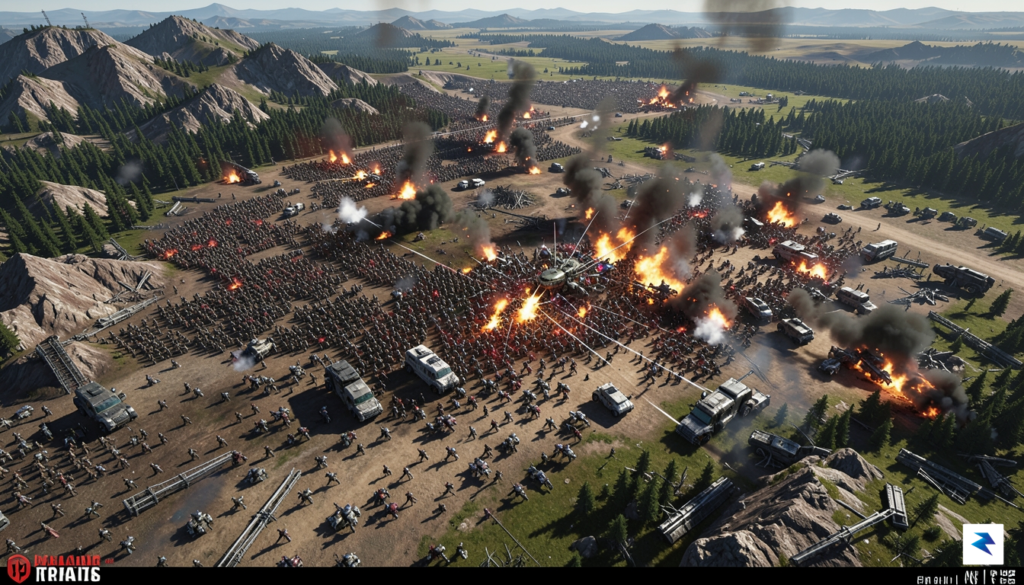
However, a quiet revolution has been brewing, largely outside the traditional corporate publishing model. *Beyond All Reason (BAR)* stands as a powerful testament to this resurgence, a living, breathing example of what happens when community passion and modern development tools converge. It isn’t merely a nostalgic rehash; instead, BAR captures the very essence of its spiritual predecessors, particularly *Total Annihilation*, and elevates those core tenets for a new era. It embraces the massive scale, allowing thousands of units to clash simultaneously, and meticulously simulates persistent physics where every crater, every fallen wreck, and every projectile has a tangible presence on the battlefield, influencing subsequent engagements.
What truly sets BAR apart in this modern context is its evolution beyond the static, mission-based designs that characterized many classic RTS titles. Driven by a dedicated open-source community, BAR embodies an infinite, procedural nature through its constantly evolving maps, diverse game modes, and a development cycle that prioritizes player feedback and innovative features over rigid corporate mandates. This agile approach allows for continuous refinement of its complex resource management systems, ensuring that players are always engaged in a dynamic economic dance, balancing energy production, metal extraction, and rapid unit deployment to outmaneuver opponents across ever-changing strategic landscapes. It’s a game that thrives on emergent gameplay, where every match feels unique, pushing the boundaries of strategic improvisation rather than rote memorization.
Ultimately, BAR doesn’t just pay homage to the “golden era” of RTS; it actively modernizes and expands upon its most cherished principles. It demonstrates that the genre’s decline wasn’t due to a lack of interest, but perhaps a lack of courage and innovation from traditional publishers. By placing power back into the hands of a passionate community, BAR has reignited the flame, proving that the desire for immense scale, intricate systems, and strategic depth is as strong as ever, paving the way for a vibrant, community-driven future for real-time strategy games.
Gameplay Mechanics and Strategic Depth
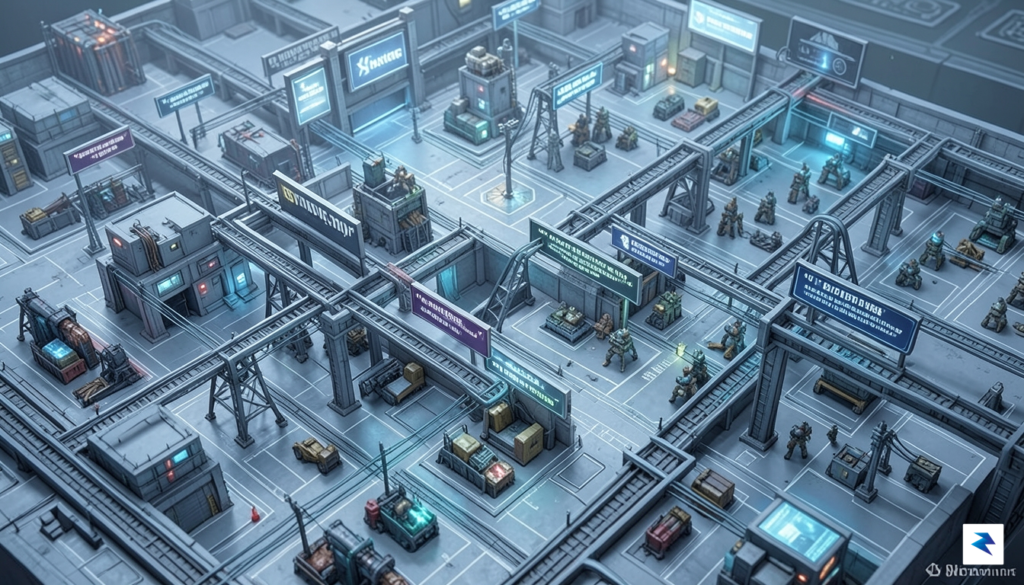
Unlike the rigid, harvest-based economies found in titles like Starcraft, Beyond All Reason operates on a sophisticated, constant-flow logistical system. Players do not simply hoard stacks of resources; instead, they manage a real-time income stream of Energy and Metal. Metal extractors must be placed on specific deposits across the map, while energy is generated through a diverse array of power plants. This creates a high-stakes balancing act where every unit production queue and construction project directly taxes your current income rate. If your consumption exceeds your generation, your entire production line stalls, forcing players to master the art of economic scaling while simultaneously directing the chaos of the front lines.
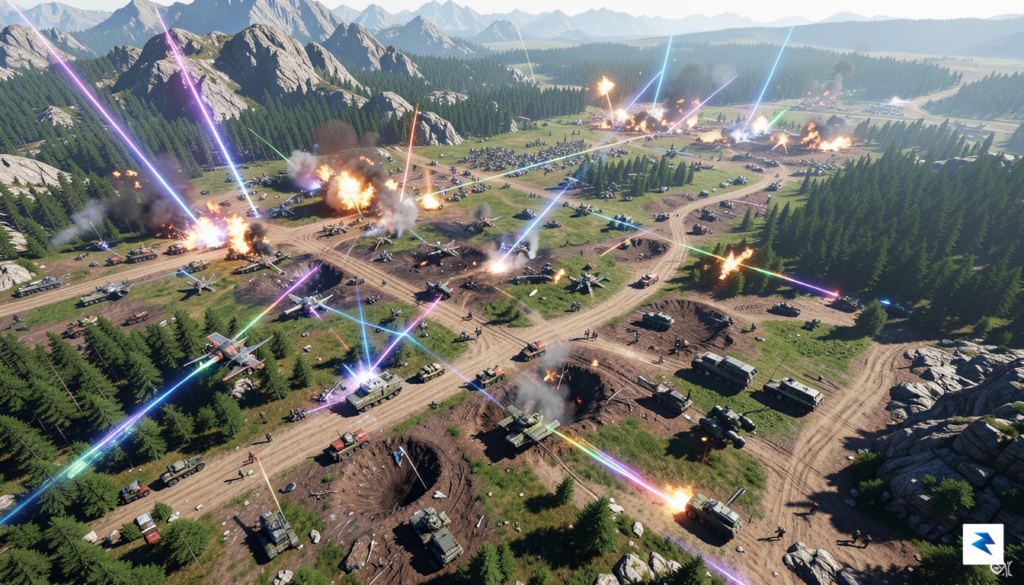
The battlefield itself is a living, breathing component of your strategy, governed by true 3D physics rather than scripted animations. Projectiles in the game have travel time, trajectory, and physical mass; a stray artillery shell can miss its target and inadvertently destroy a vital forest or flatten a mountain pass. This environmental interaction extends to line-of-sight mechanics, where terrain elevation is the deciding factor in combat effectiveness. Placing your units on high ground grants them superior range and vision, allowing them to rain destruction down on enemies trapped in valleys below. Because the game features full terrain deformation, a well-placed salvo of heavy ordinance can permanently alter the map, clearing sightlines or creating cratered chokepoints that redefine the flow of battle.
Success in Beyond All Reason is not found in individual unit micro-management, but in the macro-level orchestration of a sprawling, multi-front war machine.
The scale of warfare is perhaps the most defining characteristic that sets this title apart from traditional real-time strategy games. Players begin with humble scouts and basic defensive structures, but the tech tree eventually opens the door to massive, screen-filling experimental units. These behemoths—ranging from towering spider-bots to long-range tactical nukes—require immense investment and careful protection to reach the front. The game’s “Commander” unit acts as the focal point of your army, serving as a powerful builder and a dangerous combatant that can turn the tide of a skirmish. Managing these massive assets alongside swarms of smaller units requires an exceptional level of spatial awareness, as the game demands you defend wide-reaching territory while pushing for a decisive victory on a global scale.
To navigate this complexity, the user interface provides powerful command-queuing and automation features that allow experienced players to manage hundreds of units without feeling overwhelmed. You can set up complex patrol routes, automated repair chains, and area-of-effect construction orders that keep your logistics running even when your attention is pulled toward a heated engagement. This synthesis of high-level strategic planning and deep, physics-based tactical execution ensures that no two matches play out the same way, rewarding players who can think ahead and adapt to a constantly shifting battlefield.
Performance and Engine Capabilities
Modern real-time strategy games often grapple with a fundamental dilemma: how to balance visual fidelity and intricate mechanics with the sheer scale of warfare. Many contemporary titles, in their pursuit of graphical realism or streamlined experiences, inevitably impose strict unit caps, limiting the scope of battles and sometimes compromising strategic depth. Beyond All Reason, however, confidently sidesteps this common pitfall, thanks to the remarkable capabilities of its underlying Spring Engine, which serves as the robust technical foundation for its uniquely grand vision of conflict. This engine empowers players to command truly gargantuan armies, redefining expectations for what an RTS can achieve on the battlefield.
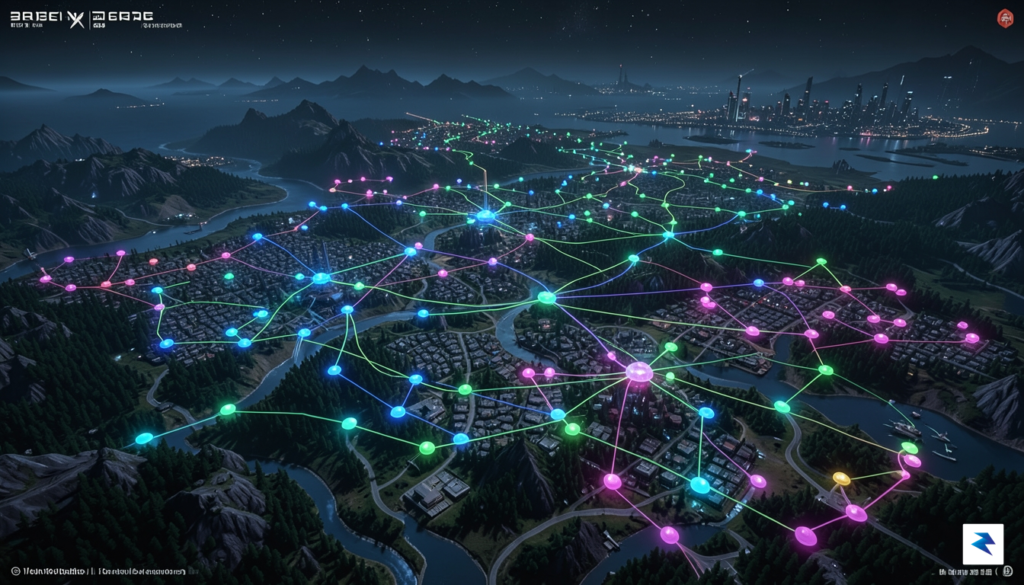
At the very core of BAR’s identity is the Spring Engine’s astonishing ability to manage thousands upon thousands of individual units simultaneously without a noticeable drop in performance. Imagine the screen filled with hundreds of tanks, swarms of aircraft, and legions of robotic infantry clashing in a single, colossal engagement – this is not an occasional spectacle but a routine occurrence in BAR. This technical stability is paramount, allowing for the chaotic, high-stakes battles that define the experience and fundamentally differentiate it from games where strategic options are constrained by artificial unit limits. The sheer magnitude of forces at your disposal transforms tactical planning, encouraging sweeping maneuvers and overwhelming assaults that simply aren’t feasible elsewhere.
The technical acumen required to render and process such immense numbers of entities in real-time is no small feat. The Spring Engine achieves this through highly optimized rendering pipelines, efficient data structures, and clever resource management that keeps CPU and GPU loads manageable even during the most intense skirmishes. Unlike many engines that might buckle under the pressure of so much simultaneous action, Spring maintains a consistent and fluid framerate, ensuring that performance never becomes an obstacle to the unfolding drama. This underlying stability is crucial for competitive play and provides a seamless, immersive experience for all players, regardless of the chaos erupting on screen.
Furthermore, orchestrating the movement of thousands of units across vast, dynamic, and often destructible maps presents a monumental challenge for any game engine’s pathfinding AI. Preventing units from clumping inefficiently, getting stuck on terrain, or taking circuitous routes is critical for maintaining tactical control and player satisfaction. The Spring Engine’s advanced pathfinding algorithms adeptly guide massive armies across complex battlefields, ensuring units move intelligently and efficiently toward their objectives. This sophisticated AI is vital for large-scale maneuvers, allowing players to focus on strategic decisions rather than micromanaging individual unit navigation across varied terrain.
Crucially, this impressive technical capability does not come at the cost of accessibility. Despite the immense scale of its battles, Beyond All Reason is remarkably optimized, allowing players with mid-range PCs to fully experience the game’s expansive conflicts. The development team has meticulously refined the engine to squeeze every ounce of performance, making it possible for a broader audience to participate in these epic engagements without needing top-tier hardware. This commitment to hardware optimization ensures that the barrier to entry remains low, inviting more players to discover the unique blend of strategic depth and overwhelming action that BAR offers.
Community and Open Source Philosophy

The very existence of Beyond All Reason (BAR) stands as a powerful testament to what dedicated communities can achieve when empowered by an open-source philosophy. Unlike the traditional proprietary model where game development is a closely guarded secret driven by corporate directives and profit margins, BAR thrives on transparency and collective effort. This fundamental difference isn’t just a technicality; it profoundly shapes the game’s trajectory, fostering a unique competitive and social environment where innovation and balance are paramount, directly reflecting player needs and desires.
Because BAR is entirely free and open-source, its development priorities are inverted compared to many commercial titles. Instead of content pipelines dictated by monetization strategies or release schedules designed to maximize sales, every balance update, new unit, or significant feature is born from robust community discussions, extensive playtesting, and direct feedback. This player-driven approach ensures that the game evolves in a way that truly serves its audience, prioritizing gameplay integrity and strategic depth above all else. Consequently, the game benefits from a rapid iteration cycle, allowing for swift implementation of improvements and fixes, which is crucial for maintaining a healthy competitive RTS environment.
The open-source model also provides unparalleled accessibility and longevity. With no initial purchase barrier, anyone can download and dive into the fray, expanding the potential player base significantly and ensuring a constant influx of new talent and ideas. Furthermore, the ability for the community to host their own servers not only offloads infrastructure costs from the core development team but also provides players with robust, low-latency connections globally, fostering vibrant local and international competitive scenes. This decentralized infrastructure makes the game resilient and truly community-owned, transcending the typical limitations of publisher-controlled servers.
Perhaps one of the most compelling advantages of BAR’s open-source nature is its incredible moddability and long-term sustainability. The entire codebase and assets are accessible, empowering enthusiasts to create custom maps, units, game modes, and even entirely new gameplay mechanics. This vibrant modding scene constantly injects fresh content and experiences into the game, dramatically extending its lifespan and replayability far beyond what a static, proprietary title could ever offer. Such creative freedom ensures that BAR will continue to evolve and surprise its players for years to come, driven by the boundless imagination of its community.
In stark contrast to the often precarious “live service” models prevalent in the AAA space, where games can be abruptly shut down when they no longer meet revenue targets, BAR enjoys a digital immortality. Its open-source foundation means that even if the core development team were to disband, the game would persist. The community could theoretically pick up the mantle, continue development, and maintain the game indefinitely. This inherent resilience provides a level of security and promise that few commercial games can match, solidifying BAR’s position not just as a game, but as a living, breathing project sustained by collective passion and dedication.
Getting Started with BAR
Stepping into the vast, explosive battlefields of Beyond All Reason (BAR) can initially feel like commanding a spaceship without a manual. The sheer scale, the hundreds of unique units, and the dynamic economy might seem overwhelming at first glance, but fear not: this remarkable real-time strategy game is exceptionally well-equipped to guide new players from nervous novice to confident commander. BAR provides a comprehensive suite of learning tools and a vibrant, supportive community, ensuring that your journey into high-stakes, large-scale warfare is both manageable and incredibly rewarding.
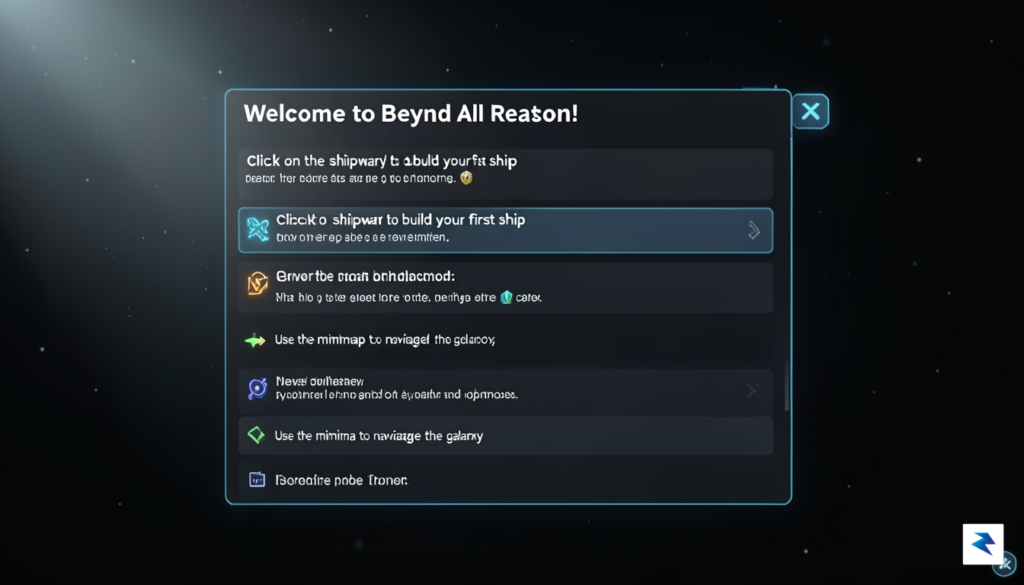
Your first port of call should undoubtedly be the game’s excellent built-in tutorials. These interactive guides are meticulously crafted to introduce you to the core mechanics, starting with fundamental controls, resource management, and basic unit production. They progress through various scenarios, explaining everything from energy and metal generation to constructing defensive structures and deploying different unit types. Take your time with these, repeating sections if necessary, as a solid understanding of these foundational principles will serve as the bedrock for all your future strategic endeavors.
Mastering the Interface and First Matches
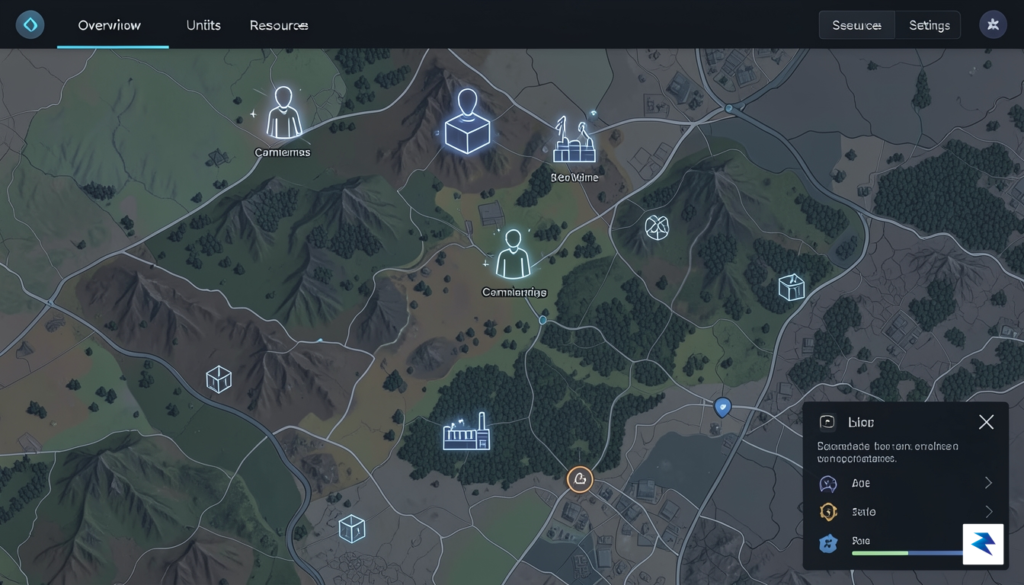
Once you’ve grasped the basics, familiarizing yourself with BAR’s user interface (UI) is the next logical step. While it appears dense due to the multitude of options and information, it is surprisingly intuitive and highly customizable. Spend some time in a skirmish game against AI, pausing frequently to hover over different elements, explore the extensive build menus, and understand what each icon represents. You’ll quickly learn to navigate the minimap, manage your commander, and issue complex commands efficiently. Don’t hesitate to experiment with hotkeys and control groups early on; binding these to comfortable positions will drastically improve your reaction time and overall efficiency in the heat of battle.
With a basic understanding under your belt, it’s time to dip your toes into actual matches. Start by playing more custom games against the AI, perhaps scaling up the difficulty or playing against multiple opponents to test your skills in more complex scenarios. When you feel ready for multiplayer, look for lobbies explicitly labeled “beginner friendly” or “noobs welcome.” Many experienced players are keen to help new commanders learn the ropes and will offer advice rather than just overwhelming you. Engaging in 1v1 matches can also be incredibly instructive, as it forces you to focus purely on your own build order, economy, and tactical decisions without the added complexity of team dynamics.
Learning from the Best and Joining the Community
One of the most effective ways to accelerate your learning in any competitive RTS is by spectating high-level games. BAR makes this incredibly easy, allowing you to watch live matches or replays directly from the game client. Pay close attention to what experienced players do: