Understanding the Tesla Texas Crash Controversy

The tragic collision involving a Tesla Model 3 and a private residence in Texas has ignited a complex debate regarding the intersection of human agency and advanced driver-assistance systems. According to incident reports, the vehicle was traveling at a high rate of speed before it veered off the road and impacted a home, resulting in a devastating fatality. In the immediate aftermath, questions regarding the role of Tesla’s Full Self-Driving (FSD) software became a focal point for both safety advocates and the general public, as observers sought to determine whether the technology performed as intended or if a technical failure contributed to the loss of life.
Following the incident, the victim’s family and legal representatives raised concerns about the reliability of Tesla’s autonomous features, suggesting that the software’s decision-making process may have been a critical factor in the crash. These claims have placed immense pressure on the manufacturer to provide transparency regarding vehicle data logs captured at the time of the impact. In response, Tesla has issued a firm rebuttal, publicly asserting that the vehicle’s telemetry data indicates the driver had manually overridden the system shortly before the collision occurred. By emphasizing that the software was not engaged in a way that would have prevented the driver’s final manual inputs, Tesla seeks to shift the narrative from a potential systemic failure to a case of human error.
Tesla’s official stance centers on the assertion that the vehicle’s onboard data serves as an objective record of the driver’s actions, specifically claiming that the system was not operating in a fully autonomous capacity that would absolve the operator of responsibility at the moment of impact.
This incident underscores the broader, systemic challenges facing the automotive industry as it transitions toward increasingly autonomous driving solutions. Because these high-profile accidents often involve conflicting narratives between grieving families and multi-billion-dollar corporations, the role of objective, third-party investigation remains vital. Regulatory bodies and independent forensic experts are tasked with the difficult job of parsing through encrypted vehicle data to recreate the final seconds of the crash. Until such investigations are completed with full transparency, the discourse will likely remain polarized, reflecting a wider societal struggle to define the boundaries of accountability when human drivers and sophisticated algorithms share the task of navigation.
Ultimately, the Texas crash serves as a somber reminder of the limitations inherent in current semi-autonomous technology. Whether the incident was caused by a lapse in human judgment or a miscalculation by the vehicle’s software remains a subject of intense legal and technical scrutiny. The outcome of this specific case will likely have far-reaching implications for how Tesla and other manufacturers market their driver-assistance suites, potentially leading to more stringent requirements for driver monitoring systems and clearer communication regarding the limitations of FSD in real-world environments.
The Role of Human Oversight in Advanced Driver Assistance Systems
Despite the ambitious nomenclature of “Full Self-Driving,” the advanced driver-assistance systems (ADAS) currently offered by Tesla, much like those from other manufacturers, are officially classified as Level 2 automation according to the Society of Automotive Engineers (SAE) International standards. This crucial distinction often gets lost in public discourse, yet it profoundly impacts how drivers must interact with the technology. Level 2 systems represent a significant step beyond basic cruise control, capable of simultaneously managing both steering and acceleration/braking under specific conditions, effectively performing many aspects of driving for extended periods.
However, the defining characteristic of Level 2 autonomy is the absolute and unwavering requirement for continuous human supervision. The driver is not merely a passenger; they are the ultimate supervisor, fully responsible for monitoring the driving environment, the system’s performance, and being prepared to intervene instantly. This means keeping hands on the wheel (or within immediate reach), eyes on the road, and full cognitive attention dedicated to the driving task. The system is designed to assist the human driver, enhancing safety and convenience, but it is not engineered to replace human judgment or situational awareness.
A fundamental safety principle embedded in all Level 2 ADAS, including Tesla’s, is the prioritization of human input. If a driver presses the accelerator pedal, hits the brake, or turns the steering wheel with sufficient force, the system will immediately cede control or modify its behavior to comply with that direct human command. This “accelerator override” or “brake override” mechanism is not a flaw but a deliberate design choice, rooted in the understanding that the human driver retains ultimate responsibility and may have critical information or a specific intention that the automated system has not perceived or cannot process. It acts as an essential safeguard, ensuring that in an unexpected situation or perceived emergency, the driver’s decision takes precedence.
This dynamic creates a unique psychological challenge for drivers. While a Level 2 system capably handles many routine driving tasks, the human brain is not inherently wired for prolonged periods of passive monitoring. The very effectiveness of the automation can paradoxically lead to a reduction in vigilance, known as the “lulling effect.” Maintaining a high level of alert attention, ready to take over at a moment’s notice, becomes cognitively demanding over time, potentially leading to slower reaction times when intervention is suddenly required. The system’s advanced capabilities, therefore, demand an equally advanced commitment from the driver to remain engaged and prepared, understanding that their active supervision is the primary safeguard for both themselves and others on the road.
Technical Evidence and the Debate Over Data Transparency

At the heart of any modern vehicle crash investigation, particularly those involving advanced driver-assistance systems, lies the intricate web of data captured by the vehicle’s onboard computers. These systems act much like the “black boxes” found in aircraft, continuously recording critical operational parameters leading up to and during an incident. In the aftermath of the tragic Texas crash, where local authorities initially suggested no one was in the driver’s seat, Tesla’s counter-claim points directly to these internal logs, asserting they show manual accelerator input and that Autosteer was not engaged. This highlights a fundamental tension: the reliance on proprietary manufacturer data versus the public’s imperative for objective, verifiable insights into how these complex systems operate and, crucially, how they might fail.
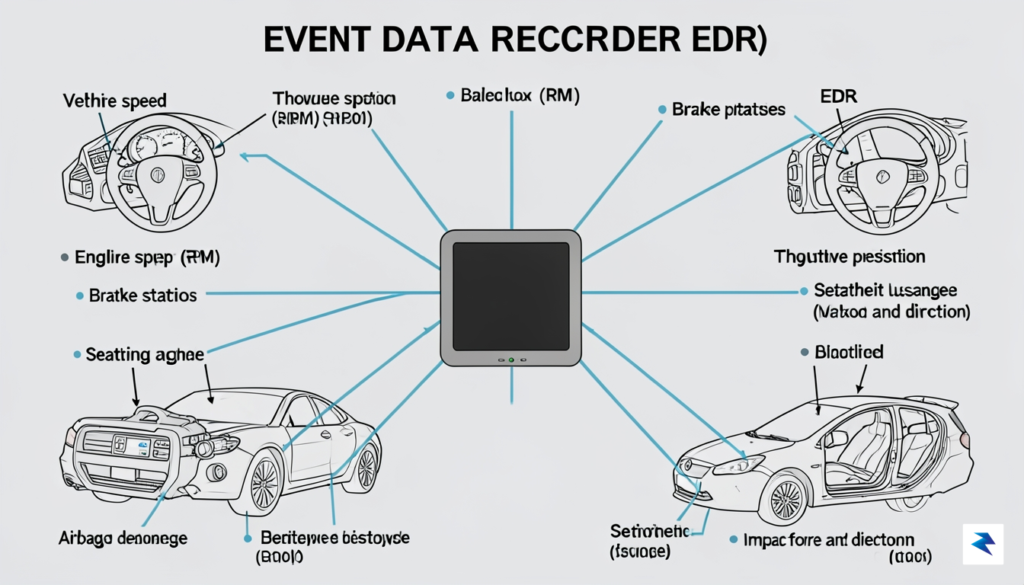
Modern electric vehicles, including Teslas, are equipped with sophisticated Event Data Recorders (EDRs) that go far beyond the basic crash sensors of older cars. These EDRs log a wealth of information, from vehicle speed, braking force, and steering angle to seatbelt status, airbag deployment, and, most importantly in this context, accelerator pedal position and the engagement status of various driver-assistance features like Autopilot or Full Self-Driving (FSD) Beta. This digital footprint offers a forensic blueprint of the moments before a collision. However, while the existence of such data is clear, the ability for independent investigators to fully access, interpret, and validate this raw data without direct cooperation from the manufacturer remains a significant challenge, often requiring specialized tools and proprietary knowledge.
The debate over data transparency intensifies when considering the proprietary nature of advanced driver-assistance software. Tesla, like other automakers, regards its FSD software and the detailed operational logs it generates as highly valuable intellectual property. This protection of trade secrets can create a “black box” scenario for external investigators, who must often rely on summarized reports or specific data points provided by the company itself, rather than having full access to raw telemetry or the underlying algorithms. This situation inevitably raises questions about the impartiality and completeness of the evidence, prompting calls from industry experts, safety advocates, and regulatory bodies for greater standardization and accessibility of crash data, especially for systems that can assume partial or full control of a vehicle.
The necessity for standardized safety reporting across the automotive industry has never been more apparent. With increasingly sophisticated ADAS and autonomous driving technologies becoming mainstream, a uniform framework for how system failures, disengagements, and crash-related data are recorded and shared is paramount. Such a framework would not only streamline accident investigations but also enable regulators, researchers, and the public to better understand the true safety performance of these systems across different manufacturers. Without a common language and accessible data points, comparing safety records, identifying systemic issues, and implementing effective regulations becomes an arduous, often impossible, task, leaving a void in public trust and accountability.
Ultimately, striking a balance between protecting a company’s intellectual property and ensuring public safety through transparent and verifiable data is a critical hurdle for the automotive industry. As vehicles become more autonomous, the responsibility for their actions shifts, making comprehensive and independently auditable data an absolute necessity. The Texas crash investigation serves as a stark reminder that while technology advances rapidly, the mechanisms for accountability and public assurance must evolve in tandem, demanding a proactive approach to data transparency that prioritizes human life and safety above all else.
The Broader Implications for Autonomous Vehicle Regulation
The recent tragic incident in Texas, where a Tesla was involved in a fatal crash and the company claimed the driver had “manually overrode self-driving,” serves as a stark reminder of the complex interplay between advanced driver-assistance systems and human responsibility. This event, far from being an anomaly, is increasingly viewed as a critical accelerant for federal regulators to intensify their scrutiny of autonomous vehicle (AV) technology. The National Highway Highway Traffic Safety Administration (NHTSA) finds itself under mounting pressure to thoroughly re-evaluate not only how these sophisticated systems are marketed to the public but also how they are rigorously tested and independently audited for safety and performance. This shifting landscape heralds a new era for AI-driven transit, where the balance between innovation and public safety is being recalibrated through the lens of legislative and regulatory action.
NHTSA has already initiated numerous investigations into Tesla’s Autopilot and “Full Self-Driving” (FSD) beta systems, scrutinizing a pattern of incidents that include collisions with emergency vehicles and other stationary objects. These ongoing probes are not merely reactive; they are foundational data-gathering exercises designed to understand the limitations, potential risks, and human factors associated with these technologies. The agency’s findings from these investigations are crucial, as they will directly inform future policy decisions, potentially leading to new performance standards, stricter reporting requirements, and clearer guidelines for manufacturers operating in the rapidly evolving AV space. The shift from a largely hands-off approach to one of proactive oversight is palpable, reflecting a growing imperative to ensure that cutting-edge technology integrates safely into existing infrastructure.
A significant area ripe for regulatory intervention is the nomenclature used to describe driver-assistance features. Terms like “Full Self-Driving” and “Autopilot,” while perhaps intended to convey advanced capabilities, have drawn criticism for potentially misleading consumers into believing the systems possess a higher degree of autonomy than they currently do. This semantic ambiguity can foster a false sense of security, encouraging drivers to disengage from the driving task prematurely or to misuse the technology in situations for which it was not designed. Consequently, there is a growing call for new legislation that would mandate standardized, transparent naming conventions for AV software, ensuring that marketing language accurately reflects the system’s true operational limitations and the required level of human supervision. Such clarity would empower consumers with accurate expectations and reinforce the understanding that current systems are aids, not replacements, for attentive drivers.
Regulatory bodies face the formidable challenge of fostering innovation in artificial intelligence and autonomous mobility while simultaneously upholding the highest standards of roadway safety. This delicate balancing act necessitates the development of robust frameworks that encourage technological advancement without compromising public trust or creating undue risks. Regulators must consider mandating comprehensive pre-market testing protocols, requiring greater data transparency from manufacturers regarding system performance and incident data, and potentially establishing independent auditing bodies to verify safety claims. The goal is not to stifle progress but to guide it responsibly, ensuring that the benefits of AI-driven transit—such as reduced accidents and improved efficiency—are realized without introducing new, unforeseen hazards. The path forward demands close collaboration between industry, government, and safety advocates to forge a regulatory environment that is both adaptive and rigorously protective.
Navigating the Future of Driver-Assistance Technology

As the lines blur between driver and driven, it’s crucial for owners of advanced driver-assistance systems (ADAS) to approach these powerful technologies with an informed and proactive perspective. Systems like adaptive cruise control, lane-keeping assist, and even more sophisticated “full self-driving” capabilities are designed to augment human driving, significantly enhancing safety and convenience, but they do not eliminate the need for driver engagement. Therefore, vigilance remains paramount whenever these systems are active. Always maintain active engagement with the driving task, keeping your hands on the wheel and your eyes on the road, even when the system is actively controlling steering or speed, ensuring you are prepared to intervene instantly. Understanding the specific operational limits and warnings of your vehicle’s system, as detailed thoroughly in your owner’s manual, is not merely a suggestion but a critical safety measure, providing the knowledge needed to react appropriately should conditions exceed the system’s capabilities or an unexpected scenario arise.
The evolution towards greater vehicle autonomy is fundamentally a collaborative journey, one that intricately links engineers, regulators, and drivers in a shared venture. Engineers are continuously refining algorithms, enhancing sensor fusion capabilities, and tackling complex edge cases to make these systems more robust and reliable across an ever-wider array of driving conditions. Simultaneously, regulatory bodies worldwide are grappling with the immense task of establishing clear, enforceable standards for testing, deployment, and accountability, ensuring that safety innovations meet rigorous benchmarks before reaching public roads. Drivers, in turn, bear the crucial responsibility of staying educated about the capabilities and, more importantly, the limitations of the technology they operate, adapting their driving habits to effectively co-pilot with these advanced systems. This ongoing dialogue and iterative improvement among all stakeholders are essential for building trust and ensuring a safe, responsible transition to the future of mobility.
Looking ahead, the promise of increasingly autonomous vehicles to dramatically reduce accidents caused by human error is immense, offering a compelling vision of significantly safer and more efficient transportation systems. This potential to save lives and improve traffic flow is a powerful motivator for continued innovation. However, the current reality demands a nuanced and sophisticated understanding of artificial intelligence’s limitations, particularly its capacity to interpret unforeseen situations or react with human-like intuition and judgment in every conceivable scenario. The trade-offs involved in this technological leap are significant, balancing the allure of convenience and enhanced safety with the imperative for continuous driver awareness and readiness for intervention. Ultimately, in this era of rapidly evolving automotive AI, staying proactively informed about system updates, new features, and industry best practices isn’t just beneficial—it’s the most powerful tool a driver possesses to navigate the complexities and maximize the benefits of modern driving automation responsibly.