
Strait of Hormuz Reopens: Navigating the New Risks of Oil Transit
The Strategic Anatomy of the Strait of Hormuz The Strait of Hormuz stands as an indispensable artery, not merely a geographical feature, but…


The year 2026 is shaping up to be a pivotal moment for anyone considering a new MacBook, making this year’s Prime Day much more than just another seasonal sale. We’re currently navigating a complex global economic landscape where the costs associated with advanced technology manufacturing are steadily climbing. Everything from the rare earth minerals essential for microchips to the specialized labor required for assembly is seeing upward price pressure. These aren’t minor fluctuations; rather, they represent fundamental shifts in the supply chain and operational expenses that tech giants like Apple are facing, and critically, are beginning to signal to the market.
For discerning buyers, this creates a unique window of opportunity that goes beyond simply finding a good discount. Think of it as an opportunity to “inflation-proof” your tech investment. MacBooks, renowned for their longevity, robust performance, and excellent resale value, are already premium devices. When companies face increased input costs, these are often passed on to consumers in the form of higher retail prices. By securing a MacBook during Prime Day 2026, you’re not just saving money on the immediate purchase; you’re effectively locking in a price point before these anticipated market-wide adjustments potentially take effect. It’s a strategic move to acquire high-value hardware at what could be the last opportunity before a broader market re-evaluation of tech pricing.
This brings us to a crucial consideration: why Prime Day, and why not wait for the traditional holiday shopping season like Black Friday? While Black Friday typically offers significant savings, the unique market conditions of 2026 suggest that waiting might be a considerable gamble. Apple has been subtly, yet consistently, signaling that its manufacturing and retail pricing models are under review due to rising costs. Should these new pricing structures be implemented, they are most likely to take effect well before the end-of-year sales events. Consequently, any Black Friday deals might then be applied to an already elevated baseline price, diminishing the true value of the discount compared to a Prime Day purchase made before any such price hikes. Therefore, Prime Day 2026 presents itself as a potentially fleeting chance to capitalize on current pricing structures before the market potentially shifts upwards, making it the most strategic time to invest in your next Apple laptop.

Apple, a company renowned for its premium pricing and meticulous control over its supply chain, has recently been sending clear signals to investors and the market that the cost of doing business is on a steady incline. These aren’t just whispers in the tech industry; official reports and earnings calls have highlighted a confluence of global economic factors that are exerting significant upward pressure on their operational expenses. For consumers eagerly eyeing a new MacBook, this corporate communication translates directly into a looming reality: the price tag on future models is almost certainly headed north. This shift marks a crucial pivot point, suggesting that the era of relatively stable or incrementally rising prices might be behind us, at least for the foreseeable future, making current opportunities all the more critical.
A primary driver behind these anticipated price hikes lies in the escalating cost of crucial components that power every MacBook. From the advanced silicon chips that define their industry-leading performance to the intricate memory modules, high-resolution Retina displays, and sophisticated battery cells, the global supply chain for these vital parts has been experiencing unprecedented strain. Factors such as increased demand for electronics worldwide, ongoing geopolitical tensions affecting raw material access, and even the sheer complexity of manufacturing cutting-edge technology contribute to a scenario where suppliers are passing on higher costs to manufacturers like Apple. This isn’t just about a single part; it’s a systemic increase across the board for the high-tech materials and sub-assemblies that make a MacBook so powerful and refined.
Beyond the cost of individual components, the global logistics network itself has become a significant financial burden for corporations operating at Apple’s scale. Shipping costs, which encompass everything from sea freight to air cargo and last-mile delivery, have surged dramatically in recent years due to fuel price volatility, labor shortages in ports and transportation, and lingering disruptions from the pandemic. Moving millions of finished products and billions of component parts across continents is an enormous undertaking, and when every leg of that journey becomes more expensive, the ultimate retail price inevitably reflects that. Furthermore, the complexities of maintaining a resilient, diversified supply chain in a volatile world also add to operational overheads, as companies invest more in redundancy and flexibility, costs that eventually find their way to the consumer.
When we translate these corporate warnings about “upward pressure on component costs and logistics” into tangible consumer realities, it means one thing: higher Manufacturer Suggested Retail Prices (MSRPs) for the next generation of MacBooks. The days of simply expecting a new model to replace the old one at a similar price point, or even a slight increase, appear to be drawing to a close. This overarching economic context is precisely why the current Prime Day MacBook deals are not merely good discounts but rather a critical, time-sensitive window of affordability. These aren’t just typical seasonal sales; they represent a chance to secure a premium device at a price point that Apple itself may find increasingly difficult to maintain in the coming months and years, making the savings far more impactful than they might seem on the surface.

Therefore, understanding these underlying economic dynamics is paramount for anyone considering a MacBook purchase in the near future. The current discounts available are not just a temporary markdown; they are a direct counterpoint to the powerful inflationary forces and supply chain challenges Apple is currently navigating. By taking advantage of these Prime Day offers, consumers aren’t just saving a few hundred dollars; they are potentially locking in a price that could soon become unattainable, establishing a new baseline for what a MacBook costs. This year, the decision to buy now isn’t just about immediate gratification; it’s a strategic move to preempt inevitable price escalations, ensuring you get the most value before the market landscape shifts permanently.
Navigating the plethora of Prime Day deals can be exhilarating, but the best bargain is only truly valuable if the machine you purchase genuinely aligns with your specific workflow and long-term needs. When it comes to Apple’s MacBooks, the fundamental choice boils down to the sleek, portable MacBook Air and the formidable, power-packed MacBook Pro. Understanding the core differences between these two lines, particularly in the context of their M-series chips, memory configurations, and storage options, is paramount to making an informed decision that you won’t regret down the line. We’ll help you dissect the technical specifications and translate them into practical utility for students, creative professionals, and everyday users alike.
At the heart of every modern MacBook lies Apple’s groundbreaking M-series silicon. The MacBook Air, typically featuring the standard M-series chip (e.g., an M3 or M4 variant by 2026), is engineered for incredible efficiency, delivering snappy performance for everyday tasks while maintaining exceptional battery life and a fanless design. This makes it an ideal companion for students juggling multiple browser tabs, writing papers, consuming media, or light professionals managing documents, spreadsheets, and video calls. Its performance is more than sufficient for general productivity and even some lighter creative work like photo editing.
Conversely, the MacBook Pro line, by 2026, will likely offer more advanced iterations of the M-series, such as the M3 Pro, M3 Max, or even M3 Ultra chips (or their subsequent generations). These chips are designed for sheer, sustained power, featuring more CPU and GPU cores, along with increased memory bandwidth. This translates into significantly faster performance for demanding applications like 4K or 8K video editing, complex 3D rendering, large-scale software development, or extensive graphic design. If your professional workflow involves tasks that push computational limits for extended periods, the MacBook Pro’s active cooling system and more robust chip architecture are indispensable.
Memory, or RAM, is often the most overlooked specification, yet it’s critical for multitasking and application performance. While 8GB of unified memory might still be offered as a base configuration in 2026, we generally recommend aiming higher for future-proofing and a smoother experience. For students and general users primarily focused on web browsing, document creation, and streaming, 8GB can suffice, but you might notice slowdowns with many apps open simultaneously or demanding browser tabs. Stepping up to 16GB, however, transforms the user experience for the vast majority of people.
A 16GB MacBook in 2026 is truly the sweet spot for most users, providing ample headroom for extensive multitasking, moderate photo and video editing, and running professional applications without performance bottlenecks. For serious creative professionals, software developers, or anyone working with massive datasets or complex simulations, 32GB or even 64GB of unified memory on a MacBook Pro will be a non-negotiable upgrade. Remember, unified memory cannot be upgraded post-purchase, so choosing wisely upfront is essential.
Key Takeaway: For a future-proof MacBook in 2026, 16GB of unified memory is the recommended baseline for most users to ensure smooth performance across a wide range of tasks.
Storage capacity directly impacts how many applications, documents, photos, and videos you can keep on your MacBook. While cloud storage and external drives are viable supplements, the speed and convenience of internal SSD storage are unmatched. By 2026, a 256GB base storage configuration, often found in the entry-level MacBook Air, is increasingly restrictive unless you are a disciplined cloud-first user with minimal local files. It can quickly fill up with system files, applications, and a handful of larger projects, potentially slowing down your system as it struggles for free space.
For most users, 512GB of internal storage should be considered the minimum comfortable starting point. This provides sufficient space for a robust application library, several years of documents, and a decent collection of photos and videos. If you are a creative professional, a photographer, a videographer, or someone who deals with large project files, 1TB or more is highly recommended. While external SSDs offer flexibility, the unparalleled speed of Apple’s internal storage for frequently accessed files and applications makes upgrading at the point of purchase a wise investment, preventing future workflow bottlenecks and the hassle of managing external peripherals constantly.

Navigating the frenzy of Prime Day requires far more than just quick fingers; it demands a calculated, tactical approach to ensure you aren’t falling for inflated discounts. Before you commit to a purchase, you must verify the legitimacy of the price drop using historical data tools like CamelCamelCamel or Keepa. These platforms allow you to view the price history of any specific MacBook configuration over the last several months, revealing whether the current “deal” is truly a record low or merely a tactical reduction from an artificially high baseline. By checking these charts, you can confidently distinguish between a genuine seasonal clearance and a marketing gimmick designed to create false urgency.
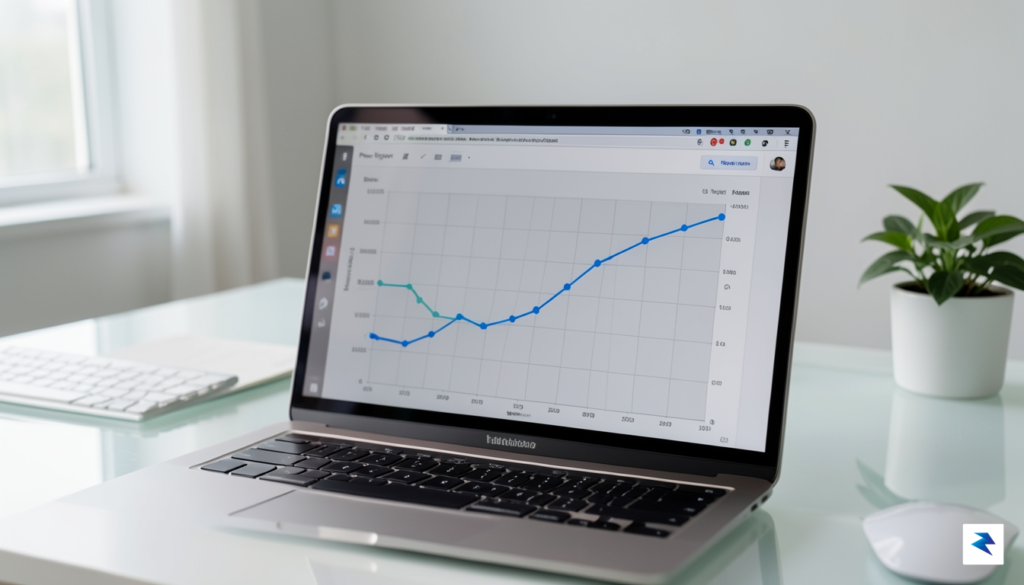
Beyond verifying price history, you must be hyper-vigilant about the seller credentials listed on the product page. Always prioritize items marked “Sold by Amazon” rather than relying on third-party marketplace sellers, especially when purchasing high-value electronics like a MacBook. Buying directly from Amazon ensures that your purchase is protected by their robust return policy and authentic manufacturer warranty, which can be significantly harder to navigate if you inadvertently purchase through a third-party storefront. If a deal seems too good to be true and the seller is an unfamiliar entity, it is almost always safer to wait for an authorized retailer to match the price.
To maximize your savings, set up price drop alerts on your preferred MacBook models at least 48 hours before the event begins so that you receive an immediate notification the moment the price reaches your target threshold.
Timing your checkout also plays a pivotal role in securing the best possible price, particularly when dealing with “Lightning Deals” that appear throughout the event. These limited-time offers often cycle through the site, so if you miss an initial window, it is worth checking back during the early morning hours or late evening when traffic subsides and inventory may be replenished. Furthermore, keep your browser prepared with necessary extensions that automatically apply coupon codes or compare prices across other major retailers in real-time. By combining these digital tools with a patient, disciplined monitoring schedule, you can effectively navigate the chaos of the sale and walk away with a premium machine at a price that justifies the investment.

Prime Day is often heralded as a golden opportunity to snag incredible deals, and while genuine savings abound, it’s also a prime time for retailers to clear out older inventory. This means that not every discounted MacBook is truly a “deal” worth your hard-earned cash. Many seemingly attractive price cuts are applied to configurations that are already past their prime, designed to entice buyers who focus solely on the percentage off rather than the actual value and longevity of the machine. To ensure you’re making a smart investment that will serve you well for years to come, it’s crucial to understand which specifications are non-negotiable in 2026 and why some “bargains” are best avoided.

One of the most common pitfalls is settling for insufficient RAM. In 2026, with macOS becoming increasingly sophisticated and applications demanding more resources, 8GB of unified memory on a MacBook is simply not enough for most users, regardless of how light their workflow might seem. While an 8GB model might feel zippy out of the box for basic browsing, it will quickly become a bottleneck when multitasking, running multiple browser tabs, using creative applications, or even just keeping several productivity apps open simultaneously. Opting for 16GB of unified memory should be considered the absolute minimum standard for any new MacBook purchase today, providing the necessary headroom for smooth operation, better responsiveness, and vital future-proofing against evolving software demands.
Storage capacity is another area where seemingly deep discounts can mask a poor long-term investment. Many base model MacBooks from past generations come with a meager 256GB SSD, which, in 2026, is barely enough for the operating system and a handful of essential applications, let alone your personal files,
You must be logged in to post a comment.