
The Cerebras Earnings Shock: A Market Reaction Analysis

Cerebras Systems, once a celebrated titan in the private AI landscape, navigated a pivotal transition onto the public stage with considerable anticipation. For years, the company captivated investors with its groundbreaking Wafer-Scale Engine (WSE) technology, promising a paradigm shift in AI compute and garnering significant private funding. This move from a closely-held “AI darling” to a publicly traded entity inherently invited a new level of scrutiny and a different set of financial expectations from a broader, often more unforgiving, investment community. The initial public offering, or similar market debut, marked not just a fundraising milestone but also the moment its intricate financials and future projections would be laid bare for immediate public judgment, moving beyond the curated narratives of venture capital pitches.
The company’s maiden public earnings call, therefore, was always destined to be a high-stakes event, and it certainly delivered drama. Despite the underlying technological innovation and the pervasive hype surrounding specialized AI hardware, the market’s reaction was unequivocally negative. Following the earnings report, Cerebras stock experienced an immediate and significant plunge, reflecting a sharp sell-off that wiped considerable value from its market capitalization. This swift downturn suggests that initial investor expectations, likely inflated by the AI boom and Cerebras’ unique value proposition, were fundamentally misaligned with the disclosed financial outlook, particularly regarding profitability and growth trajectories.
At the heart of this market turmoil was the company’s guidance, which notably pointed towards tightening margins. While the CEO later articulated that this outlook might have been “misunderstood,” the immediate investor response indicated a deep skepticism. Public markets often react unfavorably to any hint of margin compression, especially from high-growth tech companies where expansion and increasing profitability are typically assumed. This guidance likely clashed with the prevailing narrative of rapid, high-margin growth expected from a leader in cutting-edge AI acceleration, prompting investors to re-evaluate the company’s immediate financial health and long-term profitability potential. The disconnect between corporate messaging and market interpretation highlights the challenge of communicating complex financial strategies in the intense spotlight of a first public earnings call.

First-time earnings reports are inherently volatile for any newly public company, but this effect is amplified for AI hardware startups like Cerebras. The development and production of advanced AI chips and systems are incredibly capital-intensive, requiring massive investments in research, development, and manufacturing infrastructure. Furthermore, the AI hardware market itself is characterized by rapid technological shifts, intense competition from established giants like Nvidia and AMD, and a constantly evolving demand landscape, making long-term forecasting exceptionally challenging. Without a history of public financial data for comparison, every reported metric and forward-looking statement in these initial reports carries
Understanding the Margin Misunderstanding

The recent volatility in Cerebras’ share price serves as a stark reminder of the tension that often exists between high-growth technology companies and the immediate, bottom-line expectations of Wall Street. At the core of the market’s negative reaction was the company’s guidance regarding gross margins, which investors interpreted as a sign of underlying commercial fragility. However, leadership has pushed back against this narrative, arguing that the projected contraction is not a symptom of a failing business model, but rather a deliberate and necessary trade-off to facilitate rapid industrial scaling. By viewing this dip through a short-term lens, the market may be conflating temporary operational friction with structural profitability concerns.
To fully grasp the CEO’s perspective, one must differentiate between a structural decline in margins—which suggests pricing power erosion or ballooning costs that cannot be recouped—and the transient margin compression inherent in an aggressive manufacturing expansion. When a company transitions from specialized, small-batch production to high-volume manufacturing, the initial unit economics are rarely optimized. As Cerebras attempts to ramp up production to meet the insatiable demand for its specialized AI hardware, it is incurring higher upfront costs related to supply chain orchestration, manufacturing yield stabilization, and logistics. These expenditures are front-loaded investments intended to secure market share and establish a dominant hardware footprint, rather than indicators of long-term inefficiency.

The Economics of Scaling Hardware
Hardware manufacturing is notoriously capital-intensive during the early stages of a product’s lifecycle. As the company scales, it is navigating a period where the cost of individual components and assembly is high due to a lack of economies of scale. By strategically choosing to prioritize volume over immediate margin maximization, Cerebras is betting that the early establishment of its platform will yield greater dividends in the future. In essence, the leadership team is signaling that they are willing to accept a lower gross margin today to ensure that their hardware becomes the industry standard for large-scale AI training tomorrow.
The margin outlook is not a reflection of our long-term potential, but a strategic investment in our ability to meet the massive, immediate demand for our specialized compute architecture.
Ultimately, the disconnect stems from a divergence in timelines. Investors often demand immediate, linear growth in profitability, whereas hardware-centric AI companies must prioritize the physical realities of scaling manufacturing capacity. If the company successfully matures its supply chain and stabilizes its manufacturing processes, the very costs currently depressing margins are expected to decrease significantly. Consequently, the recent stock decline might represent a classic case of the market punishing a company for taking the necessary steps to build a scalable, long-term hardware giant, provided that the underlying demand for its technology remains as robust as the leadership claims.
The Structural Challenges of AI Hardware Economics

The semiconductor industry operates on a fundamentally different financial plane than the software-as-a-service (SaaS) sector that dominates much of modern tech discourse. While a software company can often scale its product to millions of users with negligible incremental costs, hardware manufacturers like Cerebras are tethered to the physical reality of raw materials, lithography equipment, and manufacturing yield rates. Creating silicon at the “wafer scale”—the practice of utilizing an entire silicon wafer as a single massive chip rather than dicing it into smaller components—introduces a unique set of economic pressures. Every defect on that wafer can compromise a significant portion of the production run, making the R&D burn rate exceptionally high compared to firms that only need to worry about server capacity and software updates.
To remain competitive against incumbents like Nvidia, companies must sustain a relentless pace of innovation, often spending billions on R&D before a single unit reaches a customer. This creates a “high-wire act” for management: they must push the boundaries of physics to deliver superior AI performance while simultaneously attempting to manage supply chain logistics that are notoriously volatile. Unlike digital products, AI hardware is subject to the unforgiving nature of the global supply chain, where access to advanced packaging facilities, specialized cooling systems, and rare-earth materials can create sudden, costly bottlenecks that directly impact profit margins.

Hardware-centric AI firms face a “double-tax” on capital: they must fund the initial design of bleeding-edge architecture while simultaneously bearing the massive, recurring costs of physical manufacturing and supply chain management.
Investors often struggle to value these companies because the standard metrics applied to tech—such as customer acquisition cost or recurring revenue growth—do not fully capture the capital-intensive nature of hardware cycles. When a company like Cerebras reports earnings, the market often fixates on short-term margin compression, failing to account for the lumpy, massive expenditures required for next-generation chip iterations. Balancing the need to keep pricing competitive against mass-market alternatives while recovering the sunk costs of wafer-scale fabrication is an immense challenge. Ultimately, the economic reality is that these firms are not just selling chips; they are essentially selling a complex, custom-engineered infrastructure solution that requires a patient, long-term outlook from shareholders who understand that innovation at this scale is measured in years, not quarters.
Investor Sentiment vs. Long-Term Strategic Value

The recent volatility in Cerebras’ share price serves as a stark reminder of the widening chasm between short-term market sentiment and the genuine, long-term strategic value of specialized AI hardware. In the current investment climate, many participants are viewing the company through the narrow lens of traditional quarterly margin expectations, often failing to account for the unique architecture of Wafer-Scale Engines. While retail and institutional traders may react to earnings reports with reactionary sell-offs, the underlying enterprise value remains tethered to the company’s ability to solve massive, compute-intensive problems that standard GPU clusters struggle to manage efficiently. This disconnect suggests that the market is currently prioritizing immediate profitability metrics over the long-term technological moats that Cerebras is meticulously building.
Much of this volatility is exacerbated by a pervasive “AI bubble” sentiment that has led investors to paint all emerging technology firms with the same broad brush. When a company disrupts a market dominated by incumbents, initial price swings are often driven by fear of overvaluation rather than an assessment of the firm’s proprietary patents or performance benchmarks. However, intrinsic value is not found in a ticker symbol’s daily fluctuation; it is found in the physical capability of a chip to reduce the time-to-train for large language models from weeks to days. By focusing solely on the margin outlook as misunderstood, investors risk missing the shift from general-purpose computing to the era of specialized, performance-driven AI infrastructure.

The true value of a hardware innovator lies not in current margins, but in the efficiency and scalability of their proprietary architecture when compared to legacy solutions.
To understand the disconnect, one must distinguish between the price of a stock and the strategic utility of the hardware it represents. Standard GPU architectures are optimized for a wide variety of tasks, but Cerebras has engineered a platform specifically designed for the massive, monolithic workloads of the future. While the financial markets may struggle to price this niche efficacy, enterprise clients—who require massive scale and efficiency—are increasingly viewing these performance metrics as the new standard. Consequently, the recent stock decline might be viewed less as a failure of the business model and more as a classic case of market myopia, where the short-term noise of margin adjustments obscures the long-term reality of a significant technological shift in the AI landscape.
Future Outlook: Can Cerebras Reclaim Market Confidence?

The path forward for Cerebras Systems hinges on a critical transition: moving from a company defined by its ambitious hardware design to one defined by its consistent, scalable operational delivery. Over the next 12 to 24 months, the firm faces a high-stakes proving ground where it must translate its technical achievements into predictable revenue streams. The primary milestone will be the successful deployment of its next-generation Wafer Scale Engine technology within massive enterprise environments, where speed and efficiency are the only currencies that matter. If Cerebras can demonstrate that its architecture provides a quantifiable, superior return on investment compared to traditional GPU clusters, it will effectively move the conversation away from quarterly margin fluctuations and toward long-term value creation.
Navigating the Competitive Landscape
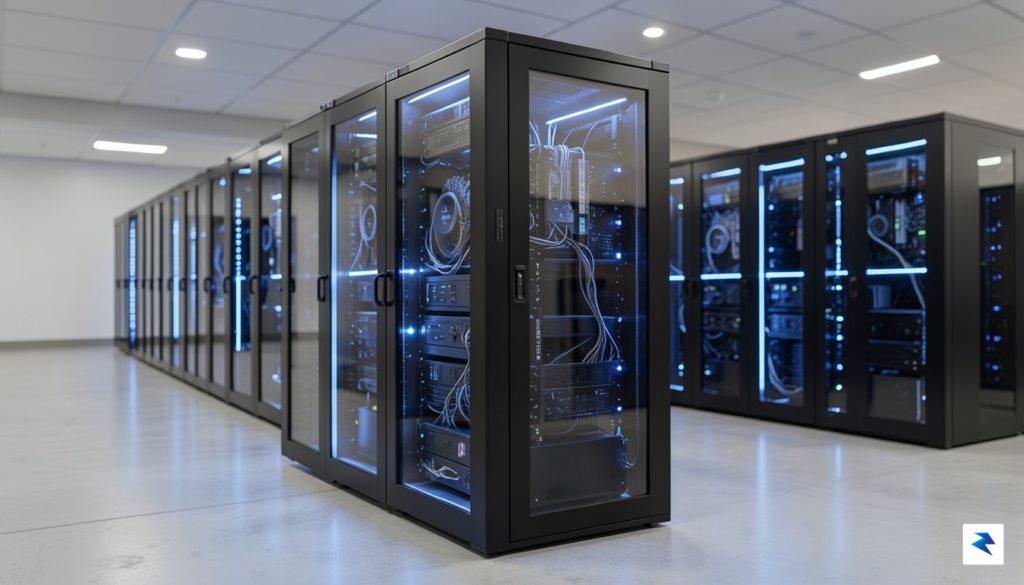
Cerebras must navigate an increasingly crowded landscape dominated by established hyperscalers and GPU giants. While major cloud providers have deep pockets and existing infrastructure dominance, Cerebras’s value proposition relies on the agility and specialized performance of its hardware for specific AI workloads. Enterprise customer adoption will be the ultimate litmus test for their survival. To gain market confidence, the company needs to secure anchor tenants—large-scale corporations that integrate Cerebras systems into their core production workflows rather than just experimental research projects. By proving that their hardware is not just a boutique tool but an essential utility for modern enterprise-level AI, they can carve out a defensible niche that protects them from broader market volatility.
Success in the coming years will not be measured by hype, but by the tangible reduction in training times and operational costs for the enterprise clients who bet on the Cerebras architecture.
Ultimately, the recent market volatility may appear as a temporary bump in the road if the company maintains a disciplined approach to its growth strategy. Investors were clearly spooked by the misunderstood margin guidance, yet if Cerebras proves that those margins were a result of necessary investment in scaling, the current dip could be viewed as a significant buying opportunity. However, the window for this recovery is narrowing. The company must ensure that its software ecosystem remains as robust as its hardware, as ease of use is often the deciding factor for enterprise adoption. Whether the market overreacted remains to be seen, but the fundamental reality is that Cerebras is now in a “show me” phase; their ability to execute on their production promises will determine whether they cement their status as a foundational player in the AI revolution or remain an outlier in a field dominated by legacy giants.