
Cerebras Stock Plummets: Is the Margin Misunderstanding a Buying Opportunity?
The Cerebras Earnings Shock: A Market Reaction Analysis Cerebras Systems, once a celebrated titan in the private AI landscape, navigated a…


James R. Gadwood, a veteran tax attorney whose career has been defined by navigating the labyrinthine complexities of federal tax law, has been formally tapped to serve as the Chief Counsel for the Internal Revenue Service. His nomination marks a significant transition from the high-stakes environment of private sector legal advocacy to the regulatory helm of the nation’s tax authority. For years, Gadwood has been a prominent fixture at Miller & Chevalier, a storied Washington, D.C.-based law firm known for its deep expertise in tax controversy and government affairs. Within those walls, he developed a reputation for meticulous analysis and a sophisticated grasp of the corporate tax planning mechanisms that govern some of the country’s largest entities.
His professional trajectory is rooted in a specialization that bridges the gap between aggressive litigation and strategic compliance. Throughout his tenure at Miller & Chevalier, Gadwood has focused extensively on complex tax litigation, representing clients who find themselves in the crosshairs of the I.R.S. or navigating the intricate regulatory frameworks established by the Treasury Department. By mastering the nuances of administrative tax law and the procedural rigors of the United States Tax Court, he has cultivated a deep understanding of how the government interprets and enforces tax statutes. This specialized background is exactly what the administration points to as the primary qualification for the role, suggesting that his intimate knowledge of how the I.R.S. functions from the “outside looking in” will provide him with a unique perspective on reforming internal processes.

The transition from a private practitioner to a high-ranking executive branch official is rarely a simple affair, as it subjects the nominee to a rigorous vetting process designed to surface potential conflicts of interest. Nominees for positions as sensitive as the I.R.S. Chief Counsel must undergo thorough background checks, financial disclosures, and ethics reviews administered by both the White House and the Senate Finance Committee. This vetting is intended to ensure that an individual’s prior client representations do not impede their ability to impartially administer the nation’s tax laws. In Gadwood’s case, the scrutiny is particularly intensified due to the intersection of his previous firm’s client list and the personal financial interests of the President, a dynamic that has sparked a broader conversation regarding the traditional boundaries between private legal service and public accountability.
The appointment of a career tax litigator to a regulatory leadership role often signals a shift toward a more enforcement-heavy or litigation-focused agency strategy, depending on the nominee’s specific history with government interactions.
Ultimately, Gadwood’s nomination serves as a focal point for understanding how the executive branch selects its legal architects. By choosing someone with deep technical roots in tax controversy, the administration is signaling a preference for legal expertise that prioritizes procedural efficiency and aggressive defense of government policy. Whether this background will translate into a more streamlined I.R.S. or raise questions about the influence of private firm loyalties remains a central point of debate for policy analysts and taxpayers alike.

At the center of the American tax system lies a position of quiet but immense power: the Chief Counsel of the Internal Revenue Service. While the IRS Commissioner manages the day-to-day operations and administrative functions of the agency, the Chief Counsel functions as its highest-ranking legal authority and primary architect of its litigation strategy. Appointed by the President and confirmed by the Senate, this individual is not merely a lawyer for a government department; they are the chief interpreter of the nation’s complex tax code, effectively bridging the gap between legislative intent and real-world enforcement. Their legal opinions can define the boundaries of what is taxable, influencing the financial landscape for every American household and multinational corporation alike.
The scope of this role extends far beyond standard courtroom representation. The Chief Counsel oversees a massive division of attorneys who provide guidance on the development of tax regulations and private letter rulings. By crafting the legal framework that dictates how tax laws are applied, the Chief Counsel possesses the authority to signal shifts in enforcement priorities, effectively determining which loopholes might be closed and which areas of taxpayer activity will face increased scrutiny. This unique influence means that the occupant of this office serves as a gatekeeper, determining the agency’s stance on everything from aggressive corporate tax shelters to the processing of individual tax returns. Consequently, the legal theories advanced by the Chief Counsel’s office often become the bedrock of the government’s arguments in high-stakes tax disputes.

The Chief Counsel’s office is the singular legal engine that drives the IRS, ensuring that the agency’s actions are not only consistent with the law but also strategically positioned to defend the government’s revenue interests in the highest courts of the land.
For the average taxpayer, the impact of this office is felt in the predictability—or lack thereof—of the tax system. When the Chief Counsel issues authoritative legal guidance, it sets a precedent that cascades through the entire agency, dictating how agents interpret specific provisions of the Internal Revenue Code. For large corporate entities, the stakes are even higher, as the Chief Counsel’s legal interpretations can literally save or cost these organizations billions of dollars in potential liabilities. Given this reality, the nominee’s professional history and potential conflicts of interest are not just matters of political trivia; they are critical indicators of how the agency might approach future disputes. When the person responsible for overseeing the government’s legal strategy against private entities has previously been employed by those same entities, the resulting questions regarding impartiality and public trust become central to the legitimacy of the agency’s enforcement actions.

At the heart of the controversy surrounding James R. Gadwood’s nomination to lead the Internal Revenue Service’s legal division is his long-standing tenure at Miller & Chevalier, a firm deeply entrenched in the tax affairs of the Trump Organization. This intersection of private practice and public oversight creates a complex web of professional entanglements that critics argue could compromise the impartiality of the nation’s top tax enforcement agency. Because Miller & Chevalier has historically served as a primary legal shield for the President in intricate, high-stakes tax litigation, Gadwood’s transition from that firm to the office of the IRS Chief Counsel raises immediate questions about whether he can effectively oversee audits or investigations involving his former firm’s most prominent clients.
The “revolving door” phenomenon—the practice of moving between senior government positions and the private sector firms that lobby or litigate against them—is a perennial issue in Washington, but the stakes are uniquely elevated when the office in question is the IRS. Tax administration relies heavily on the public’s perception of fairness; if taxpayers believe that the legal department is influenced by the personal or political interests of the President, the integrity of the entire tax system risks erosion. Gadwood’s background does not merely suggest a potential bias; it places him in a position where he might be tasked with supervising legal strategies that either mirror or contradict the very arguments he helped construct while in private practice.
Beyond the theoretical risks, there is the concrete concern of institutional memory and ongoing litigation. Miller & Chevalier has been instrumental in navigating the labyrinthine tax structures associated with the Trump family business for years. Consequently, as Chief Counsel, Gadwood would theoretically be responsible for the agency’s stance on matters that he was intimately familiar with during his time at the firm. Even if he were to recuse himself from specific cases, the internal structure of the IRS legal office could still feel the echoes of his past affiliations, as his subordinates might naturally gravitate toward policies or legal interpretations that align with his professional history.
The core challenge for any high-level government appointee with deep ties to a specific client base is not just preventing direct bias, but maintaining the appearance of absolute neutrality in a climate where trust in federal institutions is already fragile.
Ultimately, the nomination forces a difficult conversation about whether the government should implement more stringent cooling-off periods for attorneys moving from high-profile tax firms to top-tier regulatory roles. When an attorney moves from representing the most powerful tax-payers in the country to serving as the top legal advisor to the agency that audits them, the public interest and the firm’s past advocacy are on a collision course. Whether Gadwood’s legal expertise outweighs these structural concerns remains the central point of contention for lawmakers and ethics watchdogs alike.

When high-level appointees transition from the private sector into influential roles within federal agencies, the Office of Government Ethics (OGE) serves as the primary firewall designed to prevent conflicts of interest. The OGE oversees a rigorous disclosure process, requiring nominees to identify all current and past financial interests, outside positions, and professional relationships that could potentially compromise their impartiality. For an incoming legal official at the Internal Revenue Service, this process is particularly stringent, as the agency holds broad authority over the tax filings and legal compliance of thousands of entities and individuals. By mandating transparency, the OGE aims to ensure that public servants prioritize the integrity of the tax code over the interests of former employers or high-profile clients.
Central to this transition is the development of a formal recusal agreement, a binding document that outlines the specific matters from which a government official must abstain. Under standard federal ethics protocols, an appointee is typically required to recuse themselves for a period of one to two years from any particular matter involving their former firm or previous clients. These agreements are not merely suggestions; they are enforceable legal commitments intended to insulate the agency’s decision-making process from the lingering influence of private-sector loyalties. If an issue arises that directly impacts a former client, the official is legally obligated to delegate that authority to a subordinate or a separate office, thereby maintaining a wall of separation between their past professional life and their current governmental duties.

However, the efficacy of these safeguards faces a unique challenge when the appointing authority—in this case, the President of the United States—is also a subject of the agency’s oversight. Recusal agreements are designed to manage objective conflicts, such as a former client’s business dispute, but they are less effective at addressing the systemic tension created when the person who appointed the official is also the subject of the agency’s investigations or audits. Critics often argue that even with strict recusal protocols, the mere perception of influence can erode public confidence in the IRS. When a top lawyer at the agency is appointed by someone they previously represented, the public may struggle to distinguish between a formal recusal and an underlying bias, leading to questions about whether the agency can truly remain impartial in its most sensitive enforcement actions.
The strength of the federal ethics system relies not only on the legal enforcement of recusals but also on the public’s perception that those in power are held to an untouchable standard of neutrality.
Ultimately, while the OGE’s framework provides a necessary baseline for ethical conduct, it is not a cure-all for the complex political realities of high-level federal appointments. Recusal agreements serve as a vital tool for preventing explicit corruption, yet they cannot fully eliminate the scrutiny that follows appointees who have deep ties to the executive branch. As government agencies navigate these sensitive staffing decisions, the challenge remains to balance the need for specialized legal expertise with the essential requirement of maintaining an independent, non-partisan tax administration that the public can trust.
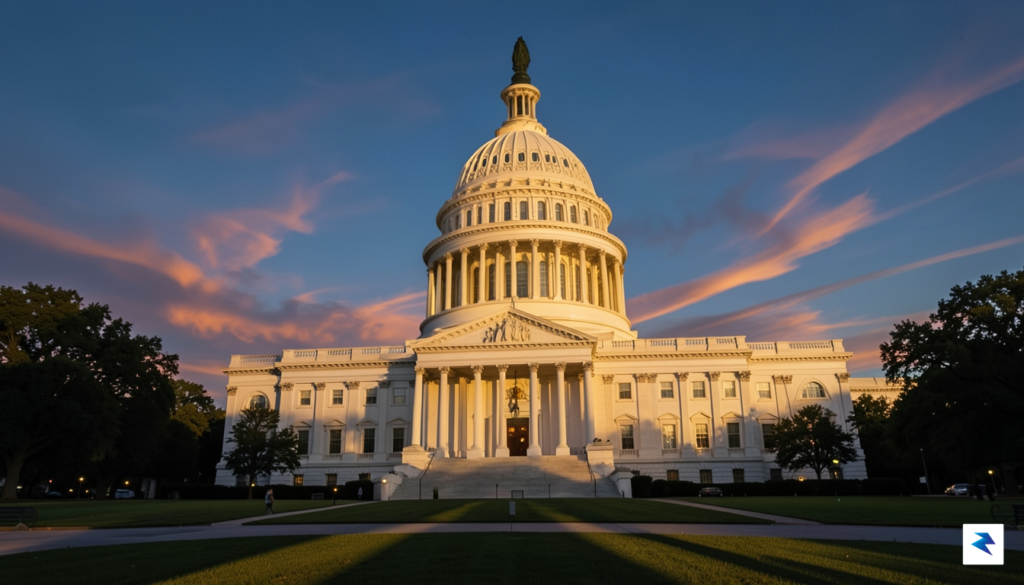
The appointment of a Chief Counsel at the Internal Revenue Service is far more than a routine administrative change; it is a signal of the administration’s core philosophy regarding tax compliance and regulatory reach. As the primary legal architect for the agency, this role dictates how tax laws are interpreted, which loopholes are prioritized for closure, and how aggressively the government pursues high-net-worth individuals and corporate entities. If the incoming leadership moves to prioritize deregulation or shifts the focus away from complex audits of the wealthy, we could see a fundamental change in the agency’s operational footprint that persists well beyond a single presidential term.
The political climate surrounding the IRS has become increasingly polarized, with the agency frequently positioned at the center of debates over government overreach versus fiscal responsibility. By installing a nominee with deep historical ties to the president’s own legal interests, the administration is inviting intense public scrutiny regarding the impartiality of tax enforcement. This tension highlights a critical challenge for the agency: maintaining the public trust while navigating the directives of the executive branch. If taxpayers believe that enforcement actions are being steered by personal or partisan loyalties rather than objective legal standards, the voluntary compliance system—which serves as the bedrock of the American tax code—could face significant erosion.

Ultimately, the long-term health of the IRS depends on the nominee’s ability to balance executive priorities with the mandate of independent, non-partisan tax administration. Transparency in this appointment process is essential, as it provides the public with a clearer understanding of how legal expertise will be deployed to serve the national interest. Moving forward, observers should look for concrete evidence of independence, such as how the Chief Counsel handles sensitive enforcement matters involving administration allies compared to the broader tax-paying public. A robust and fair tax system requires not only the efficient collection of revenue but also the assurance that the law is applied with equal rigor to all, regardless of political affiliation or previous professional associations.
The true test of this appointment will not be found in the nominee’s past professional alliances, but in their demonstrated commitment to protecting the integrity of the tax code from external political influence.
As the new leadership team settles into their roles, the shift in audit priorities will serve as the most visible metric of their agenda. Whether the agency leans toward streamlined simplified filings or aggressive litigation against sophisticated tax-avoidance strategies, the legal team will be the ones drafting the strategy. History shows that the tone set by the Chief Counsel’s office trickles down to every auditor and legal analyst in the field, making this appointment a pivotal moment for the future trajectory of federal tax policy.
You must be logged in to post a comment.