The Rise of Humanoid Labor: Why Now?

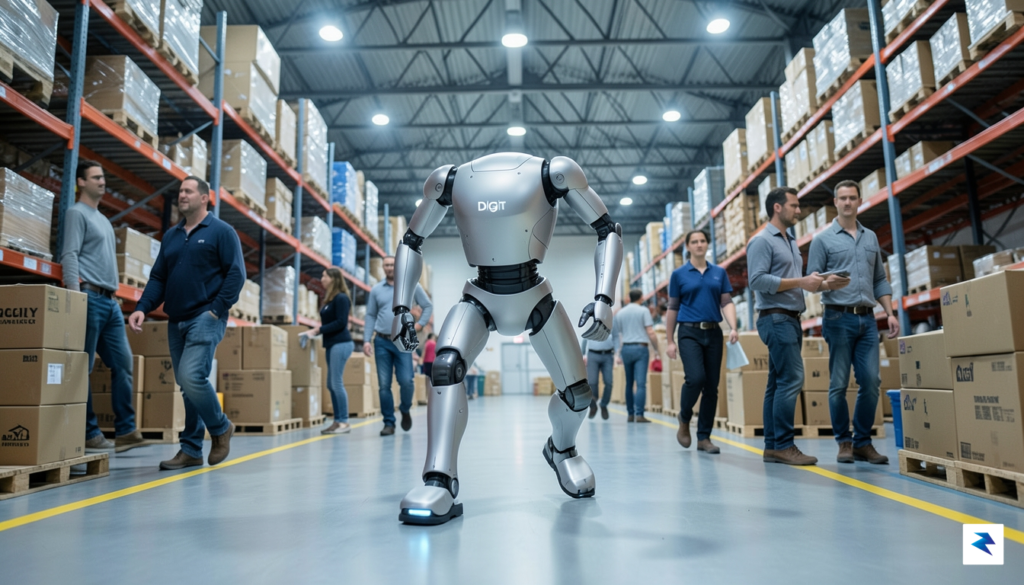
The transition of humanoid robotics from the speculative realms of science fiction into the pragmatic reality of factory floors and logistics centers is no longer a distant promise; it is an unfolding industrial revolution. For decades, robotic automation was defined by rigid, single-purpose machinery—immobile arms welded to assembly lines that could perform only one repetitive task with high precision. Today, platforms like Agility Robotics’ Digit represent a fundamental paradigm shift toward general-purpose autonomy. By designing machines that mirror the human form, engineers are creating robots capable of navigating environments already built for people, such as warehouses with stairs, narrow aisles, and complex obstacle-filled layouts that traditional wheeled robots struggle to traverse.

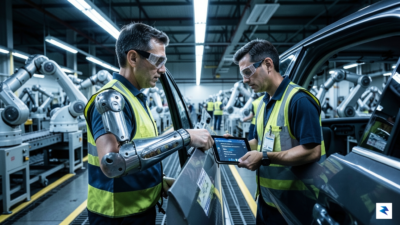
This surge in investment, punctuated by massive valuations and SPAC deals, is driven by a critical, long-term tightening of the global labor market. Across the developed world, industries are grappling with aging workforces and a persistent shortage of personnel willing to engage in repetitive, physically demanding, or ergonomically hazardous tasks. Humanoid robots offer a scalable solution to these gaps, providing a way to maintain operational continuity in sectors like e-commerce fulfillment and manufacturing. Rather than replacing humans entirely, these machines are increasingly viewed as a force multiplier—taking on the “dull, dirty, and dangerous” jobs, thereby allowing human workers to shift toward supervisory and high-level decision-making roles.
The true value of the humanoid form is not just its mobility, but its versatility; by operating in a human-centric world, these robots bypass the need for expensive, facility-wide infrastructure overhauls.
The viability of this technology hinges on a perfect storm of breakthroughs in two specific domains: edge-based artificial intelligence and advanced motor control. Modern humanoid platforms utilize sophisticated neural networks that allow for real-time perception, enabling them to identify objects, adapt to surface instabilities, and even interpret human gestures with unprecedented fluidity. Coupled with advancements in actuator density and battery energy density, these robots can now operate for full shifts with human-like dexterity. As these AI models continue to learn from vast datasets, the cost of deployment is expected to drop, making it economically feasible for companies to integrate fleets of robots into their existing supply chains, fundamentally altering the economics of labor for the next generation.
Decoding the SPAC Strategy: Understanding the $2.5B Valuation
Opting for a Special Purpose Acquisition Company (SPAC) represents a strategic departure from the traditional Initial Public Offering (IPO) route, offering a streamlined pathway to the public markets for high-growth tech firms. Unlike a conventional IPO, which involves a lengthy regulatory process and rigorous roadshows, a SPAC—often referred to as a “blank check” company—is a shell entity formed specifically to raise capital and acquire an existing private business. For Agility Robotics, this mechanism provides a more predictable timeline and the ability to negotiate a fixed valuation upfront, effectively shielding the company from the inherent volatility often seen during the initial pricing stages of a standard market debut.
The headline $2.5 billion valuation serves as a powerful testament to investor confidence in the future of human-centric automation. This figure is not merely an arbitrary number; it reflects a sophisticated calculation based on the company’s proprietary bipedal technology, its progress in commercial deployments, and its potential to disrupt labor-intensive industries like warehousing and logistics. By securing this valuation through a SPAC, Agility Robotics effectively fast-tracks its integration into the public equity market, allowing institutional and retail investors alike to gain a stake in a company that is currently at the vanguard of the robotics revolution.

Central to this financial maneuver is the injection of approximately $620 million in proceeds, a capital infusion that is vital for the company’s next phase of growth. In the capital-intensive world of robotics, where R&D costs are substantial and the transition from prototype to mass manufacturing is fraught with logistical hurdles, this liquidity is essential. These funds are earmarked for aggressive scaling, specifically to expand production facilities and enhance the software intelligence of their bipedal robots. By securing this war chest now, Agility Robotics ensures it has the operational runway necessary to outpace competitors and achieve the economies of scale required to make advanced robotics a standard feature of the modern workforce.
The transition to a public company via a SPAC is not without its challenges, requiring a delicate balance between rapid capital acquisition and long-term shareholder accountability.
While the SPAC route offers distinct advantages—namely speed and valuation certainty—it also introduces unique risks that stakeholders must navigate. Unlike a traditional IPO, which subjects a company to a more stringent public vetting process over a longer period, a SPAC merger can sometimes lead to heightened scrutiny regarding future revenue projections and long-term sustainability. However, for a company like Agility Robotics, which is already demonstrating tangible technological milestones, the trade-off is clear: the ability to deploy capital immediately toward manufacturing scale-up outweighs the risks of the public spotlight. By choosing this path, the company is signaling its readiness to move beyond the venture-funded startup phase and into the high-stakes arena of global industrial infrastructure.
Agility Robotics: From Oregon State to Wall Street
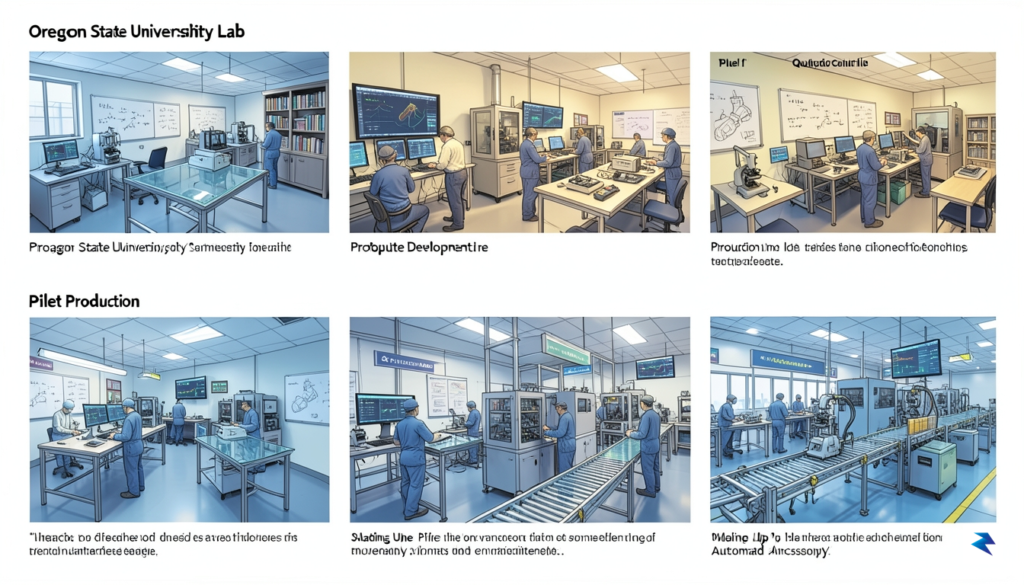
The journey of Agility Robotics began far from the frenetic energy of the stock exchange, rooted deeply in the academic rigors of Oregon State University. Founded in 2015 as a spin-out from the university’s Dynamic Robotics Laboratory, the startup was built upon years of foundational research into bipedal locomotion. By focusing on the complex challenges of balance and movement in human-centric environments, the founding team sought to move beyond the limitations of traditional wheeled robotics. This transition from laboratory experimentation to commercial viability was driven by a commitment to engineering precision, ensuring that their machines could navigate the chaotic, uneven terrain of real-world warehouses rather than just the sterile, controlled conditions of a lab.
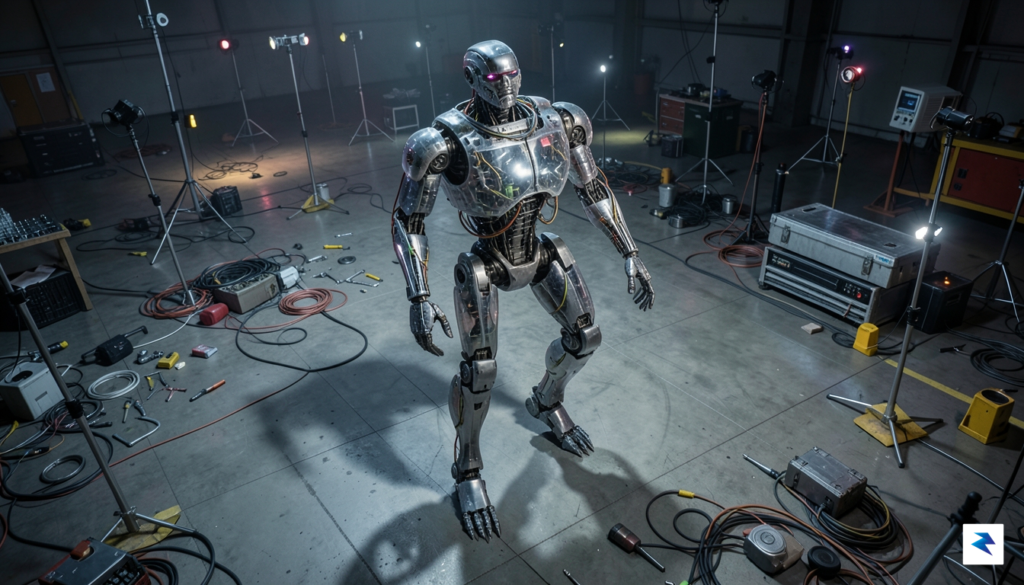
Since those early days in Corvallis, Agility Robotics has reached a series of pivotal milestones that have solidified its reputation as a leader in the humanoid sector. The company’s core intellectual property centers on its unique approach to “human-centric” design, which prioritizes energy efficiency and natural movement patterns that allow robots to operate safely alongside human workers. By developing systems that can dynamically adjust to their surroundings, the company successfully bridged the gap between theoretical robotics and practical logistics solutions. This evolution was accelerated by strategic partnerships with major industry players, including collaborative testing phases at high-volume distribution centers, which provided the real-world data necessary to refine their hardware and software architectures under actual operational stress.
The leap from university research to a multi-billion dollar valuation is not merely a financial success story, but a testament to the maturation of bipedal technology that once seemed relegated to the realm of science fiction.
As the company scaled, its focus expanded beyond basic mobility to include the integration of sophisticated artificial intelligence and sensory arrays that enable complex task execution. The transition to the public market via a special purpose acquisition company (SPAC) represents the culmination of nearly a decade of iterative development and rigorous field testing. By securing the capital necessary to fuel mass production and global expansion, Agility Robotics is positioning itself to define the next generation of industrial automation. This progression illustrates a clear trajectory: from a small group of researchers obsessed with the mechanics of a stride to a powerhouse enterprise poised to reshape the global labor landscape through advanced, bipedal intelligence.
Market Implications for the Robotics Sector

The pursuit of a $2.5 billion valuation by a leader in the humanoid space marks a definitive maturation point for the entire robotics industry. For years, the sector was characterized by speculative funding rounds that favored flashy prototypes and academic breakthroughs, often ignoring the harsh realities of supply chain integration and long-term scalability. This landmark deal signals that the venture capital community is pivoting away from the “moonshot” era and toward a phase defined by industrial-grade deployment. Investors are no longer merely looking for the next innovative sensor or gait algorithm; they are demanding clear, evidence-based paths toward widespread commercial utility in complex environments like warehouses, manufacturing floors, and logistics hubs.

This shift in investor sentiment will likely trigger a significant ripple effect across the broader robotics startup ecosystem. As capital becomes more selective, smaller firms that have relied on the “promise” of future technology will face mounting pressure to demonstrate immediate, measurable ROI. Competitors, particularly those developing general-purpose bipedal machines, must now contend with a new industry benchmark that prioritizes reliability and uptime over mere technical novelty. Consequently, we should expect to see a surge in consolidation, as larger tech conglomerates look to acquire specialized companies that can bridge the gap between experimental bench testing and the rugged requirements of the modern industrial workforce.
The transition from laboratory curiosity to industrial asset is the ultimate litmus test for the robotics sector; those who cannot scale their operational reliability will find themselves left behind in this new, high-stakes market landscape.
Furthermore, the move toward a public listing forces an unprecedented level of transparency upon the industry. Public market scrutiny demands rigorous reporting on unit economics, maintenance schedules, and safety protocols—metrics that were previously shielded by the opacity of private venture funding. As Agility Robotics invites the public to track its progress, other robotics companies will be forced to follow suit, adopting more disciplined operational frameworks to satisfy both investors and enterprise customers. Ultimately, this maturing market environment favors companies that can transform complex mechanical challenges into repeatable, dependable business solutions, effectively turning the “robotics revolution” from a futuristic concept into a core pillar of global industrial infrastructure.
The Road Ahead: Scaling Production and Trust

As Agility Robotics transitions from a pioneering robotics research and development entity to a publicly traded company poised for mass production, the journey ahead presents a complex duality of challenges. Scaling the manufacturing of sophisticated humanoid robots like Digit is only one half of the equation; the other, arguably more profound, challenge lies in cultivating public trust and ensuring ethical deployment as these autonomous machines move ever closer to human environments. Success will ultimately be measured not just by units shipped or market share captured, but by the societal acceptance and seamless, safe integration of humanoid robots into our daily lives and industries.
The primary manufacturing hurdles are substantial, requiring a significant leap from bespoke prototyping to industrial-scale production. Mass-producing robots with the complexity of Digit demands robust and resilient supply chains for specialized components, including precision actuators, advanced sensor arrays, and high-performance AI processing units. Maintaining stringent quality control at volume, ensuring component compatibility, and driving down unit costs to achieve broad market accessibility will be critical. This transition necessitates not just capital investment, but also the development of sophisticated automated assembly lines and meticulous operational efficiencies, transforming a cutting-edge invention into a reliably manufacturable product ready for global distribution.
Paramount to this expansion is the development and implementation of rigorous safety protocols, especially as humanoid robots are designed for close collaboration with human workers. Agility Robotics must engineer Digit with advanced sensing capabilities for real-time environment perception, ensuring precise collision avoidance and responsive proximity detection. Failsafe mechanisms, emergency stop systems, and redundant hardware are not merely features but fundamental requirements. Furthermore, adherence to and proactive engagement with evolving international safety standards, such as those governing collaborative robots (cobots), will be essential for building confidence among end-users and regulators alike. Demonstrating an unwavering commitment to human safety through extensive testing and transparent certification processes is non-negotiable for widespread adoption.
Beyond the immediate concerns of production and physical safety lie profound ethical considerations surrounding the deployment of AI-driven labor. As robots take on tasks traditionally performed by humans, questions about job displacement, the future of work, and the need for societal reskilling initiatives become increasingly pertinent. Agility Robotics faces the ethical imperative to design and deploy robots that augment human capabilities, enhance productivity, and create new job categories, rather than simply replacing existing ones. Moreover, the collection and utilization of environmental data by autonomous robots raise significant concerns about data privacy and security, demanding clear policies and robust safeguards. The company must navigate the “black box” problem of AI decision-making, striving for transparency and accountability in how its robots operate and interact with the world, ultimately earning a “social license to operate” from the public.
Looking ahead to 2027 and beyond, Agility Robotics’ roadmap is ambitious, fueled by the capital infusion from its SPAC deal. The strategy involves not only scaling manufacturing capacity but also expanding into new application sectors beyond its initial focus on logistics and warehouse automation. This includes exploring opportunities in areas requiring more complex manipulation and interaction, such as last-mile delivery, hazardous environment inspection, and even assistive roles. Future research and development will concentrate on enhancing Digit’s dexterity, improving natural human-robot interaction through more intuitive interfaces, and increasing the robots’ autonomy and adaptability to unstructured environments. The long-term vision is to establish Digit as a ubiquitous, beneficial presence across various industries, safely and ethically integrated into the fabric of daily work and, eventually, public life.