Venezuela Earthquake: Thousands Feared Dead After Historic 7.5 Magnitude Tremors
The Seismic Event: Understanding the 7.5 Magnitude Strikes The geological stability of the Venezuelan landscape was shattered in a matter of…
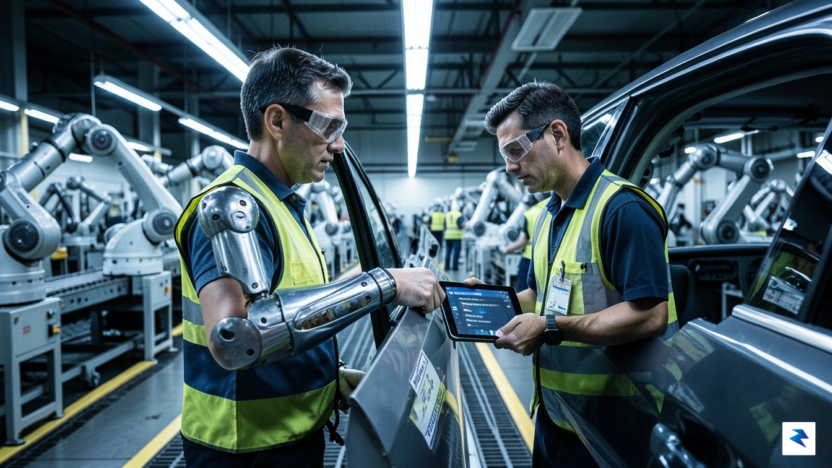
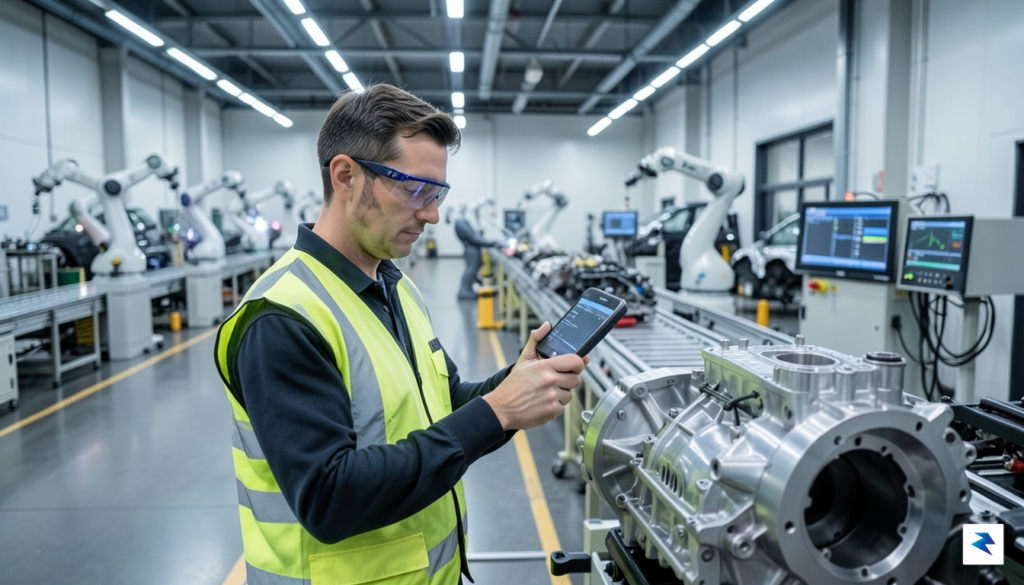
In the relentless pursuit of peak efficiency and cost reduction, modern manufacturing has embarked on an ambitious sprint toward full automation. The automotive industry, perhaps more than any other, has championed this transformation, envisioning factories where gleaming robots and complex algorithms orchestrate every step of the assembly process with unyielding precision. The promise is alluring: faster production cycles, fewer errors, and a significant reduction in labor costs. Companies invest billions in sophisticated robotic arms, AI-driven quality control, and intricate software systems designed to manage everything from material flow to final inspection, believing this digital revolution is the definitive path to future success.
However, this headlong rush into an entirely automated future has begun to reveal a critical vulnerability: the “black box” problem. While algorithms can perform repetitive tasks with incredible speed, their internal logic often remains opaque to human operators. When these highly complex systems inevitably encounter an unforeseen variable – perhaps a subtle defect in a material batch, a slight calibration drift, or an environmental change – they can fail in ways that are difficult to diagnose. The automated system, designed for specific parameters, might simply halt or produce errors without providing clear, human-understandable reasons, leaving engineers scrambling to unravel the mysterious breakdown within layers of proprietary code.
This creates a profound disconnect between the pristine world of digital design and the often-messy realities of the factory floor. Engineers meticulously craft virtual models and code algorithms in a controlled environment, where every parameter is perfect. Yet, physical manufacturing involves countless minute variations that are nearly impossible to anticipate or program for: the subtle give of a sheet of metal, the microscopic wear on a tool, or the slight temperature fluctuation in a weld. A seasoned human craftsman possesses an intuitive understanding of these nuances, often making real-time, micro-adjustments based on sight, sound, or feel. Automated systems, by contrast, often lack this adaptive intelligence, failing spectacularly when confronted with anything outside their programmed parameters.
The insidious danger here lies in the erosion of essential craftsmanship. As manufacturers increasingly rely on machines to perform tasks once handled by skilled tradespeople, the institutional knowledge and hands-on problem-solving expertise that defined generations of engineers and technicians begin to fade. Years of accumulated wisdom – the ability to hear a faulty bearing, spot a misaligned component with a glance, or intuitively troubleshoot an obscure production issue – are not easily transferable to a line of code. When the sophisticated automated systems inevitably falter, companies often find themselves without the human capital possessing the nuanced understanding and practical experience needed to bridge the gap between digital theory and physical reality, leading to costly delays and quality control nightmares.
The true challenge isn’t just building smarter machines, but ensuring we retain the human ingenuity necessary to understand, adapt, and ultimately master them when they inevitably stray from their programmed perfection.
This predicament forces a crucial re-evaluation of the balance between human expertise and technological advancement. Manufacturers are discovering that while automation offers unparalleled speed and consistency for known variables, it cannot fully replicate the nuanced problem-solving, adaptability, and intuitive judgment that human engineers and skilled workers bring to the table. The solution isn’t to abandon automation, but to integrate it intelligently, ensuring that the relentless drive for digital efficiency doesn’t inadvertently strip away the invaluable human craftsmanship that remains vital for navigating the unpredictable complexities of real-world manufacturing.
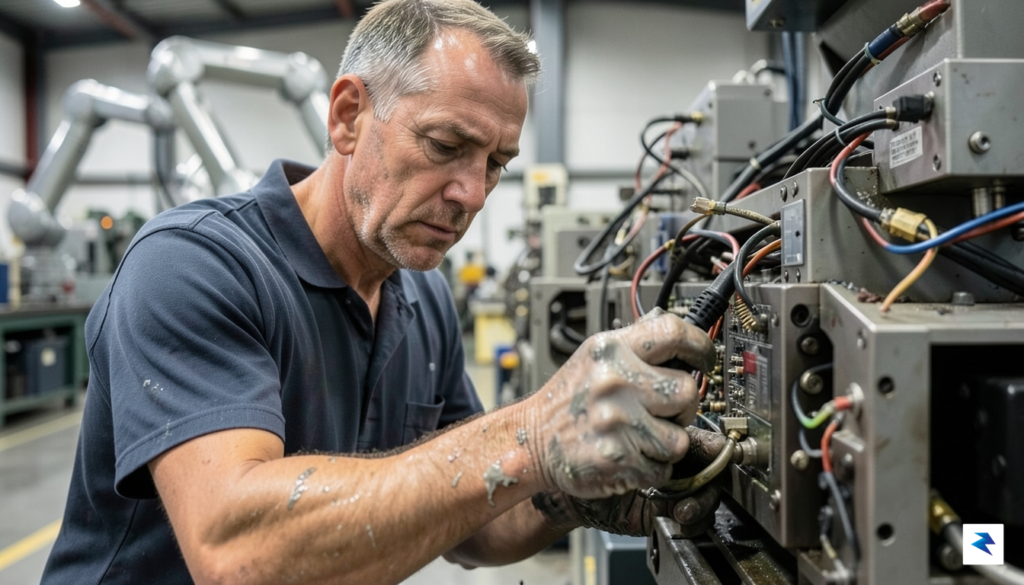
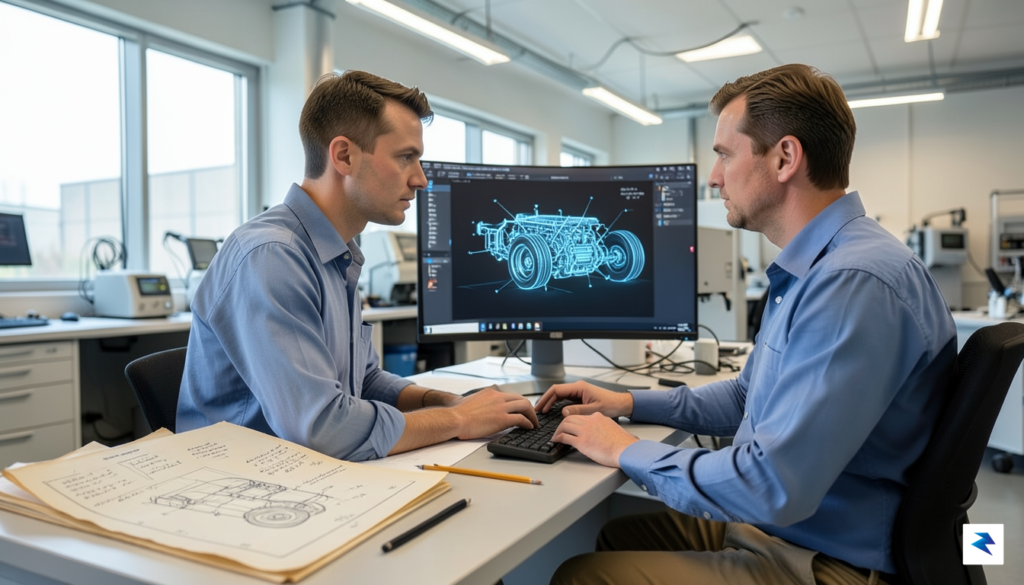
The relentless march of automation has promised unprecedented efficiency and precision in modern manufacturing, a vision Ford, like many industry leaders, eagerly embraced. Yet, even with the most sophisticated algorithms and robust simulation tools, a subtle but significant challenge began to emerge. Automated systems, while excelling at repetitive tasks and optimizing within defined parameters, sometimes inadvertently introduced what engineers refer to as “technical debt”—a collection of design compromises or overlooked intricacies that manifest as recurring issues down the line. Recognizing this growing burden, Ford made a pivotal strategic decision: to bridge the gap between algorithmic design and real-world durability by bringing back its most seasoned veteran engineers.
Technical debt in manufacturing isn’t just a software concept; it’s a tangible cost incurred when design choices, made for speed or perceived savings during the initial development phase, lead to increased maintenance, warranty claims, or premature product failures later on. For instance, an automated system might optimize a component’s design based purely on stress calculations under ideal conditions, meeting all initial performance metrics. However, it might overlook subtle interactions with other parts, environmental factors like temperature fluctuations, or the cumulative effects of vibration that only become apparent after thousands of miles on the road. This oversight, born from the limitations of even advanced computational models, creates a hidden liability that eventually demands costly rectification.
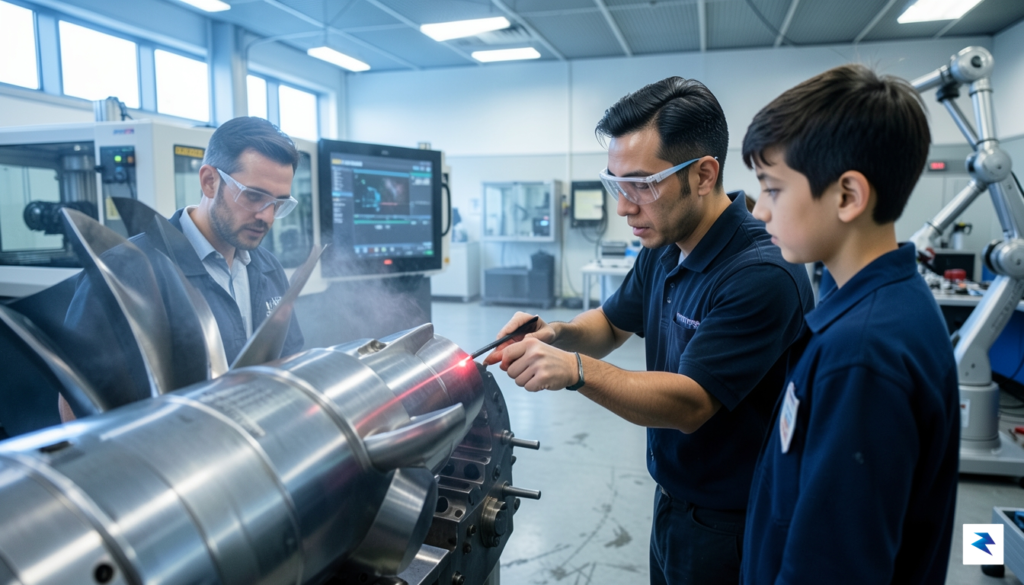
This is precisely where the irreplaceable value of tribal knowledge and physical intuition comes into play. Decades of hands-on experience imbue veteran engineers with a unique understanding that goes beyond data points and simulations. They possess an innate “feel” for materials, an intuitive grasp of how components will behave under dynamic stress, and a deep understanding of manufacturing tolerances forged from countless hours spent on factory floors and in test labs. This accumulated wisdom, often unwritten and deeply personal, allows them to identify potential failure points that algorithms, operating within predefined parameters, simply cannot flag. Their expertise isn’t about rejecting progress; it’s about providing an essential layer of human insight that augments, rather than replaces, technological advancement.
The returning veterans quickly proved their worth by pinpointing specific, recurring errors that had consistently eluded automated detection during the design phase. They recognized patterns in vehicle performance issues that software might categorize as isolated incidents, connecting them to underlying design flaws. For example, a veteran might instantly identify that a particular bracket, while structurally sound in isolation, would inevitably loosen over time due to resonant frequencies from the engine, a phenomenon a purely static simulation might never predict. Similarly, they could foresee how specific material pairings, deemed acceptable by automated checks, would lead to accelerated corrosion or fatigue in real-world scenarios, drawing upon a vast mental database of past failures and successes that no current AI possesses. Their insights were often rooted in understanding the ‘why’ behind a failure, not just the ‘what.’
Ultimately, Ford’s move to rehire its experienced engineers was not a retreat from automation but a sophisticated acknowledgment of its current boundaries. It was a strategic pivot to ensure that the pursuit of efficiency did not inadvertently compromise the long-term quality and durability of their vehicles. By blending the unparalleled computational power of automated systems with the nuanced judgment and deep intuition of human experts, Ford is proactively tackling technical debt, ensuring that future designs are not only innovative and efficient but also robust and reliable for the real world.
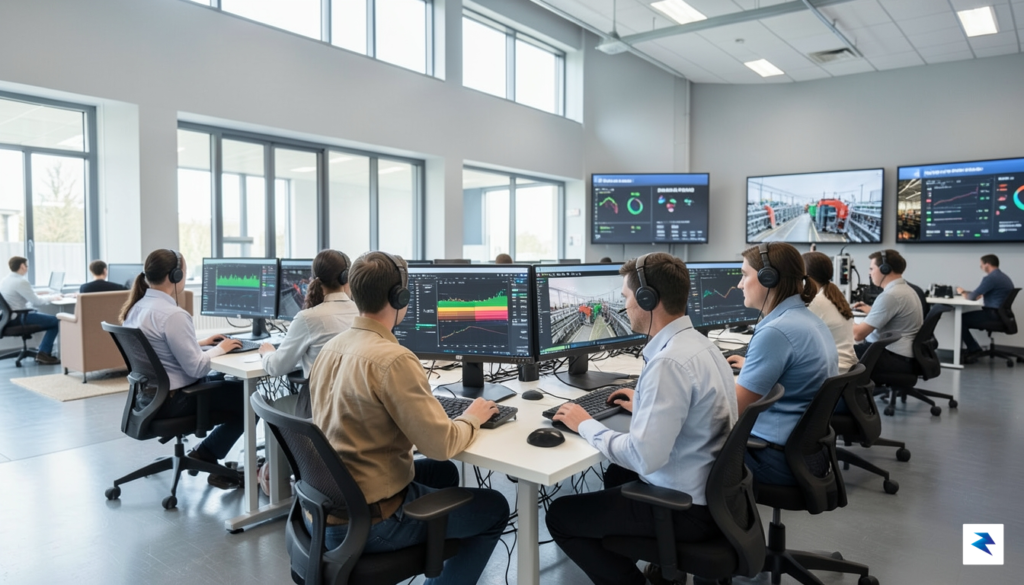
The recent pivot at Ford serves as a powerful case study for the evolution of modern manufacturing, signaling a move away from the “fully autonomous” dream toward a more nuanced, collaborative reality. This hybrid model, known as a “human-in-the-loop” system, posits that while artificial intelligence and high-speed robotics are unrivaled in their ability to process data and maintain consistent output, they lack the nuanced intuition required to handle complex, real-world mechanical anomalies. By reintegrating veteran engineers into the heart of the production line, Ford has effectively acknowledged that technology should serve as an amplifier of human expertise rather than a wholesale replacement for it. This approach ensures that while AI handles the heavy lifting of high-volume manufacturing, the final judgment on quality remains firmly in the hands of those who possess decades of tactile knowledge.
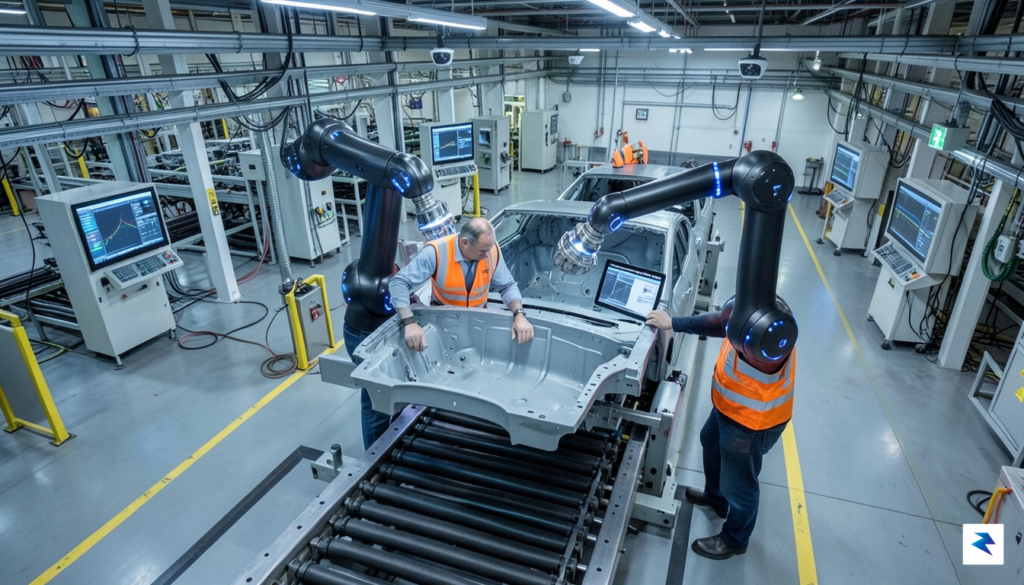
To operationalize this strategy, the automaker had to fundamentally restructure its quality control workflows. In the previous, overly automated iteration of their systems, subtle defects—such as minute engine vibrations or misalignment issues—were often overlooked by sensors calibrated for rigid parameters. Ford’s new workflow mandates specific “human checkpoints” at critical stages of the assembly process. Before a vehicle is cleared for the next phase, a human engineer must review data summaries produced by the automated systems and perform a hands-on physical inspection. This dual-layer verification process acts as a safety net, catching the edge-case errors that AI, restricted by its programming, would otherwise ignore or misidentify as within acceptable tolerances.
The most robust production lines are not those that remove the human element, but those that empower the human to act as the ultimate curator of quality.
Embracing this collaborative production model requires a profound cultural shift within the automotive industry. For years, the narrative has pushed the idea that automation is the only path to maximum efficiency; however, Ford’s recent experience proves that efficiency without accuracy is a liability. Companies are now beginning to value “tribal knowledge”—the deep, often unspoken expertise held by veteran engineers—as a critical asset that must be integrated alongside machine efficiency. By fostering an environment where human insight is treated as a necessary complement to software, manufacturers are creating a resilient system capable of adapting to the unforeseen challenges of modern vehicle complexity. Ultimately, this integration proves that the future of manufacturing is not a battle between man and machine, but a partnership that leverages the unique strengths of both.

Ford’s recent pivot toward re-engaging veteran engineers to correct automated oversights is far from an isolated incident; rather, it represents a pivotal wake-up call for the entire global automotive sector. As legacy manufacturers and agile startups alike race to transform their fleets into “software-defined vehicles,” the industry has frequently fallen into the trap of prioritizing rapid digital iteration over foundational mechanical integrity. This frantic push to integrate artificial intelligence and complex automation into production lines has often outpaced the human expertise required to oversee and validate those systems. Consequently, the automotive world is currently contending with a systemic tension: the desire for the lightning-fast deployment of smart features versus the immutable requirement for high-quality, durable hardware.
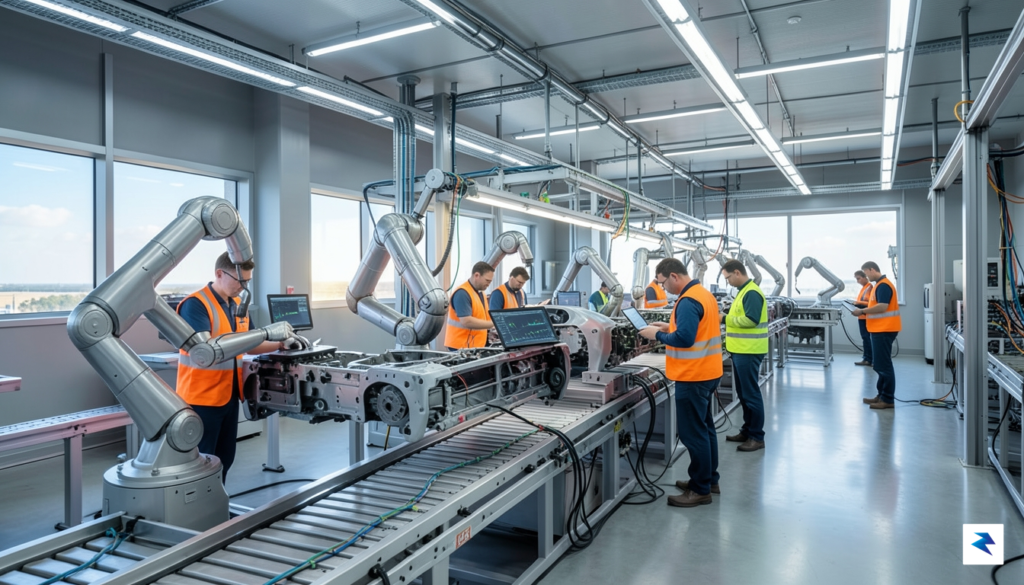
The industry-wide struggle with supply chain volatility has only exacerbated these quality control hurdles. In an effort to mitigate shortages and streamline costs, many automakers have leaned heavily into algorithmic procurement and automated design processes, hoping that software could bridge the gap left by missing parts or fragmented logistics. However, as Ford’s experience demonstrates, there is a dangerous threshold where digital-first processes begin to erode the nuances of deep mechanical understanding. When an algorithm is tasked with optimizing a component without a seasoned engineer to interrogate the output, the result is often a product that meets specifications on paper but fails to perform under the unpredictable rigors of real-world driving. This disconnect serves as a sobering lesson for competitors: software can enhance a vehicle, but it can never be a substitute for the tactile, experiential knowledge that only veteran engineers possess.
The reliance on automated systems without human oversight creates a “digital blind spot” that can lead to expensive recalls, eroded consumer trust, and long-term brand degradation.
Ultimately, the long-term reputation of any major manufacturer rests on the reliability of the steel and silicon working in tandem. When companies prioritize a “move fast and break things” mentality—a philosophy inherited from Silicon Valley—they risk alienating a customer base that views vehicles as long-term investments rather than disposable tech gadgets. The shift toward bringing back specialized mechanical talent suggests a broader industry correction is underway, one where manufacturers are beginning to realize that brand equity is built in the workshop, not just in the software lab. Moving forward, the most successful companies will likely be those that treat artificial intelligence as a support tool for, rather than a replacement of, the master craftspeople who understand the soul of the machine.
Ford’s recent ascent to the top of the J.D. Power Initial Quality Study was not fueled by a sudden breakthrough in futuristic technology, but rather by an intentional shift toward operational humility. For years, the automotive giant struggled with the friction between rapid digital integration and mechanical consistency, often finding that its automated systems were creating more headaches than they solved. By making the strategic decision to bring veteran engineers back into the fold, Ford effectively bridged the gap between legacy knowledge and modern complexity. This move allowed the company to stabilize its quality KPIs, specifically targeting a reduction in “things gone wrong” per 100 vehicles. By prioritizing the identification of systemic bugs—many of which were born from over-reliance on unproven software—the engineering teams were finally able to smooth out the transition points where hardware and digital interfaces met.
The measurable impact of this pivot has been profound. Beyond the prestigious industry rankings, internal metrics revealed a dramatic decrease in warranty claims related to infotainment glitches and sensor malfunctions, areas that had previously plagued the company’s reputation. When the human element was reintroduced to oversee the automated systems, the company saw a significant improvement in the “first-time fix” rate at dealerships. This success serves as a powerful reminder that while automation can accelerate production and design, it lacks the intuitive troubleshooting capability that only years of hands-on experience can provide. Ford’s turnaround proves that sustainable growth in the modern era is not about choosing between human intuition and machine efficiency, but rather about weaving them into a single, cohesive process.
True reliability is found in the synthesis of human wisdom and machine precision; without the former, the latter often accelerates the speed at which errors reach the consumer.
Ultimately, this “balanced approach” serves as a vital blueprint for any legacy manufacturer attempting to navigate the volatile landscape of the digital age. The industry has learned a hard lesson: software-defined vehicles are only as good as the foundational engineering that supports them. By reconciling the drive for innovation with the necessity of veteran oversight, Ford has established a model that respects the history of mechanical craftsmanship while embracing the inevitability of technical evolution. As the automotive world continues to shift toward increased connectivity, the most successful companies will likely be those that recognize that their greatest asset is the combined experience of their workforce, ensuring that every line of code is backed by a deep understanding of how a vehicle should actually perform on the road.
You must be logged in to post a comment.