
OpenAI Launches GPT-5.6: A New Era for Enterprise AI
The Evolution of GPT-5.6: A New Benchmark for AI The arrival of GPT-5.6 represents far more than a routine version increment; it signifies a…


The current landscape of the technology sector is defined by a level of capital expenditure that defies historical precedent. As hyperscalers and venture firms pour hundreds of billions of dollars into data centers, specialized silicon, and massive energy grids, the cumulative global investment in artificial intelligence is racing toward a staggering $3 trillion threshold. This is not merely a flurry of corporate spending; it is an industrial-scale bet on a fundamental shift in how humanity interacts with information, productivity, and logic. Unlike the speculative bubbles of the past, where valuations often outpaced actual infrastructure, today’s AI boom is built on a foundation of tangible, physical assets—vast clusters of GPUs and miles of fiber-optic cable that demand immediate, sustained utility to justify their existence.

The central tension lies in the transition from the “build phase” to the “value phase.” For several years, the tech industry has operated under the assumption that if you build the capacity, the intelligence will follow. However, as the cumulative spend approaches the $3 trillion mark, the patience of investors and the scrutiny of economic analysts are sharpening. We are no longer in an era where “potential” alone is enough to sustain market enthusiasm; the market is now demanding a clear, repeatable, and scalable return on investment. If this capital-intensive infrastructure cannot translate into meaningful productivity gains—whether through automated workflows, accelerated scientific discovery, or radical cost reductions in service delivery—the economic impact will be significantly muted, leading to a profound misalignment between cost and output.
The true test of the AI era will not be measured by the power of the models we build, but by the tangible economic efficiency those models unlock across the global supply chain.
This pursuit of ROI is the defining challenge of the next decade because it forces a shift in focus from speculative growth to operational excellence. Organizations are currently finding that while generating a chatbot response is easy, integrating AI into the core of a profitable business model is incredibly complex. The challenge is twofold: businesses must determine how to offset the massive energy and compute costs associated with large language models while simultaneously proving that these tools are doing more than just replicating human tasks at a higher price point. Moving forward, the companies that succeed will be those that transition away from the “AI for the sake of AI” mindset and instead pivot toward laser-focused efficiency, where every dollar spent on compute yields a verifiable, measurable, and compounding benefit to the bottom line.
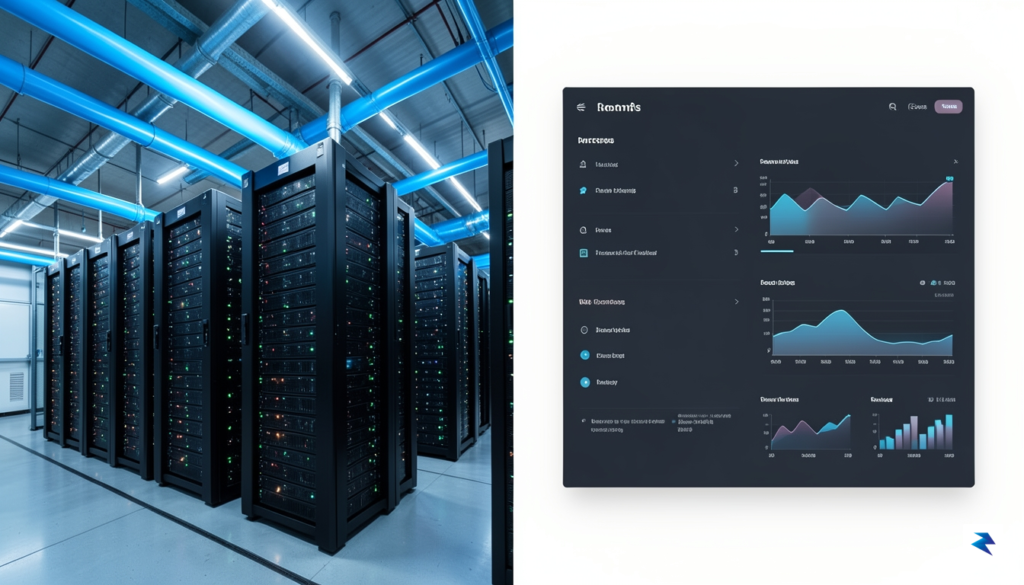
The current landscape of artificial intelligence is defined by a profound and widening chasm between the physical foundations of compute and the practical software that sits atop them. On one side of this divide, we see an unprecedented concentration of capital flowing into the hardware layer. Hyperscalers and chip manufacturers are engaged in an arms race of gargantuan proportions, pouring billions of dollars into NVIDIA’s high-end GPUs, massive data center facilities, and the necessary upgrades to aging power grids. This is the era of “brute force” AI, where the primary objective is to build the largest, most capable training clusters the world has ever seen, regardless of the immediate financial utility they provide.

However, this intense focus on infrastructure has created a significant bottleneck in the application layer. While the raw power of these models continues to scale at an exponential rate, the actual software applications—the tools that businesses and consumers use to solve everyday problems—are struggling to justify the enormous overhead costs. Many developers find themselves trapped in a cycle of experimentation, attempting to bridge the gap between impressive research-lab demonstrations and products that offer genuine, sustainable value. The reality is that building a foundation is significantly easier than discovering the elusive “killer app” that transforms raw compute into a profitable, recurring revenue stream.
The $3 trillion question is not whether the hardware can be built, but whether the software built on top of it can ever generate enough value to pay for the grid it consumes.
The energy constraints looming over the industry further complicate this equation. Because the cost of powering and cooling these massive GPU clusters is not just a financial burden but a physical limitation, the pressure on application developers to deliver immediate return on investment is mounting. If a software tool requires thousands of dollars in compute time just to answer a simple query, it is fundamentally unsustainable unless the business model behind it is equally transformative. We are currently witnessing a “wait and see” period where the industry is betting that software innovation will eventually catch up to the hardware, but as the costs of maintaining this infrastructure rise, the patience of investors and stakeholders may begin to thin. For now, the hardware sits waiting, a powerful engine without enough fuel in the form of high-margin, high-utility software to drive it forward.

For decades, economists have grappled with the so-called “Productivity Paradox”—the observation that rapid technological innovation often fails to manifest in official output statistics until long after the technology has become ubiquitous. As we integrate generative AI into the enterprise, we are witnessing a modern iteration of this phenomenon. While the hype cycle promises a $3 trillion windfall, corporate balance sheets remain stubbornly opaque, failing to reflect the seismic shifts happening on the ground. The problem lies not necessarily in a lack of impact, but in the inadequacy of our current yardsticks. Traditional productivity metrics were designed for the industrial age, where value was tied to tangible units of output, such as how many cars rolled off an assembly line or how many widgets were manufactured in a shift. In the age of intelligence, value is increasingly found in intangibles like cognitive velocity, reduced technical debt, and the accelerated iteration of ideas.

When we look at software engineering, for example, the gains provided by AI coding assistants are profound, yet they often evade standard accounting. If an engineer completes a task in two hours that previously took six, the company is not necessarily cutting costs by firing employees or shrinking the department; rather, that engineer is now freed to tackle complex architectural challenges or address long-standing security vulnerabilities that were previously deferred. These gains are qualitative and cumulative, often surfacing as superior product quality or faster release cycles rather than a simple line-item reduction in labor costs. Because these improvements are reinvested into innovation rather than being extracted as pure profit, they remain invisible to the blunt instruments of GDP accounting and quarterly earnings reports.
The challenge of AI ROI is that it transforms labor from a linear input into an exponential multiplier. We are measuring the speed of the horse while the engine is being installed under the hood.
Furthermore, early ROI projections are frequently misleading because they focus exclusively on labor substitution—the idea that AI should act as a replacement for human workers. This perspective ignores the reality of “augmentation,” where AI acts as a force multiplier for human creativity and decision-making. In creative workflows, such as marketing or design, AI allows teams to test fifty variations of a campaign in the time it once took to polish one. This leads to higher conversion rates and better market alignment, yet because the “cost” of the creative process is still high, the net productivity gain is masked by the sheer volume of output generated. We are currently in a transition period where companies are learning to capture this new value, and until our financial frameworks evolve to account for the velocity of knowledge work, the true magnitude of the AI revolution will continue to hide in plain sight.

The aggressive influx of capital into artificial intelligence—a figure now approaching $3 trillion—represents more than a mere trend in research and development; it marks a structural pivot in how global corporations define value. Big Tech firms are currently betting the farm on the belief that generative AI will catalyze a new era of capital efficiency, effectively lowering the marginal cost of intelligence and labor across the economy. By treating AI as a foundational utility rather than a speculative product, these organizations are forcing a transformation in operating models. Companies are no longer asking if they should adopt these tools, but how quickly they can restructure their entire workflows to prevent the “sunk-cost fallacy” from turning their massive infrastructure investments into stranded assets.

This massive allocation of capital carries significant deflationary potential that could reshape market dynamics for decades. As AI agents begin to handle complex cognitive tasks, the cost structures of industries ranging from legal services to software engineering are likely to compress significantly. For non-tech firms, this creates a harrowing competitive reality: either integrate these capabilities into core operations or risk rapid obsolescence. The pressure to keep pace is driving a “fear of missing out” (FOMO) investment cycle that echoes historical industrial shifts, yet with a velocity that is unprecedented. Those who successfully leverage this technology will likely see their profit margins expand as the cost of production drops, while laggards will find their traditional business models increasingly uncompetitive against leaner, AI-augmented rivals.
The true test of the $3 trillion investment lies not in the sophistication of the algorithms, but in the ability of corporations to translate computational power into tangible, bottom-line capital efficiency.
However, the risks inherent in this capitalization strategy remain profound. If the promised productivity gains fail to materialize at scale, the global economy could face a period of significant volatility as firms struggle to reconcile their bloated balance sheets with lackluster revenue growth. We are witnessing a transition where the return on invested capital (ROIC) is being tested in real-time. If these vast data centers and GPU clusters do not eventually lead to a fundamental reduction in the cost of goods and services, the resulting market correction could be severe. Ultimately, the long-term economic implication is a high-stakes race between technological deflation and the mounting pressure to justify the most expensive infrastructure build-out in corporate history.

As the initial gold rush of generative AI begins to settle, the distinction between genuine structural transformation and fleeting speculative fervor has never been more critical. Investors and business leaders must look beyond the glossy marketing collateral of tech giants and focus on tangible indicators of long-term viability. One of the most reliable early warning signs of a potential market correction is the divergence between capital expenditure and operational efficiency. When companies pour billions into GPU clusters and foundational model training without a corresponding improvement in unit economics or revenue per employee, it suggests that the investment is driven by FOMO rather than utility. A sustainable AI strategy requires a clear line of sight from infrastructure spend to margin expansion; if the cost of inference continues to outpace the value generated for the end-user, the current valuation bubble will inevitably face a painful recalibration.
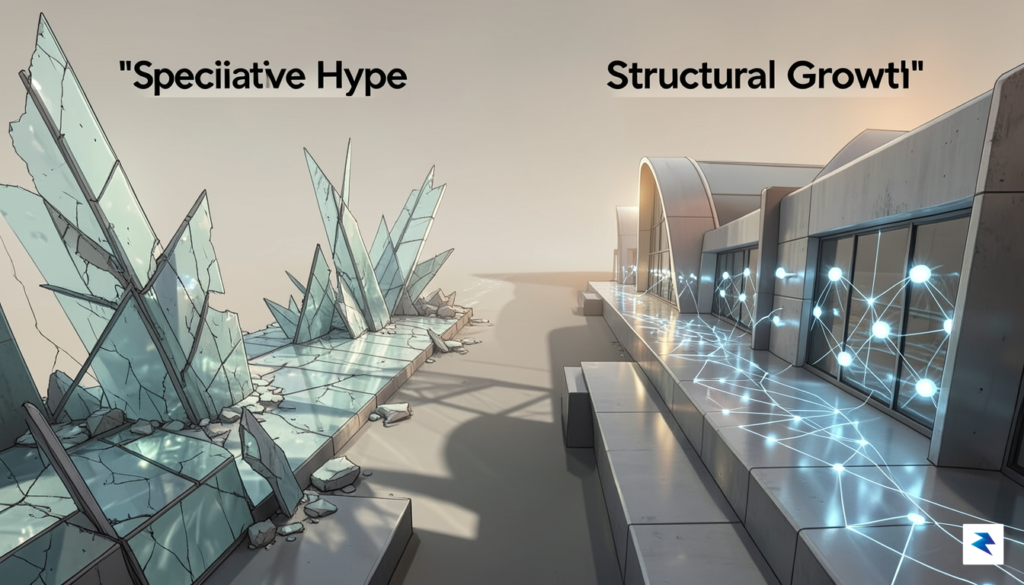
To evaluate the long-term success of AI initiatives, stakeholders should move away from vanity metrics—such as the number of parameters in a model or the total volume of data ingested—and instead adopt rigorous, outcome-based criteria. A robust framework for measuring AI success must prioritize three core pillars: process automation depth, customer retention uplift, and innovation velocity. For instance, an AI tool that merely summarizes emails is far less valuable than one that autonomously resolves complex supply chain bottlenecks or accelerates drug discovery pipelines. Organizations that can demonstrate a measurable reduction in customer churn or a significant decrease in time-to-market due to AI-augmented workflows are the ones likely to survive the eventual market cooling. Investors should prioritize those who treat AI as a persistent operational capability rather than an experimental marketing appendage.
True value in the age of artificial intelligence will not be found in the novelty of the technology itself, but in the radical efficiency and creative problem-solving it enables within established industries.
Ultimately, the challenge of justifying massive capital investment in artificial intelligence is less about the machines and more about the maturity of our own leadership. The $3 trillion question is, at its heart, a test of human ingenuity: can we successfully integrate these powerful tools into existing systems to unlock productivity that has remained dormant for decades? We must recognize that structural growth is rarely a straight line; it is a marathon that requires patience, iterative testing, and a willingness to pivot away from projects that fail to deliver a clear return. By focusing on practical application over abstract potential, business leaders can steer their organizations through the hype cycle and ensure that their AI investments become foundational assets rather than expensive liabilities. The winners of this era will be those who treat AI as a bridge to human capability, rather than a replacement for it.
You must be logged in to post a comment.