
Can AI Answer the $3 Trillion Question? The Reality of ROI
The $3 Trillion AI ROI Dilemma The current landscape of the technology sector is defined by a level of capital expenditure that defies…
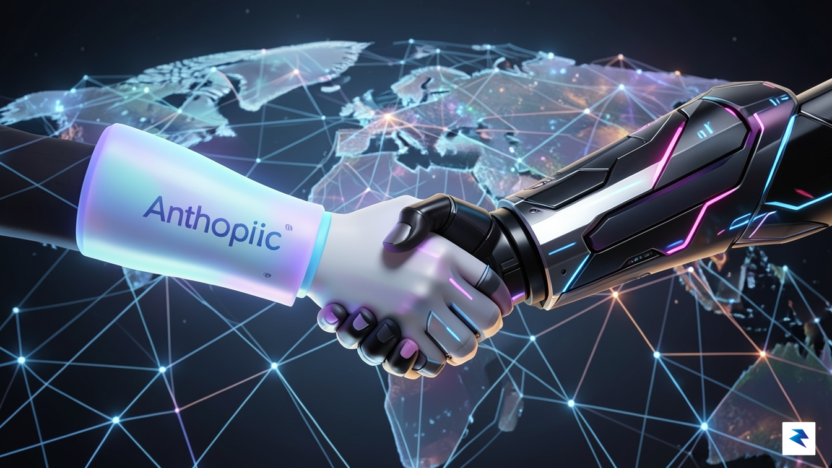

The artificial intelligence frontier is rapidly evolving, shifting focus from incremental model improvements to a foundational struggle for raw compute power. What was once a race primarily driven by algorithmic innovation has transformed into an intense, resource-intensive battle for GPUs, energy, and the specialized infrastructure capable of training and running the next generation of massive AI models. This insatiable demand for computational muscle has created a significant bottleneck, determining which entities can truly push the boundaries of AI development and, conversely, which might be left behind due to a lack of access to these crucial resources.
In a move that has sent ripples across the tech industry, Elon Musk recently extended an unexpected olive branch to Anthropic, a prominent AI research company and a direct competitor to Musk’s own xAI venture. The offer involves providing Anthropic access to Musk’s dedicated AI supercomputer infrastructure, notably referred to as “Mythos/Fable.” This isn’t merely an offer of surplus capacity; it signals a potential deep infrastructural collaboration, suggesting a pathway for Anthropic to host and scale its sophisticated models on a platform potentially designed to meet the most demanding AI workloads. Such an alliance, between entities often perceived as rivals, underscores the paramount importance of compute in today’s AI landscape.
This prospective partnership is more than just a headline; it represents a high-stakes conversation about the very future of the AI industry. For Anthropic, gaining access to a state-of-the-art supercomputer could bypass the monumental capital expenditure and logistical hurdles of building its own infrastructure, accelerating its research and deployment capabilities significantly. For Musk, integrating Anthropic into his compute ecosystem could solidify “Mythos/Fable” as a critical player in AI infrastructure, attracting other top-tier AI labs and establishing a dominant position in the foundational layer of AI development. However, the inherent tension of a competitor hosting another competitor’s core assets raises profound questions about data security, strategic influence, and the long-term independence of AI innovation, setting the stage for a dramatic reshaping of industry alliances and power dynamics.


Elon Musk is attempting to redefine the competitive landscape of artificial intelligence by positioning his massive data center infrastructure as a neutral utility, akin to a public power grid or a telecommunications backbone. By explicitly promising not to throttle, censor, or cut off access for high-profile competitors like Anthropic, Musk is effectively pitching his hardware as the “Switzerland” of the AI sector. This strategy suggests a pivot from pure proprietary dominance toward a platform-based model where even rivals rely on his physical compute clusters to train their models. The underlying message is that in an era where high-end H100 and B200 GPUs are the scarcest commodity on earth, the infrastructure provider gains a unique form of leverage that is best exercised through inclusive, rather than exclusive, access.

The economic logic behind this “neutrality” pledge is compelling, even if it appears counterintuitive to Musk’s traditionally aggressive business history. Hosting a competitor like Anthropic provides a steady, massive revenue stream that helps offset the staggering capital expenditures required to maintain state-of-the-art supercomputing facilities. By serving as the host for Mythos and Fable, Musk secures the utility of his infrastructure regardless of which specific AI model captures the largest market share. This diversification of revenue allows his compute-heavy operations to remain self-sustaining, ensuring that the hardware remains operational and state-of-the-art without relying solely on the success of his own ventures, such as xAI.
“True infrastructure is agnostic to the software it runs; if we build the most efficient compute environment in the world, the goal is to maximize its utilization, not to gatekeep progress.”
However, the credibility of this promise remains a subject of intense debate among industry analysts and AI developers. Given Musk’s history of utilizing his platform assets to push specific corporate agendas, observers are right to question whether this neutrality can survive a period of extreme market volatility or competitive pressure. If a rival model were to pose an existential threat to his own interests, would the promise of “not cutting them off” hold firm under the weight of shareholder expectations? This tension defines the Musk-Anthropic dynamic: the industry is watching to see if Musk can truly act as a platform operator, or if his competitive instincts will inevitably override the operational necessity of being a neutral utility. Ultimately, the success of this pitch depends on proving that the long-term value of being the industry’s primary “power station” outweighs the short-term gains of sabotaging a competitor.

For Anthropic, the decision to leverage compute resources owned by a direct competitor is a high-stakes gamble that transcends simple hardware logistics. While the sheer scale of modern AI training necessitates massive infrastructure, tethering one’s intellectual property to a rival’s ecosystem introduces a profound layer of vendor lock-in that could constrain future strategic pivots. When a company builds its foundation on another’s servers, it is not merely renting space; it is implicitly participating in the operational framework of its own market adversary. This dependency creates a precarious imbalance where Anthropic’s ability to iterate, scale, and innovate becomes tethered to the goodwill and technological stability of a platform managed by a competing entity.
Beyond the technical hurdles of migration and compatibility, there lies the persistent, unsettling shadow of data sovereignty. Anthropic has built its brand identity on “Constitutional AI” and a rigorous commitment to safety and model integrity, yet hosting these sensitive systems on external, black-box infrastructure invites legitimate concerns regarding oversight. Even with the strictest encryption protocols and non-disclosure agreements, the risk of data leakage or unauthorized access by the host infrastructure provider remains a theoretical—but non-zero—threat. If the host maintains even a degree of visibility into the telemetry or training patterns of the hosted model, the integrity of Anthropic’s proprietary “recipes” could be compromised in ways that are difficult to detect, let alone litigate.
The fundamental tension for Anthropic is not just about the cost of compute, but the cost of autonomy. When your infrastructure provider is also your competitor, the “neutrality” of the platform is perpetually under negotiation.
This situation inevitably forces a conversation about the necessity of scale versus the preservation of corporate autonomy. In the AI arms race, compute is the primary currency, and companies that lack the capital to build their own massive data centers are often forced into these uneasy alliances. However, this reliance creates a strategic vulnerability: should the competitive landscape shift or a disagreement arise regarding model deployment or philosophical alignment, Anthropic could find itself in a position where its operational independence is severely curtailed. Regulatory bodies are likely to view such deep-seated interdependencies with increased scrutiny, potentially treating these partnerships as potential antitrust issues or risks to market stability.
Ultimately, the challenge for Anthropic is to navigate the delicate balance between achieving the massive computational throughput required for next-generation intelligence and maintaining a firewall against external influence. Relying on an infrastructure provider that possesses its own competing AI ambitions suggests a future defined by perpetual oversight and cautious diplomacy. As these alliances deepen, the industry must watch closely to see if this marriage of convenience holds up under the weight of inevitable market friction, or if it eventually forces a strategic decoupling to ensure the long-term survival of Anthropic’s unique vision for safe, independent artificial intelligence.

Integrating a sophisticated large language model (LLM) into an existing, often disparate, hardware and software environment is an engineering feat far from a simple plug-and-play operation. These models, with their billions or even trillions of parameters, demand immense computational resources, specific hardware accelerators, and finely tuned software stacks to operate efficiently and at scale. The challenges range from managing colossal memory footprints and optimizing data transfer pathways to ensuring high-throughput inference and maintaining ultra-low latency, all while preserving the model’s integrity and performance. Without a robust and purpose-built infrastructure layer, attempting to host a complex LLM like Anthropic’s within a new ecosystem could quickly become a quagmire of compatibility issues, performance bottlenecks, and prohibitive operational costs.
This is precisely where the Mythos framework emerges as a potential technical linchpin for any prospective collaboration. Mythos, or more broadly the Fable architecture it embodies, is not merely a data center or a generic cloud offering; it’s envisioned as a specialized, high-performance computing environment meticulously designed for demanding AI workloads. By providing a standardized, optimized layer that abstracts away the underlying hardware complexities, Mythos could offer a seamless bridge. It would enable Anthropic’s models to be deployed and scaled rapidly without requiring extensive re-engineering or adaptation to Musk’s specific hardware stack, effectively acting as an intelligent intermediary that translates and optimizes LLM operations for maximum efficiency.
A critical aspect of LLM deployment is handling high-throughput demands – the ability to process numerous user requests or complex queries concurrently and instantaneously. Mythos’s architecture is likely engineered from the ground up to excel in this area, incorporating advanced techniques such as model parallelism, distributed inference, and intelligent load balancing across a vast array of specialized accelerators like GPUs. This specialized design ensures that even under peak load, the system can maintain responsiveness and deliver consistent performance, a non-negotiable requirement for consumer-facing AI applications. Furthermore, its custom-built nature suggests an ability to fine-tune resource allocation and scheduling, ensuring that every compute cycle is utilized optimally, preventing bottlenecks that plague more generalized computing environments.
Beyond raw throughput, latency and hardware optimization are paramount for delivering a fluid and natural user experience with AI. Mythos has the potential to offer significant advantages here, particularly if it’s tightly integrated with Musk’s specific hardware components. This could involve custom firmware, optimized drivers, and highly efficient data pipelines designed to minimize the time it takes for a request to travel from input to output. By operating “closer to the metal” – with direct control over the hardware and software stack – Mythos could dramatically reduce inference latency, a critical factor for real-time interactions and conversational AI. Such deep optimization ensures that Anthropic’s sophisticated models can run at their peak performance, leveraging every ounce of computational power available without the overhead typically associated with multi-tenant cloud environments.
Ultimately, Mythos positions itself as more than just a hosting platform; it’s a strategic enabler of seamless interoperability within a high-performance AI ecosystem. It could allow Anthropic’s cutting-edge models to not only operate efficiently but also potentially interact with other AI components or data sources within Musk’s broader technological ambit, all while benefiting from an optimized infrastructure. This robust integration framework minimizes the engineering overhead and accelerates deployment times, making a partnership between distinct AI entities technically viable and operationally attractive. By providing a unified, high-performance environment, Mythos could unlock unprecedented capabilities, allowing diverse AI models to thrive and collaborate in ways that would be prohibitively complex on conventional infrastructure.

If this partnership between Musk’s infrastructure and Anthropic’s model development becomes the industry blueprint, we are likely witnessing the beginning of the end for the “walled garden” era of AI. Traditionally, companies like Google and Microsoft have maintained a strict policy of vertical integration, where the model lab, the cloud infrastructure, and the distribution platform are all under one corporate roof. By decoupling these layers, the industry moves toward a more modular, interoperable future where compute-rich entities serve as neutral ground for the best models available. This shift forces incumbent tech giants to justify their massive ecosystem lock-ins, potentially compelling them to open their own platforms to third-party models or risk losing the top-tier developers who prefer hardware agnosticism.

The competitive dynamics of the $40 billion AI revenue race will inevitably sharpen as a result of this semi-cooperative model. When labs are no longer tethered to a single cloud provider’s roadmap, they can optimize for pure performance, choosing the hardware that best suits their specific architecture rather than settling for what is convenient. This puts immense pressure on providers like AWS and Azure to innovate at the hardware level, as they can no longer rely on software-based incentives to keep their AI clients loyal. Furthermore, investor confidence is likely to pivot toward companies that demonstrate high agility; the market may soon favor “infrastructure-agnostic” AI leaders that can port their intelligence across multiple compute providers to ensure uptime and cost-efficiency.
The long-term viability of these collaborative infrastructure models rests on the assumption that compute-rich entities can act as impartial landlords in an increasingly winner-take-all technological landscape.
Ultimately, the sustainability of this model depends on whether these alliances can withstand the inevitable friction of intellectual property and competitive poaching. While vertical integration offers speed and cohesion, it often comes at the cost of innovation through diversity. A collaborative ecosystem, by contrast, invites a more Darwinian market where the best model wins because of its inherent capability, not because it is bundled with a cloud contract. If this trend holds, we are moving toward a tiered market where hardware providers become the new “utilities” of the digital age, while model labs compete solely on the sophistication and safety of their software. This separation of powers could lead to a more balanced, albeit more volatile, AI economy where the barriers to entry are determined by engineering prowess rather than capital-intensive infrastructure ownership.
You must be logged in to post a comment.