Remembering Om Malik: The Voice That Defined Modern Tech Journalism
The Legacy of a Tech Storyteller Long before the era of algorithmic news aggregation and the sterile polish of corporate press releases, Om…


The meteoric rise of generative artificial intelligence, epitomized by large language models and advanced image generators, has captivated the world with its unprecedented capabilities. Yet, beneath the dazzling surface of these intelligent systems lies an increasingly voracious appetite for power, pushing the boundaries of what our current technological infrastructure can sustainably support. This rapid evolution, while exciting and transformative, has brought to light a significant and growing challenge: the enormous energy footprint required to train and operate these digital marvels, creating an urgent imperative for change.
At the heart of this soaring consumption are the massive clusters of Graphics Processing Units (GPUs) that power modern AI. Training a single state-of-the-art model can consume as much electricity as several homes over a year, with some estimates putting the carbon footprint of training a large language model equivalent to the lifetime emissions of multiple cars. These computational behemoths reside in vast data centers, humming with intense activity, each GPU drawing substantial power not just for processing but also for the extensive cooling systems needed to prevent overheating. The scale is staggering, and it’s only growing, with each new generation of AI models demanding even greater computational resources.
The environmental implications of this escalating energy demand are profound and far-reaching. Beyond the direct carbon emissions from electricity generation, which often relies on fossil fuels, data centers require immense quantities of water for cooling, exacerbating water stress in many regions already grappling with scarcity. Furthermore, the sheer volume of electronic waste generated from rapidly evolving hardware, combined with the mining of rare earth minerals for components, contributes significantly to ecological degradation. This burgeoning digital infrastructure is placing an undeniable strain on planetary resources, demanding urgent consideration and innovative solutions.
The financial costs associated with powering these AI models are equally staggering, creating a substantial barrier to entry and innovation. Companies investing in cutting-edge AI face astronomical electricity bills, making the deployment and ongoing operation of large models incredibly expensive. These costs trickle down, potentially limiting access to advanced AI capabilities to only the wealthiest organizations, thereby hindering broader technological democratization and equitable development. As models continue to scale, the operational expenditure related to energy consumption threatens to become the dominant line item in AI development budgets, impacting profitability and long-term sustainability.
Historically, the path to more capable AI models has often involved simply making them larger and feeding them more data, a strategy that directly correlates with increased computational demands. This traditional “bigger is better” paradigm, particularly prevalent in transformer-based architectures that dominate today’s landscape, is now reaching a critical tipping point. The incremental gains in performance achieved by merely scaling up existing designs are increasingly outweighed by the exponential rise in energy consumption, making such a strategy economically and environmentally unsustainable in the long run. We are quickly approaching a ceiling where current architectural approaches can no longer be scaled efficiently without prohibitive costs and unacceptable ecological impact.
Consequently, the industry finds itself at a pivotal juncture, compelled to seek radical alternatives to the current energy-intensive methods. The urgency to decouple AI’s increasing intelligence from its escalating power demands has become a primary driver for innovation across the sector. This necessitates a fundamental re-evaluation of how AI models are designed, trained, and executed, pushing researchers and engineers to explore entirely new architectural paradigms that prioritize efficiency and sustainability alongside performance. The motivation is clear: to ensure the future of advanced AI is not constrained by its own colossal energy footprint, but rather enabled by smarter, more sustainable designs.

At the heart of the current AI energy crisis lies a dependency on brute-force computation, where models like standard diffusion systems perform millions of redundant calculations to refine a single pixelated image into a masterpiece. The Un-0 system fundamentally challenges this paradigm by rethinking the architectural marriage between mathematical precision and image synthesis. Rather than forcing a model to “guess” its way through the noise-reduction process—a method that requires massive GPU clusters running at full tilt—Un-0 streamlines the underlying logic of image replication. By optimizing the fundamental pathways that data takes through the neural network, the system achieves a level of efficiency that suggests we have been over-engineering our AI models for years.

The primary innovation within Un-0 lies in its departure from the standard diffusion model’s iterative refinement loop. Traditional architectures rely on a step-by-step process where the model constantly re-evaluates the entire frame, consuming vast amounts of electricity to nudge a few pixels closer to the desired output. Conversely, Un-0 treats image generation as a streamlined transformation rather than an exhaustive search. By pre-calculating the mathematical “shortcuts” required to reach the final state, the model bypasses the need for the continuous, high-intensity compute cycles that define today’s industry leaders. This shift effectively turns the heavy lifting of image synthesis into a series of elegant, directed operations that demand only a fraction of the hardware resources typically utilized.
The true cost of modern AI isn’t just the electricity on the bill; it is the inefficiency of the math we ask our machines to perform. Un-0 proves that better architecture is a viable alternative to more silicon.
This technical leap is not merely a minor tweak to existing algorithms but a foundational rethink of how generative models interpret visual data. While current diffusion models operate on the assumption that “more computation equals higher quality,” Un-0 demonstrates that performance is a function of architectural intelligence. By discarding the redundant noise-reduction steps that currently saturate the industry, the creators have developed a framework where high-fidelity generation occurs with a significantly smaller footprint. Ultimately, this approach signals a move away from the unsustainable “bigger is better” philosophy that has dominated the AI sector, replacing it with a leaner, more precise methodology that proves efficiency and high-end performance can—and should—coexist.
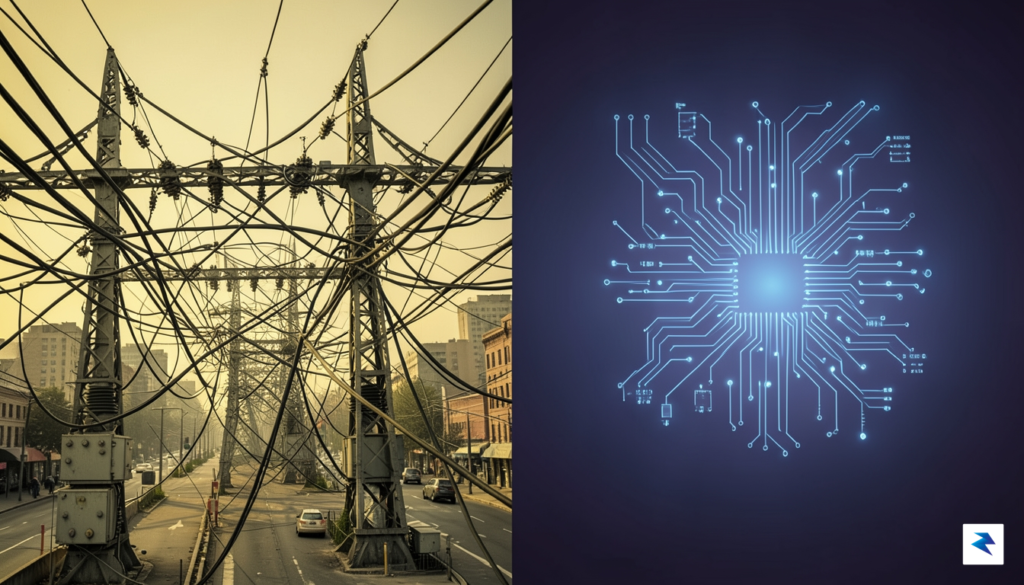
Achieving a 1,000x reduction in energy consumption is a goal that challenges the very foundations of modern computational physics and software engineering. Currently, the massive power draw of AI models is largely driven by the “von Neumann bottleneck,” where data must constantly shuttle back and forth between memory and the processing unit. To bridge this three-order-of-magnitude gap, we must move away from general-purpose hardware toward specialized, energy-efficient architectures. This shift relies on hardware-software co-optimization, where the underlying silicon is custom-tailored to the specific mathematical operations—such as low-precision matrix multiplications—that dominate neural network execution. By baking these functions directly into the hardware, we can eliminate the wasteful overhead of general instruction fetching and decoding.

The engineering breakthroughs necessary for this transformation involve more than just silicon; they require a fundamental rethink of how information is stored and processed. Innovative approaches, such as neuromorphic computing or analog-based processing, seek to mimic the synaptic efficiency of the human brain, which operates on a fraction of the energy required by digital supercomputers. By utilizing specialized memory structures—often referred to as Processing-in-Memory (PIM)—developers can perform calculations directly where the data resides. This eliminates the energy-intensive movement of bits across the bus, which currently accounts for the vast majority of power consumption in standard GPU-based training clusters.
To achieve a 1,000x leap, we cannot simply optimize existing code; we must fundamentally change the physical path that electrical signals travel during a single inference or training pass.
Naturally, such a drastic leap in efficiency involves complex trade-offs between speed, accuracy, and power consumption. In many current AI applications, we over-engineer precision; we perform calculations at higher bit-depths than are strictly necessary for the final output. By embracing aggressive quantization and sparsity—where we ignore unnecessary data connections within a model—we can drastically reduce the energy footprint without sacrificing the utility of the AI. While this might result in a slight dip in theoretical accuracy, the massive energy savings allow for a much larger, more robust model to be run on the same power budget, effectively democratizing access to high-performance AI.
Looking beyond the immediate domain of image generation, this efficiency gains immense significance for the scalability of large language models and autonomous systems. If these architectural shifts prove viable, the bottleneck for AI development would transition from energy costs to algorithmic innovation. This could allow complex, real-time AI agents to run locally on mobile devices or edge sensors, rather than requiring the massive, power-hungry data centers that currently dominate the landscape. Ultimately, the transition represents a move toward sustainable computing where the complexity of the intelligence is no longer tethered to the size of the electricity bill.
The successful deployment of an architecture capable of achieving a 1,000x reduction in energy consumption would fundamentally rewrite the economic calculus of the artificial intelligence industry. Currently, the prohibitive cost of electricity is a primary bottleneck for scaling large language models, forcing companies to prioritize capital-intensive infrastructure over algorithmic experimentation. If these energy requirements were suddenly slashed, the margins for AI service providers would expand dramatically, allowing startups to compete with hyperscalers that currently dominate the market through sheer hardware volume. This shift would transition the industry from an era of scarce, expensive compute to one of abundant, low-cost intelligence, effectively lowering the barrier to entry for innovative applications that were previously deemed too computationally expensive to operate at scale.
Cloud infrastructure providers stand to see the most immediate ripple effects as the demand for massive, energy-guzzling data centers evolves. If AI workloads no longer require the same level of raw power, the existing reliance on massive cooling systems and dedicated power grids could diminish, potentially rendering current data center designs obsolete. Furthermore, this shift could democratize access to high-performance AI, moving it from centralized “AI factories” to edge devices and local servers. As these models become more energy-efficient, they could be deployed directly on personal hardware or smaller, private clouds, reducing the dependency on the global cloud giants that currently control the distribution of AI capabilities.

By decoupling intelligence from extreme power consumption, the industry could move toward a more sustainable and decentralized future where AI is a utility rather than a luxury resource.
For hardware manufacturers like NVIDIA, AMD, and the emerging wave of custom silicon designers, this development presents a complex paradox. On one hand, a radical increase in efficiency could lead to a massive surge in the total addressable market, as more companies integrate AI into every facet of their operations. However, if the underlying architectural shift renders existing, power-hungry hardware designs less competitive, the major players may find themselves in a race to pivot their research and development strategies. Hardware providers will likely be forced to move away from purely maximizing raw performance toward optimizing for efficiency-per-watt, as the next generation of AI dominance will belong to those who can deliver the most intelligence with the smallest physical and electrical footprint.
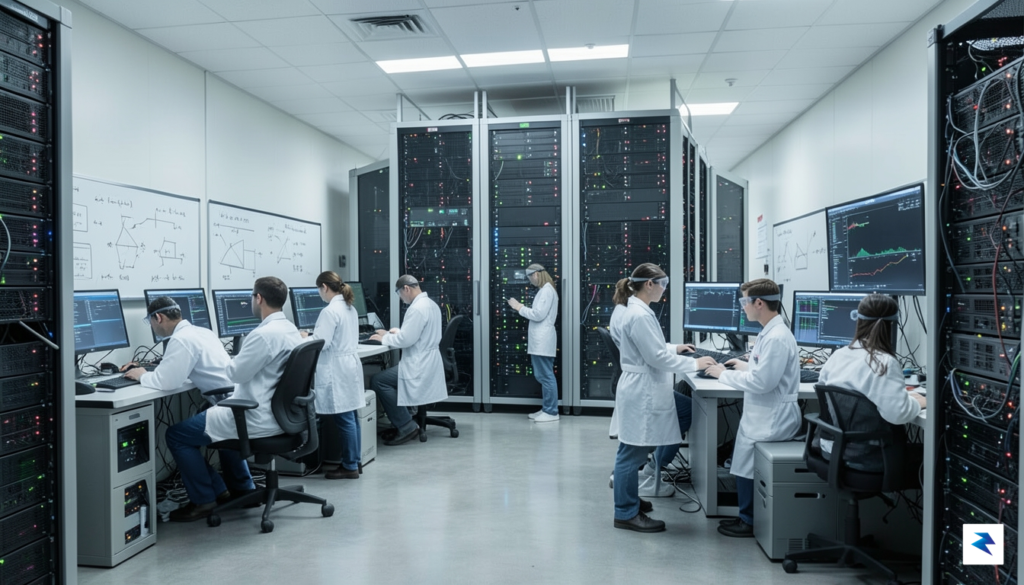
While the promise of a 1,000x reduction in energy consumption is undeniably transformative, the journey from a laboratory breakthrough to a functional industry standard is rarely a straight line. Scaling a novel architecture like Un-0 requires more than just theoretical efficiency; it demands a robust infrastructure capable of handling the massive, high-throughput demands of modern enterprise AI. Currently, the industry relies on a deeply entrenched ecosystem built around transformer models and specialized hardware like NVIDIA’s GPUs. Displacing these incumbents means not only proving that a new model is more efficient but also demonstrating that it can perform reliably across diverse, mission-critical workloads without sacrificing the nuanced performance that businesses now expect.
One of the most significant technical hurdles lies in software compatibility. The global AI stack—from PyTorch and TensorFlow to the low-level CUDA kernels that power hardware acceleration—is heavily optimized for the dominant transformer paradigm. To achieve widespread adoption, a new architecture must either find a way to plug seamlessly into these existing pipelines or force an industry-wide migration to a new set of tools. Developers are notoriously hesitant to abandon the environments they have mastered, meaning that any new solution must offer a path of least resistance. Without a robust developer ecosystem and mature library support, even the most energy-efficient model will struggle to gain traction against the sheer momentum of current standards.

The transition from a research success to a commercial staple is rarely about the math alone; it is about the friction of adoption within established engineering workflows.
Furthermore, the competitive response from existing AI giants cannot be underestimated. Companies like OpenAI, Google, and Meta have invested billions into optimizing transformer-based architectures and their associated data center footprints. These incumbents have a vested interest in protecting their technological hegemony, and they are likely to respond to challengers by doubling down on their own efficiency gains or by acquiring promising new architectures to fold them into their existing platforms. This creates a challenging environment for startups attempting to introduce radical shifts, as they must compete not only on technical merit but also against the immense financial and lobbying power of companies that define the current AI landscape.
Finally, we must consider the timeline for mainstream adoption, which will be heavily influenced by regulatory and standard-setting bodies. As governments begin to look more closely at the environmental impact of large-scale AI, new regulations regarding power usage and sustainability reporting may emerge. If Un-0 or similar technologies can prove their environmental credentials, they might find a faster route to adoption driven by policy rather than just market competition. However, establishing these new methods as industry benchmarks requires transparency, rigorous peer review, and long-term reliability testing, all of which take time to solidify before a company can confidently integrate them into their core product offerings.
You must be logged in to post a comment.