
Why OpenAI is Delaying Its IPO: A Strategic Move for Long-Term AI Dominance
The Strategic Delay: Why OpenAI is Hitting the Brakes The conversation surrounding a potential public offering for OpenAI has shifted…

Long before the era of algorithmic news aggregation and the sterile polish of corporate press releases, Om Malik emerged as a singular voice who understood that the pulse of Silicon Valley was not found in quarterly earnings reports or hardware specifications. His journey into the heart of technology began not as a dispassionate observer, but as a curious mind navigating the seismic shifts of the early internet. By cutting through the industry jargon that often obscured the true trajectory of innovation, he taught a generation of readers that the most important stories were those unfolding in the quiet, iterative work of engineers and visionaries. He possessed a rare, intuitive ability to distill complex architectural shifts into narratives that felt urgent, personal, and profoundly relevant to the average user.
What set Om apart in a crowded landscape of tech journalism was his unwavering commitment to the human element of digital transformation. While many of his contemporaries were focused on the next big IPO or the superficiality of market hype, he consistently redirected the conversation toward the people behind the code. He viewed technology as a deeply human story, a continuous dialogue between our innate desires and the tools we build to fulfill them. This philosophy allowed him to bridge the gap between the ivory towers of venture capital and the lived experiences of those whose lives were being fundamentally reshaped by these new digital ecosystems. His prose was never just about the “how” of a product; it was an exploration of the “why,” demanding that the industry acknowledge its ethical and social responsibilities.

Technology is not merely a collection of circuits and software; it is a reflection of our collective aspirations, our failures, and our enduring desire to connect in an increasingly fragmented world.
His legacy is anchored in his refusal to treat technology as an isolated vertical, separate from the broader currents of history and culture. By prioritizing nuance over speed and curiosity over cynicism, he elevated tech journalism into a form of literature. He was a mentor to many, a skeptic of the status quo, and a constant advocate for authenticity in an industry that frequently prizes performance over truth. As we reflect on his contributions, it becomes clear that his true impact lies not just in the articles he wrote, but in the standard of integrity he set for everyone who picks up a pen to document the future. His voice—thoughtful, incisive, and deeply humane—leaves an indelible mark on the landscape he spent his career meticulously mapping for us all.

To read Om Malik was to engage with a mind that refused to be seduced by the glossy surface of a product launch. While much of the technology press was busy reciting spec sheets or breathlessly tracking market valuations, Om possessed a singular, almost surgical ability to peer beneath the veneer of the hype cycle. He understood that the true story of technology was never found in the device itself, but in the ripple effects it created within the fabric of our daily lives. By prioritizing the “why” over the “what,” he transformed the way we interpret digital change, teaching his readers that a new interface or a faster processor mattered only insofar as it shifted how we connect, work, and perceive our own humanity.
His signature prose style was defined by an elegant brevity that felt both urgent and deeply considered. Om did not need thousands of words to dismantle a trend; he often did it in a few punchy, incisive sentences that cut straight to the heart of the matter. This economy of language was not merely an aesthetic choice, but a manifestation of his inherent skepticism. He viewed the industry with a healthy, seasoned doubt that served as a necessary counterbalance to the relentless optimism of Silicon Valley. Where others saw a revolutionary breakthrough, Om looked for the second-order effects—the unintended consequences, the hidden costs, and the societal shifts that would only become apparent long after the initial marketing glow had faded.

The true value of a tool is not measured by its feature list, but by how it fundamentally alters the rhythm of our lives.
This commitment to finding the signal in the noise made him a foundational figure for a generation of writers who sought to move beyond mere reporting. Om influenced a wide array of journalists and thinkers to stop acting as stenographers for corporate press releases and start acting as observers of the human condition. He demanded that we look at tech through a humanistic lens, consistently asking what these tools were doing to our attention spans, our communities, and our collective privacy. Because he was never afraid to challenge the prevailing narrative, his work remains a masterclass in independent thought.
Ultimately, his legacy lies in this unique capacity to treat technology as a cultural subject rather than a mechanical one. By framing every advancement within the context of history and human behavior, he provided his readers with a map for navigating an increasingly complex world. He taught us that to truly understand the future, one must first be willing to interrogate the present with unflinching honesty. Even as the industry changes and new platforms emerge, the intellectual rigor he modeled remains a vital compass for anyone trying to make sense of the digital age.

When Gigaom first emerged onto the digital landscape, it was more than just a blog; it was a radical assertion that the future of journalism did not belong exclusively to the lumbering, traditional giants of the legacy press. At a time when tech reporting was often relegated to superficial press release regurgitation, the platform pioneered a model built on rigorous, expert-led analysis that respected the intelligence of its audience. By positioning deep-dive research and nuanced commentary at the center of the experience, it proved that independent journalism could be both sustainable and authoritative. This shift fundamentally altered the industry’s perception of what a digital newsroom could look like, showing that deep expertise, rather than mere speed or corporate scale, was the most valuable currency in the information age.
Central to this revolution was the early adoption of the subscription-based model for specialized news, a strategy that many legacy outlets eventually scrambled to emulate years later. Long before the “paywall” became a standard industry defensive mechanism, Gigaom was cultivating a dedicated readership willing to pay for clarity and insight in an increasingly noisy tech ecosystem. This approach was inherently tied to the strength of its community, which served as a dynamic, intellectual partner in the editorial process. Rather than treating readers as passive consumers, the platform fostered a dialogue where the boundary between the journalist and the expert practitioner was often porous, creating a collaborative environment that anticipated the modern creator economy by nearly a decade.

The true success of the Gigaom model was not in the technology it covered, but in the community it built—a testament to the idea that expertise, when shared with transparency and passion, transforms readers into a dedicated movement.
The lessons imparted by this era remain profoundly relevant as we navigate the current fragmentation of the media landscape. The platform demonstrated that the most enduring journalism is that which cultivates a distinct voice and builds a loyal audience through consistent, high-value delivery. By prioritizing depth and human connection over the ephemeral metrics of the click-driven web, the Gigaom era set a high bar for digital integrity. It remains a blueprint for how independent thinkers can bypass traditional gatekeepers to reach a global audience, proving that the most important stories are often those told by individuals who are deeply embedded within the communities they serve.
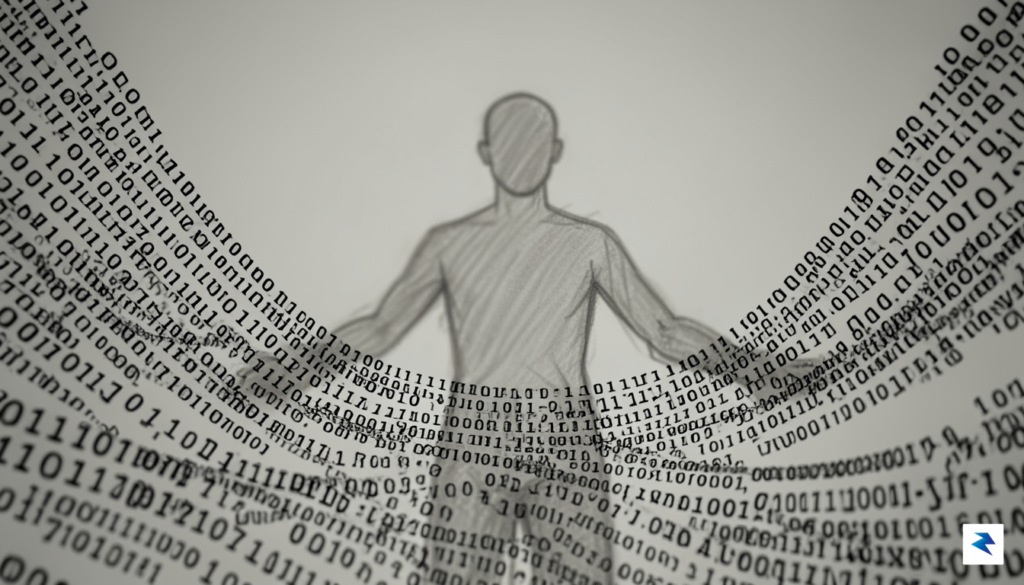
In his final years, Om Malik became a poignant sentinel for the soul of the digital age, observing with characteristic clarity as our tools began to reshape the fundamental architecture of human experience. He possessed an uncanny ability to peel back the polished surface of Silicon Valley’s latest innovations, revealing the deeper, often unsettling, implications for our collective well-being. While he was a pioneer in documenting the rise of the connected world, he eventually pivoted toward a more contemplative stance, cautioning us against the invisible erosion of our human agency. For Om, the promise of the internet was never merely about speed or efficiency; it was about the potential for profound, authentic human connection that transcends geography and social strata.
As the conversation shifted toward generative AI and the automated curation of our reality, Om’s work served as a necessary ballast against the tide of technological determinism. He frequently argued that we were sleepwalking into an era where algorithms decide not just what we see, but how we perceive the world around us. His skepticism was not rooted in a Luddite rejection of progress, but rather in a deep-seated belief that technology should remain a subservient instrument of human intent. He warned that if we allow our digital habits to be dictated by engagement-driven models, we risk losing the serendipity, nuance, and friction that define a meaningful life.

The true measure of our technological success should not be how much time we spend in front of a screen, but how much that screen enriches the quality of our face-to-face interactions and the depth of our inner lives.
This philosophy of digital wellness became the cornerstone of his later writing, as he urged his readers to cultivate a more intentional relationship with their devices. He saw the current obsession with generative AI as a dangerous shortcut, a way to outsource the very creative and critical thinking processes that make us human. To Om, the “algorithmic takeover” of our daily lives was a quiet crisis of spirit. He constantly nudged his audience to prioritize what he called the “analog moments”—the unscripted conversations, the quiet walks, and the messy, imperfect reality that no large language model could ever truly replicate or understand.
Ultimately, his legacy in this space is a challenge to all of us living in the shadow of rapid automation: to reclaim our attention and our humanity from the machinery of the digital economy. He taught us that while connectivity is a gift, it is also a responsibility that requires constant vigilance. By championing the idea that technology must serve the human spirit rather than replace it, Om left behind a roadmap for navigating an increasingly automated world without losing our sense of self. His voice remains a steady reminder that in an age of artificial intelligence, the most radical and necessary act is to remain unapologetically, defiantly human.

To understand Om Malik is to understand a life lived as a perpetual experiment, one defined by an insatiable hunger for the “why” behind the “what.” He did not merely report on the shifting tectonic plates of the technology industry; he lived among them, observing the tremors of change with a rare, quiet intensity. Whether he was dissecting the rise of a Silicon Valley behemoth or exploring the nuanced intersection of culture and connectivity, his approach remained anchored in a fundamental humility. He possessed an uncanny ability to strip away the jargon and marketing veneer that often obscures the reality of innovation, seeking instead the human stories that powered every line of code and every strategic shift in the digital landscape.
Beyond his sharp insights, Om was a profound architect of community, serving as a mentor to countless journalists and creators who sought to navigate the complexities of a rapidly evolving media landscape. He gave generously of his time, teaching those around him that the most valuable asset in any career is not a static set of skills, but the agility of one’s mind. He fostered a culture of deep inquiry, pushing his peers to look past the surface-level metrics of growth to ask what truly mattered for the long-term health of our digital society. For those he mentored, his greatest lesson was not just how to cover the news, but how to maintain a sense of wonder in an industry that frequently prioritizes speed over substance.

Ultimately, his life serves as a definitive argument for the power of the “beginner’s mind”—that rare capacity to approach even the most familiar subjects with the openness and skepticism of a newcomer. In an era characterized by the relentless acceleration of news cycles, Om’s work stands as a testament to the endurance of thoughtful, intentional writing. His extensive archives are not merely historical records of a bygone era in tech; they are a living library of perspective, offering a roadmap for how to remain relevant by staying perpetually curious. While the industry continues to move at a breakneck pace, the legacy he leaves behind reminds us that the most impactful voices are those that choose to listen, learn, and question, long after the rest of the world has decided it knows the answer.
The true measure of a journalist is not the breadth of their influence, but the depth of the curiosity they ignite in others.
Om’s personal character—marked by a gentle tenacity and an unwavering commitment to intellectual honesty—will be missed as deeply as his byline. He navigated the complexities of the digital age with a grace that was as rare as it was refreshing, never losing his humanity amidst the machines. As we reflect on his contributions, we find that his work continues to challenge us to be better observers, deeper thinkers, and more compassionate participants in the global conversation. He taught us that technology is ultimately about people, and his own life remains the most compelling story he ever told.
You must be logged in to post a comment.