The End of the Road? How Volkswagen Lost Its Grip on China
The Golden Era: Volkswagen’s Dependency on the Chinese Market In the early 1980s, while most global automakers viewed the People’s Republic of…

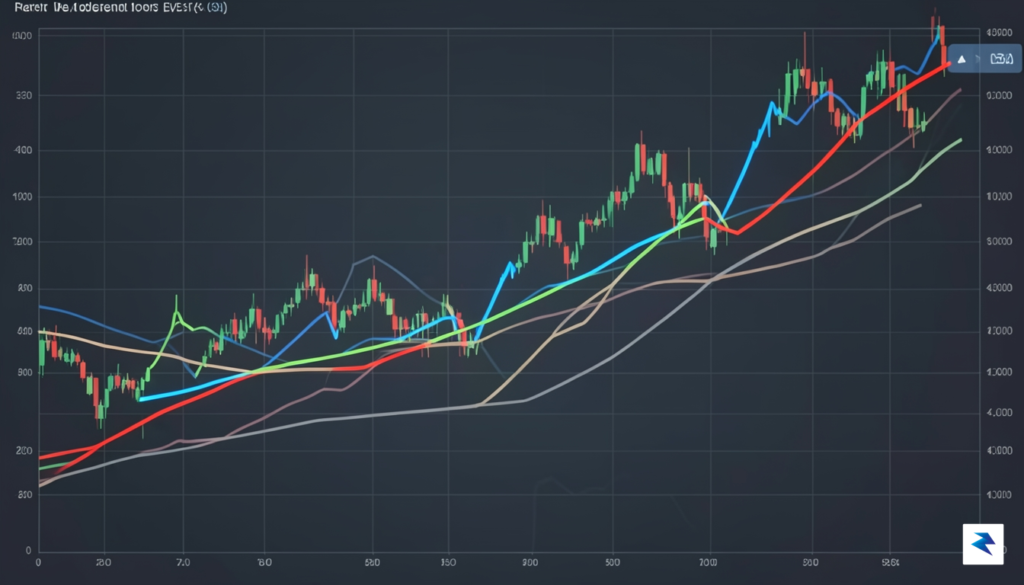
At first glance, the mid-year financial reports paint a picture of undeniable prosperity, with major indices reaching record-breaking heights that suggest a rising tide lifting all ships. However, beneath the surface of these headline-grabbing numbers lies a structural fragility that warrants careful scrutiny. Most mainstream market indices, such as the S&P 500, are market-cap-weighted, meaning that the largest companies exert a disproportionate influence on the overall movement of the index. This mathematical reality creates a performance mirage: when a small cluster of massive tech titans surges, the entire index appears to be thriving, even if the vast majority of the underlying companies are stagnating or struggling to turn a profit.
The disparity between the so-called “Magnificent Seven”—the dominant technology and AI-focused giants—and the remaining 493 companies in the S&P 500 has reached an extreme not seen in decades. While these few industry leaders have captured the imagination of Wall Street through aggressive AI investment, the broader market remains tethered to a more tepid economic reality. To illustrate this point, one need only look at the performance of an equal-weighted index, which treats every member of the S&P 500 as an equal participant. When stripped of the outsized influence of the tech giants, the index reveals a much narrower, more cautious recovery that lacks the universal strength implied by the standard, market-cap-weighted headline figures.

The danger of a concentrated market lies in the false sense of security it provides to the average investor, who may believe their diversified portfolio is participating in a broad economic expansion when, in reality, they are heavily exposed to a narrow sector of the market.
This extreme concentration creates a precarious dependency; if the AI-driven momentum of these few companies faces a correction, the headline indices will inevitably suffer, regardless of how the rest of the corporate landscape is performing. For the average individual investor, this realization is critical because it highlights that index funds may not be the “set it and forget it” diversifiers they were historically considered to be. By relying solely on the performance of a few tech heavyweights, investors are essentially placing a concentrated bet on a specific technological cycle rather than broad economic growth. Recognizing this illusion of breadth is the first step toward building a more resilient, truly diversified strategy that can withstand the potential volatility of an overly centralized market.

For years, investors have leaned on the safety of index funds, operating under the assumption that broad market participation provides a natural hedge against volatility. However, the current landscape of the equity market has shifted, creating a phenomenon where index performance is increasingly tethered to a handful of massive technology firms. This extreme concentration creates a systemic vulnerability: when the majority of market gains are generated by a narrow cohort of companies, the entire portfolio becomes hypersensitive to industry-specific shocks. If a singular regulatory shift, a supply chain bottleneck, or a sudden change in capital expenditure priorities hits the artificial intelligence sector, the ripple effects are no longer contained to tech-heavy portfolios; they inevitably destabilize the broader indices upon which millions of retirees and retail investors rely.
History serves as a sobering reminder of what happens when market leadership becomes overly exclusive. During the late 1990s, the Dot-com bubble was fueled by a narrow obsession with internet-based growth, leading to a disconnect between valuation and underlying productivity. Much like today, the excitement was rooted in a genuine technological revolution, yet the concentration of capital in a small group of high-flying stocks meant that when sentiment finally shifted, the collapse was indiscriminate. While modern AI giants boast far stronger balance sheets than the speculative firms of 1999, the structural risk remains the same: high correlation. When the top-weighted stocks in an index move in near-perfect lockstep, the mathematical benefits of diversification—the idea that some assets will zig while others zag—effectively evaporate.

Concentration is a double-edged sword; while it accelerates gains during a bull market, it strips away the protective insulation that diverse asset allocation is intended to provide.
This reliance on a few dominant players fundamentally alters the risk-reward profile for the average investor. Many individuals mistakenly believe that owning an S&P 500 fund grants them exposure to the entire economy, yet the current weighting means that a significant portion of their risk is actually tied to the specific outcomes of the “Magnificent Seven.” If these companies experience a synchronized drawdown, the indices will retreat regardless of the health of smaller, traditional sectors like healthcare, energy, or manufacturing. Consequently, investors must confront the reality that their portfolios are currently being driven by a high-stakes momentum trade rather than a balanced representation of global economic activity. Protecting against this requires a nuanced understanding of how much “AI beta” is embedded in one’s holdings, as the cost of ignoring this concentration could be substantial should the current leadership cycle eventually break.

The current frenzy surrounding artificial intelligence has catalyzed a massive surge in market valuations, yet beneath this surface-level exuberance lies a growing disconnect between heavy capital expenditure and tangible bottom-line results. Major technology giants are currently engaged in a historic arms race, pouring hundreds of billions of dollars into data centers, specialized semiconductors, and energy infrastructure. While these massive investments are essential for building the foundational models of tomorrow, they represent a significant drag on current free cash flows. Investors have largely cheered this spending as a down payment on future dominance, but the reality is that the transition from infrastructure build-out to widespread corporate profitability remains largely unproven at this stage.

This situation creates what many analysts are beginning to identify as a productivity gap. Despite the optimistic narratives presented during earnings calls, broad-based corporate profit margins have yet to show the transformative efficiency gains that AI proponents suggest are inevitable. Companies across various sectors are currently in the experimental phase, spending heavily on subscription fees and integration costs for AI tools without seeing a proportional increase in output or a significant reduction in operational expenses. Consequently, the market is currently operating on a “priced-for-perfection” logic, where current stock prices assume that these massive expenditures will inevitably yield outsized, near-term returns. If the expected productivity revolution fails to materialize within the next few fiscal cycles, this misalignment between speculative growth and operational reality could lead to a painful re-rating of assets.
The danger for the average investor lies in the assumption that the infrastructure boom is synonymous with universal profitability; currently, the value is being captured by the providers of the hardware, while the end-users are still struggling to translate AI integration into measurable margin expansion.
Furthermore, the concentration of market gains among a handful of dominant players exacerbates this risk. When a significant portion of market performance is tethered to a small cluster of companies, any delay in their ability to monetize their AI investments could trigger widespread volatility. Investors must learn to distinguish between the long-term transformative potential of the technology—which is undeniably significant—and the immediate financial performance of the firms currently leading the charge. Relying on the belief that historical growth patterns will continue indefinitely ignores the cyclical nature of hardware investment and the inevitable scrutiny that follows any prolonged period of high spending without commensurate revenue growth. To navigate this period safely, one must look past the hype and demand proof of concept in the form of sustainable, scalable, and profitable business models.

The first step toward securing your financial future in an AI-dominated market is an honest assessment of your current exposure. Many retail investors mistakenly believe they are diversified simply because they hold a handful of different exchange-traded funds (ETFs) or mutual funds. However, a deep dive into your holdings—specifically looking at the “top ten” components of those funds—often reveals that a significant portion of your capital is tied to the same small cluster of mega-cap technology firms. If your portfolio is heavily skewed toward these players, a correction in the tech sector will not just be a minor dip; it could lead to a disproportionate loss that undermines your long-term goals. Utilize online portfolio analysis tools to view your aggregate exposure to specific sectors and individual companies, ensuring that your reliance on artificial intelligence growth is a conscious choice rather than an accidental byproduct of index investing.

Once you have identified an over-concentration, the next logical step is to rebalance by introducing non-correlated assets. Bonds and fixed-income securities serve as a vital ballast during periods of extreme market volatility, providing a predictable cushion when growth stocks experience rapid sell-offs. Furthermore, investors often overlook the potential of international diversification, which offers exposure to markets operating under different economic cycles and regulatory environments than the U.S. tech sector. By spreading your risk across geography and asset class, you create a defensive perimeter that protects your principal from a single-sector meltdown while still allowing for participation in global economic development.
The most dangerous phrase in investing is not just “this time it’s different,” but the assumption that yesterday’s winners will inevitably be tomorrow’s leaders without a period of consolidation.
Beyond the technical mechanics of rebalancing, you must grapple with the psychological weight of FOMO—the Fear of Missing Out. It is easy to feel left behind when daily headlines trumpet the unprecedented gains of AI-driven stocks, but chasing momentum at the peak of a cycle is a recipe for poor timing and subsequent regret. Emotional investing often leads to buying high and selling low, the exact opposite of a disciplined strategy. Instead of reacting to the daily news cycle, establish a firm set of rules for your portfolio, such as predetermined profit-taking thresholds or a consistent dollar-cost averaging schedule. By removing the emotional component from your decision-making process, you can navigate the current exuberance with a level head, ensuring that your long-term financial health remains intact regardless of how the AI trend ultimately matures.

While the explosive growth of artificial intelligence has undoubtedly captured the imagination of global markets, seasoned investors understand that historical cycles inevitably revert to the mean. Chasing momentum in a highly concentrated sector can feel exhilarating during a bull run, but it often blinds participants to the creeping accumulation of systemic risk. To preserve wealth, one must transition from a mindset of speculative participation to one of disciplined stewardship. The most effective defense against market volatility is not predicting the next peak, but rather adhering to the timeless principle of time-in-the-market, which consistently outperforms the futile attempt to time market shifts.

Regular portfolio rebalancing serves as the primary mechanism for enforcing this discipline. When a handful of AI-driven stocks dominate a portfolio, they quietly increase the investor’s exposure to a single point of failure. By systematically selling off portions of high-flying winners and reinvesting those proceeds into undervalued or overlooked sectors, investors can lock in gains while simultaneously lowering their overall risk profile. This mechanical process removes the emotional bias that often leads to holding onto overvalued assets for too long, ensuring that the portfolio remains aligned with a target asset allocation regardless of the prevailing market fervor.
The goal of a robust investment strategy is not to capture every dollar of a speculative run, but to ensure that your financial future is not tied to the success or failure of a single technological narrative.
Ultimately, the objective is to decouple your personal financial health from the volatility of speculative trends. Rather than asking whether the current AI surge will continue for another quarter, investors should ask whether their current holdings remain consistent with their long-term financial objectives, such as retirement, education, or wealth preservation. By focusing on fundamental investment principles—diversification, valuation, and consistent rebalancing—you can navigate the inevitable turbulence of the market with confidence. Maintaining this steady course is the surest way to transform the fleeting gains of a tech boom into the lasting stability of a well-constructed, resilient financial future.
You must be logged in to post a comment.