
Oil Markets and the Persian Gulf: Analyzing the Recent Price Shift
The Anatomy of Current Oil Market Volatility The recent upward trajectory in crude oil prices is far more than a simple reaction to news…
In the quiet, often overlooked corners of digital forums, a stark narrative of modern financial precarity is unfolding. Within the online space dedicated to those living on the precipice of displacement, thousands of individuals are documenting the fragile reality of surviving in an economy where the buffer between stability and destitution has become perilously thin. These users are not necessarily defined by their current lack of a roof, but rather by the crushing anxiety of an impending eviction, a sudden job loss, or a single medical emergency that could dismantle their lives overnight. This community has become a digital sanctuary for people who, until recently, viewed themselves as firmly entrenched in the middle class, only to find the ground shifting beneath them due to skyrocketing rents and stagnant wages.

The demographics of this community defy the traditional stereotypes often associated with housing instability. Among the posters are single parents balancing childcare costs against utility bills, gig workers whose income fluctuates wildly from week to week, and older adults watching their retirement savings evaporate under the pressure of inflation. They share a common thread: they are the “working poor” and the “working middle class,” individuals who have played by the rules—maintaining employment, paying taxes, and managing debt—yet find that these efforts no longer guarantee the basic security of a permanent home. This shift reflects a broader, systemic failure where the cost of living has fundamentally decoupled from the average income, leaving a vast demographic stranded in a state of perpetual fiscal vulnerability.
The “almost” status is not merely a temporary setback; it is a psychological state of living in a state of high-alert, where every paycheck is scrutinized for its potential to delay the inevitable for just one more month.
As a modern-day support group, the platform provides more than just financial advice or resource sharing; it serves as a vital emotional outlet for those who feel isolated by their struggle. In a society that often stigmatizes poverty, these forums allow users to strip away the facade of normalcy and speak candidly about the shame and fear that accompany the threat of homelessness. By documenting their daily maneuvers—choosing between groceries and gas, negotiating with predatory landlords, or navigating labyrinthine social safety nets—these individuals are creating a collective record of a systemic issue that politicians and policymakers are only beginning to acknowledge. Ultimately, the community highlights the precariousness of the American Dream, revealing that for a growing number of citizens, the line between living in a home and living on the street is dictated less by personal failure and more by the widening chasm of wealth inequality.
At the heart of the housing crisis lies a fundamental disconnect between the cost of survival and the reality of modern compensation. For decades, the metric for “affordable” housing—defined as spending no more than 30% of gross income on rent—has been systematically dismantled by a rental market that has far outpaced wage growth. As landlords capitalize on high demand and limited inventory, low- and middle-income workers are frequently forced to allocate 50% or more of their monthly earnings just to maintain a roof over their heads. This rent-to-income imbalance leaves virtually no room for error, transforming what should be a basic human necessity into a constant, crushing financial burden that prevents individuals from accumulating any semblance of long-term stability.
Compounding this structural trap is the persistent, corrosive effect of inflation on the essential pillars of life. When the price of groceries, utilities, and fuel rises faster than the digits on a paycheck, the “middle class” buffer evaporates. Families are no longer choosing between luxuries; they are choosing between nutrition, transportation, and rent. This erosion of the social safety net means that when a singular, unexpected financial emergency occurs—a broken transmission, a sudden dental crisis, or an unpaid medical invoice—there is no reserve fund to act as a shock absorber. For many, this represents a sudden and violent descent into precarity, where the loss of a few hundred dollars can trigger a catastrophic domino effect, leading directly to the loss of housing.
The fragility of the current economic landscape ensures that even those who are diligently employed are only ever one major misfortune away from the threshold of homelessness.
Ultimately, these recurring patterns illustrate that housing insecurity is not the result of personal failure, but rather a symptom of a systemic inability to distribute prosperity equitably. The shift toward a gig-based economy, combined with the rising costs of childcare and healthcare, has created a landscape where the standard “hard work” narrative no longer yields the same guaranteed stability it once did. When the cost of living consistently outruns the standard of living, the resulting housing instability becomes an inevitable byproduct of a broken machine. Until the macro-economic drivers—such as the stagnation of the minimum wage and the lack of robust, affordable housing initiatives—are addressed, the cycle of precarity will continue to widen its reach, pulling more people into the ranks of the vulnerable.
When the traditional safety nets of society — government assistance programs, local charities, and even familial support — begin to fray or prove insufficient, individuals teetering on the brink of homelessness often find themselves navigating an incredibly complex and unforgiving landscape alone. It is in this vulnerable space that a community like the ‘Almost Homeless’ subreddit transforms into an invaluable, decentralized support system. Here, the collective wisdom and shared struggles of thousands coalesce into a dynamic forum where survival is not just a hope, but an actively sought-after outcome through mutual aid and practical guidance.
This digital haven thrives on the principle of peer-to-peer empowerment, enabling users to swap vital information that can mean the difference between maintaining a precarious existence and slipping into absolute destitution. Far from being a space for mere commiseration, the subreddit is a bustling exchange of actionable intelligence. Members consistently share their hard-won knowledge on everything from how to effectively navigate bureaucratic hurdles to the most efficient ways of stretching meager resources, creating a living repository of life-saving hacks.
One common thread involves detailed strategies for accessing and optimizing food security. Users frequently post tips on locating local food pantries, understanding their eligibility requirements, and even advising on the best times to visit for maximum availability. Similarly, the community actively compiles and disseminates information about utility assistance programs, guiding others through the often-confusing application processes for electricity, gas, or water bill relief. These aren’t just lists; they are often accompanied by personal anecdotes and direct advice on what paperwork to prepare and who to contact, turning abstract programs into tangible lifelines.
Beyond immediate needs, the community also delves into preventative measures crucial for long-term stability. Discussions frequently revolve around innovative roommate-finding strategies, emphasizing safety precautions and red flags to watch out for in shared living situations. Furthermore, threads dedicated to legal advice, particularly concerning tenant rights and eviction prevention, empower individuals to understand their entitlements and challenge unlawful practices. Fiscal budgeting tips, from creating an emergency fund with minimal income to managing mounting debt, are also mainstays, providing realistic pathways to financial resilience in incredibly challenging circumstances.
The psychological value derived from this online interaction cannot be overstated. The veil of anonymity often encourages a level of candor and vulnerability that might be impossible in face-to-face interactions, where shame or stigma could easily deter someone from asking for help. This anonymity fosters an environment of profound empathy, as individuals who have experienced similar hardships offer non-judgmental support and understanding. Knowing that one is not alone in their struggle, and that others genuinely care enough to share their own survival tactics, provides a critical boost to mental well-being and a sense of belonging amidst overwhelming isolation.
However, while the ‘Almost Homeless’ community offers a powerful model of digital solidarity, it is essential to acknowledge the inherent limits of peer-to-peer support. While invaluable for immediate practical advice and emotional support, it cannot fully replace the systemic solutions required to address the root causes of wealth inequality and housing insecurity. The information shared, while often accurate and helpful, is not always vetted by professionals, and individual circumstances can vary greatly. Ultimately, these digital communities serve as vital coping mechanisms and information hubs, highlighting both the resilience of individuals and the profound gaps in societal safety nets that urgently need robust, institutional intervention.

The digital desperation found within these online communities is not a coincidence, nor is it a reflection of individual moral failing; rather, it is the logical byproduct of an economic landscape that has become increasingly hostile to the average earner. While members of the subreddit offer each other life-saving tips on how to stretch a remaining twenty dollars or navigate the labyrinthine bureaucracy of local social services, these acts of grassroots kindness exist in the shadow of a profound systemic imbalance. We are currently witnessing a historic divergence where the net worth of the ultra-wealthy continues to climb to stratospheric heights, while the baseline for human survival—specifically the cost of a roof over one’s head—has become untethered from the realities of median income.
This chasm between the billionaire class and the working public is not merely a matter of economic statistics; it is a fundamental failure of housing policy that treats shelter as a speculative investment vehicle rather than a basic human right. For decades, the construction of affordable housing has failed to keep pace with population growth, while corporate entities have aggressively bought up single-family homes to convert them into high-margin rentals. This deliberate commodification of living space has effectively eroded the concept of middle-class stability. Where a full-time job once guaranteed a pathway to homeownership or at least a stable lease, that expectation has been replaced by a state of permanent precariousness, where a single medical emergency or a car repair can be the difference between having a bed and sleeping in a vehicle.
The normalization of precarious living is the most damning indictment of our current economic era: when even those who are employed full-time find themselves one paycheck away from displacement, the social contract has effectively been dismantled.
Furthermore, the shift from stability to volatility is now a standard experience for a vast swathe of the population that previously considered itself secure. This is not a temporary dip in the business cycle, but a structural realignment of the economy that prioritizes asset appreciation for the few over the fundamental physical security of the many. As the floor falls out from under renters and low-to-middle-income families, the subreddit serves as a harrowing census of those who have been left behind by a system that rewards the hoarding of capital while punishing the pursuit of basic stability. Until the structural incentives that prioritize luxury development and corporate property ownership are addressed, these digital spaces will continue to swell with individuals who are doing everything “right” by the standards of traditional society, yet still find themselves on the precipice of total erasure.
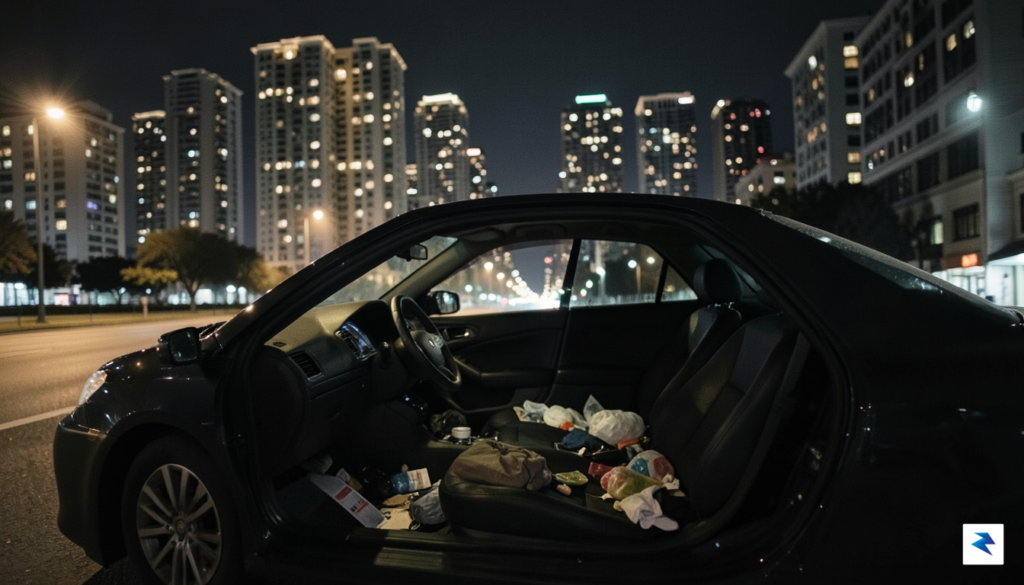

The digital threads within the “Almost Homeless” community expose a harsh reality: the traditional narrative of the American dream is being hollowed out by the sheer weight of modern economic instability. For decades, we have been conditioned to view financial struggle through the lens of individual failure, assuming that hard work is an infallible shield against poverty. However, the testimonies shared online suggest otherwise, revealing a landscape where full-time employment, diligent budgeting, and personal sacrifice are no longer enough to guarantee basic housing security. When the difference between stability and displacement is a single unexpected car repair or a medical co-pay, it becomes clear that we are not witnessing a crisis of individual incompetence, but rather a systemic vulnerability that threatens the very foundation of our society.
Addressing this precarious existence requires a fundamental shift in how we approach housing policy and social safety nets. We must move away from the stigmatization of those teetering on the edge and instead acknowledge that the current market dynamics are fundamentally broken for the working class. Current housing policies, which prioritize investment vehicles and corporate ownership over the availability of affordable living spaces, have effectively priced out the backbone of the economy. Without aggressive legislative intervention—such as robust rent stabilization measures, the expansion of low-income housing tax credits, and the decoupling of essential services from traditional employment—the gap between the wealthy and the working poor will only widen until the social fabric begins to fray beyond repair.
The future of economic mobility depends on our collective willingness to recognize that housing is a fundamental human necessity rather than a speculative asset class. If we fail to implement structural reforms that protect the most vulnerable, we risk cementing a permanent underclass defined not by a lack of ambition, but by a lack of opportunity.
Looking toward the future, the path forward must involve a multi-pronged legislative effort that centers on human dignity rather than solely on market efficiency. This includes incentivizing the construction of high-density, mixed-income developments and creating stronger tenant protections that prevent predatory evictions. If we continue to ignore the warning signs displayed by those struggling to keep a roof over their heads, we implicitly accept a future where the American dream is reserved for an increasingly narrow sliver of the population. True economic mobility is impossible in a society where the threat of homelessness is used as a constant, coercive pressure; only by anchoring our economy in the basic security of its citizens can we hope to restore a sense of fairness and promise to the next generation.
You must be logged in to post a comment.