
Is Your Modern Home Straining Your Brain? The Hidden Cost of Minimalism
The Psychological Toll of Modern Minimalism For years, modern minimalism has reigned supreme in interior design, capturing the imagination of…


The modern JavaScript landscape has undoubtedly reached a state of intense fragmentation. As developers, we are often forced to stitch together a precarious mosaic of disparate runtimes, package managers, and build tools, each with its own quirks and configuration overhead. This “toolbox assembly” approach frequently leads to compatibility friction and maintenance fatigue, slowing down the very innovation it is meant to support. While individual tools have evolved to be faster and more efficient, the lack of a cohesive, end-to-end strategy across the development lifecycle has created a significant hurdle for teams aiming to scale their projects seamlessly from the server-side to the desktop.
Enter Ant, a bold new entrant designed to fundamentally rethink the developer experience. Rather than positioning itself as just another isolated engine to execute code, Ant arrives as a holistic ecosystem that seeks to unify the entire spectrum of web and desktop development. By consolidating backend services, native package management, and cross-platform UI capabilities into a single, coherent platform, Ant eliminates the need for the fragmented configuration chains that have become the industry standard. It acknowledges the complexity of modern engineering and offers a streamlined path that allows developers to focus on building features rather than managing infrastructure.
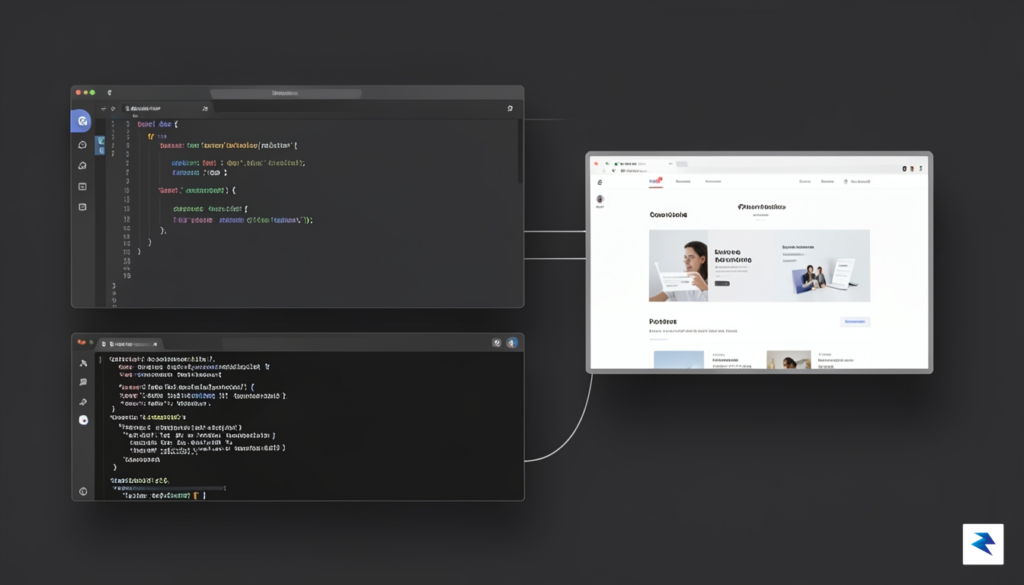
A core pillar of the Ant philosophy is the commitment to total compatibility without sacrificing innovation. Developers are not forced to abandon their existing knowledge or abandon the vast wealth of resources found within the NPM registry; instead, Ant acts as a bridge that maintains full interoperability with the Node.js ecosystem. This design choice ensures that migrating to a more robust platform does not equate to a complete rewrite of your codebase. By embracing existing standards while providing a high-performance internal toolchain, Ant allows teams to tap into the benefits of a modern, unified environment immediately, without the friction typically associated with adopting new technologies.
Ant represents a shift in focus from managing individual runtime dependencies to cultivating a unified, high-performance lifecycle that bridges the gap between server-side logic and client-side presentation.
The vision for Ant extends beyond simple execution; it is built to be an infrastructure-aware platform. By integrating the toolchain directly into the runtime, Ant provides developers with deeper insights into how their applications interact with system resources, whether they are deploying microservices to the cloud or compiling high-performance desktop applications. This vertical integration allows for optimizations that were previously impossible when tools were siloed. Ultimately, Ant is designed to empower a new generation of development, where the barrier to entry for building complex, cross-platform applications is lowered through simplicity, unity, and raw performance.

Ant distinguishes itself not merely as an incremental improvement in the JavaScript landscape, but as an ambitious undertaking to forge a vertically integrated development stack. This comprehensive approach aims to streamline the entire software lifecycle, from local development to global deployment and even cross-platform desktop applications. By meticulously crafting its own core components – the runtime, package registry, deployment platform, and a desktop framework – Ant seeks to alleviate the pervasive “configuration fatigue” that often plagues modern web development, offering a cohesive and opinionated environment designed for efficiency and ease of use.
At its very core, Ant provides a robust JavaScript runtime, engineered not merely as an alternative to existing solutions but as the foundational layer of its integrated ecosystem. This runtime is designed with performance, security, and developer experience in mind, offering a consistent execution environment across all aspects of the Ant stack. Crucially, it comes with built-in tooling and standard library enhancements that are tightly coupled with the other Ant components, meaning developers spend less time configuring build tools, managing dependencies, or wrestling with environmental discrepancies. This deep integration allows for optimizations that would be challenging to achieve in a fragmented ecosystem, paving the way for faster application startup times and more efficient resource utilization.
Complementing the runtime is Ant’s bespoke package registry, ants.land. This isn’t just another public repository; it’s deeply interwoven with the Ant runtime and deployment platform, serving as a central hub for managing project dependencies and sharing code. Unlike traditional registries that might require manual caching or complex mirroring setups for production, ants.land is engineered to communicate seamlessly with Ant’s other services. This tight integration can significantly reduce build times by intelligently resolving and serving packages, potentially leveraging optimizations like content-addressable storage or pre-compiled modules tailored for the Ant runtime. Furthermore, it opens avenues for enhanced security features, such as automated vulnerability scanning and dependency auditing, directly within the ecosystem.
Further solidifying its vertically integrated vision, Ant offers its own dedicated deployment platform. This platform is meticulously designed to eliminate the common headaches associated with taking an application from development to production, offering a “zero-config” or minimal-config deployment experience. When an Ant application is pushed to the platform, it leverages the same Ant runtime and interacts directly with ants.land for dependency resolution, ensuring consistency and predictability. The platform handles everything from automatic builds and environment provisioning to scaling and monitoring, abstracting away the complexities of infrastructure management. This seamless journey from local development to hosted application dramatically simplifies deployment pipelines and frees developers to focus on writing code rather than managing servers.
Extending beyond server-side and web applications, Ant also encompasses a powerful framework for building native desktop applications. This pillar allows developers to leverage their existing JavaScript skills and the familiar Ant ecosystem to create rich, cross-platform graphical user interfaces for Windows, macOS, and Linux. By using the same underlying Ant runtime and potentially sharing code modules from ants.land, developers can maintain a consistent codebase and toolchain across their entire software suite. This unified approach not only reduces the learning curve for developers but also fosters a more cohesive application experience, blurring the lines between web, server, and desktop development within a single, powerful ecosystem.
The synergy between these four core pillars — the runtime, the ants.land registry, the deployment platform, and the desktop framework — represents Ant’s boldest proposition. By providing a comprehensive, opinionated, and tightly integrated stack, Ant aims to dramatically reduce development friction, accelerate time to market, and deliver a more coherent and productive experience for JavaScript developers tackling projects of any scale.

At the core of the Ant runtime lies a daring engineering choice: the development of a bespoke JavaScript engine rather than relying on established industry standards like V8 or SpiderMonkey. While off-the-shelf engines offer immense maturity and battle-tested compatibility, they often come with significant overhead, carrying decades of legacy code and complex abstraction layers designed for the general-purpose requirements of a web browser. By building from the ground up, the team behind Ant has effectively stripped away the “browser-first” baggage, allowing the engine to be hyper-optimized for server-side execution and modern asynchronous workloads. This architectural autonomy grants developers unprecedented control over the lifecycle of the execution environment, enabling deeper integration between the runtime’s internal memory management and the specific patterns found in modern JavaScript applications.
The primary advantage of this custom approach manifests in memory footprint and startup latency. In most standard runtimes, the sheer size of the engine forces a high baseline memory usage, which becomes a bottleneck when scaling microservices or containerized workloads where every megabyte counts. Ant’s engine utilizes a streamlined heap management strategy that prioritizes short-lived object allocation—a common trait in modular, functional-style JavaScript—without triggering the heavy-duty garbage collection cycles that often cause stuttering in larger, more generalized engines. By optimizing the object representation specifically for the runtime’s internal ecosystem, the engine can achieve faster property access and more efficient hidden class transitions, directly resulting in a smoother execution profile for high-concurrency tasks.
The decision to build a custom engine is not merely about raw speed; it is about reclaiming the runtime from the constraints of browser-centric design, ensuring that server-side performance is a first-class citizen rather than an afterthought.

Despite the technical departure from standard engines, maintaining compatibility with the vast landscape of ES6+ features and legacy NPM packages remains a non-negotiable priority. Achieving this balance requires a highly sophisticated transpilation and emulation layer within the engine’s core. Rather than forcing developers to rewrite their codebases to suit the new runtime, the engine is designed to interpret standard ECMAScript specifications while utilizing its own highly efficient primitives to execute those operations under the hood. This means that even as the engine employs custom optimizations for modern syntax like async/await, generators, and complex arrow functions, it retains enough flexibility to handle older, less efficient patterns commonly found in legacy codebases without sacrificing performance. By decoupling the API surface from the internal execution logic, Ant provides a seamless experience where developers benefit from modern runtime speed without the friction of a restrictive or incompatible development environment.

In the modern JavaScript landscape, the friction between package management and cloud infrastructure often feels like a significant hurdle to rapid iteration. Ant addresses this by treating its registry and deployment platform as a unified, first-class citizen of the runtime itself. By moving away from the fragmented approach of using independent tools like npm for dependencies, GitHub Actions for orchestration, and Vercel or AWS for hosting, Ant provides a tightly integrated ecosystem where the code you write locally is context-aware of the environment where it will eventually reside. This tight coupling effectively eliminates the notorious “dependency hell” that plagues large Node.js projects, ensuring that package versions are not just compatible, but optimized for the runtime’s internal architecture.
The Ants.land registry is designed with a focus on high-fidelity dependency resolution, ensuring that the installation process is deterministic and significantly faster than traditional alternatives. Because the registry is built in tandem with the runtime, it can perform deep tree-shaking and binary pre-compilation before a single line of code reaches your server. This means that developers spend less time debugging version conflicts caused by deep dependency chains and more time focusing on feature delivery. When the package manager knows exactly what the runtime needs, it can prune unnecessary bloat, resulting in leaner artifacts that deploy in seconds rather than minutes.

Transitioning from a traditional setup—such as managing complex AWS Lambda configurations or manually configuring Vercel’s build pipelines—to the Ant ecosystem feels like a fundamental shift in workflow. In conventional setups, developers must juggle environment variables, disparate build steps, and secret management across multiple platforms. Conversely, Ant’s deployment platform abstracts this complexity by leveraging its native understanding of the project structure. The workflow is designed to be “zero-config” by default, allowing developers to push code directly to the cloud without needing to write extensive YAML files or manage complex CI/CD infrastructure.
The true power of Ant lies in its ability to collapse the distance between a local development environment and a production-grade cloud deployment, making the “it works on my machine” problem a relic of the past.
Ultimately, this all-in-one stack philosophy is about reclaiming time that is otherwise lost to configuration overhead. By standardizing the way dependencies are resolved and how they are deployed, Ant allows teams to focus on the unique business logic that differentiates their application. Whether you are building a microservice or a complex server-side rendered application, the uniformity provided by the Ant ecosystem ensures that scaling, monitoring, and updating your infrastructure remains a consistent and predictable process throughout the entire application lifecycle.
For years, Electron has served as the industry standard for cross-platform desktop development, enabling web developers to leverage their existing skill sets to build functional, aesthetic applications. However, this convenience comes at a significant cost: the inherent weight of bundling a full Chromium instance and a Node.js runtime into every single application. Users frequently encounter the “Electron tax,” characterized by massive memory footprints and sluggish startup times that can make even simple utility tools feel resource-heavy. Ant Desktop arrives as a sophisticated evolution, designed to bridge the gap between web-based development speed and the lean, responsive performance expected of native software.

The core advantage of the Ant runtime architecture lies in its departure from the Chromium-heavy model. By utilizing a more streamlined, unified runtime environment, Ant Desktop significantly reduces the overhead required to render interfaces and execute background logic. Instead of forcing every application to carry the baggage of an entire web browser, Ant provides a focused, high-performance execution context. This architecture leads to drastically faster cold-start times and a memory footprint that scales gracefully with application complexity, ensuring that system resources remain available for the user’s primary tasks rather than being consumed by the underlying development framework.
Beyond raw performance, Ant Desktop empowers developers with robust access to native system APIs without the friction typically associated with bridging web-layer code to low-level operating system functions. Because the runtime is built with a unified approach, the transition from web logic to native capabilities is seamless, allowing for deep integration with file systems, hardware peripherals, and OS-specific notification systems. This integrated design philosophy removes the need for complex, performance-draining abstraction layers, providing a cleaner developer experience that results in more stable and efficient final products.
The shift toward Ant Desktop represents a transition from “convenience at any cost” to “performance by default,” allowing developers to build modern desktop software that respects the user’s hardware.
Ultimately, choosing Ant Desktop is a strategic decision for teams that prioritize long-term maintainability and user experience. By adopting a runtime that is built for the modern era of computing, developers can deliver cross-platform applications that feel indistinguishable from natively compiled software. Whether building complex data visualization tools, collaborative workspaces, or simple desktop utilities, the efficiency gains offered by the Ant ecosystem ensure that software remains snappy and reliable, even on lower-end hardware configurations. This is not just a replacement for existing tools; it is a fundamental improvement in how we conceptualize and distribute software in an increasingly demanding digital landscape.

Entering the JavaScript runtime arena is an ambitious endeavor, particularly given the dominance of established incumbents like Node.js and the rapid ascent of performance-oriented alternatives like Bun and Deno. The challenge for Ant is not merely to exist, but to carve out a distinct identity that balances high-performance execution with the deep, sprawling compatibility requirements of the modern web. To achieve widespread adoption, the project must navigate the “compatibility chasm,” where developers often hesitate to migrate critical infrastructure due to the fear of breaking changes or missing library support. By prioritizing a frictionless transition path, the team behind Ant is focusing heavily on ensuring that existing Node.js modules function seamlessly out of the box, effectively reducing the cognitive load and technical debt associated with switching environments.

The core philosophy driving this development is rooted in the belief that open-source software thrives on diverse feedback loops and iterative refinement rather than top-down mandates. Recognizing that the JavaScript ecosystem is essentially a collective organism, the Ant roadmap is designed to be highly responsive to community-driven bug reports and feature requests. Instead of imposing a rigid, monolithic vision, the maintainers are actively cultivating a collaborative environment where developers can contribute to the core architecture while shaping the toolkits that will support their specific use cases. This approach ensures that the project remains grounded in real-world utility, evolving in tandem with the needs of those building the next generation of server-side applications.
The true measure of a runtime’s success is not its benchmark speed, but its ability to empower developers to build complex, reliable systems without being hindered by the very tools they use to run them.
Looking toward the future, the roadmap is clearly defined by a commitment to feature parity and long-term stability—two essential pillars for attracting enterprise-level users. Over the coming months, the focus will shift from experimental optimizations to stabilizing core APIs and expanding support for comprehensive security protocols. By establishing a robust, predictable release cadence, the team aims to provide the confidence that large-scale organizations require when evaluating a new platform for their production environments. While the road ahead is undoubtedly complex, the combination of a performance-first foundation and an unwavering commitment to the broader JavaScript community positions Ant as a pivotal addition to the modern developer’s toolkit, setting the stage for more efficient, scalable software delivery.
You must be logged in to post a comment.