
Inside the Galactic Core: Euclid Telescope Captures 60 Million Stars
Unveiling the Galactic Core: Euclid’s Historic Milestone The recent release of the high-definition mosaic capturing the heart of our home…


The unveiling of Anthropic’s Mythos 5, backed by the current administration and slated for deployment across over 100 U.S. companies and agencies, marks a definitive shift in the domestic technological landscape. Amidst an increasingly competitive global AI arena, this strategic initiative positions Mythos 5 not merely as another large language model, but as a cornerstone of future enterprise intelligence and a testament to a concerted effort to fortify American leadership in artificial intelligence. Its rollout signifies a pivotal moment, underscoring the government’s direct involvement in shaping the AI tools that will drive both public sector efficiency and private industry innovation, ensuring that critical AI infrastructure remains robust and domestically controlled.
Mythos 5 represents a significant technical leap from its predecessors, engineered specifically to meet the rigorous demands of institutional and enterprise-grade applications. Where earlier models offered impressive capabilities, Mythos 5 excels in nuanced reasoning, complex problem-solving, and the secure processing of vast, sensitive datasets. It boasts enhanced contextual understanding, allowing it to perform tasks requiring deep analytical thought, generate highly coherent and accurate reports, and facilitate sophisticated decision-making processes across diverse sectors, from financial services to national defense. This advanced capability makes it uniquely suited for environments where precision, reliability, and the ability to handle intricate, multi-layered challenges are not just desirable, but absolutely essential for operational success.
The administration’s strategic rationale behind championing Mythos 5 extends far beyond simply adopting a new piece of software; it’s a calculated move to secure and advance national technological sovereignty. By backing a domestically developed model like Mythos 5, the government aims to foster innovation within U.S. borders, reduce reliance on foreign AI systems, and establish a robust framework for ethical and secure AI deployment. This initiative is designed to bolster America’s economic competitiveness, safeguard national security interests by ensuring trusted AI solutions, and accelerate the integration of cutting-edge AI into critical public and private sector operations, thereby setting a new standard for responsible and powerful AI applications on a national scale.
Crucially, Mythos 5 strikes a vital balance between its high-end performance capabilities and the paramount need for stringent safety protocols required for institutional use. Anthropic’s foundational commitment to “Constitutional AI” principles is deeply embedded, ensuring the model is trained with ethical guidelines and designed to mitigate biases, reduce harmful outputs, and provide greater transparency in its decision-making processes. This focus on safety, explainability, and robust security features is non-negotiable for government agencies and large corporations handling sensitive information and making impactful decisions. The deployment of Mythos 5 therefore not only delivers superior intellectual power but also instills confidence in its responsible and reliable operation, making it an indispensable asset for navigating the complexities of the modern digital landscape.
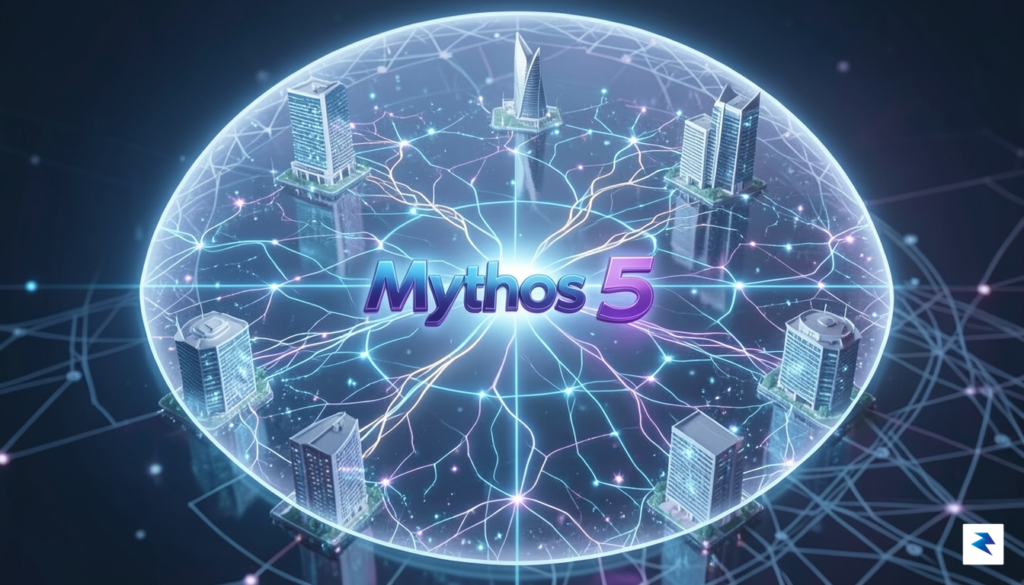
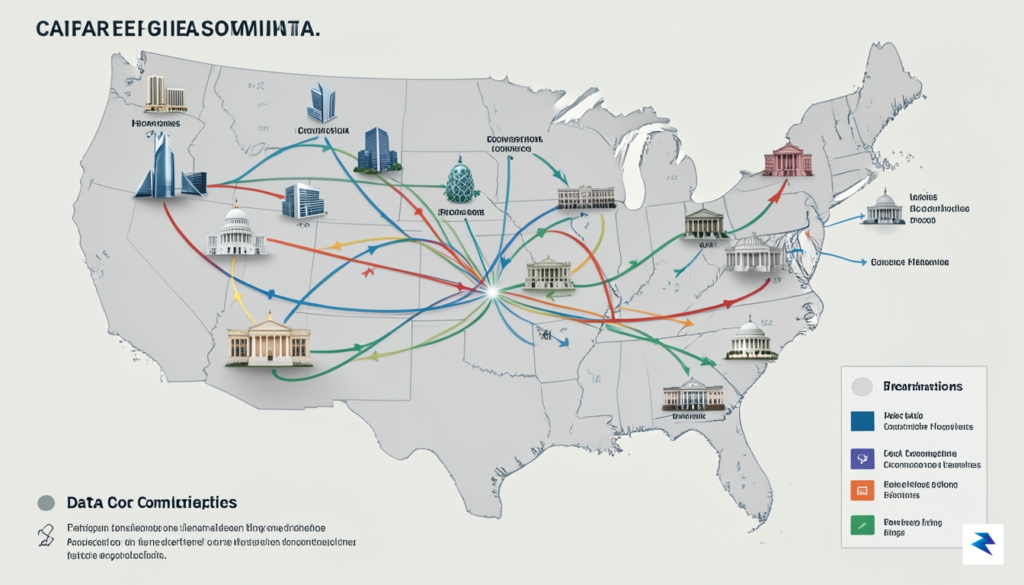
The rapid authorization of over 100 U.S. companies and federal agencies to deploy the Mythos 5 platform marks a watershed moment in the intersection of public policy and advanced artificial intelligence. This rollout is not merely a pilot program; it represents a comprehensive shift toward standardizing high-level generative AI across the nation’s most critical infrastructure. By integrating a unified model into sectors as diverse as maritime logistics, high-frequency finance, and public administration, the administration is effectively creating a common digital language for operational efficiency. This diversity of participants ensures that Mythos 5 will be stress-tested against a wide array of datasets, ranging from highly sensitive intelligence archives to real-time supply chain telemetry.

The practical applications being targeted by these organizations are as varied as the entities themselves. In the public sector, agencies are leveraging the tool to streamline bureaucratic workflows, automate documentation processing, and enhance inter-departmental communication, which has historically been hampered by legacy software silos. Simultaneously, private sector partners in the financial and logistics sectors are utilizing the model’s predictive capabilities to anticipate market volatility and optimize distribution networks. By creating a standardized environment, the administration hopes to foster a “plug-and-play” ecosystem where security protocols and data compliance standards are mirrored across both government and commercial boundaries, theoretically hardening the nation’s digital perimeter against sophisticated external threats.
“The broad-scale integration of Mythos 5 across the public-private divide signals a transition from experimental AI usage to a foundational reliance on machine intelligence for national operational continuity.”
However, the logistical challenge of onboarding such a massive, heterogeneous group of users simultaneously cannot be understated. Integrating 100 disparate organizations requires more than just software distribution; it demands a unified approach to ethics training, data sovereignty, and security patching. The administration’s strategy hinges on the assumption that a centralized AI architecture will simplify oversight rather than complicate it. If successful, this deployment could provide a blueprint for future large-scale federal technology initiatives. Conversely, if the onboarding process encounters significant friction—such as interoperability issues between specialized proprietary systems and the new AI core—it could serve as a cautionary tale for the limitations of top-down technological mandates in the private sector.

The widespread integration of Mythos across more than 100 major U.S. entities presents a delicate balancing act, particularly when those organizations operate with a global workforce. While the administration’s authorization aims to bolster national competitiveness, it simultaneously introduces significant friction regarding the participation of non-American employees. To mitigate the risks of unauthorized data exposure, the framework mandates rigorous policy constraints, such as mandatory identity verification and role-based access controls that restrict non-U.S. personnel to non-sensitive sandbox environments. By enforcing these “digital borders,” the government intends to ensure that while international teams can benefit from the tool’s productivity gains, they remain physically and logically isolated from the core intellectual property that defines domestic technological sovereignty.

Data governance protocols form the backbone of this security strategy, functioning as a sophisticated filter designed to prevent the accidental leakage of proprietary intelligence. Under the current guidelines, every interaction with the AI model is subjected to real-time metadata scrubbing and automated anomaly detection, which identifies and flags patterns suggestive of data exfiltration or unauthorized training inputs. These protocols are not merely passive restrictions; they act as a proactive audit trail that ensures compliance with federal oversight requirements. Furthermore, organizations are required to implement regionalized data residency, ensuring that while the model architecture is global, the sensitive datasets processed by the AI remain within jurisdictions that adhere to strict U.S.-aligned cybersecurity mandates.
The true challenge of the Mythos rollout lies in reconciling the borderless reality of modern cloud-based business with the rigid requirements of national security, necessitating a hybrid approach that favors rigorous oversight over total operational friction.
Ultimately, this rollout exposes the inherent tension between the mandate for global corporate efficiency and the desire to protect domestic technological assets. Critics argue that these restrictions may inadvertently hinder the collaboration that makes American companies leaders in their fields, yet proponents suggest that such guardrails are the only way to safely scale advanced AI. By creating a tiered access model, the administration is attempting to build a sustainable middle ground where international cooperation can flourish without compromising the integrity of the nation’s most valuable information. As the deployment matures, the success of this strategy will likely be measured by whether these firms can continue to innovate at scale while maintaining a fortress-like posture around their most critical internal systems.

The widespread deployment of Mythos 5 across more than 100 federal agencies and private sector partners marks a definitive turning point in the maturation of artificial intelligence. By formalizing a strategic partnership between the administration and a leading developer, the government has essentially signaled that AI is no longer an experimental niche, but rather a core pillar of national infrastructure. This precedent suggests that the future of AI integration will be defined by deep, public-private synergy rather than a hands-off regulatory approach. As these agencies begin to weave Mythos 5 into their operational workflows, other AI providers will likely face intense pressure to prove their own capabilities, fostering a more competitive landscape where performance, security, and interoperability become the baseline requirements for market entry.

Looking ahead, this rollout serves as a blueprint for how future government-private sector collaborations will be structured. We are likely moving toward a model of “standardized innovation,” where common AI benchmarks are established through these large-scale implementations, making it easier for smaller companies to integrate with federal systems. While some critics might worry about the consolidation of power, the long-term reality is that this scale of adoption creates a massive sandbox for testing safety protocols and ethical AI usage at a national level. This creates a feedback loop: as the government uses the technology, the developers gain invaluable insights into real-world, high-stakes applications that private research labs simply cannot replicate.
The integration of Mythos 5 represents more than just a software update; it is a strategic maneuver to ensure that American industry remains the global benchmark for AI-driven productivity and institutional efficiency.
Ultimately, the impact on US economic competitiveness cannot be overstated. By accelerating the adoption of sophisticated tools like Mythos 5, the United States is positioning itself to lead in the global AI arms race, moving beyond the phase of mere proof-of-concept into the era of practical, large-scale implementation. This move incentivizes other domestic firms to innovate faster to keep pace with the efficiency gains being realized by these 100-plus adopters. As these standardized AI frameworks become embedded in the backbone of the economy, the resulting boost in workplace productivity and administrative efficiency will likely provide the structural advantage needed to maintain a dominant position in the international market for years to come.
You must be logged in to post a comment.