
Norm Hits Unicorn Status: How $120M in Funding Is Changing Legal Tech
The Rise of Norm: Understanding the $1.2B Milestone In a truly landmark moment for the legal technology sector, Norm has successfully secured…

For years, the tech industry operated on a cycle of short-term procurement, often treating component sourcing as a reactive process dictated by immediate consumer demand. However, Apple’s decision to secure a multi-billion dollar partnership with Broadcom through 2031 marks a profound departure from this reactive model. By extending this collaboration into the next decade, Apple is effectively trading the flexibility of the open market for the ironclad security of a long-term infrastructure roadmap. In an era where the global semiconductor supply chain remains notoriously fragile, this move transforms a standard vendor-client relationship into a deep, symbiotic strategic alliance that prioritizes long-term stability over quarterly cost fluctuations.
The necessity of this deal becomes clear when considering the sheer scale of Apple’s hardware ecosystem. Producing hundreds of millions of devices annually requires an almost surgical level of logistical precision, particularly regarding high-performance 5G radio frequency components and advanced wireless connectivity chips. Without the guarantee of Broadcom’s production capacity, Apple would be perpetually vulnerable to the volatility of global silicon shortages and the escalating geopolitical tensions that threaten to disrupt trade routes. By locking in this supply through 2031, Apple ensures that its product pipeline remains insulated from the unpredictable external shocks that have historically crippled rivals, providing the predictability required to invest in next-generation hardware architectures with confidence.
The move toward a decade-long partnership is less about current product sales and more about securing the foundational building blocks required for the next era of edge computing and artificial intelligence.
Furthermore, this strategic shift is intrinsically linked to the burgeoning requirements of artificial intelligence. As Apple integrates more sophisticated, on-device AI capabilities into its future hardware, the demand for low-latency, high-bandwidth connectivity will reach unprecedented levels. These AI-driven features rely on seamless data movement between the device and the cloud, necessitating hardware that is not only powerful but also perfectly tuned for modern network standards. By standardizing their infrastructure needs with a single, reliable partner like Broadcom, Apple can co-develop custom components that are specifically optimized for the unique power and thermal profiles of future AI-enabled hardware. This foresight creates a competitive moat that allows them to innovate at a pace that few other manufacturers can match, ensuring that the hardware remains a robust vessel for the software intelligence of tomorrow.
Ultimately, this agreement signals that Apple is no longer simply buying parts; they are securing their future. By mitigating the risks associated with global supply chain fragmentation, the company is positioning itself to lead in a landscape where hardware availability is the primary bottleneck for innovation. This decade-long commitment provides the necessary runway for both companies to invest in massive R&D projects that will define the connectivity standards of the 2030s, proving that for Apple, the path to AI dominance is paved with long-term, structural reliability.

The meteoric rise of generative AI has fundamentally altered the semiconductor landscape, transforming what was once a steady evolution of silicon into a frenzied race for high-performance components. As artificial intelligence models grow in complexity, they demand unprecedented levels of data throughput and near-zero latency to function effectively, particularly when these processes are executed locally on consumer devices. This shift necessitates a new generation of hardware—chips that can manage massive data streams while maintaining thermal efficiency and power stability. For Apple, which is aggressively embedding sophisticated AI features into the heart of its ecosystem, the physical limitations of current wireless and power-management infrastructure have become a primary bottleneck to innovation.

To maintain a seamless user experience, Apple requires components that can transmit immense amounts of information instantaneously without draining battery life or overheating the device chassis. Broadcom’s expertise in advanced connectivity and custom silicon becomes the linchpin in this strategy, as their specialized chips are designed to handle the high-bandwidth requirements of modern AI applications. By securing a long-term partnership that extends through 2031, Apple is effectively insulating itself from the volatile supply chain shortages that frequently plague the tech industry during periods of rapid innovation. This is not merely a purchase agreement; it is a strategic maneuver to ensure that Apple remains at the very front of the queue, gaining exclusive, “first-look” access to the next generation of specialized wireless and power-management technology.
In an era where hardware availability can dictate the success or failure of a software rollout, securing long-term access to critical silicon components is the ultimate competitive advantage for a consumer tech giant.
The pressure on silicon suppliers is immense, as companies across the globe scramble to secure manufacturing capacity for AI-optimized hardware. By anchoring its future to Broadcom’s roadmap, Apple effectively mitigates the risk of being sidelined by competitors who are equally desperate for cutting-edge connectivity solutions. This forward-looking commitment allows for deep collaboration between the two engineering teams, ensuring that Broadcom’s upcoming innovations are custom-tailored to the specific architectural needs of Apple’s silicon. Ultimately, this deal serves as a foundational pillar for Apple’s broader AI ambitions, guaranteeing that as the software grows more intelligent, the physical hardware beneath it possesses the speed and reliability to keep pace.

While Apple has earned a reputation for its iron-clad control over its hardware ecosystem, the reality of modern consumer electronics is that no single company can master every component of a complex machine in-house. Apple’s internal R&D is legendary, particularly regarding its proprietary A-series and M-series silicon, which serve as the “brains” of its devices. However, Broadcom acts as the essential nervous system, providing the specialized components that allow those chips to interact with the outside world. By outsourcing the development of complex wireless connectivity, radio frequency (RF) front-end modules, and advanced storage controllers to Broadcom, Apple ensures that its flagship devices maintain industry-leading data speeds and signal reliability without needing to reinvent the wheel for every connectivity standard.
This division of labor is a calculated strategic maneuver. Developing high-performance RF components requires decades of specialized expertise in analog engineering and spectral efficiency—fields where Broadcom is a global leader. Instead of pouring immense capital and talent into these peripheral domains, Apple directs its engineering resources toward the core architecture of its custom silicon, where it can achieve the greatest competitive advantage. This partnership allows Apple to maintain a lean, highly focused internal roadmap. The company essentially treats Broadcom as an extension of its own product development team, ensuring that Broadcom’s hardware is not just compatible with Apple’s chips, but deeply optimized to work in perfect harmony with them.
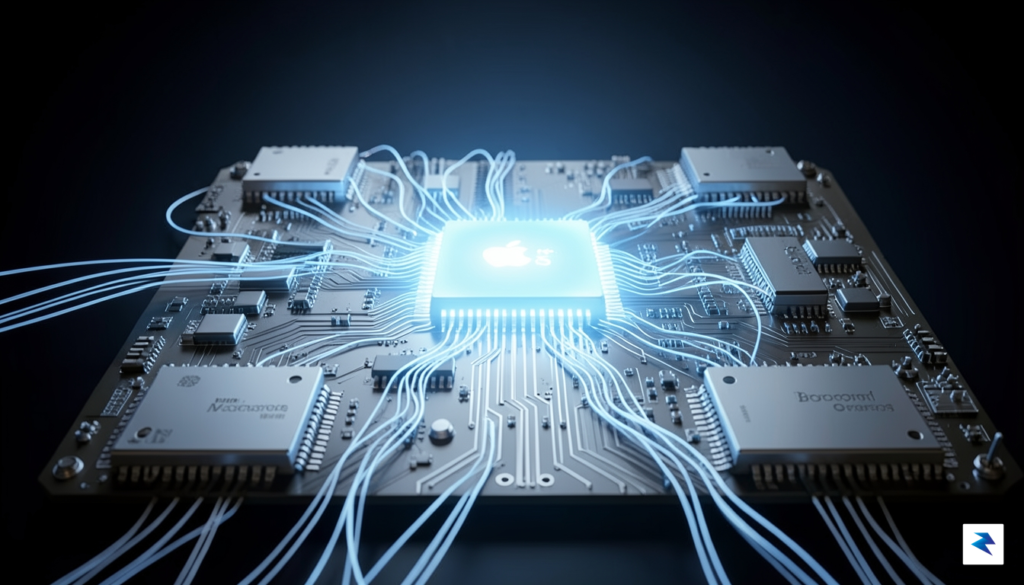
The synergy between Broadcom’s connectivity hardware and Apple’s software-defined ecosystem is a cornerstone of the company’s “walled garden” approach. When an iPhone seamlessly transitions between Wi-Fi and cellular networks, or when a Mac maintains a stable, low-latency connection for heavy-duty cloud tasks, it is the result of deep technical alignment between Apple’s proprietary firmware and Broadcom’s high-precision modules. This integration is critical for the future of artificial intelligence. As AI models become increasingly dependent on cloud-based processing and real-time data streaming, the efficiency of these connectivity components becomes paramount. If the hardware bottlenecking the data transmission is even slightly suboptimal, the entire user experience—no matter how fast the internal AI neural engine might be—will suffer.
The partnership with Broadcom is not merely a supply chain arrangement; it is a strategic alliance that enables Apple to scale its AI ambitions while keeping its own engineering team laser-focused on the bleeding-edge architecture that defines the premium Apple user experience.
Ultimately, this long-term deal through 2031 signals that Apple is comfortable with its current vertical integration model. By securing a reliable supply of Broadcom’s best-in-class chips, Apple is essentially buying itself the freedom to innovate elsewhere. The company can continue to push the boundaries of what is possible with its own silicon, safe in the knowledge that the communication and storage layers of its devices are being handled by a partner whose technical capabilities are as robust as its own. This combination of internal brilliance and external expertise is what allows Apple to deliver products that feel consistently faster, more reliable, and more integrated than the competition.
For the average consumer, the intricate world of semiconductor supply chains rarely garners much attention until it manifests as a sudden price hike on the latest smartphone. By locking in a multi-year partnership with Broadcom, Apple is effectively building a financial and logistical fortress around its hardware roadmap. This long-term commitment acts as a critical buffer against the volatile swings of the global component market. When companies are forced to purchase chips on the spot market during periods of high demand, those costs are almost invariably passed down to the customer. By securing its supply through 2031, Apple gains the ability to stabilize its cost-of-goods-sold (COGS), which provides the breathing room necessary to absorb the rising expenses associated with increasingly sophisticated hardware without forcing an immediate, aggressive increase in retail price points.
This stability is particularly vital as Apple transitions into an era defined by aggressive artificial intelligence integration. Modern AI features, such as on-device Large Language Models (LLMs) and advanced neural processing, demand specialized hardware overhead that consumes significant power and silicon real estate. These cutting-edge components are notoriously difficult to manufacture at scale, often leading to scarcity and unpredictable cost spikes. Because Apple has guaranteed its access to Broadcom’s wireless and connectivity solutions for the next several years, the company’s engineers can design their future AI features with the confidence that the underlying infrastructure will be available and cost-predictable. This reliability ensures that the transition from cloud-based AI to more private, on-device processing does not become a financial burden that limits the accessibility of these new tools to only the most expensive “Pro” tier devices.
The true value of this deal lies in its predictability; by neutralizing the risk of component shortages, Apple ensures that its most ambitious AI-driven software upgrades can be deployed across its entire ecosystem rather than being gated behind prohibitive hardware costs.
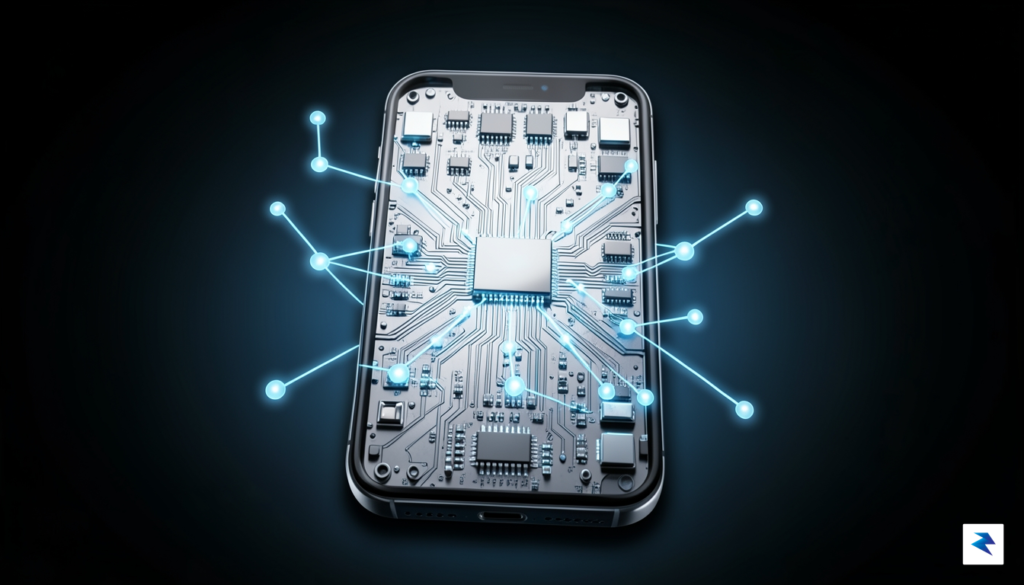
Furthermore, this strategic alignment creates a unique competitive advantage for the consumer. As AI becomes a standard requirement rather than a luxury addition, the ability to maintain consistent pricing while simultaneously increasing the computational capability of each generation of hardware is a difficult balancing act. By mitigating the risk of supply chain disruptions, Apple is essentially “locking in” its ability to innovate at a steady pace. Users can expect that the trajectory of their device’s performance will continue to grow to meet the demands of advanced machine learning tasks, all while the company avoids the drastic price volatility that often plagues other manufacturers who must navigate the unpredictable open market for critical components.

The recent multi-year agreement between Apple and Broadcom serves as a definitive bellwether for the modern semiconductor industry, signaling a permanent departure from the “just-in-time” supply chains of the past. As tech giants aggressively compete to secure the hardware foundations necessary for generative AI and advanced machine learning, this deal illustrates a transition toward long-term, exclusive procurement models. By locking in capacity through 2031, Apple is effectively insulating itself from the volatility that has plagued global chip markets since the pandemic. This move forces other industry players to reconsider their own reliance on open-market purchasing, as they now face a landscape where the most reliable foundry space and high-end component inventory are being swallowed by multi-decade partnerships.

For smaller competitors and mid-sized hardware firms, the implications are particularly stark. As industry leaders consolidate their access to the world’s top-tier manufacturing facilities, smaller players may find themselves increasingly squeezed out of the market. This creates a “bottleneck effect” where only the largest companies with the deepest pockets can guarantee the steady flow of chips required for the next generation of AI-integrated devices. Consequently, we are witnessing a shift toward a more stratified semiconductor ecosystem, where vertical integration and exclusive manufacturing partnerships become the primary defenses against supply shocks. Smaller firms may soon be forced to form consortia or pivot their business models entirely to survive in a market where silicon supply is no longer a commodity but a proprietary advantage.
“The era of transactional, short-term chip procurement is effectively over; the new gold standard for tech giants is absolute supply chain sovereignty, realized through decade-long commitments that prioritize stability over price flexibility.”
Ultimately, this development sets a new industry-wide baseline for what constitutes “supply chain resilience” in the post-AI era. It is no longer sufficient to maintain diverse suppliers; companies must now embed themselves directly into the roadmap of their chipmakers to ensure they aren’t left behind. As AI workloads continue to demand exponential increases in processing power and bandwidth, the Apple-Broadcom model will likely become the blueprint for how major hardware manufacturers secure their futures. We should expect to see a ripple effect across the sector, prompting more aggressive consolidation and a fundamental change in how semiconductor firms allocate their limited manufacturing capacity in the face of insatiable demand.
You must be logged in to post a comment.