
How One Trader Turned $800 Into $1M on Robinhood’s New Blockchain
The Rise of Robinhood's New Blockchain Ecosystem On July 1, the financial landscape shifted beneath the feet of traditional retail…


For more than a decade, the Japanese economy existed in a unique bubble of fiscal experimentation, defined largely by the aggressive stimulus measures known as Abenomics. Under this framework, the Bank of Japan (BOJ) stood as a global outlier, stubbornly maintaining near-zero or even negative interest rates to combat chronic deflation and stimulate stagnant domestic consumption. While central banks across the United States, Europe, and elsewhere pivoted toward aggressive tightening to rein in post-pandemic inflation, the BOJ remained committed to its ultra-loose stance. This divergence created a massive carry trade environment, where investors borrowed cheaply in yen to fund higher-yielding assets abroad, effectively tethering Japan’s monetary policy to the stability of international markets.
However, the narrative of permanent accommodation is rapidly fraying as Japan finally confronts the reality of persistent inflationary pressures. Years of a weak yen have inflated the cost of essential imports, from energy to raw materials, fundamentally shifting the cost of living for Japanese households and eating into corporate profit margins. Consequently, the central bank can no longer afford to remain passive while the yen’s depreciation threatens social stability and economic sustainability. The era of cheap money is being forced to a close, not merely by choice, but by the unavoidable necessity of stabilizing the domestic currency and aligning with global economic realities.

The situation has become so precarious that former central bank insiders are sounding the alarm, suggesting that the pace of policy normalization may soon accelerate beyond initial market expectations. These experts warn that the Bank of Japan may be compelled to hike rates more aggressively than previously forecasted, potentially pushing borrowing costs above the 2% threshold sooner than analysts have anticipated. Such a move would represent a tectonic shift in the global financial landscape, potentially triggering a massive repatriation of capital as investors unwind yen-based carry trades. For a global financial system that has grown accustomed to the safety net of Japanese liquidity, the transition toward a higher-interest-rate environment in Tokyo is not just a domestic policy adjustment—it is a potential catalyst for significant market turbulence.
The pivot from negative interest rates is no longer a distant theoretical discussion; it is a live, unfolding economic event that could reshape the flow of capital worldwide.
As the BOJ navigates this delicate transition, the primary challenge remains balancing the need to curb inflation without stifling the fragile recovery of the domestic economy. Policymakers must carefully calibrate their messaging and timing to avoid shocking the bond markets, which are deeply sensitive to any move away from the central bank’s long-standing yield curve control. Nevertheless, the consensus among observers is that the window for hesitation has closed. The coming months will likely serve as a critical test for the Bank of Japan, as it attempts to steer the world’s third-largest economy into a new era of conventional monetary policy while mitigating the risks of a sudden, volatile market correction.
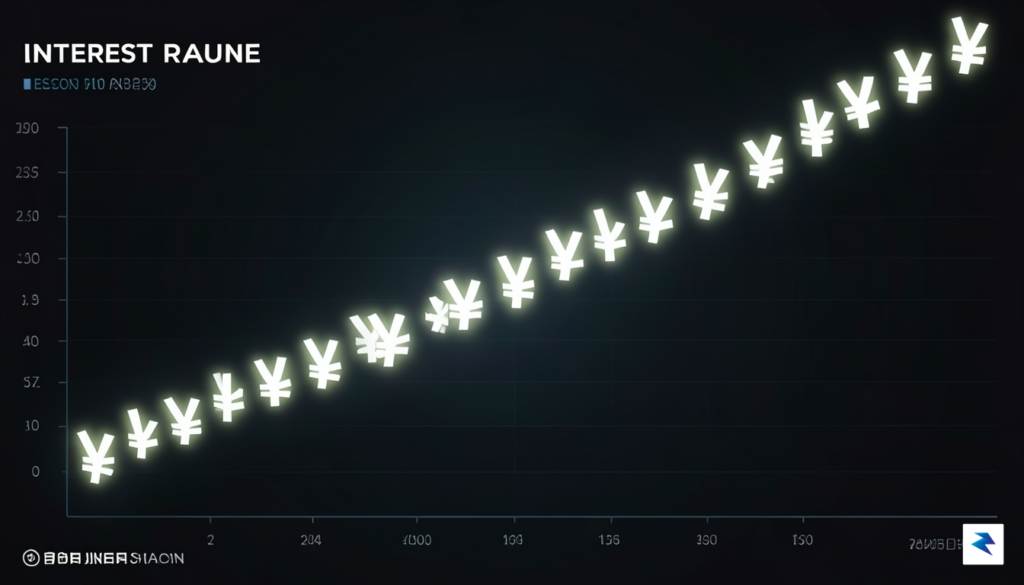
While a 2% interest rate might appear modest—or even negligible—when compared to the aggressive monetary policies seen across other G7 nations, for Japan, it represents a seismic shift that could fundamentally dismantle decades of economic stagnation. For years, the Bank of Japan has operated in a unique vacuum of near-zero or negative interest rates, effectively subsidizing corporate debt and discouraging traditional consumer saving habits. Crossing the 2% threshold is not merely a quantitative adjustment; it acts as a critical “red line” that threatens to disrupt the delicate equilibrium of an economy that has become structurally addicted to cheap credit. As borrowing costs rise, the cost of servicing existing debt will accelerate, forcing a painful transition for firms that have long relied on inexpensive capital to mask underlying operational inefficiencies.
The implications for Japanese corporations are particularly profound, as higher rates will inevitably squeeze profit margins and force a re-evaluation of capital expenditure plans. Companies that have thrived in a low-interest-rate environment may find themselves unable to sustain debt-heavy expansion strategies, potentially leading to a wave of corporate restructuring or consolidation. Furthermore, this transition will place significant pressure on the Japanese government, which currently manages one of the highest debt-to-GDP ratios in the developed world. Even a marginal increase in interest rates significantly inflates the government’s annual debt-servicing costs, which could force policymakers to choose between cutting public services or raising taxes—both of which are politically volatile and economically restrictive measures.

The 2% threshold serves as a psychological and financial barrier; crossing it effectively signals the end of the “easy money” era that defined Japan’s post-bubble economy, forcing a pivot toward fundamental fiscal discipline.
For the average Japanese household, the impact of reaching this 2% benchmark is a double-edged sword that could reshape personal finance. On one hand, savers who have endured years of near-zero returns on their bank deposits may finally see a modest increase in yields, potentially incentivizing a shift away from cash and toward more productive investment vehicles. Conversely, households carrying variable-rate mortgages will face an immediate increase in monthly expenses, which could dampen consumer spending—a vital engine for the broader economy. This delicate balancing act between incentivizing savings and maintaining consumer confidence is exactly why analysts are monitoring this threshold so closely; if the transition is managed poorly, it risks stifling domestic demand just as the country attempts to emerge from its long-standing deflationary trap.
Ultimately, this shift represents a move toward global normalization, yet the speed of the adjustment remains the primary concern for market participants. If the Bank of Japan accelerates its rate hikes too quickly to catch up with global peers, it risks triggering volatility in the yen and destabilizing the bond market. By pushing borrowing costs above the 2% mark, the central bank is effectively testing the resilience of a system that has been shielded from market forces for far too long. Whether this transition leads to a more robust, competitive Japanese economy or a period of prolonged financial turbulence will depend heavily on the central bank’s ability to navigate the complex interplay between inflation, corporate debt, and household purchasing power.

For years, the Japanese Yen has served as the bedrock of global liquidity, acting as the primary funding currency for the so-called “carry trade.” In this strategy, international investors borrow money in Yen at ultra-low interest rates and reinvest that capital into higher-yielding assets, such as U.S. tech stocks or emerging market bonds. Because Japan’s monetary policy remained trapped in a cycle of negative rates, this trade was considered remarkably safe and highly profitable. However, as the Bank of Japan signals a move toward a more aggressive interest rate trajectory, the very foundation of this trade is beginning to crack, forcing institutional investors to scramble as their cost of capital suddenly climbs.

The mechanics of this disruption are rooted in the inverse relationship between the Yen and dollar-denominated assets. When the Yen is weak, the carry trade flourishes, effectively flooding global markets with cheap cash and buoying equity prices. When the Bank of Japan hints at raising rates, the Yen naturally strengthens, which forces investors to unwind their positions. To “unwind,” these traders must sell their foreign assets—like U.S. Treasuries or equities—to buy back Yen and repay their Japanese loans. This creates a sudden, massive wave of selling pressure across global markets, potentially triggering a broader rebalancing of risk capital that is not limited to Japan’s borders.
“The unwinding of the yen carry trade is not merely a domestic Japanese concern; it is a global liquidity shock that threatens to tighten financial conditions for investors worldwide.”
Ultimately, the shift in Japanese monetary policy marks the end of an era where cheap, abundant liquidity could be taken for granted. As borrowing costs in Japan move toward the 2% threshold, the arbitrage opportunity that sustained many international portfolios is vanishing. Investors must now prepare for increased volatility, as the normalization of Japanese interest rates will inevitably force a repricing of risk across the entire financial spectrum. For the average investor, this means that the stability of global asset prices is now intricately tied to the decisions made in Tokyo, making the Yen one of the most critical barometers for global economic health in the coming months.

For over a decade, global financial markets have been underpinned by a persistent, low-cost engine: the Japanese yen carry trade. By borrowing in yen at near-zero interest rates and reinvesting that capital into higher-yielding assets—ranging from U.S. technology stocks to emerging market bonds—institutional investors have effectively capitalized on the Bank of Japan’s ultra-loose monetary policy. This mechanism has acted as a primary source of cheap liquidity, fueling asset price inflation across the globe. However, as the Bank of Japan pivots toward a more hawkish stance, the fundamental mathematics of this trade are beginning to invert, threatening to turn a once-reliable profit strategy into a significant liability.
The risks inherent in a sudden reversal are compounded by the sheer scale of these leveraged positions. When borrowing costs in Japan rise, the cost of servicing existing debt increases, forcing investors to liquidate their international holdings to cover margin requirements or settle yen-denominated obligations. This process creates a self-reinforcing downward spiral: as investors sell off foreign assets to buy back yen, the yen strengthens, further eroding the profitability of carry trades and triggering more liquidations. For institutional players, this transition is not merely a matter of adjusting portfolio weights, but a potential liquidity squeeze that could ripple across equity and bond markets worldwide.

Market participants are now forced to confront the reality that the era of “easy money” is nearing an abrupt conclusion. As borrowing costs climb toward the 2% threshold, the interest rate differential that made the carry trade so attractive is rapidly narrowing. This shift requires investors to reassess the risk-adjusted returns of their global portfolios, as the “cushion” provided by cheap yen funding disappears. The potential for volatility is high, particularly in sectors that have become overly reliant on this influx of low-cost capital for their growth trajectories.
The unwinding of the yen carry trade is not just a regional economic event; it is a global liquidity shock that threatens to reprice risk across every major asset class.
Furthermore, the behavior of institutional investors is shifting from aggressive expansion to defensive posturing. As the prospect of sustained rate hikes becomes a central bank priority, treasury desks are increasingly wary of the currency risk associated with yen-denominated debt. This cautious approach could lead to a broader contraction in market participation, as funds move to deleverage before the interest rate environment undergoes a structural transformation. Ultimately, the transition away from Japan’s zero-rate regime serves as a stark reminder that prolonged periods of artificial monetary support often hide systemic vulnerabilities that only surface when the cost of capital finally begins to normalize.

As the Bank of Japan (BoJ) navigates the delicate transition away from its long-standing era of ultra-loose monetary policy, veteran observers are signaling a need for caution. Former central bank officials have recently underscored the possibility of an accelerated rate hike cycle, suggesting that borrowing costs could feasibly climb above the 2% threshold sooner than previously anticipated. This shift represents a fundamental departure from the stagnant interest rate environment that has defined the Japanese economy for decades. While such a move is essential to curb inflationary pressures and restore a sense of normalcy to financial markets, experts warn that the velocity of these adjustments is paramount. If the BoJ moves too aggressively, it risks triggering economic shockwaves that could stifle the very recovery it aims to sustain.
The central bank’s greatest challenge lies in its communication strategy, as it must effectively guide both the public and global investors through this uncharted territory. Market participants have grown accustomed to the safety net of suppressed rates, and any sudden hawkish signaling can lead to sharp volatility in the yen and domestic asset prices. To maintain stability, the BoJ must balance the necessity of “normalizing” policy with the need to prevent a liquidity crunch among corporations that have relied on cheap debt for years. Clear, forward-looking guidance is not merely a policy tool; it is a mechanism for preventing panic and ensuring that households and businesses can adjust their financial planning without facing abrupt, destabilizing spikes in borrowing costs.
The path forward for Japan is a high-stakes balancing act: the central bank must normalize rates to ensure long-term domestic health, yet it must remain hyper-vigilant to ensure that the transition does not inadvertently derail the fragile recovery of the broader economy.

Looking ahead over the next 18 to 24 months, the trajectory of the Japanese economy will likely be defined by a tug-of-war between sustainable growth and transition risks. If the BoJ successfully manages the “normalization” process, the economy could benefit from a more efficient allocation of capital and a stronger, more resilient currency. However, the risk of a policy error remains a tangible concern. If the central bank pushes rates too high, too fast, it could inadvertently dampen consumer spending and discourage corporate investment at a time when Japan is finally seeing signs of wage-driven growth. Ultimately, the next two years will serve as a definitive stress test for the BoJ’s ability to modernize its monetary framework while safeguarding the nation’s economic future against the turbulence of global financial shifts.
You must be logged in to post a comment.